The Chemistry of Hypoid Gear Lubrication
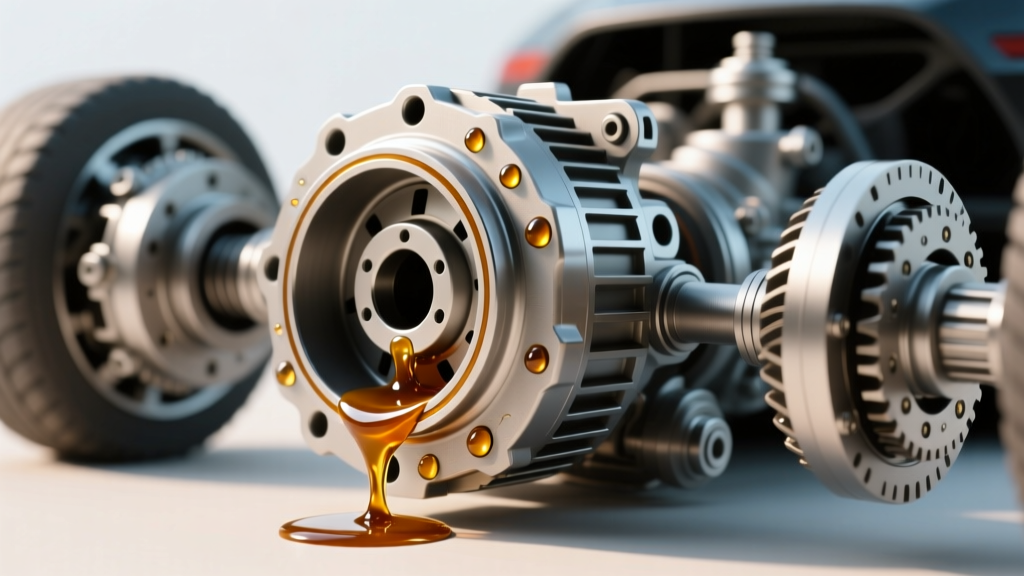
Modern automotive differentials rely on hypoid gear sets, characterized by an offset pinion gear that meshes with the ring gear below the centerline. This design allows for lower driveshaft tunnels and increased torque capacity, but it introduces extreme sliding friction. To survive this, API GL-5 gear oils are formulated with Sulfur-Phosphorus (S-P) Extreme Pressure (EP) additives. Under high load and heat, these additives sacrificially coat the gear teeth to prevent metal-on-metal welding and micro-pitting.
However, EP additives are consumable. As they deplete through thermal cycling and shear stress, the fluid undergoes chemical and physical changes. Monitoring your differential fluid color and condition is the single most effective preventive maintenance diagnostic you can perform. Catching degradation early is the difference between a routine $80 fluid swap and a $2,500 ring-and-pinion replacement.
Decoding Differential Fluid Color: A Visual Diagnostic Chart
The visual state of your gear oil tells a detailed story about the internal health of your axle assembly. Use the following diagnostic chart to interpret your fluid sample during a drain or via the fill-plug inspection.
| Fluid Color | Condition / Consistency | Diagnostic Meaning | Required Action |
|---|---|---|---|
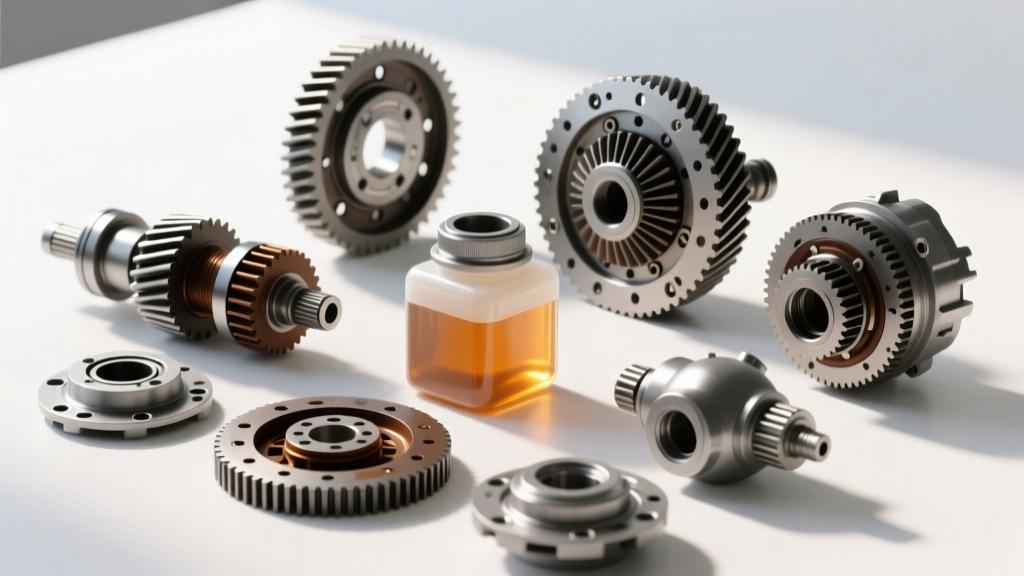
| Translucent Amber / Honey | Smooth, free-flowing | New or excellent condition. Additives are fully active. | No action required. Re-check at next interval. |
| Dark Brown / Opaque | Viscous, slight sulfur odor | Normal aging. Oxidation has begun; EP additives are depleting. | Schedule a drain and fill within 3,000 miles. |
| Jet Black / Sludgy | Thick, tar-like, heavy carbon | Severe thermal breakdown. Fluid has exceeded 300°F repeatedly. | Immediate fluid change; inspect for bearing wear. |
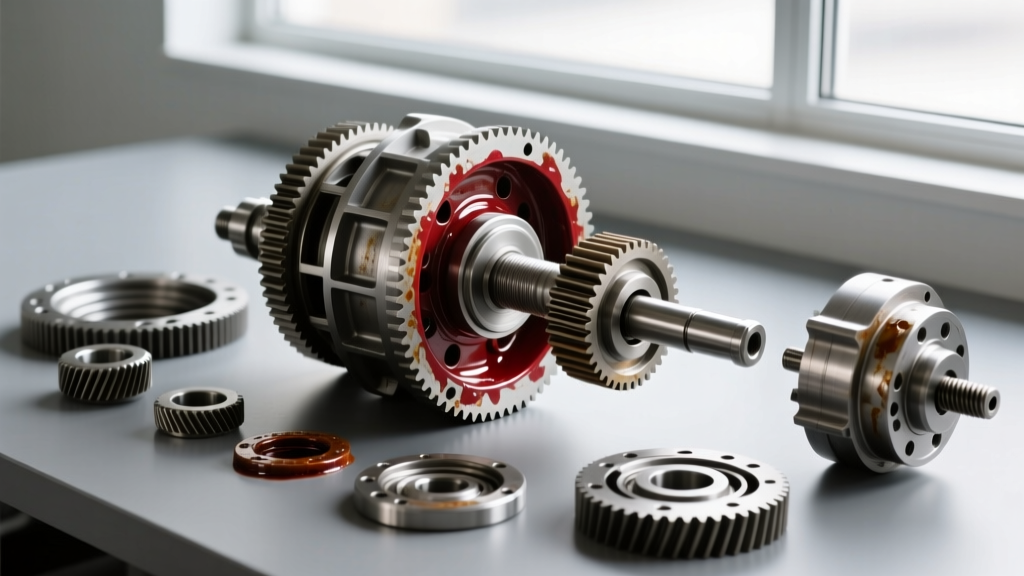
| Milky / Chocolate Milk | Emulsified, frothy | Water intrusion. Fluid has mixed with moisture and lost lubricity. | Immediate flush; inspect axle seals and breather tube. |
| Amber with 'Glitter' | Metallic flakes suspended | Active mechanical wear. Ring/pinion or thrust bearing failure. | Seek professional differential repair service in Glendale immediately. |
Olfactory and Tactile Diagnostics: Beyond the Visual
Color alone does not provide a complete diagnostic picture. As an automotive drivetrain specialist, I always recommend rubbing a drop of differential fluid between your fingers and noting the odor.
The Burnt Smell Indicator
Standard GL-5 gear oil naturally smells like sulfur or rotten eggs due to the S-P additives. However, if the fluid smells sharply burnt or acrid, it indicates the oil has exceeded its thermal stability threshold (typically around 300°F to 350°F for conventional oils, and up to 400°F for high-end synthetics like Amsoil Severe Gear). Burnt fluid has lost its film strength, meaning the boundary lubrication layer is compromised.
The Grit and Magnet Test
Rub the fluid between your thumb and index finger. A slight metallic paste is normal for high-mileage axles—this is the byproduct of the clutch packs in limited-slip differentials (LSD) wearing in. However, if you feel sharp, distinct metal shards or grit, your differential is actively destroying itself. Many differential housings feature a magnetic drain plug. When you remove the plug, a small, fuzzy patch of fine metal 'fuzz' is acceptable. Large, jagged chunks of steel indicate catastrophic gear tooth spalling or bearing cage disintegration.
The Breather Valve: A Hidden Culprit of Milky Fluid
If your fluid resembles a milky latte, water has entered the housing. While a blown axle seal submerged in a deep water crossing is an obvious cause, a more insidious culprit is a clogged axle breather valve. As the differential heats up during highway driving, the internal air expands. When you park, the axle cools rapidly, creating a vacuum. If the breather tube on the axle housing is clogged with dirt or debris, the vacuum will pull moisture past the pinion seal or axle shaft seals, emulsifying the gear oil. Always clear the axle breather tube with compressed air during every fluid service.
Platform-Specific Capacities and Friction Modifiers
Performing a preventive fluid change requires exact specifications. Using the wrong friction modifier in a clutch-type LSD will result in aggressive chatter during low-speed cornering. Below are specifications for common light-truck and SUV platforms:
- GM 8.6-Inch (10-Bolt): Capacity is typically 2.0 to 2.1 quarts. Requires 75W-90 synthetic GL-5. If equipped with the G80 Eaton locking differential, do not add friction modifier, as it can interfere with the locking mechanism. Fill plug torque: 24 lb-ft.
- Ford 8.8-Inch: Capacity is roughly 1.8 to 2.0 quarts. Requires 75W-140 for towing applications or 75W-90 for standard duty. Trac-Loc limited-slip models require exactly 4 oz of Ford XL-3 Friction Modifier (EST-M2C118-A). Cover bolts must be torqued to 20-25 lb-ft in a star pattern to prevent warping the housing flange.
- Dana 44 (Jeep/Off-Road): Capacity ranges from 2.0 to 2.5 quarts depending on the cover. Requires 75W-90 or 80W-90. Truetrac (Torsen-style) gear-driven lockers require no modifier, while Auburn or Detroit Truetrac clutch-based systems require specific limited-slip additives. Fill plug torque: 25-35 lb-ft.
Severe Duty Cycles: Why Glendale Drivers Face Accelerated Degradation
Local geography and climate dictate maintenance intervals. If you are driving in the Glendale, CA area, your drivetrain is subjected to a severe duty cycle. Stop-and-go traffic on the I-5 and CA-2 generates immense low-speed, high-torque heat in the pinion bearings, which rely on gear splash for cooling. Furthermore, weekend warriors towing trailers or driving up the Angeles Crest Highway subject the hypoid gears to sustained sliding friction.
According to Dana Incorporated, severe duty conditions mandate cutting standard 50,000-mile differential fluid intervals in half. For Glendale drivers towing over 3,000 lbs or frequently navigating steep grades, a 25,000 to 30,000-mile synthetic fluid change interval is highly recommended to prevent thermal runaway.
DIY Maintenance vs. Professional Differential Repair Service in Glendale
Changing differential fluid is a staple of DIY preventive maintenance, but knowing your limits is critical to avoiding stripped threads and cracked housings.
When to DIY
If your fluid is dark brown but smooth, and you have a 3/8-inch drive torque wrench, a floor jack, and jack stands, a DIY service is straightforward. A high-quality synthetic like Motul Gear 300 75W-90 costs roughly $18 per quart. Total DIY cost: $60 to $90. Crucial Tip: Always remove the fill plug before the drain plug. If you drain the fluid and then find the fill plug is seized, your vehicle is immobilized.
When to Call a Professional
If your inspection reveals milky fluid, large metal chunks, or a high-pitched whining noise that changes pitch on deceleration (indicating pinion bearing wear or incorrect gear backlash), stop driving. These symptoms require specialized tools like dial indicators, inch-pound torque wrenches for bearing preload, and hydraulic presses. At this stage, you need a professional differential repair service in Glendale. A professional teardown, bearing replacement, and ring-and-pinion setup typically ranges from $1,200 to $2,800 depending on parts availability and axle complexity. Attempting to set gear backlash without a runout dial indicator will result in rapid gear destruction. For verified drivetrain specialists and setup components, resources like Ring-Pinion.com offer excellent technical documentation on proper gear patterning and shim selection.
Conclusion
Differential fluid is the lifeblood of your axle assembly. By routinely inspecting the color, smell, and texture of your gear oil, you can intercept minor thermal degradation before it escalates into catastrophic mechanical failure. Adhere to platform-specific torque specs, respect the chemistry of friction modifiers, and never ignore the warning signs of metallic particulates. When visual diagnostics point to internal hardware failure, bypass the driveway and consult a qualified differential repair service in Glendale to restore your drivetrain to factory tolerances.