Deconstructing the Intermittent Clutch Failure
When a driver or technician asks, how does the clutch in a car work, they are usually inquiring about the fundamental friction coupling between the engine and transmission. Under normal conditions, the diaphragm spring applies clamping force to the friction disc, locking the input shaft to the flywheel. However, when a clutch fails intermittently—slipping only under high load, chattering only when cold, or failing to disengage randomly—the diagnostic process becomes exponentially more complex. Intermittent faults do not leave behind the obvious debris of a shattered ceramic disc or a completely burnt-out friction surface. Instead, they hide in hydraulic fluid dynamics, thermal expansion tolerances, and microscopic mechanical binding.
In this 2026 diagnostic guide, we bypass basic clutch theory and dive deep into the advanced troubleshooting protocols required to isolate erratic clutch behavior in modern manual and automated manual transmissions.
The Physics of Friction and Thermal Inconsistency
To understand intermittent slipping, we must examine the coefficient of friction (µ) across varying temperature spectrums. Modern organic and Kevlar-reinforced clutch facings are engineered to maintain a stable µ between 150°F and 400°F. However, when a vehicle is subjected to stop-and-go traffic or aggressive track use, localized hot spots on the flywheel can exceed 700°F.
At these extreme temperatures, the resin binders in the friction material undergo temporary outgassing. This creates a microscopic layer of gas between the disc and the flywheel, resulting in a sudden, temporary loss of clamping force. Once the vehicle is in motion and airflow cools the bell housing, the clutch 'heals' and operates normally. This phenomenon, known as thermal fade, is frequently misdiagnosed as a weak pressure plate. According to SAE International technical papers on tribology, thermal degradation of clutch facings is highly cyclical and heavily dependent on the specific friction compound matrix used by OEMs.
Hydraulic Inconsistencies: The Hidden Culprits
The majority of intermittent engagement and disengagement issues stem from the hydraulic actuation system. Modern vehicles utilize a master cylinder, a hard line, and either an external slave cylinder or an internal hydraulic throwout bearing (HTOB).
1. Clutch Delay Valve (CDV) Stiction
Many European and domestic performance vehicles (notably BMW E90/F30 chassis and select GM applications) feature a Clutch Delay Valve in the hydraulic line. The CDV restricts fluid flow to ensure smooth, gradual engagement regardless of how fast the driver releases the pedal. Over time, the internal rubber diaphragm of the CDV can swell or accumulate micro-debris, causing it to stick intermittently. The symptom? A delayed engagement that only happens 1 out of 10 shifts, often accompanied by a 'clunk' as the hydraulic pressure finally overcomes the valve restriction. Removing the CDV (often replaced with a straight-through fitting like the BMW part 21526804505 delete kit) is the primary troubleshooting step for erratic engagement timing.
2. Hygroscopic Fluid and Vapor Lock
Clutch systems share fluid with the brake system, typically DOT 4 or DOT 5.1. These glycol-based fluids are hygroscopic, meaning they absorb moisture from the atmosphere. While fresh DOT 4 fluid has a dry boiling point of 446°F (230°C), a three-year-old fluid sample with 3% water content drops to a wet boiling point of just 311°F (155°C). Because the clutch slave cylinder line is frequently routed near the exhaust downpipe or catalytic converter, localized heat can cause the moisture-laden fluid to boil intermittently. This creates a vapor pocket, resulting in a sudden loss of pedal pressure and incomplete disengagement that vanishes once the fluid cools and the vapor condenses.
Mechanical Anomalies: DMF and Release Bearing Binding
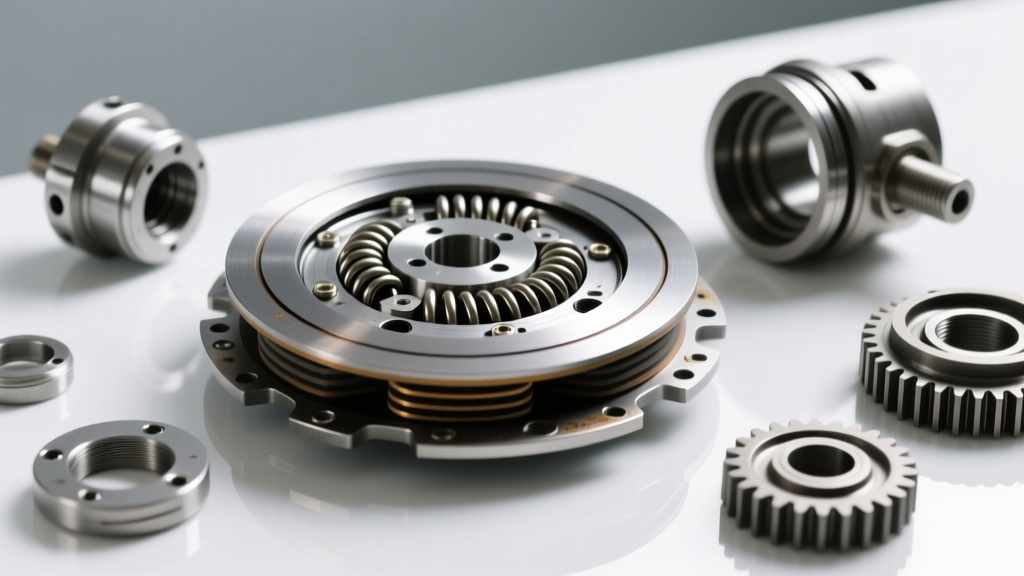
When the hydraulic system tests perfectly, the fault lies within the bell housing. Dual-Mass Flywheels (DMFs) are standard on nearly all modern diesel and turbocharged manual vehicles to dampen torsional vibrations. Inside a DMF, a series of heavy-duty arc springs separate the primary and secondary masses.
Dual-Mass Flywheel Thermal Warping
If a DMF is subjected to excessive slip, the internal grease breaks down and the arc springs can fatigue unevenly. This leads to intermittent clutch chatter that is highly RPM-dependent. A technician might test drive the vehicle and feel no vibration, only to have the customer complain of violent shuddering specifically at 1,800 RPM under moderate load in 4th gear. According to the Schaeffler REPXPERT knowledge center, verifying DMF health requires checking both the freeplay arc (typically 4 to 6 gear teeth) and the axial runout, which must not exceed 1.2mm on most LUK and Sachs units. Intermittent chatter is a hallmark of a DMF that is beginning to warp asymmetrically.
Hydraulic Throwout Bearing (HTOB) Preload Errors
In GM LS/LT and Ford Coyote applications utilizing an internal HTOB, the bearing must maintain a specific air gap or preload against the diaphragm spring fingers. If the engine block was recently decked, or if an aftermarket bell housing with incorrect stack-up tolerances was installed, the HTOB may over-extend. This causes the bearing to ride the fingers constantly, generating immense heat. The intermittent symptom here is slipping that only occurs after 30 minutes of driving, as the thermal expansion of the bearing piston eliminates the necessary clearance, effectively 'riding the clutch' without the driver's foot on the pedal.
Diagnostic Matrix: Intermittent Symptoms vs. Root Causes
Use the following matrix to cross-reference the specific conditions under which the intermittent fault occurs.
| Intermittent Symptom | Trigger Condition | Primary Suspect | Diagnostic Action |
|---|---|---|---|
| Delayed Engagement / Clunk | Cold Starts / 1st to 2nd Gear | Sticking Clutch Delay Valve (CDV) | Remove CDV, measure fluid flow rate, inspect for swelling |
| Sudden Pedal Drop / No Disengagement | High Ambient Heat / Stop-and-Go | Hydraulic Vapor Lock (Moisture in DOT 4) | Test fluid moisture content, inspect line routing near exhaust |
| RPM-Specific Chatter | 1,600 - 2,000 RPM Under Load | Dual-Mass Flywheel Arc Spring Fatigue | Measure DMF axial runout and rotational freeplay arc |
| Slipping After Prolonged Driving | 30+ Minutes / Highway Cruising | HTOB Over-Extension / Thermal Expansion | Measure clutch fork travel (external) or check HTOB preload shim |
| Random Release Bearing Squeal | Light Pedal Pressure / Idle | Pivot Ball Wear / Fork Binding | Inspect pivot ball for grooving, apply high-temp moly grease |
Step-by-Step Troubleshooting Protocol
When faced with an intermittent complaint, follow this strict sequence to avoid unnecessary transmission removals.
Step 1: The Hydraulic Pressure Decay Test
Connect a hydraulic pressure gauge to the slave cylinder bleed nipple. Have an assistant depress the clutch pedal with exactly 40 lbs of force. Hold for 60 seconds. If the pressure drops more than 15% over one minute, the master cylinder cup seal is internally bypassing. This bypass often only occurs when the fluid is warm and the seal is pliable, explaining the intermittent nature of the failure. Replace the master cylinder (e.g., Sachs SH5000 series) and flush with fresh DOT 5.1 fluid for its higher wet boiling point.
Step 2: Clutch Fork Travel Measurement
For external slave setups, mount a dial indicator on the bell housing to measure the physical travel of the clutch fork. Most OEM systems require between 0.450' and 0.550' of total travel to fully disengage the pressure plate. If the travel is inconsistent across multiple pedal pumps, you have aeration in the line or a failing slave cylinder return spring. Note: If you are working on a GM LS application with an external fork, ensure the pivot ball is not worn. A grooved pivot ball will alter the fulcrum geometry, causing the release bearing to bind intermittently on the diaphragm fingers.
Step 3: Flywheel Runout and Torque Verification
If the hydraulics are flawless and the transmission is pulled, verify the flywheel mounting. An improperly torqued flywheel can warp slightly under heat, causing intermittent contact loss. For example, VW/Audi 2.0 TSI applications require the DMF bolts to be torqued to 44 lb-ft, followed by a 90-degree turn, and a second 90-degree turn. GM LS applications utilizing ARP fasteners (part 245-2801) require exactly 74 lb-ft. Always use new, pre-lubricated bolts, as stretch-yield bolts that are reused will lose clamping force as the engine heat cycles.
Repair Costs and Part Sourcing Guidelines
Addressing intermittent issues requires high-quality OEM or OE-equivalent parts. Avoid white-box aftermarket kits, as their friction compounds and hydraulic seals are notorious for introducing new variables into the system.
- LUK RepSet (e.g., Part # 624 3155 00): Includes DMF, pressure plate, disc, and hardware. Expect to pay between $450 and $750 depending on the application.
- Sachs Hydraulic Master/Slave Assemblies: $120 to $250. Always replace the entire hydraulic circuit if internal bypassing is confirmed.
- Labor Costs: Transmission removal and reinstallation typically requires 5.0 to 8.0 hours. At an average independent shop rate of $150/hr in 2026, labor will range from $750 to $1,200.
Final Diagnostic Thoughts
Understanding how the clutch in a car work is only the first step; mastering the nuances of its failure modes is what separates a parts-changer from a true drivetrain specialist. Intermittent clutch problems are rarely ghosts in the machine; they are the direct result of thermal dynamics, fluid chemistry, and microscopic mechanical wear. By systematically isolating the hydraulic actuation from the mechanical friction assembly, you can accurately diagnose erratic behavior on the first attempt, saving time, money, and the frustration of a comeback repair.