The Acoustic Fingerprint: Decoding Differential Gear Problems
Differential gear problems rarely announce themselves with a check engine light. Instead, they communicate through a complex acoustic fingerprint—whines, rumbles, clunks, and chatter that vary with vehicle speed, load, and temperature. As an automotive drivetrain specialist, I have seen countless ring and pinion sets destroyed because a driver ignored a subtle coast-down whine or attributed limited-slip chatter to a failing transmission. In 2026, with vehicles pushing higher torque outputs and utilizing ultra-low viscosity synthetic gear oils for efficiency, the margin for error in differential diagnostics is razor-thin.
Whether you are troubleshooting a classic Ford 8.8-inch, a heavy-duty Dana 60, or a GM 10-bolt (8.5-inch), accurately identifying the source of the noise is the first step toward a successful repair. Misdiagnosis leads to unnecessary teardowns, wasted money, and compromised axle longevity. Below is a comprehensive, expert-level guide to diagnosing differential gear problems, focusing on noise isolation, fluid dynamics, and precision measurement.
Noise-to-Failure Mapping Table
| Noise Type | Operating Condition | Probable Mechanical Cause | Severity / Action Required |
|---|---|---|---|
| High-Pitched Whine | Deceleration (Coast-down) | Ring and pinion gear wear on the coast side; improper pinion depth. | High. Inspect gear pattern immediately. |
| Low-Frequency Rumble | Above 20 mph (Load & Coast) | Worn pinion shaft bearings (outer or inner race spalling). | Critical. Replace bearings before gear scoring occurs. |
| Metallic Knock / Clunk | Shifting from Reverse to Drive | Excessive ring gear backlash; worn cross-pin or spider gears. | Moderate. Check backlash and carrier tolerances. |
| Stuttering Chatter | Low-speed tight turns | Limited-slip clutch pack binding; missing or degraded friction modifier. | Low (Mechanical). Perform fluid service with correct additive. |
| Howling / Siren Noise | Constant speed (45-65 mph) | Gear tooth pitting; incorrect gear oil viscosity causing micro-welding. | High. Requires complete R&P replacement. |
Fluid Dynamics & The LSD Chatter Phenomenon
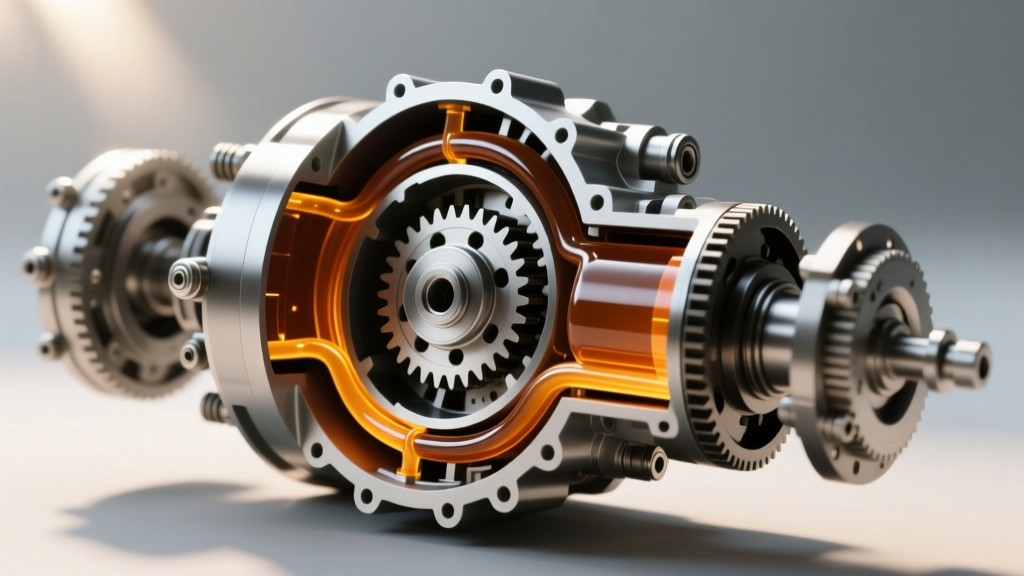
Before tearing into the differential cover, you must rule out fluid-induced differential gear problems. The majority of low-speed cornering chatter in Limited Slip Differentials (LSDs)—such as Ford's Traction-Lok or GM's G80/Eaton MLocker—is entirely fluid-related. Clutch-type LSDs require a specific friction modifier to allow the clutch packs to slip smoothly under differential speed conditions. Without it, the clutches experience a stick-slip phenomenon, generating severe chatter that can eventually shatter the carrier or strip the spider gear pins.
Expert Tip: Never assume a generic "Limited Slip Compatible" 75W-90 GL-5 gear oil contains sufficient friction modifier for your specific application. OEM formulations vary wildly. For Ford 8.8 axles, I always recommend adding exactly 4 oz of OEM Ford XL-3 Friction Modifier (C6TZ-19548-A) or an equivalent high-quality synthetic additive like Red Line Limited Slip Friction Modifier. For GM 10-bolt axles, GM LSD Additive (88900333) is the gold standard. Perform three figure-eight maneuvers in a wet parking lot after the fluid change to work the modifier into the composite clutch material.
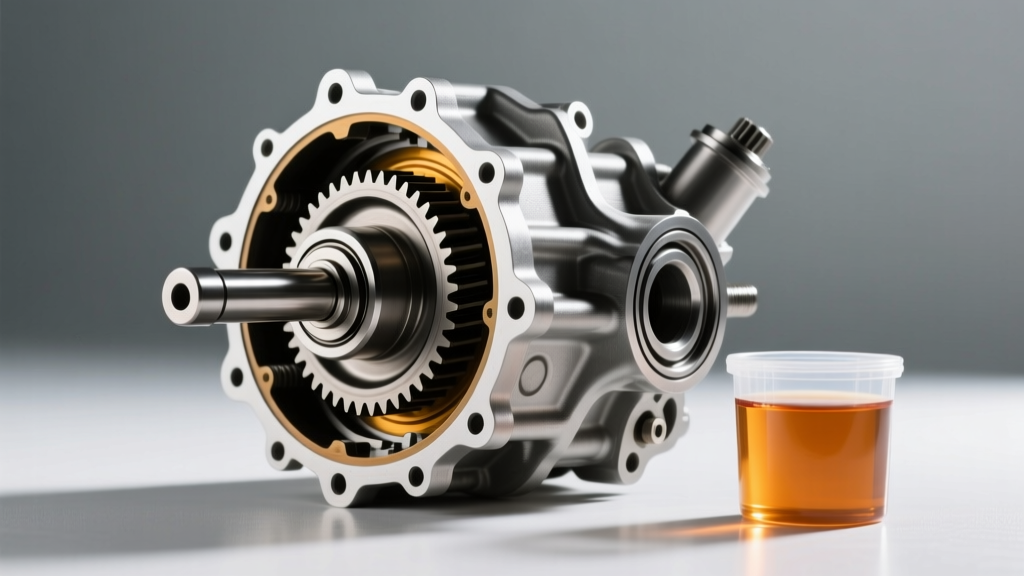
Furthermore, modern synthetic gear oils (like Amsoil Severe Gear or Motul Gear 300 75W-90) offer vastly superior shear stability and film strength compared to conventional mineral oils. According to Yukon Gear & Axle's technical documentation, maintaining the correct API GL-5 specification is non-negotiable for hypoid gears, as the extreme sliding action of the hypoid offset requires the sulfur-phosphorus anti-wear additives found only in GL-5 formulations. Using GL-4 in a hypoid differential will result in catastrophic gear scoring within a few thousand miles.
Precision Measurements: Backlash and Preload Specs
If the fluid is verified and the noise persists as a whine or clunk, you are likely dealing with out-of-spec backlash or bearing preload. Backlash is the amount of free rotational movement between the ring and pinion gears. Too little backlash causes binding and overheating; too much causes impact loading and clunking.
When diagnosing differential gear problems, a magnetic-base dial indicator reading in 0.001-inch increments is mandatory. Guessing by hand is a hallmark of amateur mechanics. Below are the factory baseline specifications for three of the most common solid axles on the road:
| Axle Type | Target Backlash | Pinion Bearing Preload (New) | Ring Gear Bolt Torque |
|---|---|---|---|
| Ford 8.8-Inch (Super 8.8) | 0.008" - 0.012" | 16 - 29 in-lbs | 70 - 85 ft-lbs (with Loctite 243) |
| Dana 44 (Standard / HD) | 0.006" - 0.010" | 15 - 25 in-lbs | 55 - 65 ft-lbs |
| GM 8.5" 10-Bolt | 0.006" - 0.010" | 15 - 25 in-lbs | 65 - 75 ft-lbs |
Pro-Tip on Pinion Preload: Never measure pinion preload by torqueing the pinion nut to a specific foot-pound spec. The crush sleeve (or solid spacer shims) dictates the actual bearing crush. You must use an inch-pound beam-style torque wrench (such as the Intercomp 141008) to measure the rotational resistance of the pinion yoke with the carrier removed. If you are reusing old pinion bearings, subtract 3-5 in-lbs from the "new" specs above.
Pattern Reading: Decoding the Contact Patch
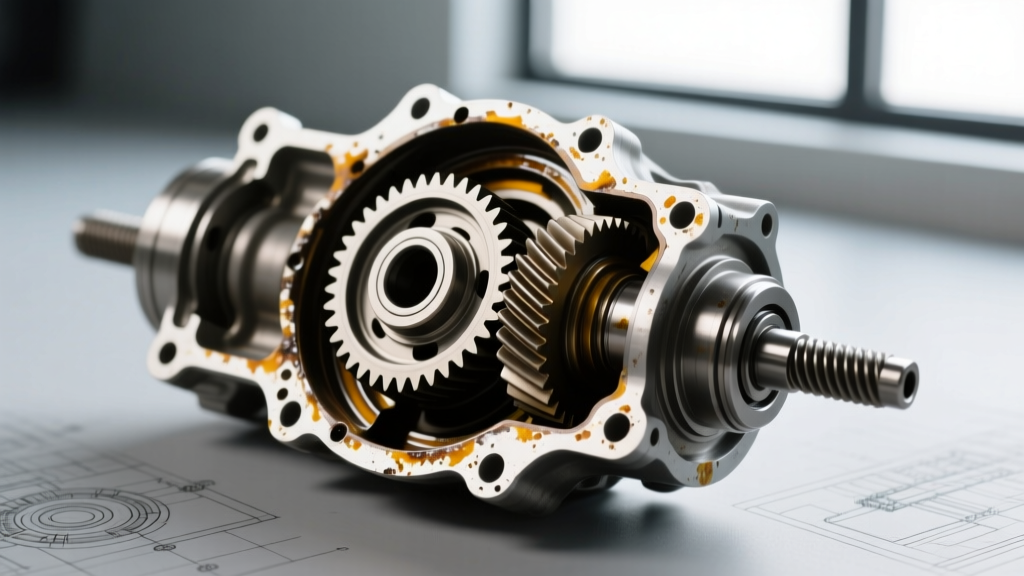
When replacing a ring and pinion set due to severe differential gear problems, the gear contact pattern is your only visual confirmation of correct setup. Using a high-contrast gear marking compound (Yellow Iron Oxide for used gears, Prussian Blue for new), apply a thin, even coat to three or four ring gear teeth on both the drive and coast sides.
Rotate the pinion against the ring gear under moderate drag (apply a rag to the ring gear to create resistance). The resulting pattern tells the exact story of your shim stack:
- Drive Side (Convex): Under load, the pattern should sit dead center from top (face) to bottom (flank), and slightly biased toward the toe (inner edge). As load increases, the pattern will naturally migrate toward the heel (outer edge).
- Coast Side (Concave): Should mirror the drive side but is generally less critical for load-bearing capacity.
- Pattern Too Deep (Toward Heel): The pinion is too close to the ring gear centerline. You must remove pinion depth shims to push the pinion away from the ring gear.
- Pattern Too Shallow (Toward Toe): The pinion is too far away. You must add pinion depth shims.
- Pattern Too High (Toward Face): Backlash is too tight. Move the ring gear away from the pinion using carrier shims or adjuster nuts.
For a deep dive into visual pattern reading, Ring-Pinion.com's installation guides offer excellent photographic references that every drivetrain technician should keep bookmarked.
Advanced Diagnostic Tools & Thermal Analysis
In 2026, professional drivetrain diagnostic bays utilize more than just a stethoscope. Two tools are essential for isolating differential gear problems from wheel bearing or transmission issues:
- Wireless Chassis Ears: Devices like the STEELMAN Pro wireless chassis ear allow you to clamp piezoelectric microphones directly to the differential housing, the transmission tail shaft, and the wheel hubs simultaneously. Driving the vehicle while switching audio channels instantly isolates whether a rumble is a failing wheel bearing (high-frequency, isolated to one corner) or a pinion bearing (low-frequency, centered on the axle).
- Infrared Thermal Cameras: Bearing friction generates heat long before it generates catastrophic noise. After a 20-mile highway drive, scan the differential pinion snout and carrier bearing caps. A pinion snout temperature exceeding 180°F (82°C) or a temperature differential of more than 30°F compared to the differential cover indicates severe pinion bearing preload failure or lack of lubrication at the pinion head.
Cost Expectations and Rebuild Economics
Understanding the financial reality of differential repairs helps in advising customers or budgeting for a personal project. Diagnosing differential gear problems is only half the battle; executing the repair requires specific components.
- Ring and Pinion Sets: A quality USA-forged 8620 carbon steel R&P set (e.g., Yukon, Motive Gear, or Dana Spicer) typically costs between $250 and $450. For high-horsepower or off-road applications, upgrade to 9310 Chromoly sets, which run $500 to $750 but offer superior impact resistance.
- Master Rebuild Kits: Never reuse bearings or crush sleeves. A master kit (Timken bearings, high-grade seals, shims, ring gear bolts, and crush sleeve) costs $150 to $250. Part numbers like the Yukon YGK001 (for Ford 8.8) are industry staples.
- Specialty Tools: If doing it yourself, budget $150 for a bearing puller/press kit, an inch-pound torque wrench, and a dial indicator.
- Professional Labor: A complete differential setup (removing, pressing, shimming, and patterning) takes a seasoned tech 3 to 5 hours. At standard 2026 independent shop rates ($140-$190/hr), expect labor to range from $500 to $950.
Ultimately, resolving differential gear problems requires patience, an ear for mechanical acoustics, and an uncompromising adherence to factory tolerances. By combining fluid analysis, thermal diagnostics, and precision measurement, you can accurately diagnose axle failures and execute rebuilds that outlast the vehicle itself.