The Misdiagnosis Trap: Friction Disc vs. Cable Stretch
When building a performance vehicle, whether it is a track-prepped Honda K-Series swap or a classic V8 Mustang restomod, the clutch system is the critical link between your engine's torque and the drivetrain. Many enthusiasts immediately assume that a slipping or poorly engaging pedal means the friction disc is glazed or the pressure plate fingers are fatigued. However, one of the most common—and costly—mistakes in the garage is tearing down the transmission to perform a full clutch replacement, only to discover the friction material is perfectly fine and the actual culprit is a stretched, fraying, or improperly routed clutch cable.
Understanding the definitive signs you need a clutch replacement requires a systematic diagnostic approach. Furthermore, as performance clutches demand higher pedal effort, evaluating the structural integrity of your cable system is mandatory. In this 2026 performance upgrade guide, we will break down the exact symptoms of clutch system failure, how to isolate the issue, and the real-world cost to replace clutch cable assemblies versus executing a full drivetrain teardown.
5 Critical Signs You Need a Clutch Replacement
Before ordering a new sprung-hub ceramic disc or a twin-disc setup, you must verify that the friction assembly is actually failing. Here are the primary indicators that your clutch pack has reached the end of its service life.
1. High-Shift Point Slippage Under Load
The most undeniable sign of a worn friction disc is RPM flare without a corresponding increase in vehicle speed. If you are in third or fourth gear, apply wide-open throttle (WOT), and watch the tachometer climb 500+ RPMs while the speedometer lags, your friction material is depleted. In performance applications running high-clamp-load pressure plates (like an ACT XT or Spec Stage 3+), slippage usually indicates that the disc has been overheated and glazed, or the flywheel surface has developed hard spots and micro-cracks.
2. Spongy or Inconsistent Pedal Engagement
If the engagement point of the clutch pedal wanders—sometimes catching near the floor, other times at the top of the pedal travel—the issue is rarely the friction disc itself. This is a classic symptom of air in a hydraulic line or, in cable-driven systems, a failing clutch cable housing that is expanding and contracting under pedal pressure. However, if the pedal feels consistently 'dead' and lacks the mechanical resistance of the pressure plate diaphragm springs, the pressure plate fingers may have yielded from excessive heat cycling.
3. Inability to Engage First Gear at a Stop
When you press the clutch pedal to the floor at a dead stop and the transmission grinds or refuses to slide into first gear, the clutch is not fully disengaging. This 'dragging' condition can be caused by a warped friction disc, a failed pilot bearing, or insufficient cable throw. If your cable adjustment is maxed out and the fork is not traveling its full specified arc, the disc remains partially coupled to the flywheel.
4. Severe Chatter During Takeoff
Violent shuddering when releasing the pedal in first gear is a hallmark of a contaminated or mechanically compromised clutch. Oil ingress from a leaking rear main seal or transmission input shaft seal will ruin a friction disc instantly. Alternatively, broken marcel springs (the wavy springs beneath the friction material designed to cushion engagement) will cause aggressive, un-dampened chatter that can eventually shatter the transmission bellhousing.
5. Burnt Odor and Excessive Heat
The acrid smell of burning asbestos-free organic (Kevlar/carbon) friction material is unmistakable. If you smell this after a hard launch or heavy traffic, the clutch has slipped to the point of thermal degradation. Once a disc exceeds 600°F, the resin binders break down, and the clutch must be replaced immediately.
The Hidden Culprit: Evaluating the Clutch Cable
Why do so many performance builders misdiagnose these signs? The answer lies in the physics of modern aftermarket pressure plates. An OEM clutch pressure plate might exert 1,800 lbs of clamp load. A performance unit like the ACT Heavy Duty pressure plate can exert upwards of 3,200 lbs. This massive increase in clamping force transfers directly through the release fork to the clutch cable.
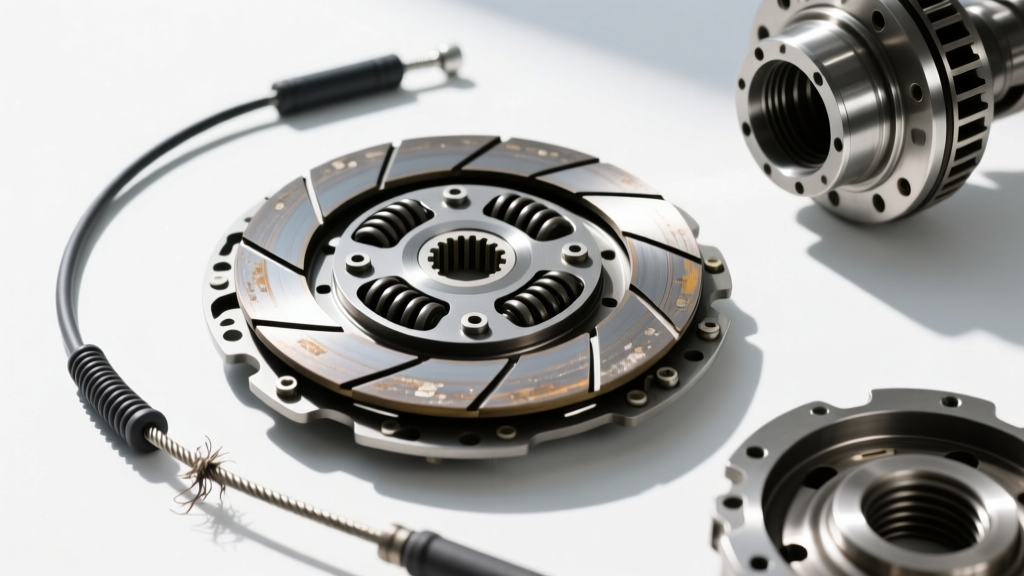
OEM cables are typically constructed of braided steel encased in a plastic-lined rubber sheath. Under the immense tension of a performance pressure plate, the rubber sheath compresses, and the inner steel wire stretches. This results in a loss of 'free play.' Without proper free play, the release bearing is constantly pressed against the pressure plate fingers, causing premature wear, slippage, and eventual catastrophic failure. Therefore, recognizing the signs you need a clutch replacement must always include a physical inspection of the cable routing, housing integrity, and free-play measurement.
Breaking Down the Cost to Replace Clutch Cable Systems
If your diagnostic checks reveal that the friction disc is healthy but the cable is stretched, frayed, or inadequate for your power levels, you must address the actuation system. As of 2026, the cost to replace clutch cable assemblies varies wildly based on whether you choose an OEM replacement, a performance braided line, or a full hydraulic conversion.
| Upgrade Path | Part Cost (2026) | Labor / Install Time | Pedal Effort | Best Application |
|---|---|---|---|---|
| OEM Replacement Cable | $35 - $75 | 1 - 2 Hours ($120) | Stock (Soft) | Daily Drivers / Stock Rebuilds |
| Braided Stainless Cable | $140 - $220 | 1 - 2 Hours ($120) | Firm / Direct | Track Cars / High-Torque Swaps |
| Hydraulic Throwout Bearing | $450 - $850 | 4 - 6 Hours ($500+) | Adjustable / Smooth | Pro-Touring / 600+ HP Builds |
Labor and Part Realities
When calculating the total cost to replace clutch cable setups, labor is highly dependent on vehicle architecture. On a classic Foxbody Mustang, routing a new cable through the firewall and under the exhaust headers can take two hours of frustrating labor. Conversely, on a Honda Civic EG, the cable is highly accessible, and a swap can be completed in 45 minutes. For those installing braided stainless steel cables from manufacturers like Fidelity Automotive, the elimination of the rubber sheath completely eradicates housing compression, providing a 1:1 pedal ratio that is essential for modulating high-horsepower launches.
Performance Upgrades: When to Ditch the Cable Entirely
If you are already pulling the transmission to perform a full clutch replacement due to a shattered friction disc or upgraded power goals, this is the optimal time to evaluate a hydraulic conversion. Companies like Modern Driveline offer complete hydraulic clutch conversion kits for classic cable-driven vehicles. By replacing the mechanical cable with a master cylinder, hard lines, and a hydraulic release bearing, you eliminate cable stretch, snapping, and firewall flex entirely.
While a hydraulic conversion pushes the budget well past the standard cost to replace clutch cable systems, the consistency it provides on a road course or drag strip is invaluable. Hydraulic systems allow for precise pedal stop adjustments, ensuring you never over-stroke the pressure plate fingers, which can lead to bending and catastrophic disengagement failure.
Installation Specs and Torque Requirements
Whether you are replacing a cable or installing a new clutch assembly, adhering to exact torque specifications is non-negotiable in performance applications. Improper torque on the bellhousing or clutch fork pivot can alter the geometry of the cable pull, leading to premature cable failure.
- Clutch Fork Pivot Ball: Typically 21-25 lb-ft. Use high-temp thread locker.
- Bellhousing to Block (Honda B/K-Series): 10mm bolts require 34 lb-ft; 12mm bolts require 47 lb-ft.
- Bellhousing to Block (Ford T5/Tremec): Usually 35-40 lb-ft depending on bolt grade.
- Cable Free-Play Adjustment: You MUST maintain 0.50' to 0.75' of free play measured at the release fork. Zero free play will destroy your release bearing and cause the exact slippage signs that mimic a worn friction disc.
Expert Verdict: Diagnose Before You Disassemble
Recognizing the signs you need a clutch replacement is only half the battle; accurately isolating the failure point separates professional builders from amateurs who throw parts at a problem. Before committing to a $1,200 clutch kit and a weekend of lying under a car on jack stands, measure your cable free play, inspect the firewall for flex, and evaluate the housing for micro-tears. If the friction material is indeed dead, use the teardown as an opportunity to upgrade your actuation system. Factoring in the relatively low cost to replace clutch cable assemblies with high-quality braided units, or investing in a hydraulic conversion, will ensure your new high-clamp-load clutch performs flawlessly at the track.