Understanding the Role of 75W-85 Gear Oil in Modern Drivetrains
As automotive engineering has evolved to prioritize fuel economy and reduce parasitic drivetrain losses, manufacturers have increasingly shifted away from heavier 75W-90 and 80W-90 gear oils. Today, if your owner's manual specifies a differential oil 75w 85 grade, it is likely for a front differential in a modern 4WD system (such as the Toyota Tacoma, 4Runner, or Lexus GX) or a specialized all-wheel-drive transfer case. The 75W-85 viscosity provides a critical balance: it flows rapidly at sub-zero temperatures to protect ring and pinion gears during cold starts, yet maintains a sufficient hydrodynamic film under high-torque loading.
However, preventive maintenance is not just about swapping fluids at arbitrary mileage intervals; it is about interpreting the chemical and physical story the used fluid tells you. By analyzing the color, consistency, and odor of your differential oil, you can diagnose internal axle health, seal integrity, and bearing wear long before a catastrophic failure occurs.
The Baseline: Fresh 75W-85 Characteristics
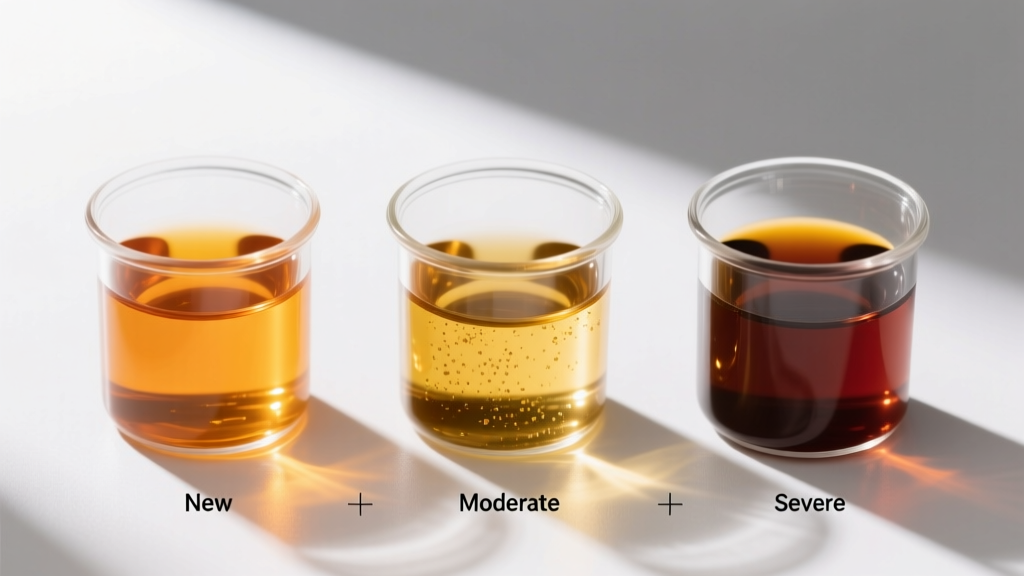
Before diagnosing used fluid, you must understand the baseline. Fresh 75W-85 GL-5 gear oil is typically a clear, translucent amber or light honey color. Some premium synthetic manufacturers use dyes for brand differentiation—Amsoil often uses a blue dye, while Red Line uses a distinct red. The most prominent characteristic of fresh GL-5 fluid is its odor. The sulfur-phosphorus Extreme Pressure (EP) additives required to protect hypoid gear sets emit a strong, pungent smell reminiscent of rotten eggs or garlic. This is entirely normal and indicates the presence of the active chemistry needed to prevent microwelding on the gear teeth.
Visual and Olfactory Diagnostic Matrix
When you pull the drain plug, do not immediately dump the fluid into a recycling jug. Catch it in a clean, clear pan and inspect it under bright light. Use the following diagnostic matrix to interpret your findings.
| Fluid Appearance | Odor Profile | Root Cause Analysis | Preventive Action Required |
|---|---|---|---|
| Milky, Opaque, Chocolate Milk | Sweet, Musty, or Acidic | Water intrusion via submerged axle breather or failed pinion seal. Emulsification destroys the hydrodynamic film. | Flush immediately. Inspect breather hoses and reseal axle. Check bearings for pitting. |
| Jet Black, Thick Sludge | Sharp, Burnt, Acrid | Severe thermal oxidation. Base oil has broken down due to excessive heat (often from dragging brakes or heavy towing). | Inspect parking brake shoes inside the axle hat. Upgrade to synthetic 75W-85. |
| Dark Brown with Silver Glitter | Metallic, Sulfuric | Normal steady-state wear of hypoid gears and thrust washers. The EP additives are actively sacrificial. | Standard drain and fill. No internal teardown required. |
| Gritty, Black Paste | Burnt Toast | Clutch pack degradation in Limited Slip Differentials (LSD). Friction modifiers have sheared and clutches are glazing. | Teardown required. Replace LSD clutch packs and friction modifier. |
Decoding the Drain Plug Magnet
Almost all modern differential drain plugs feature a neodymium or ferrite magnet designed to capture ferrous debris before it circulates through the pinion and carrier bearings. Interpreting the magnet is a core skill in drivetrain preventive maintenance.
- Fine, Paste-Like Fuzz: This is normal. Hypoid ring and pinion gears experience a microscopic amount of sliding friction. A thin layer of metallic paste on the magnet indicates healthy, steady-state wear. Wipe it off and proceed with the service.
- Needle-Like Shards or Splinters: This indicates active spalling or fatigue flaking on the bearing rollers or gear teeth. The differential requires immediate teardown and inspection. Continuing to drive will result in total axle seizure.
- Brass or Bronze Flakes: Synchronizers in manual transmissions are brass, but in a differential, brass-colored flakes point to the thrust washers behind the side gears wearing through. This requires a carrier rebuild to restore proper gear backlash.
- Large, Jagged Chunks: Catastrophic failure. A tooth has likely sheared off the ring gear, or the pinion bearing cage has shattered. Do not reinstall the drain plug; prepare for a full differential replacement or rebuild.
The Chemistry of Water Intrusion and Emulsification
Water is the ultimate enemy of the hypoid gear set. When water enters the differential—usually through a cracked axle breather tube during water fording or a degraded pinion seal—it shears the oil's surface tension, creating an emulsion. According to technical bulletins from Lubrizol, the sulfur-phosphorus EP additives in GL-5 gear oils are highly reactive to water. When mixed, they form sulfuric and phosphoric acids. This rapid drop in pH attacks the copper, bronze, and steel alloys within the carrier assembly, leading to microscopic pitting on the bearing races. If your 75W-85 fluid looks like a milkshake, the damage to the bearings may have already begun, necessitating a complete flush with a cheap flushing oil before refilling with premium synthetic.
Thermal Degradation and Varnish Formation
Unlike engine oil, gear oil is not contaminated by combustion byproducts like soot or unburnt hydrocarbons. Therefore, gear oil does not 'wear out' in the traditional sense; rather, the additive package depletes and the base oil oxidizes. When 75W-85 oil is subjected to sustained temperatures above 250°F (121°C)—common when towing heavy loads up mountain grades—the base oil oxidizes and forms a hard, amber varnish on the gear teeth. This varnish acts as a thermal insulator, preventing the gear oil from drawing heat away from the metal, which creates a destructive feedback loop of rising temperatures. Adhering to the SAE J2360 standard for driveline lubricants ensures your chosen fluid has the necessary oxidation inhibitors to prevent varnish formation.
Real-World Service Specifications: Toyota & Lexus Applications
The 75W-85 viscosity is most famously specified by Toyota and Lexus for their front independent suspension (IFS) differentials and specific AWD transfer cases. For example, the 2016-2023 Toyota Tacoma and 4Runner front differentials require approximately 0.9 to 1.2 Liters of 75W-85 GL-5 gear oil.
OEM Part Number: Toyota Genuine 08885-81016 (Typically $12–$16 per liter at the dealer).
Aftermarket Equivalents: Amsoil Severe Gear 75W-85, Red Line 75W85, or Valvoline SynPower 75W-85.
Crush Washers: Never reuse aluminum crush washers. Toyota Part # 90430-18008 (or equivalent) costs less than $2 and prevents weeping.
Torque Specifications:
Front Differential Drain Plug: 29 ft-lbs (39 Nm)
Front Differential Fill Plug: 29 ft-lbs (39 Nm)
Master Technician Rule: ALWAYS remove the fill plug before removing the drain plug. If the fill plug is seized, rounded off, or cross-threaded, you will be left with an empty differential and a vehicle that cannot be driven to a shop for extraction.
Limited Slip Differentials (LSD) and Friction Modifiers
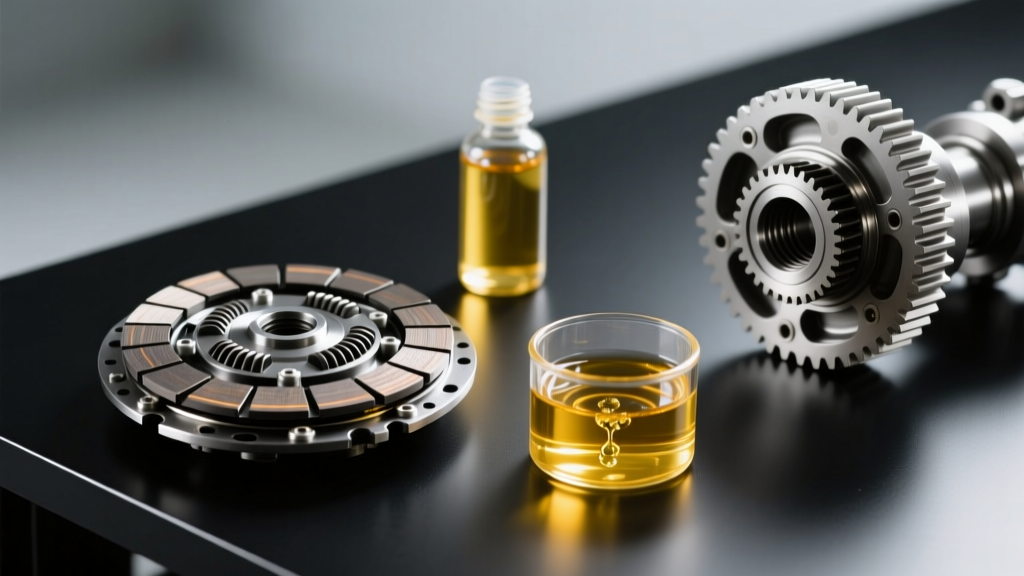
If your 75W-85 application includes a clutch-type Limited Slip Differential, fluid condition takes on an additional olfactory warning sign. Clutch packs require long-chain organic friction modifiers to prevent chatter during low-speed cornering. Over time, the friction material from the clutches sheds into the oil, turning it opaque black and giving it a distinct 'burnt toast' smell. While some modern synthetic 75W-85 fluids come pre-blended with LSD additives, severe use requires a standalone friction modifier top-off (typically 2-4 oz). If chatter persists after a fluid change and modifier addition, the clutch packs have glazed and require physical replacement.
Establishing a Preventive Maintenance Interval
While many manufacturers claim their differential fluid is 'lifetime,' real-world tribology data discussed extensively on platforms like BITOG Gear Oil Analysis proves otherwise. For normal commuting, a 60,000-mile interval is sufficient. However, if your vehicle is subjected to 'severe duty'—defined as frequent water fording, heavy towing, off-road use, or sustained highway speeds in extreme desert heat—the 75W-85 fluid should be sampled and replaced every 30,000 miles. The cost of a DIY fluid swap is roughly $25-$40, a fraction of the $1,500+ required to replace a scored ring and pinion set.