The Critical Role of Gear Oil in Axle Health
When performing preventive maintenance on differentials in cars, SUVs, and light trucks, the condition of the gear oil is the single most accurate indicator of internal hardware health. The differential operates under extreme shear forces and high thermal loads, particularly in hypoid gear sets where the pinion gear sits below the centerline of the ring gear. This sliding friction requires specialized Extreme Pressure (EP) additives to prevent metal-on-metal welding.
As of 2026, while many electric vehicles utilize integrated drive units with specialized dielectric fluids, traditional internal combustion and hybrid vehicles still rely heavily on conventional API GL-5 gear oils. Learning to read the color, smell, and texture of this fluid allows you to predict catastrophic failures before they leave you stranded.
Visual Diagnostics: Decoding Differential Fluid Color
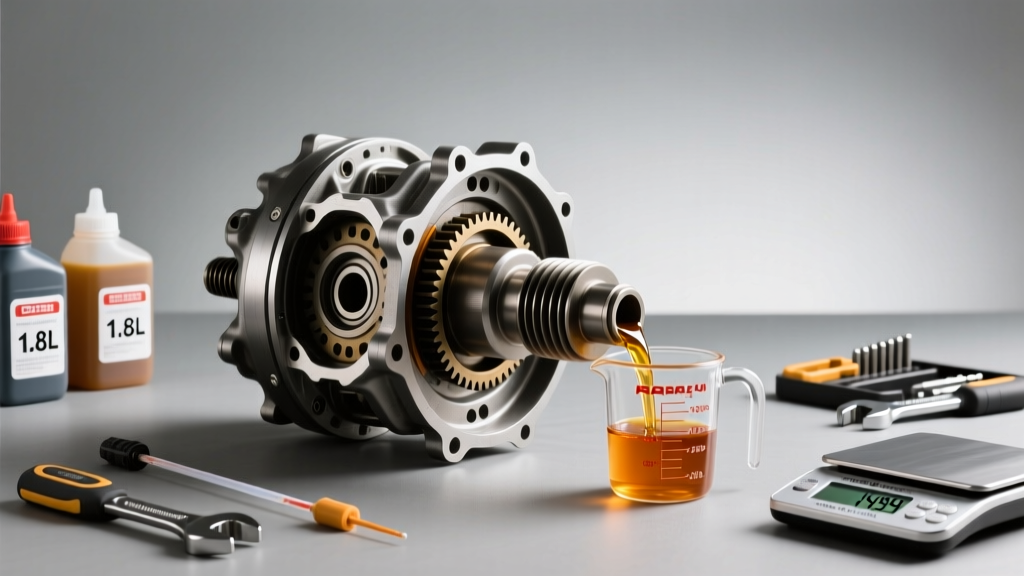
Extracting a fluid sample via the fill plug or by dropping the differential cover provides immediate visual clues about the differential's operating environment and wear state.
Amber to Honey (New or Healthy Condition)
Fresh synthetic 75W-90 or 80W-90 gear oil is naturally translucent, ranging from pale amber to a rich honey color. This indicates that the sulfur-phosphorus EP additive package is intact, the base oil has not oxidized, and no significant metallic wear or moisture intrusion is present. If your fluid looks like this, simply re-seal the housing and adhere to the manufacturer's service interval.
Dark Brown or Opaque Black (Thermal Breakdown and Oxidation)
Gear oil that has turned opaque black is a sign of severe thermal degradation and oxidation. Hypoid gears generate immense localized heat. When the oil exceeds its thermal stability threshold (typically around 250°F to 300°F at the gear tooth contact patch), the base oil begins to crack and form carbon sludge. This is common in vehicles used for heavy towing, repeated track days, or off-road crawling without adequate aftermarket differential covers for heat dissipation.
Milky, Cloudy, or 'Chocolate Milk' (Water Intrusion)
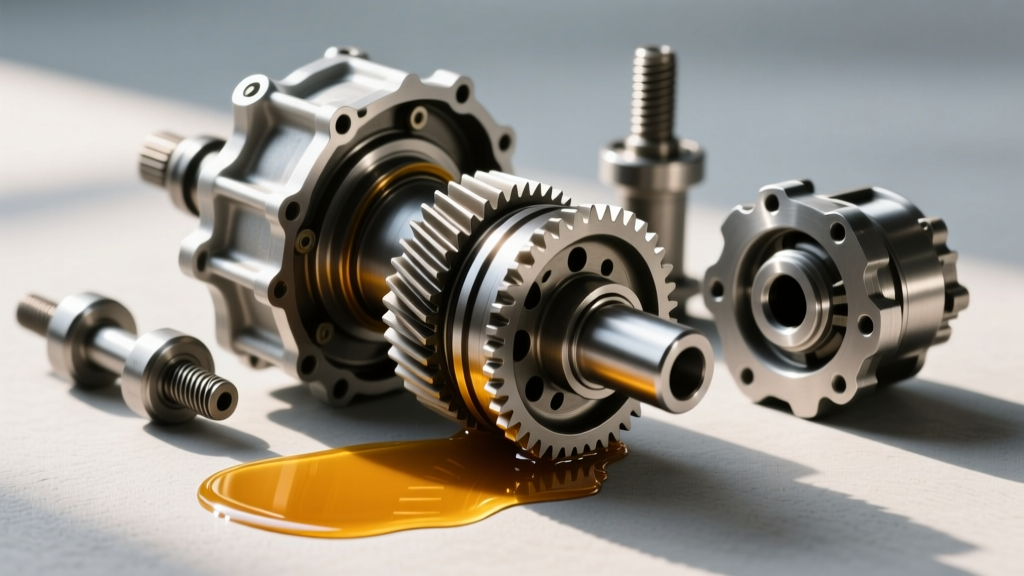
If the fluid resembles a milkshake or coffee with creamer, water has emulsified with the gear oil. This occurs when moisture bypasses the axle seals or is sucked in through a clogged or submerged axle breather tube. When a hot differential housing is suddenly cooled by driving through deep water, the rapid contraction of internal air creates a vacuum, pulling water past the breather valve. Water destroys the load-bearing film of GL-5 oil, leading to rapid bearing pitting and rust on the ring and pinion gears.
Visible Metallic Glitter or Shavings (Catastrophic Wear)
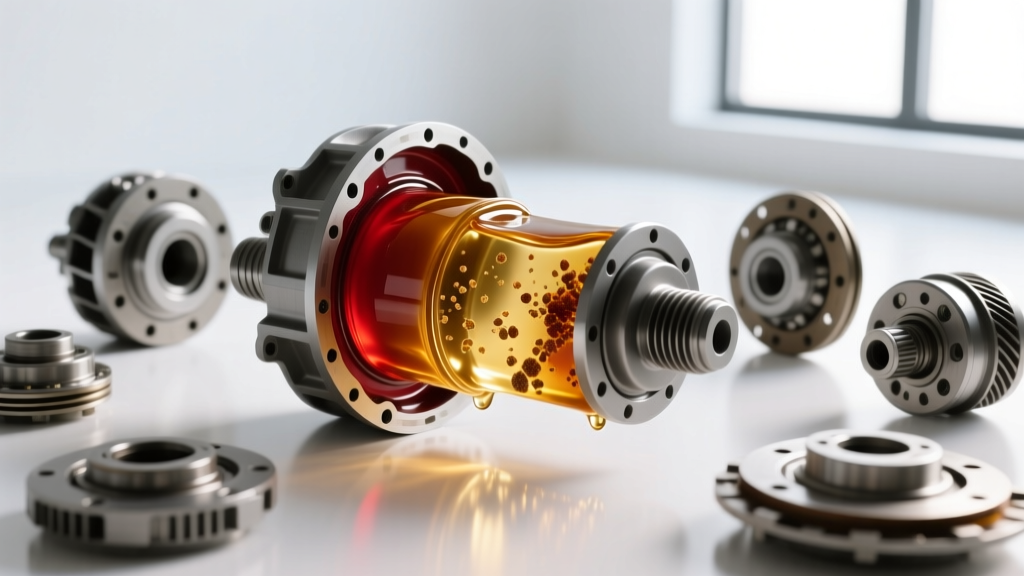
While a very fine, almost imperceptible metallic dust on the magnetic drain plug is normal for the first 10,000 miles of a new gear set, visible glitter or chunky shavings suspended in the fluid indicate active destruction. Fine glitter points to thrust bearing or carrier bearing wear, while larger, jagged flakes suggest the hypoid gear teeth are spalling or the limited-slip clutch packs are disintegrating.
Olfactory and Tactile Diagnostics
Color only tells half the story. Gear oil has a distinct, pungent sulfur odor due to the EP additives. However, a sharp, acrid smell similar to burnt brake pads indicates that the limited-slip differential (LSD) clutch packs are slipping and overheating. This is highly common in clutch-type LSDs (like the Auburn or Eaton Posi) when the incorrect fluid is used or the required friction modifier (e.g., ACDelco 10-4005) has depleted.
Rubbing a drop of fluid between your thumb and index finger should feel smooth and viscous. If you feel grittiness or micro-abrasions, the oil is saturated with silica (dirt) or metallic particulates, meaning the fluid's suspension capabilities have failed and the oil must be flushed immediately.
2026 Considerations: EV and Hybrid Drive Units
It is crucial to note that modern EVs and PHEVs often house the differential inside the Electric Drive Unit (EDU), sharing fluid with the electric motor stator. These systems require specialized low-conductivity, dielectric gear oils (such as specific Dexron ULV variants or OEM-specific e-fluids). Never put standard GL-5 gear oil into an EDU, as the sulfur-phosphorus additives can conduct electricity and short-circuit the motor windings. Always consult the 2026 OEM service manual for EDU-equipped vehicles.
Differential Fluid Condition Diagnostic Matrix
| Fluid Appearance | Odor Profile | Texture / Feel | Probable Root Cause | Required Corrective Action |
|---|---|---|---|---|
| Translucent Amber | Mild Sulfur | Smooth, Viscous | Normal, Healthy Operation | None; Re-seal and monitor |
| Opaque Black | Burnt / Acrid | Smooth but thin | Thermal breakdown, clutch slip | Flush, refill, add friction modifier |
| Milky / Cloudy | Sour / Musty | Emulsified, Slimy | Water ingress via breather/seal | Flush, replace breather, inspect seals |
| Dark with Glitter | Heavy Sulfur / Iron | Gritty, Abrasive | Bearing wear, gear spalling | Tear down, inspect bearings and gears |
Preventive Maintenance: Specifications, Torques, and Costs
Ignoring fluid condition leads to costly rebuilds. A standard differential rebuild (new ring and pinion, master bearing kit, seals) costs between $1,800 and $3,500 at a drivetrain specialty shop in 2026. Conversely, a preventive fluid service is a fraction of the cost.
Fluid Selection and Pricing
- Standard Synthetic 75W-90 GL-5: Ideal for daily driving and light towing. Examples include AMSOIL Severe Gear 75W-90 or Motul Gear 300. Expect to pay $22 to $28 per quart.
- Heavy Duty 75W-140 GL-5: Recommended for severe towing or off-road use to maintain film strength at extreme temperatures, though it increases parasitic rolling resistance.
- LSD Friction Modifier: Required for clutch-type LSDs. A 4oz bottle of GM ACDelco 10-4005 or Ford XL-3 costs $8 to $12. Note: Torsen (helical) and Detroit Locker (gear-type) differentials do not require friction modifiers.
Critical Torque Specifications
Over-torquing differential cover bolts or fill plugs is a leading cause of stripped threads and warped housings. Always use a calibrated inch-pound or low-range torque wrench. Reference data from Yukon Gear & Axle Technical Resources and OEM manuals:
- GM 8.625-inch (Camaro/Silverado): Fill plug 24 lb-ft (32 Nm).
- Ford 8.8-inch (Mustang/F-150): Cover bolts 28 lb-ft (38 Nm); Fill plug 33 lb-ft (45 Nm).
- Subaru R160/R180 Rear: Fill plug 33 lb-ft (45 Nm).
- Dana 44 (Jeep/Trucks): Cover bolts 30 lb-ft (41 Nm).
Step-by-Step Fluid Sampling Protocol
To accurately assess the fluid without introducing contaminants, follow this extraction protocol:
- Warm the Axle: Drive the vehicle for 15-20 minutes to bring the gear oil up to operating temperature. Warm oil flows faster and keeps metallic particulates in suspension for a more accurate sample.
- Clean the Area: Thoroughly degrease the fill plug, drain plug, or differential cover perimeter. Brake cleaner works well, but ensure it evaporates completely before opening the housing.
- Extract the Sample: If using a fluid extraction pump, insert the tube through the fill hole, aiming for the bottom of the housing where heavy particulates and water settle. If dropping the cover, position a clean, lint-free glass or clear plastic catch pan directly under the drain stream to observe the color and flow rate.
- Inspect the Magnet: Wipe the magnetic drain plug or the internal housing magnet on a clean white paper towel. Assess the particulate size and volume.
- Refill to Specification: Most differentials are filled until the oil level is exactly flush with the bottom edge of the fill plug hole (typically 1.5 to 2.5 quarts for passenger cars, up to 3.5 quarts for heavy-duty trucks). Reinstall the plug and torque to spec.
Final Thoughts on Drivetrain Longevity
Treating differential fluid as a 'lifetime' component is a relic of outdated maintenance schedules. The extreme shear forces placed on hypoid gears and limited-slip clutches demand proactive monitoring. By decoding the color, smell, and texture of your gear oil, you transition from reactive, expensive repairs to proactive, cost-effective preventive maintenance. Whether you are maintaining a daily commuter, a track-prepped coupe, or a heavy-duty tow rig, the fluid is the lifeblood of the axle—read it carefully.