The Baseline: Dayun Summer 110-6 Manual Clutch Architecture
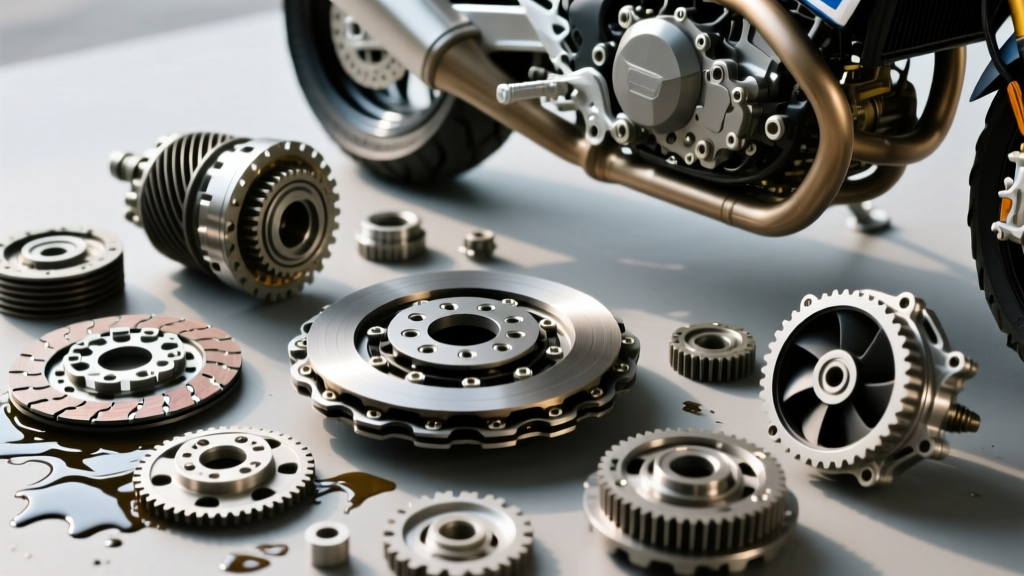
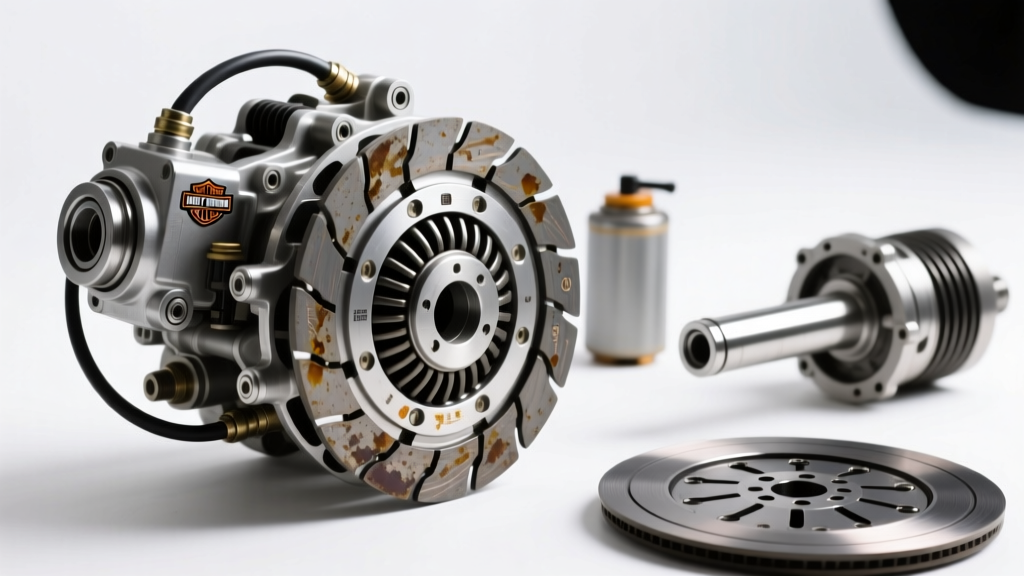
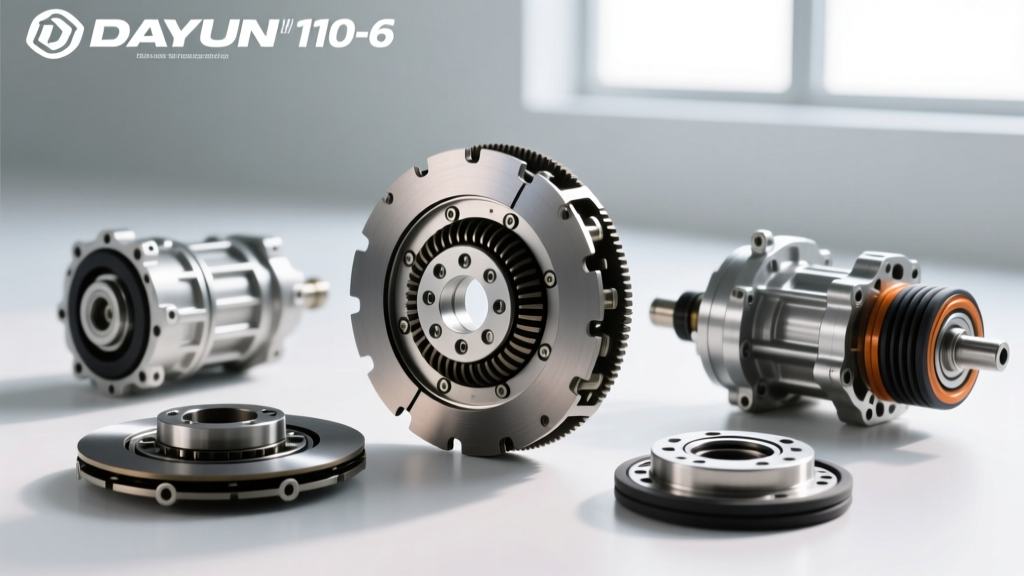
When evaluating small-displacement commuter motorcycles, the Dayun Summer 110-6 manual clutch represents the gold standard of mechanical simplicity and serviceability. Operating in a shared oil bath (typically 10W-40 JASO MA2), this wet multi-plate system relies on direct mechanical cable actuation. The architecture usually consists of four friction discs and four steel separator plates compressed by heavy-duty coil springs.
Diagnosing a slipping or dragging Dayun 110-6 manual clutch is straightforward. Technicians check for 10-15mm of cable freeplay at the lever. If slippage persists, the transmission cover is removed to measure friction plate thickness. The OEM specification is generally 3.0mm, with a hard service limit of 2.6mm. Clutch spring free-length is measured with calipers; if the springs compress below 36mm (from a nominal 38.5mm), they must be replaced to maintain adequate clamping force. Reassembly requires precise torque application: the clutch center lock nut is torqued to 38 Nm (28 lb-ft), while the spring bolts are secured at 8 Nm (71 lb-in). A complete OEM replacement kit costs between $25 and $45, making it an incredibly economical repair.
Decoding Clutch Problems in Automatic Transmissions
While the Dayun Summer 110-6 offers transparent mechanical feedback, modern automatic transmissions hide their clutch mechanisms deep within the casing or torque converter. Understanding clutch problems in automatic transmissions requires a paradigm shift from mechanical linkages to hydraulic pressures, electronic solenoids, and complex friction materials. In 2026, the three primary automatic clutch systems dominating the market are CVT centrifugal clutches, Dual-Clutch Transmissions (DCT), and Torque Converter Lock-Up Clutches (TCC).
1. CVT Centrifugal Clutch Glazing and Shudder
In continuously variable transmissions (common in scooters and light utility vehicles), the 'clutch' is a centrifugal dry-shoe mechanism that engages the clutch bell at a specific RPM threshold. The most prevalent clutch problem here is glazing. When the clutch shoes overheat due to aggressive stop-and-go riding or a worn contra-spring, the friction material hardens and glassifies. This results in severe take-off shudder and delayed engagement. Unlike the Dayun manual clutch, which slips progressively, a glazed CVT clutch will grab violently or slip endlessly, generating massive heat that can warp the aluminum clutch bell.
2. DCT Friction Pack Degradation and Calibration
Dual-Clutch Transmissions (found in high-end motorcycles like the Honda Africa Twin and automotive platforms like the VW DSG) utilize wet or dry multi-plate clutch packs actuated by electro-hydraulic servos. Clutch problems in these automatics rarely manifest as simple cable-stretch issues. Instead, they present as micro-shudder during low-speed crawling or harsh 1st-to-2nd gear shifts. This is often caused by friction material wear altering the clutch pack clearance. Furthermore, as the friction discs wear, the hydraulic actuator must travel further. If the transmission control module (TCM) is not updated with a 'bite-point adaptation' or 'clutch touch-point calibration' via an OBD2 scan tool, the computer will misjudge engagement timing, leading to premature actuator burnout.
3. Torque Converter Lock-Up Clutch (TCC) Shudder
Traditional planetary automatics (like the ZF 8HP or GM 10L90) use a torque converter to multiply engine torque. To eliminate parasitic fluid coupling losses at highway speeds, a Torque Converter Clutch (TCC) applies a friction-lined piston to mechanically lock the engine to the transmission input shaft. The most notorious automatic clutch problem is TCC shudder. According to diagnostic data from Transmission Digest, TCC shudder is often caused by degraded automatic transmission fluid (ATF) losing its friction-modifying properties, or microscopic wear on the carbon-cellulose TCC lining. This creates a rapid apply-release oscillation (slip-lock-slip) at 40-55 mph, often triggering a P0741 (Torque Converter Clutch Circuit Performance) diagnostic trouble code.
Diagnostic Comparison Matrix: Manual vs. Automatic
To bridge the gap between traditional mechanical diagnostics and modern electronic troubleshooting, refer to the comparison table below.
| Symptom | Dayun 110-6 Manual Clutch | Automatic Transmission (CVT / DCT / TCC) | Primary Diagnostic Step |
|---|---|---|---|
| Slippage under load | Worn friction plates or weak springs. | Low hydraulic line pressure, leaking piston seals, or worn DCT packs. | Manual: Measure plate thickness. Auto: Hook up hydraulic pressure gauge to test port. |
| Shudder on engagement | Rare; usually warped steel plates or notched basket tangs. | CVT shoe glazing, DCT calibration drift, or TCC friction material breakdown. | Manual: Inspect basket for grooving. Auto: Scan for TCC slip RPM data or inspect CVT shoes. |
| Dragging / Creeping | Insufficient cable freeplay or warped plates. | DCT touch-point miscalibration or CVT centrifugal spring fatigue. | Manual: Adjust cable to 10-15mm play. Auto: Perform TCM clutch adaptation reset. |
| Harsh / Jerky Shifts | N/A (Rider-controlled). | Sticking shift solenoids, degraded ATF viscosity, or aggressive DCT mapping. | Auto: Check ATF condition and scan for solenoid electrical faults. |
Deep Dive: Advanced Automatic Clutch Diagnostics
While the Dayun 110-6 requires basic hand tools and a torque wrench, diagnosing clutch problems in automatic transmissions demands advanced telemetry and specialized equipment. For instance, diagnosing a slipping TCC in a modern 10-speed automatic requires monitoring the TCC Slip Speed PID via a bi-directional scan tool. Under steady-state cruise, TCC slip should read between 0 and 15 RPM. If the slip oscillates wildly between -50 and +50 RPM, the clutch is shuddering.
Experts at Sonnax Technical Resources frequently note that before condemning the torque converter, technicians must rule out hydraulic cross-leaks. A worn TCC apply valve in the valve body can cause pulsating hydraulic pressure, mimicking a bad clutch lining. Utilizing a pressure transducer connected to the TCC apply circuit allows technicians to visualize hydraulic waves on an oscilloscope, separating mechanical clutch failure from hydraulic valve body wear.
2026 Buyer's Guide: Replacement Costs and Sourcing
When budgeting for drivetrain repairs, the financial disparity between manual and automatic clutch systems is staggering. Below is a 2026 market breakdown for parts, labor, and required tooling.
- Dayun Summer 110-6 Manual Clutch Kit:
- Parts Cost: $25 - $45 (OEM or high-quality aftermarket like EBC).
- Labor Time: 0.8 - 1.2 hours.
- Tooling: Basic metric socket set, clutch holding tool, torque wrench.
- Verdict: Highly accessible for DIY mechanics. Total out-the-door cost rarely exceeds $120 at an independent shop.
- CVT Centrifugal Clutch & Bell Assembly:
- Parts Cost: $80 - $150 (Includes shoes, springs, and bell).
- Labor Time: 1.5 - 2.0 hours.
- Tooling: Impact wrench or universal variator holding tool, torque wrench (clutch nut often requires 55-65 Nm).
- Verdict: Moderate DIY difficulty. Requires dealing with fine belt dust and precise spring tension selection.
- DCT Clutch Pack Replacement (Motorcycle/Auto):
- Parts Cost: $400 - $900 (Friction packs, steel plates, and specialized DCTF fluid).
- Labor Time: 4.0 - 7.0 hours.
- Tooling: Factory scan tool for bite-point adaptation, dial indicator for pack clearance measurement.
- Verdict: Strictly professional territory. Failure to perform the electronic adaptation will result in immediate clutch burnout upon test drive.
- Automotive Torque Converter (TCC) Replacement:
- Parts Cost: $600 - $1,400 (Remanufactured torque converter with upgraded billet TCC piston).
- Labor Time: 6.0 - 10.0 hours (Requires transmission removal).
- Tooling: Hydraulic lift, transmission jack, fluid exchange machine.
- Verdict: Major drivetrain overhaul. Often paired with a full transmission fluid and filter service.
Expert Verdict: Maintenance Realities
The Dayun Summer 110-6 manual clutch remains a masterclass in transparent, low-cost mechanical engineering. When it fails, it speaks directly to the rider through the lever, and fixing it requires minimal investment. Conversely, clutch problems in automatic transmissions are insidious. They hide behind hydraulic valves, electronic solenoids, and sealed torque converters. For buyers and technicians navigating the 2026 landscape, the key takeaway is preventive maintenance: utilizing exact OEM-specified friction-modified fluids and performing electronic adaptations at manufacturer-recommended intervals is the only way to maximize the lifespan of complex automatic clutch systems.