The Universal Economics of Constant Velocity Drivetrains
Drivetrain engineering principles scale universally, whether transferring 120 horsepower to a full-size truck or routing 5,000 RPM through a 1/10th scale chassis. At the core of independent suspension systems lies the Constant Velocity (CV) joint, a mechanical marvel designed to transmit rotational power through variable angles without binding. However, CV joints and axles are high-wear consumables. When they fail, the cost analysis spans from micro-drivetrain components like the traxxas slash 4x4 rear differential assembly to heavy-duty automotive half-shafts mated to a ZF 8HP or Ford 10R80 transmission.
In this 2026 cost analysis and price breakdown, we dissect CV joint and CV axle problems across scales. We will evaluate the exact part numbers, torque specifications, and financial impact of repairing constant velocity drivetrains, providing a comprehensive framework for both RC hobbyists and automotive technicians.
Micro-Scale Drivetrain Cost Analysis: Traxxas Slash 4x4 Rear Differential
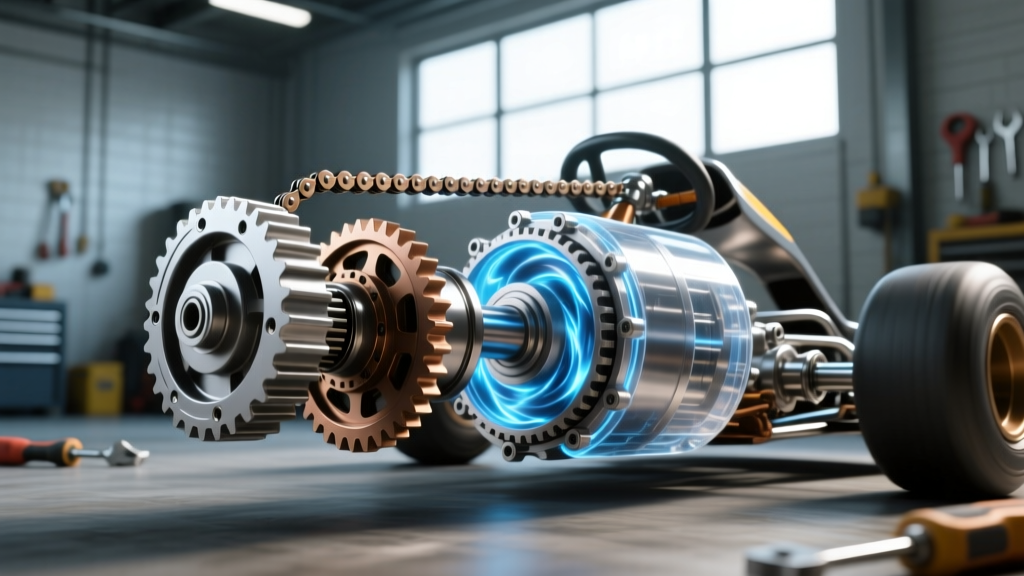
The Traxxas Slash 4x4 utilizes a fully independent suspension with a centralized differential and stub axles. In the rear drivetrain, power is transferred from the ring and pinion to the wheels via driveshafts. Early models relied on sintered steel "dogbones" which frequently bound under high-articulation loads, leading to catastrophic failure when paired with high-discharge 3S LiPo batteries. The modern solution is the Constant Velocity Drive (CVD).
Component Breakdown and 2026 Pricing
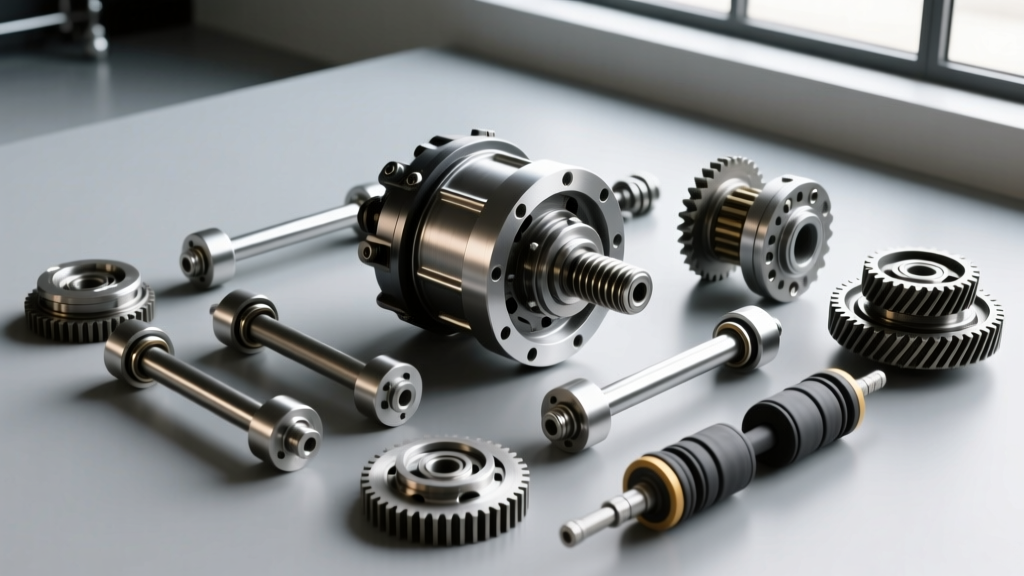
Upgrading or repairing the rear drivetrain requires addressing the differential housing, the internal gears, and the CVD axles. Below is the cost breakdown for a complete rear-end rebuild using OEM Traxxas components.
| Component | Part Number | Function | Est. Cost (2026) |
|---|---|---|---|
| Rear Diff Housing | #6873A | Houses ring/pinion, accepts bearings | $12.50 |
| Ring & Pinion Gear Set | #6872 | Transfers 90-degree rotational force | $10.00 |
| Heavy-Duty Steel CVD Kit | #6878 | Replaces dogbones, eliminates binding | $42.00 |
| Rear Diff Seal Kit | #6877 | Retains high-viscosity diff fluid | $6.00 |
| 100k wt Silicone Diff Fluid | Various | Provides limited-slip locking action | $8.00 |
Total Rear Drivetrain Rebuild Cost: ~$78.50. While seemingly inexpensive, the labor involves precise shimming of the pinion gear to prevent backlash whine and premature tooth shearing. The M3x10mm pinion screw must be secured with blue threadlocker and torqued to precisely 1.5 Nm to prevent it from backing out and destroying the differential housing.
Full-Size Automotive CV Axle Cost Breakdown
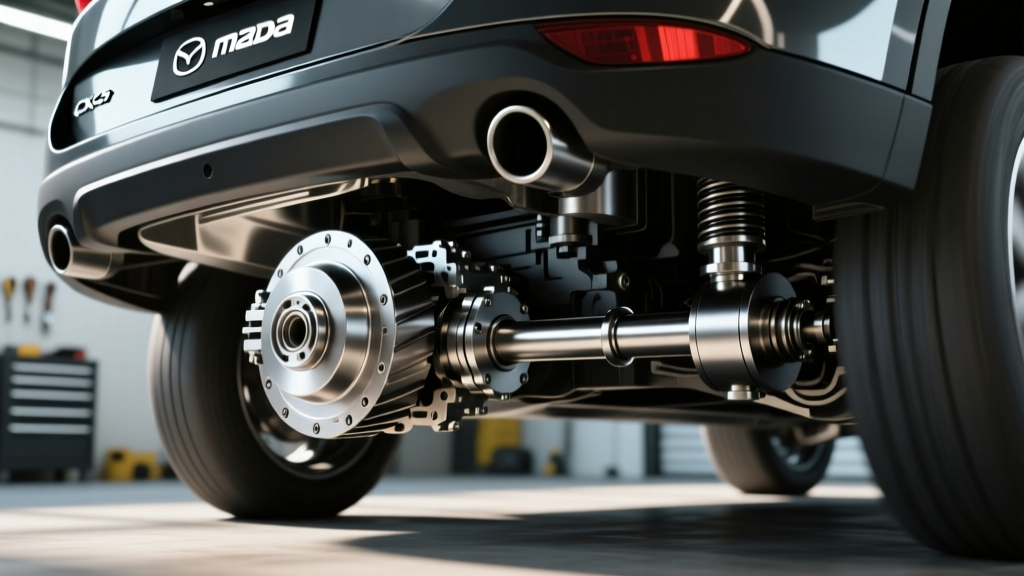
Scaling up to full-size passenger vehicles, CV axles (or half-shafts) connect the transmission or transaxle output flanges to the wheel hubs. In high-torque applications—such as a 2024 Ford F-150 with the 10R80 10-speed automatic or a Subaru Outback with the Lineartronic CVT—the inner tripod joints and outer Rzeppa ball-type joints endure immense thermal and mechanical stress.
Common Automotive CV Failure Modes
- Boot Degradation: Thermoplastic elastomer (TPE) boots crack over 60,000 miles, expelling molybdenum disulfide grease and allowing moisture ingress.
- Inner Tripod Bind: Common in lifted trucks where the suspension droop exceeds the CV joint's maximum operating angle (typically 47 degrees for Rzeppa, 25 degrees for tripod).
- Transmission Seal Scoring: A worn inner CV joint stub can wobble, destroying the transmission output shaft seal and leading to catastrophic fluid loss in units like the GM 6L80.
Automotive CV Axle Repair Cost Matrix
Pricing below reflects 2026 national averages for independent repair facilities, factoring in stabilized aftermarket supply chains. Data is cross-referenced with industry standards from RepairPal.
| Vehicle Platform | Aftermarket Axle Cost | OEM Axle Cost | Labor (Hours) | Total Est. Cost |
|---|---|---|---|---|
| FWD Compact (e.g., Honda Civic) | $90 - $130 | $350 - $450 | 1.2 - 1.5 | $250 - $650 |
| AWD Crossover (e.g., Subaru Outback) | $110 - $160 | $400 - $550 | 1.5 - 2.0 | $300 - $800 |
| 4WD Half-Ton (e.g., Ford F-150 4x4) | $140 - $220 | $450 - $650 | 2.0 - 2.8 | $400 - $1,050 |
Note: Pricing excludes the cost of differential or transmission fluid required if the inner joint seal is compromised during extraction. Always budget an additional $40-$120 for synthetic 75W-90 gear oil or specific ATF (e.g., Motorcraft MERCON ULV for the 10R80).
Diagnostic Framework: Identifying CV Joint Degradation
Accurate diagnosis prevents unnecessary parts replacement. Whether evaluating a micro-chassis or a full-size SUV, the acoustic and vibrational signatures of a failing CV joint are remarkably similar.
1. The Articulation Click Test
In full-size FWD and AWD vehicles, a failing outer Rzeppa joint will produce a distinct rhythmic clicking or popping noise during tight, low-speed turning. This occurs because the ball bearings are skipping across pitted races due to grease starvation. In RC applications, a failing CVD will produce a metallic "ticking" sound at low throttle, indicating the cross-pin is elongating the spherical cup bore.
2. High-Speed Harmonic Vibration
Inner tripod joint wear manifests as a lateral vibration or "shudder" under heavy acceleration between 45-65 mph. The worn roller bearings fail to glide smoothly within the tulip housing, creating a harmonic imbalance that is often misdiagnosed as a tire balance issue or a failing transmission torque converter.
3. Visual Boot and Grease Inspection
The most reliable preventative metric is visual. Automotive technicians should inspect the inboard and outboard boots during every oil change. Look for centrifugal grease splatter on the lower control arms, brake calipers, and subframe. For the Traxxas Slash 4x4, inspect the universal joint cross-pins for excessive lateral play; if the pin moves more than 1mm side-to-side within the cup, the CVD must be replaced to prevent it from ejecting at high RPM.
Labor, Tooling, and Hidden Drivetrain Costs
The physical replacement of a CV axle requires specialized tooling and adherence to strict torque specifications. Ignoring these parameters leads to immediate secondary failures.
Automotive Torque Specifications and Tooling
- Axle Nut Torque: CV axle nuts are single-use, stretch-torque fasteners. For example, a Ford F-150 front axle nut requires a massive 221 lb-ft of torque. Attempting to reuse an old axle nut will result in hub bearing preload loss and catastrophic wheel detachment.
- Ball Joint Separation: Extracting the CV axle from the steering knuckle often requires a specialized pickle fork or ball joint press. Aggressive hammering on the CV axle stub can "mushroom" the threads, destroying the wheel hub assembly (an unplanned $150-$300 cost).
- Transmission Seal Protection: Prying the inner CV joint from the transmission differential requires a dedicated seal-puller. Scoring the aluminum transmission housing with a flathead screwdriver will cause a permanent fluid leak, necessitating transmission removal to install a helicoil or replace the case.
RC Micro-Drivetrain Tooling
While the scale is different, the precision required is identical. Rebuilding a Traxxas rear differential requires a digital caliper to measure gear backlash, a hex driver machined to exact tolerances to prevent stripping the M3 and M4 socket heads, and high-quality threadlocker. Using cheap, soft hex drivers will strip the pinion screw, requiring the use of an easy-out tool and potentially ruining the differential gear.
Preventative Maintenance: Fluid Dynamics and Grease Degradation
The lifespan of any CV joint is dictated by its lubricant. In automotive applications, CV joints are packed with a specialized molybdenum disulfide (moly) grease designed to withstand extreme pressure (EP) and high shear forces. Once the boot is compromised and water enters, the moly grease emulsifies into an abrasive paste that rapidly machines away the steel races.
In sealed differential environments, fluid shear is the enemy. The Traxxas Slash 4x4 rear differential relies on high-viscosity silicone fluid (typically 100,000 weight) to create a temporary limited-slip effect. Under the extreme heat generated by brushless motors, this fluid degrades, losing its sheer stability and resulting in "diff slip"—where power takes the path of least resistance to a spinning wheel rather than transferring equally. Flushing the differential fluid every 10-15 runtime hours is a $5 maintenance task that prevents the premature wear of the #6872 ring and pinion gears.
Final Verdict: Rebuild vs. Replace Economics
When addressing CV axle problems, the economic decision hinges on the scale and accessibility of the drivetrain. For automotive applications, replacing the entire half-shaft assembly with a premium aftermarket unit (from manufacturers like GSP or SurTrack, available via RockAuto) is almost always more cost-effective than attempting to disassemble, clean, and repack a failed Rzeppa joint. The labor cost to rebuild an automotive CV joint exceeds the cost of a brand-new assembly.
Conversely, in micro-drivetrains like the Traxxas Slash 4x4 rear differential, modular replacement is the standard. Hobbyists replace the individual CVD shafts (#6878) or the differential housing (#6873A) as needed, keeping a stocked inventory of $10-$40 wear items. Ultimately, whether you are turning wrenches on a 4,000-pound truck or tuning a 6-pound RC trophy truck, respecting the mechanical limits of constant velocity joints and adhering to precise torque and maintenance schedules is the only way to maximize drivetrain longevity and minimize long-term operational costs.