The Anatomy of the 5.9L ISB Electronic Fan Clutch System
When discussing clutch system diagnostics on heavy-duty platforms, most enthusiasts immediately jump to the transmission. However, as of 2026, aging 5.9L Cummins ISB engines (2003–2007 Dodge Ram 2500/3500) are suffering from a critical, often overlooked failure point: the electronic fan clutch and its associated wiring harness. The 5.9L Cummins utilizes an electromagnetic/viscous hybrid fan clutch. Unlike older purely thermal bi-metal spring clutches, this system relies on an ECM-controlled electromagnetic coil to engage the internal viscous fluid shear plate.
Understanding the lifespan indicators and wear signs of this specific clutch mechanism—and the 5.9 Cummins fan clutch wiring harness that commands it—is vital. A failure here doesn't just cause engine overheating; it creates a catastrophic thermal domino effect that destroys your 48RE or 68RFE transmission clutches.
Differentiating Wiring Harness Faults from Internal Clutch Wear
Diagnosing a locked or free-spinning fan requires isolating the electrical command circuit from the mechanical clutch assembly. The symptoms often overlap, but the root causes demand entirely different repairs.
5.9 Cummins Fan Clutch Wiring Harness Degradation
The factory wiring harness routing on the 5.9L ISB places the fan clutch pigtail dangerously close to the alternator bracket, the A/C compressor lines, and extreme radiant heat from the exhaust manifold. Over time, the following wiring wear signs emerge:
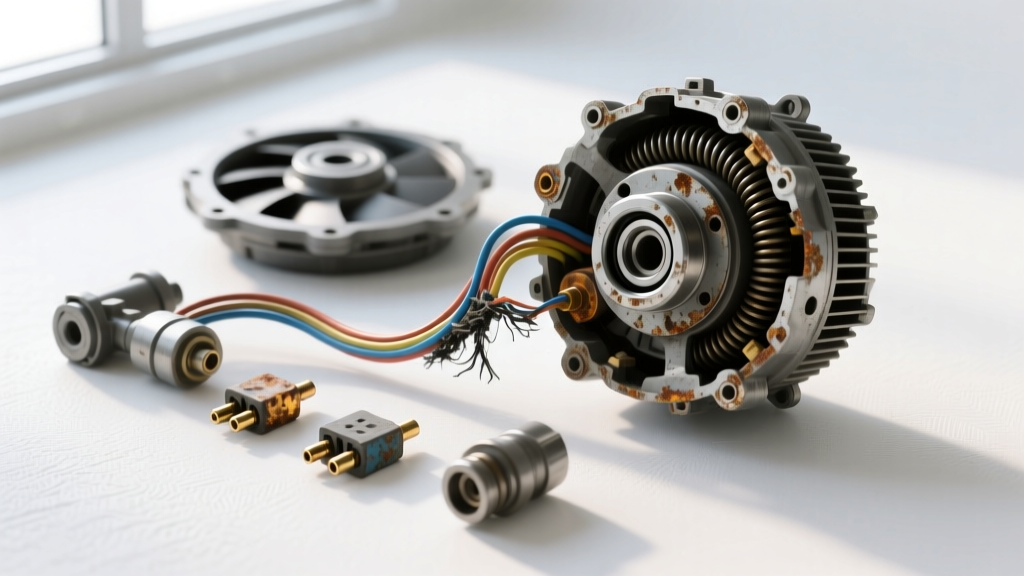
- Insulation Chafing: Vibration causes the split-loom casing to wear through, exposing the 12V power and ECM ground wires. This leads to intermittent short-to-ground, triggering a P0480 (Fan 1 Control Circuit) code.
- Connector Melting: The 2-pin Weather-Pack connector sits directly in the path of the fan draft, which pulls 200°F+ radiant heat across the connector face when idling. The plastic becomes brittle, and the internal copper pins oxidize, increasing resistance.
- Phantom ECM Derate: If the ECM detects an open circuit in the harness, it defaults the fan to a 'fail-safe' locked state to prevent overheating. This parasitic drag robs the engine of up to 35 horsepower and mimics a slipping transmission torque converter clutch.
Internal Clutch Wear & Lifespan Indicators
If the wiring harness tests perfectly, the fault lies within the fan clutch assembly itself. The internal electromagnetic coil and viscous fluid reservoir have a finite lifespan, typically maxing out between 120,000 and 150,000 miles.
Expert Insight: Viscous fluid shear degradation is the silent killer of fan clutches. Over thousands of thermal cycles, the silicone-based shear fluid loses its viscosity. The clutch will 'engage' electrically, but the fluid can no longer transfer enough torque to spin the fan blade at the required RPM, resulting in severe under-hood heat soak.
Physical Wear Signs:
- Bearing Wobble: Grab the fan blade at the 12 and 6 o'clock positions. Any lateral deflection greater than 1/8-inch indicates the internal pilot bearing is worn. This misalignment destroys the electromagnetic air gap.
- Fluid Sling: Inspect the water pump pulley and lower radiator hose for a fine mist of oily residue. This indicates the internal O-ring seals have failed, allowing the viscous fluid to leak out under centrifugal force.
- Coil Burnout: Extreme heat bakes the copper windings inside the electromagnetic coil, causing the internal resistance to drop or short out completely.
The Drivetrain Domino Effect: Fan Clutch vs. Transmission Clutch Wear
Why is an engine cooling component featured in a transmission and drivetrain diagnostic guide? Because fan clutch failure is a leading catalyst for premature transmission clutch wear in the 5.9L Cummins ecosystem.
The 48RE (and later 68RFE) automatic transmissions rely heavily on the Torque Converter Clutch (TCC) for efficiency and temperature management. The TCC is a friction clutch that locks the engine to the transmission input shaft. When the 5.9 Cummins fan clutch wiring harness fails or the internal viscous clutch wears out, under-hood and coolant temperatures spike. The transmission fluid cooler, which is often integrated into the radiator or mounted in the hot air stream of the intercooler, loses its thermal exchange efficiency.
Once transmission fluid temperatures exceed 220°F, the synthetic ATF loses its shear stability. The 48RE's overdrive friction clutches and the TCC lining begin to glaze and slip. Therefore, diagnosing transmission clutch slip on a 5.9L Cummins must begin with a verification of the fan clutch engagement and wiring harness integrity.
Diagnostic Data: Resistance, Voltage, and Air Gap Specs
To accurately diagnose the system, you must bypass the guesswork and use a multimeter. Below are the exact diagnostic specifications for the 5.9L ISB electronic fan clutch and its harness.
| Diagnostic Metric | Specification / Threshold | Failure Indication |
|---|---|---|
| Electromagnetic Coil Resistance | 2.5 to 3.5 Ohms (at 68°F) | < 2.0 Ohms (Internal Short) or > 5.0 Ohms (Open Circuit) |
| Harness Voltage Drop (Loaded) | Less than 0.2V across the 2-pin connector | > 0.5V indicates corroded pins or chafed wiring |
| ECM Command Voltage | 12V Pulse-Width Modulated (PWM) | Constant 12V or 0V indicates ECM driver failure |
| Electromagnetic Air Gap | 0.020' to 0.035' | Worn pilot bearing causes gap variation, leading to slip |
Step-by-Step Harness and Clutch Testing Procedure
Follow this sequence to isolate the fault without throwing unnecessary parts at the truck. Replacement components from Mopar and heavy-duty manufacturers like Horton are expensive; accurate testing is mandatory.
- Visual Harness Inspection: Trace the wiring from the fan clutch connector back to the main engine harness loom near the valve cover. Look for melted split-loom or copper showing through the insulation.
- Back-Probe the Connector: With the engine running and the A/C turned ON (which forces a fan clutch command), back-probe the connector pins. You should read a 12V PWM signal. If you have 12V at the harness but the fan remains disengaged, the harness is good, and the internal clutch coil is dead.
- Ohm the Coil: Disconnect the harness. Set your multimeter to Ohms. Place the probes on the two pins of the fan clutch itself. If it reads 'OL' (Open Loop), the internal coil is broken and the entire clutch assembly must be replaced.
- Spin Test: With the engine OFF and cold, the fan should spin freely with slight viscous drag. If it feels completely locked or spins with zero resistance like a free-wheeling bicycle hub, the internal fluid reservoir has failed.
Replacement Costs, Torque Specs, and Part Numbers
If your testing confirms that the wiring harness is degraded, do not attempt to splice the wires with standard crimp connectors. The high-vibration, high-heat environment will destroy standard butt-splices within months. Use a factory-style pigtail repair kit with sealed Weather-Pack terminals and dielectric grease.
Part Numbers and Pricing (2026 Estimates)
- OEM Mopar Fan Clutch Assembly: Part # 53032916AD (or latest supersession). Expect to pay between $450 and $650.
- Horton Heavy-Duty Replacement: Horton HT25 series equivalents offer upgraded coil windings and typically cost around $400 to $500.
- Wiring Harness Pigtail Repair Kit: Mopar # 05139153AA or standard 2-pin sealed weatherpack kits cost between $15 and $35.
Critical Installation Torque Specifications
When replacing the fan clutch assembly onto the water pump hub, precise torque is required to prevent warping the electromagnetic coil housing or damaging the water pump bearings.
- Fan Clutch Hub to Water Pump Flange (M10 Bolts): 37 lb-ft (50 Nm).
- Fan Blade to Fan Clutch Bracket (M8 Bolts): 89 in-lbs (10 Nm). Do not overtighten, as the stamped steel brackets will bend, altering the fan shroud clearance.
Preventative Maintenance for Maximum Clutch Lifespan
To extend the lifespan of your replacement 5.9 Cummins fan clutch wiring harness and internal mechanism, implement these preventative measures during installation:
- Reroute and Shield: Wrap the final 12 inches of the wiring harness in high-temp silicone fiberglass sleeving (rated for 500°F) to protect it from exhaust manifold radiation.
- Secure the Loom: Use high-temp adhesive-backed P-clips to secure the harness away from the alternator bracket, eliminating the primary vibration chafe point.
- Dielectric Grease: Pack the 2-pin Weather-Pack connector with marine-grade dielectric grease to prevent moisture intrusion and copper oxidation, which alters the circuit resistance and confuses the ECM.
By mastering the diagnostics of the 5.9 Cummins fan clutch wiring harness and recognizing the physical wear signs of the internal viscous mechanism, you protect not only your engine's thermal limits but also the longevity of your drivetrain's critical transmission clutches.