Heavy-Duty Clutch Architectures: Beyond the Standard Manual
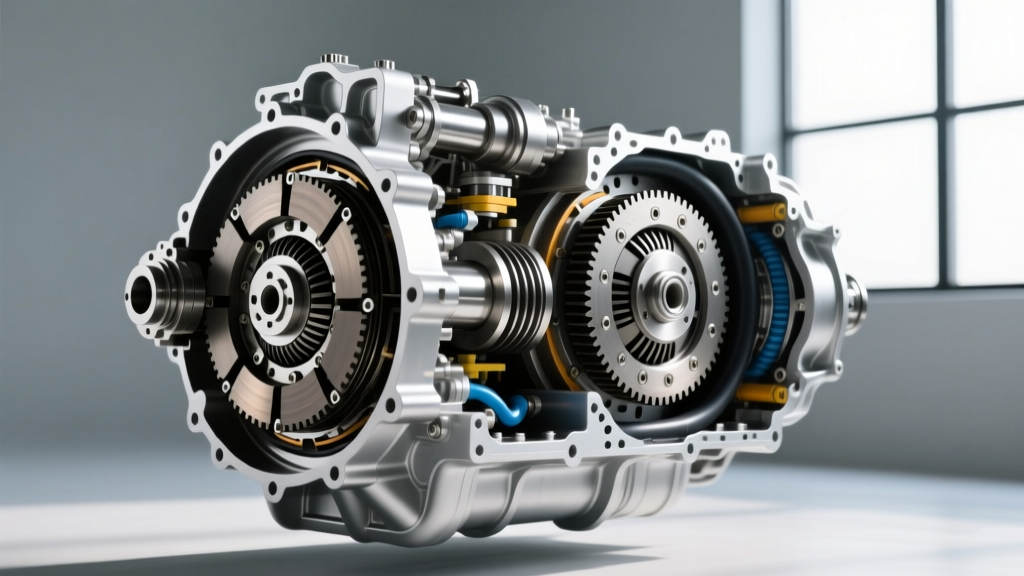
The commercial trucking and heavy-duty fleet sectors have undergone a massive powertrain evolution over the last decade. While traditional 10-speed and 18-speed manual transmissions once ruled the highways, automated manual transmissions (AMTs) and advanced automated clutch systems now dominate the market. When diagnosing modern commercial fleets, technicians must understand the nuanced differences between transmission types. In fleet maintenance bays and engineering documents, a dual clutch transmission is sometimes referred to as a twin-clutch AMT, automated twin-clutch, or simply a DCT, particularly when discussing medium-duty distribution trucks, high-performance commercial vans, and specialized European heavy haulers.
Unlike passenger vehicles where DCTs (like the VW DQ500 or Ford PowerShift) are common, true dual-clutch architectures in Class 8 heavy-duty trucks are rare but emerging in specific high-efficiency applications. More commonly, heavy-duty trucks utilize single-clutch AMTs (such as the Eaton Endurant HD or Volvo I-Shift) that share significant diagnostic DNA, actuator wear patterns, and thermal management challenges with their DCT counterparts. Understanding these systems is critical for fleet managers and transmission specialists looking to diagnose clutch slip, optimize torque transfer, and implement performance upgrades in 2026.
Core Symptoms of Commercial Clutch Degradation
Heavy-duty commercial vehicles operate under extreme Gross Combination Weight (GCW) limits, often exceeding 80,000 lbs in North America and up to 60 tonnes in specialized European configurations. This immense stress accelerates clutch wear in ways passenger vehicles never experience. Below are the primary symptoms of clutch system failure in commercial applications.
1. High-RPM Slip Under High-GCW Loads
Clutch slip in a heavy-duty truck is rarely subtle. It typically manifests when the vehicle is pulling a heavy load up a 6% or greater grade. The engine RPM will surge without a corresponding increase in vehicle speed, and the transmission control module (TCM) will often throw a slip fault code (e.g., Eaton SPN 520202). In automated systems, the TCM attempts to compensate for facing wear by increasing the clamping force via the electronic or pneumatic actuator. Once the actuator reaches its maximum stroke limit, the clutch begins to slip, generating extreme heat that can easily exceed 800°F (426°C) at the friction interface, leading to rapid glazing or complete burnout of organic facings.
2. Harsh Engagement and Low-Frequency Chatter
Clutch chatter in commercial vehicles is often misdiagnosed as a driveline U-joint or engine mount issue. True clutch chatter occurs during initial engagement (1st or 2nd gear) and is characterized by a violent, low-frequency shudder. In heavy-duty applications, this is frequently caused by failed torsional dampening springs inside the clutch disc, designed to absorb the massive torque spikes of a 15-liter diesel engine producing over 2,050 lb-ft of torque. Another common culprit is flywheel face runout exceeding 0.005 inches, which causes uneven clamping pressure as the release bearing engages.
3. Pneumatic Actuator Hiss and Release Bearing Whine
While passenger car DCTs use electro-hydraulic mechatronics, many heavy-duty AMTs and automated clutches utilize pneumatic or electro-pneumatic clutch actuators. A persistent hiss from the bell housing area indicates a failing internal air seal in the clutch actuator cylinder. Furthermore, a high-pitched whine that changes pitch with engine RPM—rather than vehicle speed—points to a failing clutch release bearing. In self-adjusting clutch (SAC) designs like the ZF Sachs XTend, a worn release bearing can prevent the internal ramp mechanism from compensating for facing wear, leading to premature clutch slip.
Performance Upgrades: Selecting the Right Commercial Clutch Facing
When a heavy-duty clutch requires replacement, simply installing an OEM-equivalent organic clutch is often a missed opportunity for fleet optimization. Upgrading the friction material can drastically extend service intervals, especially for trucks operating in mountainous terrain or heavy stop-and-go vocational environments. Below is a comparison of the primary clutch facing materials used in commercial performance upgrades.
| Material Type | Max Torque Capacity | Heat Resistance | Engagement Feel | Avg. Kit Cost (2026) |
|---|---|---|---|---|
| Organic (Standard OEM) | Up to 1,750 lb-ft | Moderate (Glazes >500°F) | Smooth, Progressive | $1,200 - $1,600 |
| Kevlar / Aramid Fiber | Up to 2,050 lb-ft | High (Resists Fade) | Slightly Aggressive | $1,800 - $2,400 |
| Cerametallic (Sintered) | Up to 2,500+ lb-ft | Extreme (Withstands >800°F) | Harsh, On/Off | $2,500 - $3,500 |
Note: Upgrading to a Cerametallic clutch (such as the Eaton Cerametallic 15.5-inch series) requires verifying that the transmission input shaft and driveline U-joints are rated for the increased shock load, as the aggressive engagement can accelerate wear on downstream driveline components.
Critical Torque Specs and Clearances for Fleet Techs
Proper setup of a heavy-duty commercial clutch is vastly more complex than a passenger vehicle. Tolerances are incredibly tight, and failure to adhere to OEM specifications will result in immediate warranty denial and rapid component failure. When servicing a standard 15.5-inch Eaton Solo or Advantage series clutch, technicians must verify the following critical measurements:
- Clutch Brake Squeeze Gap: Must be strictly between 0.500" and 0.560". If the gap is too wide, the clutch brake will not engage, causing gear grinding during shifts. If too narrow, the clutch will drag and overheat.
- Release Bearing Free Travel: Minimum of 0.500". This ensures the release bearing is not riding on the clutch fingers during highway cruising, which would cause catastrophic bearing failure.
- Flywheel Face Runout: Maximum allowable runout is 0.005" (0.127 mm). Measure using a dial indicator mounted to the bell housing. If runout exceeds this, the flywheel must be resurfaced (if thickness permits) or replaced with a nodular iron performance unit.
- Bell Housing Bore Runout: Maximum 0.008" (0.203 mm). Excessive bore runout misaligns the transmission input shaft with the engine crankshaft, causing severe vibration and premature wear on the pilot bearing and input shaft splines.
- Clutch Cover Bolt Torque: Typically 75-85 lb-ft for heavy-duty 15.5" covers, tightened in a star pattern to prevent warping the pressure plate casting.
Advanced Actuator and Flywheel Diagnostics
In automated commercial transmissions, the clutch actuator is the brain and muscle of the system. For transmissions like the ZF TraXon or the Eaton Endurant HD, the actuator relies on precise positional sensors to determine clutch wear. When performing a clutch replacement, it is mandatory to use the OEM diagnostic software (e.g., Eaton ServiceRanger or ZF PROXI) to execute a 'Clutch Wear Reset' and 'Actuator Calibration'. Failing to perform this software reset will cause the TCM to apply incorrect clamping forces based on the old, worn clutch's parameters, leading to immediate slip or harsh engagement.
Furthermore, heavy-duty dual-mass flywheels (DMFs) or specialized dampening flywheels must be inspected for internal grease leaks and excessive rotational free-play. A failing DMF will exhibit more than 15 degrees of free rotational play between the primary and secondary masses. While the upfront cost of a heavy-duty commercial clutch kit and flywheel assembly can range from $3,200 to $4,900 (including labor at an average shop rate of $175/hr), proactive diagnostics and material upgrades can extend the life of the assembly from 350,000 miles to well over 600,000 miles in line-haul applications.
Authoritative Resources for Commercial Drivetrain Specs
For the most up-to-date torque specifications, actuator calibration procedures, and technical service bulletins (TSBs) regarding heavy-duty automated clutches, technicians should consult the official OEM engineering portals:
- Eaton Cummins Commercial Clutch Specifications and Service Manuals
- ZF Group Commercial Vehicle Transmissions and TraXon Diagnostics
By understanding the unique architecture of commercial automated clutches and adhering to strict diagnostic protocols, fleet technicians can minimize downtime, optimize torque transfer, and ensure maximum drivetrain longevity in the most demanding heavy-duty environments.