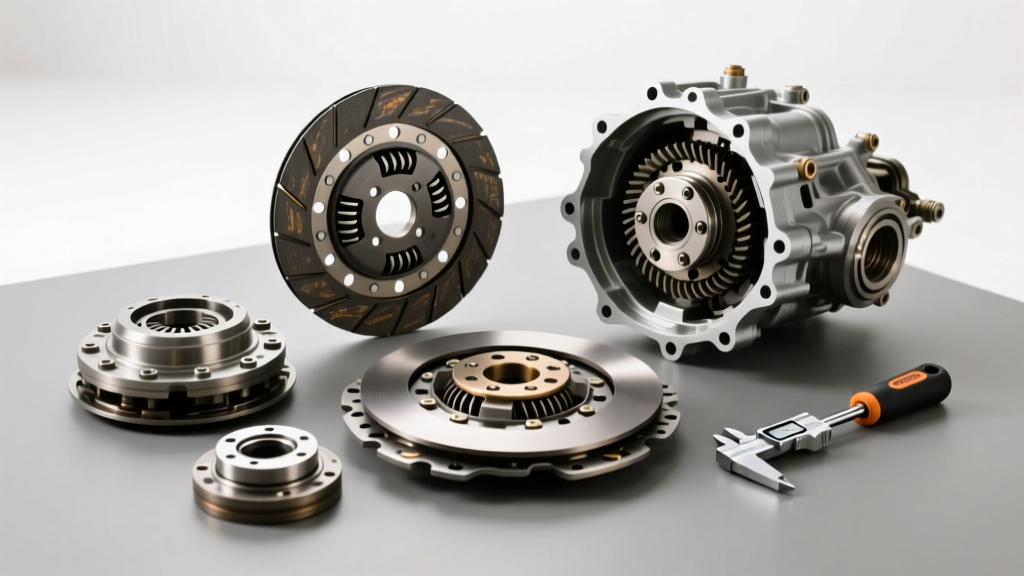
The 2026 Reality of Clutch Service Time Estimates
As we navigate the automotive service landscape in 2026, accurate clutch replacement time estimates are more critical than ever. With professional shop labor rates averaging between $165 and $225 per hour, a miscalculated book time can turn a profitable repair into a financial loss, or a DIY weekend project into a multi-week garage occupation. A manual transmission clutch job is never just about swapping a friction disc and pressure plate; it is a comprehensive overhaul of the mechanical and hydraulic actuation systems.
One of the most frequently overlooked variables in these time estimates is the hydraulic actuation circuit. Specifically, technicians and DIYers must evaluate whether it is time to replace clutch master cylinder components while the system is already drained and disassembled. Failing to address a fatigued master cylinder during a primary clutch overhaul is the leading cause of premature clutch drag, incomplete disengagement, and dreaded 'comeback' repairs.
Baseline Clutch Replacement Time Estimates by Drivetrain
Before factoring in hydraulic repairs, you must establish a baseline for the mechanical removal and installation (R&I) of the transmission. Drivetrain layout dictates the complexity of subframe manipulation, exhaust removal, and driveshaft extraction.
| Drivetrain Layout | Standard Book Time (Hours) | Real-World Shop Time (Hours) | Common Time Sinks & Hurdles |
|---|---|---|---|
| FWD (Transverse) | 4.5 - 6.0 | 5.5 - 7.5 | Axle nut removal, subframe dropping, steering linkage interference, left-side intermediate shaft extraction. |
| RWD (Longitudinal) | 5.0 - 7.0 | 6.0 - 8.5 | Corroded exhaust flanges, seized pilot bearings, transmission crossmember alignment, driveshaft indexing. |
| AWD / 4WD | 7.5 - 9.5 | 9.0 - 12.0 | Transfer case R&I, front differential clearance, complex prop shaft center support bearings, limited underbody clearance. |
Note: Real-world times account for rusted hardware, seized alignment dowels, and the necessity of safely supporting heavy cast-iron or thick-walled aluminum transmissions on a standard hydraulic lift.
The Hydraulic Variable: When to Replace Clutch Master Cylinder
The most crucial decision in your time estimate matrix is whether to replace the hydraulic actuation components. Modern vehicles utilize a hydraulic clutch master cylinder mounted on the firewall, connected via high-pressure lines to either an external slave cylinder or an internal Concentric Slave Cylinder (CSC) / Hydraulic Throwout Bearing.
Failure Modes That Dictate Immediate Replacement
If you are replacing a heavy-duty clutch kit (such as a South Bend or McLeod twin-disc setup) that features higher clamp loads and stiffer pedal effort, your existing master cylinder will be subjected to increased hydraulic pressure. If the internal rubber cups or the phenolic resin piston are worn, the increased pressure will cause internal bypassing. Fluid will leak past the piston inside the bore rather than traveling to the slave cylinder, resulting in a pedal that slowly sinks to the floor while holding the clutch in at a stoplight.
You must add 1.2 to 1.8 hours to your clutch replacement time estimate if you need to replace the clutch master cylinder. This includes:
- Removing the under-dash retaining clips and pushrod clevis (0.4 hours).
- Unbolting the firewall mounting nuts and disconnecting the hydraulic quick-disconnect line (0.3 hours).
- Bench bleeding the new unit (0.5 hours).
- Reinstallation and system flushing (0.6 hours).
According to technical bulletins from Schaeffler Aftermarket (LuK), replacing the master cylinder simultaneously with a CSC or clutch kit overhaul reduces warranty claims related to 'incomplete disengagement' by over 40%. Hygroscopic DOT 3 and DOT 4 brake fluids absorb moisture over time, leading to microscopic pitting in the aluminum master cylinder bore. Once pitted, no amount of seal replacement will save the unit.
Step-by-Step Time Breakdown: The Hidden Time Sinks
When building your project timeline, allocate buffer time for the following notorious delays that rarely appear in OEM service manuals:
- Exhaust Manifold / Downpipe Removal (0.5 - 2.5 Hours): On turbocharged platforms like the Subaru WRX or Ford EcoBoost Mustang, the downpipe must be removed to clear the bellhousing. Broken O2 sensor bungs and stripped turbo studs can easily add two hours to the job.
- Pilot Bearing Extraction (0.5 - 1.5 Hours): If the pilot bearing or bushing is seized in the crankshaft flange, you will need to use a blind-hole bearing puller or the traditional 'grease and dowel' hydraulic extraction method. Failing to replace or properly seat the pilot bearing will result in transmission input shaft binding.
- Flywheel Resurfacing Logistics (24 - 48 Hours): While not 'wrench time', sending a dual-mass flywheel (DMF) or a stepped steel flywheel to a machine shop for micrometer measurement and resurfacing halts the physical build. Always measure flywheel runout and step-depth before teardown to order a replacement unit in advance.
Critical Torque Specs & Fluid Capacities (GM LS / Tremec T56 Example)
To illustrate the technical depth required, below is a reference table for one of the most common RWD manual platforms: the GM LS-series V8 mated to a Tremec T56 Magnum transmission. Adhering to these specs prevents warping, fluid leaks, and catastrophic driveline failure.
| Component | Fastener / Specification | Torque Spec | Technical Notes |
|---|---|---|---|
| Flywheel to Crankshaft | M10 x 1.5 (OEM TTY) | 59 lb-ft + 90° turn | Must use new TTY bolts. If using ARP aftermarket hardware, torque to 85 lb-ft using ARP ultra-torque lube. |
| Pressure Plate to Flywheel | M8 x 1.25 | 35 lb-ft | Tighten in a crisscross star pattern to ensure even diaphragm spring compression. |
| Bellhousing to Engine Block | M10 / M12 | 37 lb-ft (M10) / 59 lb-ft (M12) | Verify bellhousing runout with a dial indicator; max allowable is typically 0.005". |
| Clutch Master Cylinder | M8 Firewall Nuts | 15 lb-ft | Do not overtighten; firewall sheet metal will deform and cause pedal binding. |
| Hydraulic System Fluid | DOT 4 (e.g., Motul RBF 600) | Capacity: ~0.6 Liters | Flush until fluid is completely clear of black rubber particulate from the old master cylinder. |
Bench Bleeding: The 45-Minute Time Saver
If your time estimate includes a master cylinder swap, you must include 'bench bleeding' in your workflow. Installing a dry master cylinder and attempting to bleed the system through the slave cylinder bleeder valve will trap an air pocket in the master cylinder's forward nose. Because the master cylinder is mounted at an angle on the firewall, this air pocket sits at the highest point of the bore and will never be pushed out by standard pedal pumping.
The Bench Bleed Procedure:
- Secure the new master cylinder in a vise (using soft jaws to protect the aluminum body).
- Fill the reservoir with high-quality DOT 4 fluid.
- Attach a looped hose from the outlet port back into the reservoir, ensuring the hose end is submerged in fluid.
- Use a blunt punch to slowly stroke the pushrod 10 to 15 times until no air bubbles emerge in the reservoir.
- Cap the outlet port immediately before installing it on the firewall to prevent fluid drain-back.
This 15-minute bench procedure will save you up to 45 minutes of frustrating under-car bleeding and prevents the need to re-bleed the system after a test drive reveals a spongy pedal.
Cost vs. Time Matrix: DIY vs. Professional Shop Rates
Understanding the financial impact of your time estimate helps in deciding whether to tackle the job yourself or hand it to a specialist. Below is a comparative matrix for a complete RWD clutch and hydraulic overhaul (including a new master cylinder and CSC) based on 2026 national averages.
| Scenario | Estimated Labor Hours | Labor Cost (@ $185/hr) | Parts Cost (OEM / Premium) | Total Estimated Cost |
|---|---|---|---|---|
| Professional Shop (Full Overhaul) | 8.5 Hours | $1,572.50 | $650.00 | $2,222.50 |
| DIY Mechanic (Weekend Project) | 14.0 Hours | $0.00 (Your Time) | $650.00 | $650.00 + Tool Rental |
| Shop (Clutch Only, Reusing Old Hydraulics) | 6.5 Hours | $1,202.50 | $350.00 | $1,552.50 (High Comeback Risk) |
As the data illustrates, skipping the master cylinder replacement saves roughly $370 in labor and $120 in parts upfront. However, if the old master cylinder fails internally three months later due to the increased pedal effort of the new clutch kit, the shop will charge a minimum 1.5-hour diagnostic and bleed fee, or the DIYer will be forced to drain the system and crawl back under the dash, effectively negating any initial time or cost savings.
Final Diagnostic Checklist Before Teardown
Before finalizing your time estimate and ordering parts, perform these three critical hydraulic diagnostics:
- The Pedal Sink Test: Depress the clutch pedal and hold it against the floor mat for 60 seconds. If the pedal slowly rises or the transmission begins to creep into gear, the master cylinder is internally bypassing. Mandatory replacement required.
- The Pushrod Free-Play Check: Measure the free-play at the master cylinder pushrod. Most OEMs specify between 0.5mm and 1.5mm. Zero free-play will keep the internal compensation port blocked, leading to fluid overheating and clutch drag.
- Fluid Inspection: Draw a sample from the reservoir. If it is black or contains suspended metallic flakes, the master cylinder bore or the slave cylinder piston is severely degraded. A complete hydraulic flush and component replacement is non-negotiable.
By integrating the hydraulic system into your primary clutch replacement time estimate, you ensure a seamless, reliable repair that restores factory pedal feel and guarantees complete disengagement of the friction assembly. Whether you are wrenching on a transverse FWD hot hatch or a longitudinal RWD muscle car, respecting the time required for proper hydraulic servicing is the hallmark of true drivetrain expertise.