The Hidden Variable in Local Shop Quotes
When you type "clutch replacement cost near me" into a search engine, the estimates you receive from local transmission and repair shops will vary wildly—often ranging from $900 to over $2,500 for the exact same vehicle. Why does this massive price gap exist? The hidden variable is almost always the clutch kit the shop intends to install. As an automotive transmission specialist navigating the 2026 aftermarket landscape, I can tell you that controlling your parts selection is the single most effective way to manage long-term drivetrain reliability and overall pricing.
Many shops default to the cheapest available white-box replacement kits to maximize their profit margins, leaving you with a clutch that shudders, slips under load, or destroys your flywheel within 15,000 miles. This step-by-step clutch kit selection guide will teach you how to specify the exact components your manual transmission needs, ensuring you never overpay for inadequate parts or underpay for a kit that will fail prematurely.
Step 1: Profile Your Drivetrain and Torque Output
Before requesting quotes, you must define your vehicle's torque output and transmission limitations. A clutch kit is not a one-size-fits-all component; it is a calibrated friction and clamping system.
- Stock / Daily Driver: If your vehicle is completely stock (e.g., a Honda Civic Si with a K20C1 or a Ford Mustang GT with a Tremec MT-82), your primary goal is OEM-equivalent drivability and longevity.
- Mild Bolt-Ons / Towing: If you have added a cold air intake, aftermarket downpipe, or use your truck (like a 6-speed manual Cummins or Duramax) for light towing, you need a heavy-duty organic disc with a high-clamp-load pressure plate.
- High-Horsepower / Track Use: Forced induction builds or dedicated track cars require aggressive friction materials like cerametallic or sintered iron, paired with a billet steel flywheel.
Expert Insight: Never install a Stage 3 or 4 sintered iron clutch on a daily-driven street car with an aluminum flywheel. The aggressive friction material will chatter violently at low RPMs, cause severe drivetrain shock, and eventually crack the bellhousing or transmission input shaft casing.
Step 2: The Flywheel Dilemma — DMF vs. SMF Conversions
One of the biggest factors influencing the "clutch replacement cost near me" search results is whether your vehicle uses a Dual-Mass Flywheel (DMF) or a Single-Mass Flywheel (SMF). Vehicles from Volkswagen, BMW, Porsche, and many modern Ford and GM trucks use DMFs to absorb torsional vibrations from the engine.
Understanding DMF Failures
A DMF contains internal arc springs and a damping mechanism. Over time, these internal springs fatigue, causing a metallic clunking noise at idle and severe vibration during clutch engagement. When replacing a DMF, you have two choices:
- Direct DMF Replacement: Purchasing a kit like the LuK RepSet DMF. This maintains factory-smooth drivability but costs significantly more (DMFs alone often cost $400–$800).
- SMF Conversion: Swapping to a solid Single-Mass Flywheel (SMF). Companies like South Bend Clutch offer SMF conversion kits that are cheaper, lighter, and immune to internal DMF spring failures. However, you will experience more gear rattle at idle and slightly more cabin vibration.
If a local shop quotes you significantly less than competitors, verify they aren't illegally machining a DMF down to act as an SMF without the proper solid-hub clutch disc conversion—a recipe for catastrophic transmission failure.
Step 3: Select the Correct Friction Material
The friction disc is the heart of the kit. According to Exedy USA Tech Support, matching the friction material to your heat-tolerance and engagement needs is critical.
| Kit Tier | Friction Material | Best Application | Est. Part Cost | Example Part # |
|---|---|---|---|---|
| OEM Replacement | Organic | Daily driving, stock power | $150 - $350 | LuK 04-115 |
| Stage 1 Heavy Duty | Heavy-Duty Organic | Mild bolt-ons, light towing | $300 - $550 | Exedy 08065 |
| Stage 2/3 Performance | Cerametallic / Kevlar | Track use, high boost | $550 - $900+ | ACT HD-SS |
Step 4: Don't Ignore the Release Bearing and Hydraulics
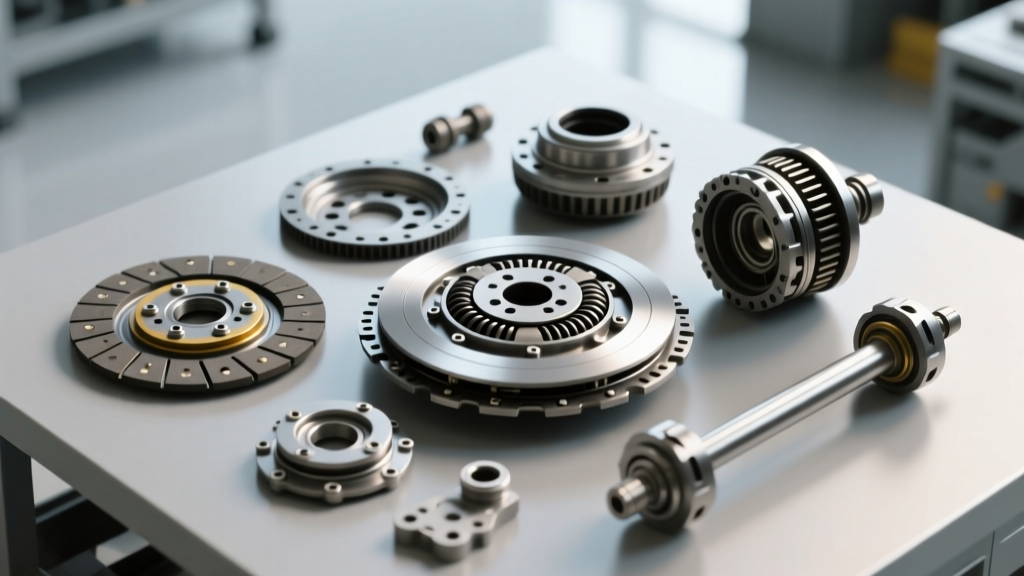
A complete clutch kit must include the release bearing (throwout bearing). In modern vehicles (2010 and newer), this is often a Concentric Slave Cylinder (CSC). The CSC is a hydraulic bearing that sits directly on the transmission input shaft.
Critical Warning: Never reuse an old CSC, and never allow a shop to install a cheap, unbranded CSC to lower your clutch replacement cost near me. If a budget CSC fails 10,000 miles later, you will have to pay for the exact same 6-hour labor job all over again to drop the transmission. Always insist on OEM-tier hydraulic bearings from manufacturers like Schaeffler (LuK), Sachs, or FTE.
Step 5: How to Audit Local Shop Quotes
Now that you understand the anatomy of a kit, use this framework to evaluate the quotes you gathered from your local search:
- Ask for the Brand and Part Number: If the shop says "it's an OEM-equivalent kit" but refuses to provide the manufacturer name (LuK, Sachs, Exedy, Valeo), walk away. They are using cheap import kits that will cause shudder.
- Verify the Flywheel Service: Ask explicitly, "Does this quote include resurfacing the flywheel, or a new DMF?" Installing a new clutch disc on a glazed, scored, or overheated flywheel will ruin the new friction material in under 500 miles.
- Check the Hydraulics: Ensure the quote includes flushing the hydraulic clutch fluid and replacing the slave cylinder if it is internal to the bellhousing.
Step 6: Essential Installation Hardware & Torque Specs
Whether you are performing a DIY replacement in your garage or verifying your mechanic's work, proper hardware and torque sequences are non-negotiable. Reusing old, stretched pressure plate bolts is a common cause of catastrophic clutch failure.
Standard Torque Specifications
Always use new, grade-appropriate hardware. Apply a medium-strength threadlocker (like Loctite 243) to flywheel bolts, but never apply oil or threadlocker to pressure plate bolts unless specified by the manufacturer.
- Pressure Plate to Flywheel (M8 x 1.25 bolts): 18 - 22 lb-ft (25 - 30 Nm)
- Pressure Plate to Flywheel (M10 x 1.25 bolts): 35 - 40 lb-ft (47 - 54 Nm)
- Flywheel to Crankshaft (Typical V8/Inline-4): 60 - 85 lb-ft (always verify factory service manual for specific stretch-bolt TTY procedures)
- Bellhousing to Engine Block: 40 - 55 lb-ft
Pro-Tip for Pilot Bearings: If you are struggling to extract a stubborn pilot bearing or bushing from the crankshaft, pack the cavity behind the bearing with heavy grease. Insert a tightly fitting bolt or drift into the grease, and tap it with a hammer. The hydraulic pressure of the incompressible grease will push the pilot bearing straight out without damaging the crankshaft bore.
Step 7: The Bedding-In Process
Your selection process doesn't end at installation. Organic and Kevlar clutch kits require a proper bedding-in procedure to transfer an even layer of friction material onto the flywheel face. Plan for 300 to 500 miles of varied city driving. Avoid aggressive launches, stop-and-go traffic in low gears with excessive slipping, and high-RPM shifts during this period. Sintered iron and cerametallic discs require specific heat-cycling procedures outlined by the manufacturer.
Summary: Take Control of Your Drivetrain
By understanding the nuances of flywheel dynamics, friction materials, and hydraulic release bearings, you transform from a passive consumer into an informed drivetrain manager. The next time you search for a "clutch replacement cost near me," you won't just be looking for the cheapest labor rate; you will be demanding the correct, high-quality components that ensure your manual transmission shifts flawlessly for the next 100,000 miles.