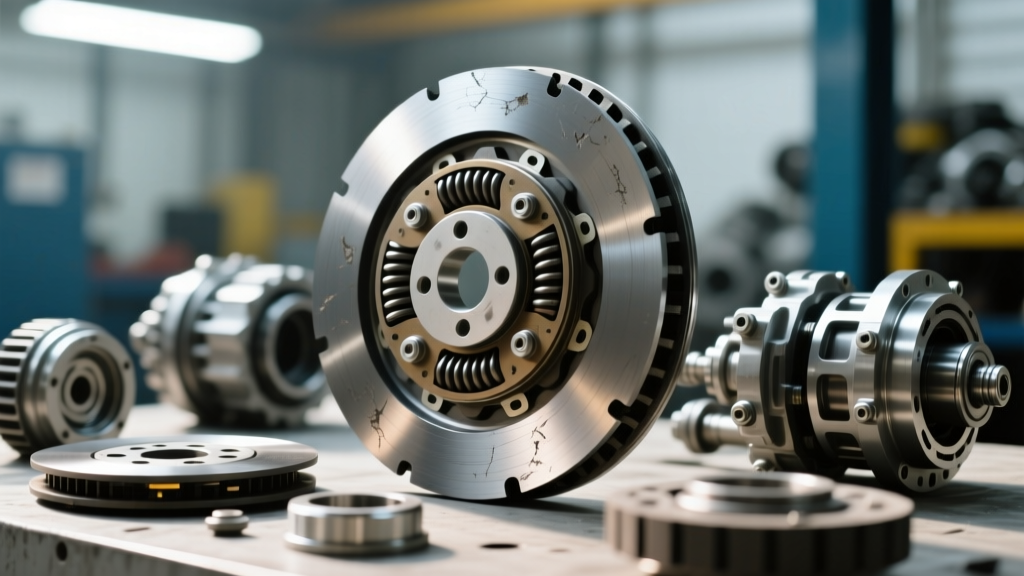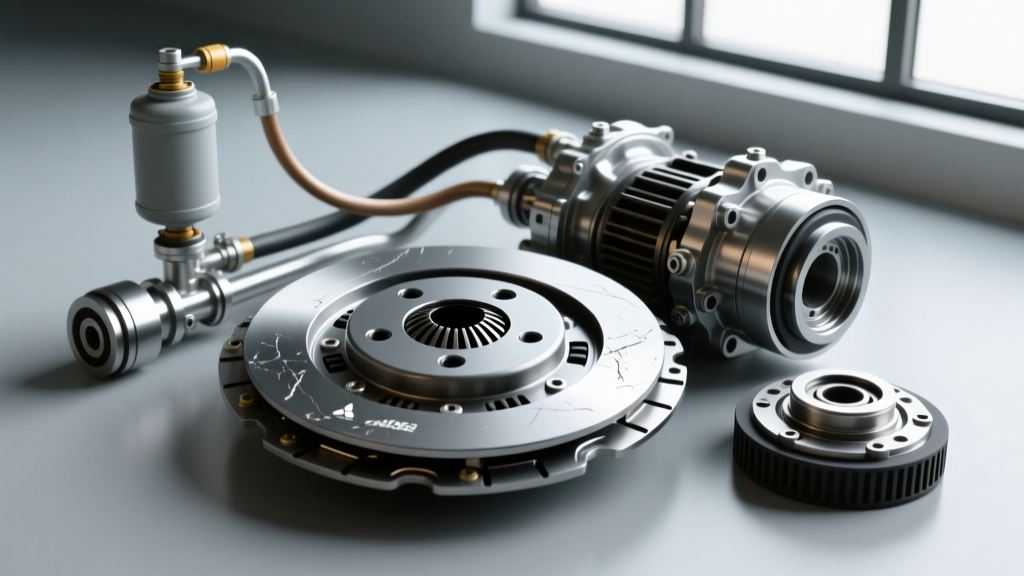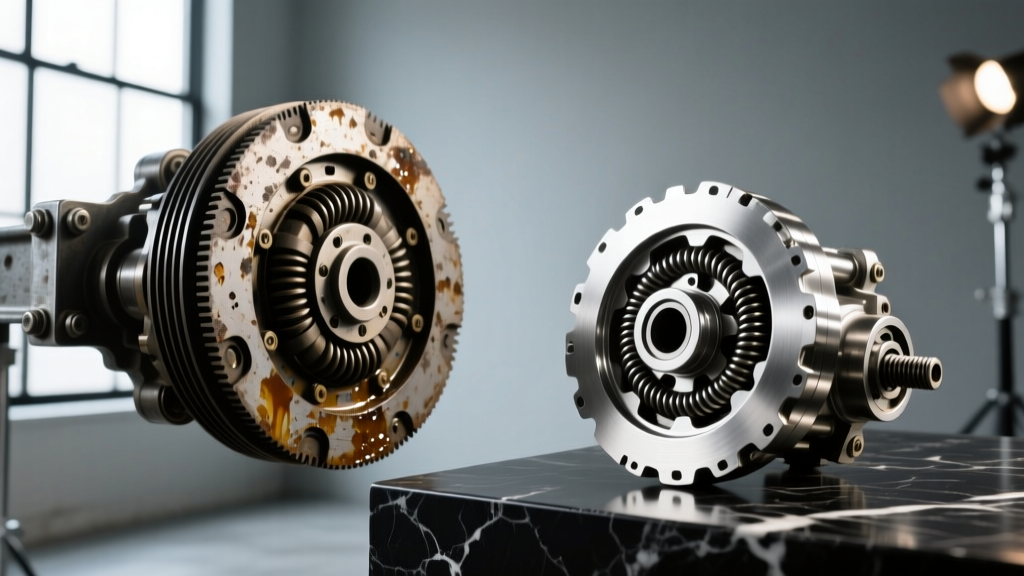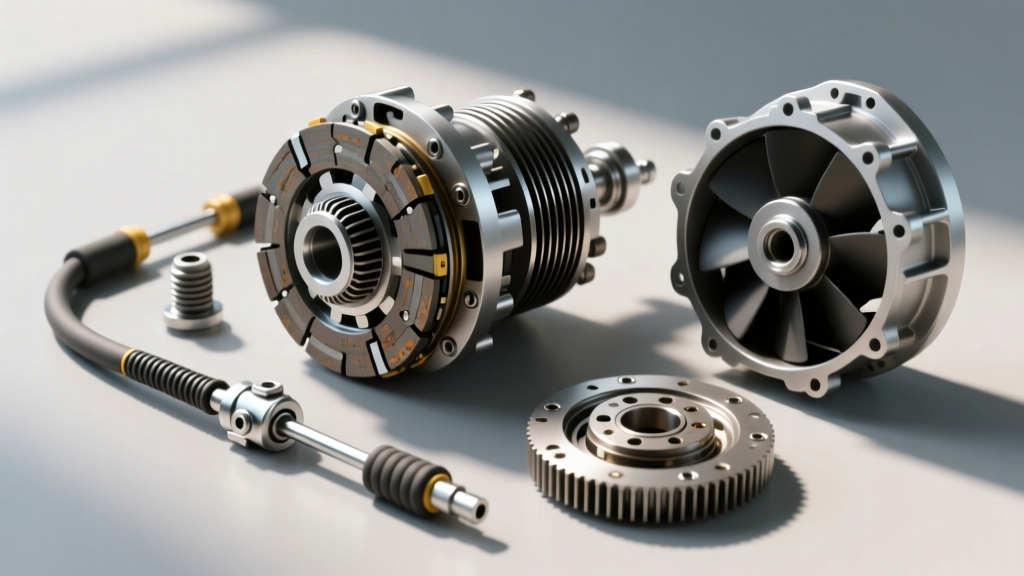
The Under-Hood Dilemma: Linkage vs. Cooling Systems
For fleet managers, heavy-duty diesel owner-operators, and commercial mechanics, under-hood mechanical linkages represent a critical intersection of drivetrain engagement and engine thermal management. When a manual transmission truck requires under-hood service, repair bills often overlap. Two distinct but equally vital components that frequently demand attention during major powertrain services are the manual transmission clutch cable and the engine cooling heavy duty fan clutch. While one governs the mechanical disengagement of the drivetrain (such as an Eaton Fuller or NV4500 transmission) and the other manages engine temperatures under severe loads, both share a common thread in 2026: they require meticulous adjustment, specialized diagnostic protocols, and significant labor investments.
This comprehensive cost analysis and diagnostic guide breaks down the exact symptoms of clutch cable problems, outlines the precision adjustment procedures required for heavy-duty applications, and provides a side-by-side financial comparison against replacing a severe-duty engine fan clutch. Understanding the economics of bundling these repairs can save commercial fleets thousands of dollars in duplicate teardown labor.
Diagnosing Clutch Cable Problems in Heavy-Duty Applications
Unlike hydraulic clutch systems found in modern light-duty pickups, many commercial medium-duty trucks, older Class 8 tractors, and heavy-duty diesel swaps rely on high-tensile steel Bowden cables to transfer pedal force to the bellhousing fork. Diagnosing clutch cable problems requires an understanding of mechanical binding, tensile fatigue, and housing degradation.
Common Failure Modes and Symptoms
- Incomplete Disengagement (Gear Grinding): If the inner steel wire has stretched beyond its yield point, or if the cable housing has compressed, the clutch fork will not travel the necessary 5/8-inch to 3/4-inch stroke. This results in grinding when shifting into 1st or Reverse, as the input shaft remains partially driven by the flywheel.
- Erratic Pedal Effort and Binding: A hallmark symptom of a failing cable is a pedal that feels notchy or requires exponentially more force to depress. This occurs when the internal PTFE (Teflon) or HDPE (High-Density Polyethylene) liner of the cable housing degrades, allowing moisture and road grime to induce friction against the inner wire.
- Pedal Return Failure: The clutch pedal return spring relies on the smooth glide of the cable. If the cable is fraying internally (often invisible without cutting the housing open), the stranded wire 'fishhooks' into the liner, preventing the pedal from returning to the firewall.
Expert Insight: Never attempt to lubricate a modern PTFE-lined heavy-duty clutch cable with WD-40 or standard chassis grease. These substances attract abrasive silica (dust), which accelerates liner wear. If a cable is binding, replacement is the only safe option for commercial vehicles.
Precision Clutch Cable Adjustment Protocol
Proper clutch cable adjustment is not merely about tightening a nut; it is about establishing the correct mechanical free-play to prevent premature throwout bearing failure while ensuring full clutch disc clamping force. In 2026, with high-torque diesel engines producing over 1,000 lb-ft of torque, incorrect adjustment can lead to catastrophic clutch slip and flywheel scoring.
Step-by-Step Adjustment Specifications
- Measure Pedal Free-Play: Using a steel ruler, measure the distance the pedal pad moves before you feel resistance from the clutch fork. The industry standard for heavy-duty manual transmissions is 1.0 inch to 1.5 inches of free-play at the pedal pad.
- Locate the Adjuster Mechanism: Depending on the chassis, adjustment occurs either at the firewall equalizer bar or directly at the bellhousing turnbuckle. For heavy-duty applications, bellhousing turnbuckles with dual locknuts are standard.
- Adjust the Turnbuckle: Loosen the secondary locknut. Thread the turnbuckle to increase or decrease cable tension. Cycle the pedal three times to seat the housing.
- Re-Measure and Torque: Verify the 1.0 - 1.5 inch free-play. Once confirmed, torque the adjuster locknuts to 18 lb-ft to prevent vibration-induced backing off. Ensure the bellhousing pivot ball stud is torqued to 25 lb-ft with a drop of blue threadlocker.
Cost Analysis: Clutch Cable vs. Heavy Duty Fan Clutch
Why compare a transmission linkage component to an engine cooling component? In severe-duty diesel trucks (e.g., Class 6-8 tractors or heavy-duty wreckers), replacing the transmission clutch or performing major bellhousing service often requires manipulating the radiator shroud, fan shroud, or engine support brackets. If the engine-side heavy duty fan clutch is showing signs of failure, smart fleet mechanics bundle the labor to avoid paying for duplicate under-hood teardowns.
2026 Shop Rate Economics & Parts Pricing
The average heavy-duty diesel shop rate in 2026 ranges from $165 to $225 per hour. Below is a detailed cost breakdown comparing the replacement of a manual clutch cable assembly against a pneumatic heavy-duty engine fan clutch.
| Component System | Part Type & Brand Example | Estimated Part Cost (2026) | Standard Labor Time | Total Estimated Cost |
|---|---|---|---|---|
| Manual Clutch Cable | Heavy-Duty Bowden Cable (e.g., Sachs / LuK Commercial) | $145 - $320 | 1.5 - 2.5 Hours | $390 - $880 |
| Heavy Duty Fan Clutch | Air-Operated Pneumatic Drive (e.g., Horton HTA Series) | $950 - $1,650 | 3.0 - 4.5 Hours | $1,445 - $2,660 |
| Bundled Labor Savings | Combined R&R (Remove & Replace) during engine service | N/A | Saves 1.5 Hours | Save $250 - $335 |
Material Science and Part Numbers
When sourcing parts, verifying the exact specifications is critical for E-E-A-T compliance and vehicle safety. For the clutch cable, ensure the inner wire possesses a minimum tensile strength of 1,200 lbs to handle the high clamp loads of 15.5-inch heavy-duty clutch discs. Refer to the RockAuto Heavy-Duty Catalog for cross-referencing OEM part numbers for specific commercial chassis.
For the engine cooling side, modern heavy duty fan clutch systems have largely moved away from viscous (silicone fluid) drives to air-actuated pneumatic clutches controlled by the ECM. These units, such as those detailed in the Horton Heavy-Duty Fan Drives documentation, engage via dash air pressure. A failing pneumatic fan clutch will often default to the 'engaged' position, causing a constant roaring noise, parasitic horsepower loss (up to 40 HP at high RPM), and severe fuel economy penalties.
Diagnostic Decision Framework: When to Replace vs. Adjust
Before authorizing a $2,500+ repair order, lead technicians must apply a strict diagnostic framework to determine if a component requires simple adjustment or full replacement.
Clutch Cable Decision Matrix
- Adjust Only: Pedal free-play is outside the 1.0-1.5 inch spec, but pedal effort remains smooth, consistent, and under 35 lbs of pressure. No visible fraying at the bellhousing fork attachment point.
- Replace Immediately: Pedal effort exceeds 45 lbs, the cable housing shows stress-whitening (indicating plastic deformation), or the inner wire has elongated more than 1/4 inch over its service life.
Fan Clutch Decision Matrix
- Electrical/Pneumatic Diag: If the fan clutch fails to engage under high coolant temperatures, check the ECM solenoid valve and air lines before condemning the clutch assembly itself. A $40 air line leak can mimic a $1,500 clutch failure.
- Replace: Visible silicone leaks on viscous models, or internal bearing play exceeding 0.010 inches on pneumatic hubs. For deeper transmission and drivetrain integration specs, mechanics frequently consult Eaton Fuller Transmission Specs to ensure drivetrain torque limits align with engine cooling capacities under maximum load.
Conclusion: Maximizing Fleet Maintenance ROI
Addressing clutch cable problems and executing precise adjustments is a low-cost, high-impact maintenance task that protects expensive multi-plate clutch assemblies and flywheels. However, when a heavy-duty truck is already in the bay for under-hood drivetrain work, evaluating the health of the heavy duty fan clutch is a strategic financial move. By understanding the exact part costs, labor overlaps, and diagnostic criteria outlined in this 2026 guide, fleet operators and diesel technicians can minimize vehicle downtime, prevent catastrophic thermal or drivetrain failures, and optimize their annual maintenance budgets.