The Viscous Shear Coupling: SBC 350 Fan Clutch Dynamics
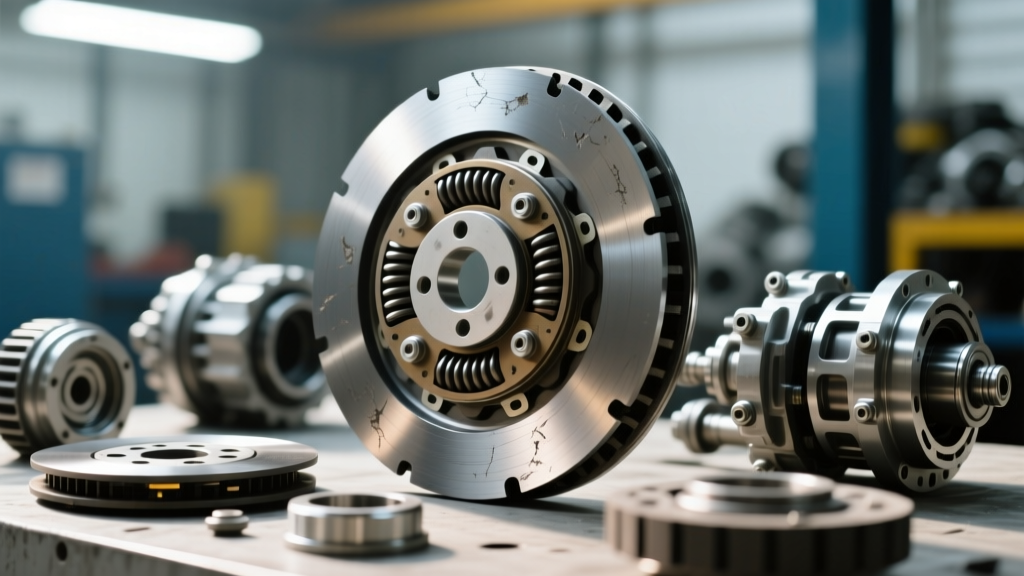
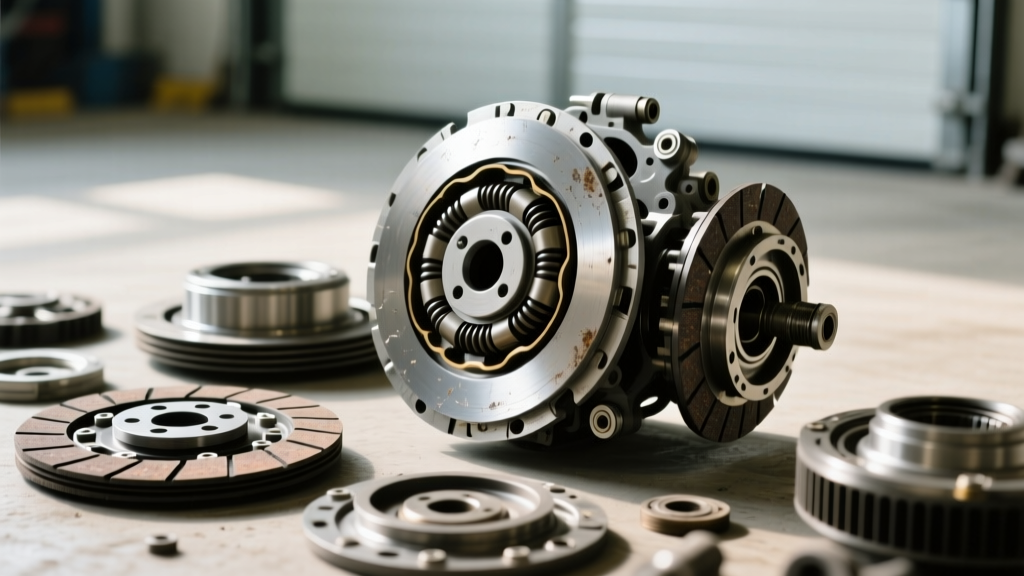
The Small Block Chevy (SBC) 350 remains one of the most prolific V8 engines in automotive history. While transmission and drivetrain clutches manage torque transfer to the wheels, the engine-driven cooling fan relies on a specialized mechanical clutch to manage parasitic drag and thermal regulation. The Chevy 350 fan clutch is a fluid-driven viscous shear coupling. It utilizes a high-viscosity silicone fluid to transfer rotational energy from the water pump shaft to the fan blade assembly. When under-hood temperatures spike, a bimetallic thermostat coil actuates an internal valve, allowing the silicone fluid to flood the shear chambers, effectively locking the fan closer to the engine's RPM. Understanding the failure modes of this component is critical for maintaining optimal operating temperatures and preventing catastrophic engine overheating or water pump bearing failure.
Root Cause Analysis: Primary Failure Modes
Diagnosing a failing fan clutch requires moving beyond simple symptom observation and understanding the metallurgical and fluid dynamic root causes. Below are the three most common failure modes specific to the SBC 350 platform.
1. Polydimethylsiloxane (Silicone) Fluid Degradation and Leakage
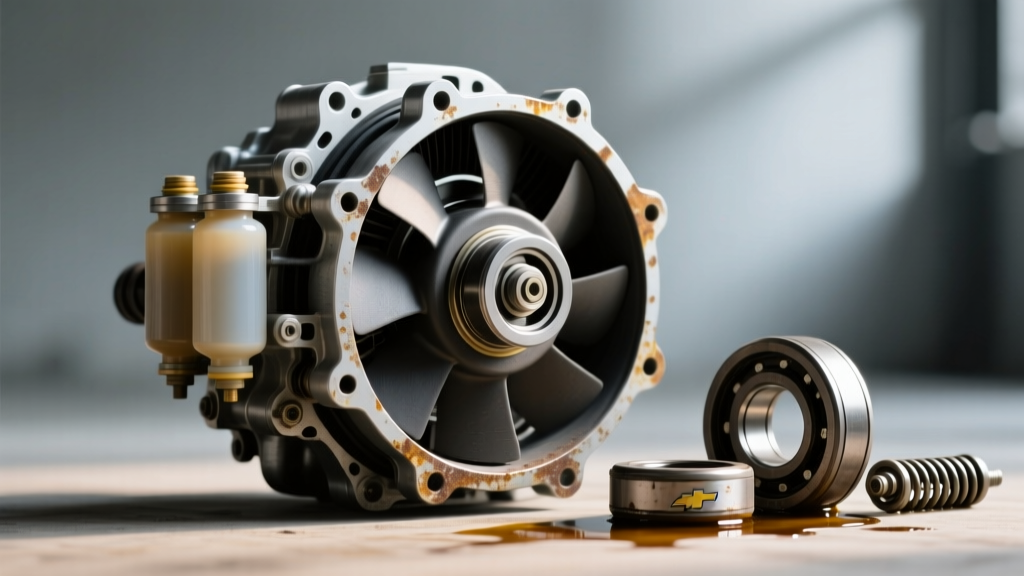
The internal shear chambers rely on polydimethylsiloxane (silicone) fluid, typically ranging from 10,000 to 60,000 centistokes (cSt) in viscosity depending on the duty cycle. Over years of extreme thermal cycling—especially in SBC 350 applications equipped with long-tube headers that radiate immense heat into the engine bay—the internal O-rings and gaskets harden and lose their elasticity. This results in micro-leaks. As the fluid volume drops, the clutch loses its ability to transfer torque, resulting in severe fan slip. Furthermore, prolonged exposure to excessive heat can cause the silicone fluid itself to oxidize and shear down, permanently reducing its viscosity and causing the clutch to slip even when fully engaged.
2. Bimetallic Thermostat Hysteresis and Fatigue
The thermal actuator on the face of the clutch is a bimetallic strip calibrated to open the internal valve at specific temperatures (usually between 160°F and 185°F at the clutch face). In high-mileage SBC 350 engines, repeated exposure to extreme under-hood heat can alter the metallurgical temper of this coil. This phenomenon, known as hysteresis, causes the coil to lose its precise calibration. The root cause is often localized heat soak from aftermarket exhaust manifolds or inadequate radiator airflow. The result is a delayed engagement, where the fan fails to lock up until the engine is already on the verge of overheating.
3. Internal Pilot Bearing Seizure
Inside the fan clutch hub is a sealed pilot bearing that supports the clutch body on the water pump shaft. If the seal fails, moisture and abrasive road debris infiltrate the bearing race. This causes pitting and eventual seizure. A seized fan clutch will either lock the fan at 1:1 ratio constantly (causing massive parasitic horsepower loss, excessive noise, and potential water pump shaft bearing destruction) or freeze entirely, snapping the drive pins and leaving the engine with zero mechanical cooling.
Diagnostic Framework: Isolating the Fault
Before replacing the unit, perform this structured diagnostic sequence to confirm the root cause:
- The Cold Spin Test: With the engine cold and off, attempt to spin the fan blade by hand. You should feel distinct viscous resistance. If it spins freely with zero drag, the internal fluid has leaked out or severely degraded.
- The Thermal Engagement Test: Start the cold engine. The fan should spin moderately due to cold fluid viscosity, then slow down as the fluid is pumped back into the reservoir. Once the thermostat opens and hot air hits the clutch face (approx. 170°F), you should hear a distinct increase in fan roar as the valve opens and the clutch engages.
- The Newspaper Block Test: With the engine fully warmed up and idling, carefully roll up a newspaper and attempt to stop the fan blade. A properly engaging thermal clutch will easily stall the blade and shut off the engine or slip audibly. If the blade stops easily without stalling the engine or slipping, the clutch is failed.
- Water Pump Shaft Inspection: Check for lateral play in the fan clutch. If the entire assembly wobbles on the water pump shaft, the internal pilot bearing is destroyed, and the water pump must be inspected for shaft scoring.
2026 Buyer's Guide: Thermal vs. Severe Duty Replacements
When sourcing a replacement Chevy 350 fan clutch, buyers are often confused by the marketing terminology. The primary distinction lies in the internal fluid volume, the valve port sizing, and the thermal calibration curve. Below is a comparison of the top-tier replacement options available in 2026 for the SBC 350 platform.
| Brand / Part Number | Type | Est. Price (2026) | Best Application | Technical Notes |
|---|---|---|---|---|
| Hayden 2732 | Heavy-Duty Thermal | $65 - $85 | Stock to mildly modified SBC 350, towing, daily driving. | Standard rotation. Excellent OEM replacement with factory-matched thermal calibration. |
| Hayden 2947 | Severe-Duty Thermal | $90 - $115 | High-horsepower SBC 350, off-road, heavy towing, tight engine bays. | Larger fluid reservoir, higher viscosity fluid. Engages faster and transfers more torque at peak heat. |
| AC Delco 15-40056 | Standard Thermal | $55 - $75 | Strictly stock, numbers-matching restorations, low-RPM cruising. | Exact OE specification. Not recommended for modified engines with high under-hood ambient temps. |
| Derale 16214 | Electronic Programmable | $180 - $220 | Restomod SBC 350, LS-swapped classics, custom ECU tuning. | Replaces thermal coil with an electronic solenoid. Allows precise RPM-to-temp mapping via controller. |
Expert Insight: Never install a non-thermal (centrifugal) fan clutch on a street-driven SBC 350. Non-thermal clutches rely solely on engine RPM to pump fluid, meaning the fan spins at high speeds even when the engine is cold, wasting horsepower and delaying engine warm-up times. Always select a thermal or electronic unit for proper hysteresis management.
Installation Specifications and Torque Data
Proper installation of the fan clutch on a Chevy 350 is where many DIY mechanics make critical errors, often resulting in destroyed water pumps or shattered fan blades. The SBC 350 was produced across decades with varying accessory drive configurations, which directly impacts the installation procedure.
Thread Direction Identification
This is the most crucial step. The thread direction of the water pump shaft is dictated by the belt drive system, not the year of the engine block:
- V-Belt (Driver-Side Water Pump Inlet): The water pump rotates clockwise. To prevent the fan clutch nut from loosening under load, the shaft nut is Left-Hand (Reverse) Thread. You must turn it counter-clockwise to tighten.
- Serpentine Belt (Passenger-Side Water Pump Inlet): The water pump rotates counter-clockwise. The shaft nut is Right-Hand (Standard) Thread. Turn clockwise to tighten.
Torque Specifications and Clearances
The fan clutch hub nut should be torqued to 15 to 18 lb-ft. Do not exceed 20 lb-ft, as the water pump shaft is relatively soft and can be stretched or snapped. Use a dedicated fan clutch wrench set (typically 1-1/4 inch and 1-7/8 inch wrenches) to hold the water pump pulley stationary while applying torque. Never use an impact wrench, as the shock loading can shatter the internal ceramic seals of the new clutch.
Finally, verify the fan blade to radiator shroud clearance. The SBC 350 requires a minimum of 1/2 inch clearance between the blade tips and the shroud, though 1 inch is optimal for airflow efficiency and to account for engine mount deflection under heavy acceleration. For deeper technical data on cooling system dynamics and component sourcing, consult resources like Summit Racing Equipment and the engineering tech library at Hayden Automotive.
Final Verdict
Treating the Chevy 350 fan clutch as a precision drivetrain component rather than a simple bolt-on accessory is the key to reliable cooling. By understanding the root causes of silicone degradation and bimetallic fatigue, and by selecting the correct thermal profile for your specific engine build, you can eliminate parasitic drag while ensuring your SBC 350 maintains optimal thermal equilibrium in any driving condition.