The Great Misdiagnosis: Engine Harmonics vs. Drivetrain Chatter
When upgrading a classic Small Block Chevy (SBC) 350 for modern performance, builders frequently encounter a violent, shuddering vibration that peaks between 1,500 and 2,500 RPM. In the performance automotive community, this is routinely—and incorrectly—diagnosed as transmission clutch chatter, a warped flywheel, or a failing pressure plate. However, as NVH (Noise, Vibration, and Harshness) diagnostic tools have become more accessible in 2026, experts have identified a primary culprit hiding in plain sight: the engine cooling fan assembly.
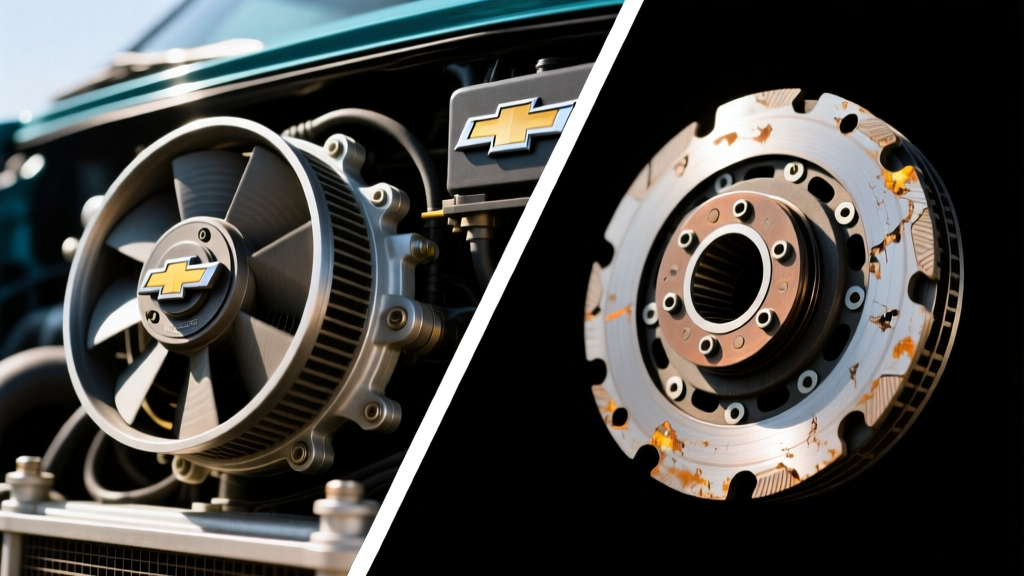
A heavy-duty or failing fan clutch chevrolet 350 assembly creates severe rotational imbalance at the front of the crankshaft. Because the SBC 350 block is a rigid casting, these harmonic vibrations travel directly through the block and into the bellhousing, perfectly mimicking the symptoms of a slipping or chattering friction disc. Before you drop your transmission and spend $1,200 on a new clutch kit, you must systematically isolate engine-driven harmonics from true drivetrain clutch chatter.
Expert Insight: True clutch chatter only occurs under load during the friction engagement phase (taking off from a dead stop in 1st gear). If your vehicle vibrates or shudders while revving in Neutral, or while cruising under light load at 2,000 RPM, you are chasing an engine harmonic issue, not a transmission clutch failure.
How a Failing Fan Clutch Mimics Clutch Chatter
The standard Chevrolet 350 water pump snout utilizes a 5/8"-18 UNF thread to mount the fan clutch. When builders upgrade to severe-duty thermal clutches (like the Hayden 2747) or solid mechanical billet fans for track use, they introduce significant rotational mass at the very front of the engine. If the fan clutch is internally degraded, if the mounting flange is warped, or if the fan blade is slightly bent, it creates a 1x or 2x order vibration. This vibration frequency aligns perfectly with the RPM range where most street-driven SBC 350s experience clutch engagement, leading to the misdiagnosis.
Step-by-Step Isolation: Pinpointing the Vibration Source
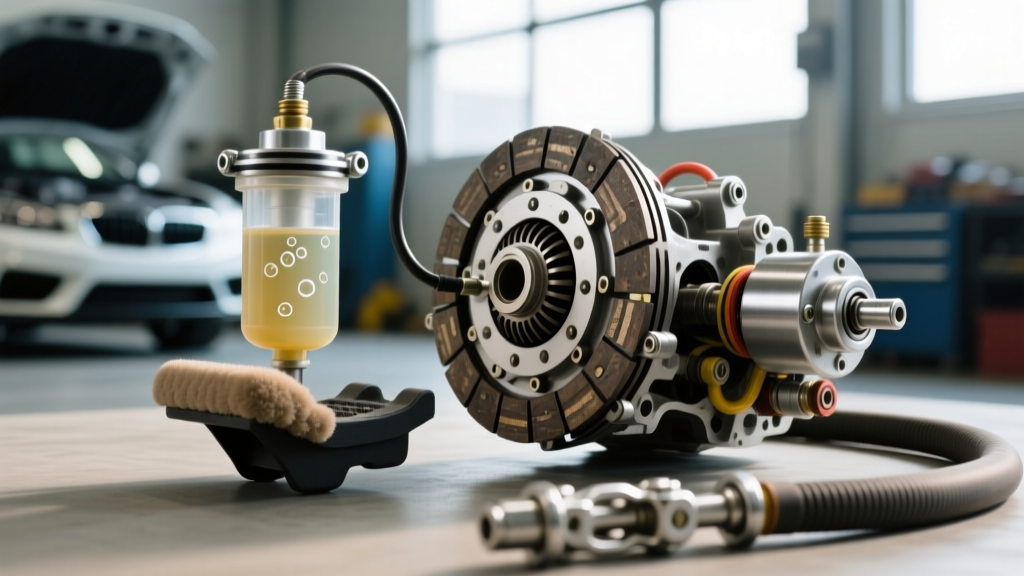
To accurately diagnose clutch symptoms on a Chevy 350, you must separate the engine's rotational assembly from the drivetrain's load-bearing engagement. Use the following diagnostic matrix to map your specific vibration profile.
| Test Condition | RPM Range | Vibration Characteristics | Probable Failure Point |
|---|---|---|---|
| Revving in Neutral (No Load) | 1,800 - 2,500 RPM | High-frequency buzzing, shudder felt in shifter and floorboards | Fan clutch imbalance, harmonic balancer slip, or water pump bearing play |
| Taking off from stop (Under Load) | 1,200 - 1,800 RPM | Violent fore-aft bucking, grabbing sensation, loud metallic clatter | True clutch chatter (oil contamination, hot spots, marcel spring failure) |
| Cruising in 4th/5th Gear (Light Load) | 2,000 - 2,500 RPM | Steady harmonic drone, steering wheel oscillation | Driveshaft imbalance, worn transmission extension housing bushing |
| Depressing Clutch Pedal (Coasting) | Any RPM | Vibration immediately disappears | Pilot bearing failure or input shaft bearing wear |
The "Pull Test" for the Fan Clutch Chevrolet 350
If your NVH profile points to an engine-side issue, perform the Pull Test. With the engine completely cold, remove the fan shroud and unbolt the fan clutch assembly from the water pump pulley. Temporarily secure the fan out of the way. Start the engine and allow it to reach operating temperature (monitor your coolant temps closely via an OBD2 scanner or aftermarket gauge, as you have no active cooling). Rev the engine through the 1,500–2,500 RPM range. If the vibration vanishes, your fan clutch assembly is unbalanced or failing. Replace it immediately to prevent catastrophic water pump bearing failure or radiator damage.
Addressing True Clutch Chatter: Flywheel and Bellhousing Specs
If the isolation tests confirm that the vibration only occurs under load during clutch engagement, you are dealing with genuine clutch chatter. In performance SBC 350 builds—especially those mating classic blocks to modern Tremec TKX or Magnum 6-speed transmissions—chatter is almost always caused by improper flywheel runout, bellhousing misalignment, or aggressive friction materials.
1. Flywheel Runout and Surface Condition
Clutch chatter occurs when the friction disc cannot apply pressure evenly across the flywheel surface. According to GM factory service specifications and aftermarket performance standards, maximum allowable flywheel runout is 0.005 inches.
When upgrading, avoid cheap, no-name aluminum flywheels. For a street-driven Chevy 350 producing 400-550 HP, an SFI 1.1 certified steel flywheel (such as the McLeod 460101 or RAM 910-1530) provides the necessary rotational mass to dampen engagement shock. If you prefer the quick-revving nature of aluminum (like the Fidanza 115551, currently retailing around $420 in 2026), you must use a clutch disc with high-hysteresis marcel springs to absorb the engagement shock, otherwise chatter is guaranteed.
2. Bellhousing Register Hole Alignment
The most overlooked cause of clutch chatter and premature transmission wear is bellhousing runout. If the bellhousing register hole is not perfectly concentric with the crankshaft centerline, the transmission input shaft binds against the pilot bearing and clutch disc hub during engagement, causing a violent shudder.
- Acceptable Runout: 0.005" Total Indicator Runout (TIR) maximum.
- Correction Method: Use offset dowel pins (available in 0.007", 0.014", and 0.021" offsets from brands like Lakewood or RobbMc) to dial in the bellhousing.
- Measurement: Mount a magnetic dial indicator to the back of the crankshaft or flywheel, resting the needle on the inside register bore of the bellhousing. Rotate the engine 360 degrees by hand.
3. Friction Material Selection for the SBC 350
Not all clutch discs are created equal. If you have upgraded your Chevy 350 with a high-stall torque converter (for auto-to-manual swaps) or a stiff aftermarket pressure plate, your friction material choice dictates drivability.
- Full Organic: Best for street manners. Smooth engagement, zero chatter, but prone to slipping above 450 lb-ft of torque.
- Kevlar / Aramid: Extremely high torque capacity, but notorious for clutch chatter in stop-and-go traffic unless bedded perfectly under high-heat track conditions. Avoid for dedicated street cars.
- Ceramic / Organic Blend (Puck Disc): The ideal 2026 compromise for Restomod SBCs. Offers aggressive bite for high-horsepower launches while the organic segments cushion low-speed engagement to eliminate chatter.
Final Torque Specs and Assembly Checklist
Whether you are reinstalling a balanced fan clutch or bolting up a new performance clutch assembly, precise torque specifications are non-negotiable. Always refer to the specific manufacturer's guidelines, but the following ARP fastener specifications serve as the gold standard for SBC 350 builds.
| Component | Fastener Spec | Lubrication | Torque Specification |
|---|---|---|---|
| Flywheel to Crankshaft (7/16" Bolts) | ARP 200-2802 | ARP Ultra-Torque | 70 - 80 ft-lbs |
| Pressure Plate to Flywheel (3/8" Bolts) | ARP 100-0901 | ARP Ultra-Torque | 35 ft-lbs (Star Pattern) |
| Fan Clutch to Water Pump Pulley | Factory 5/8"-18 Nut | Light Threadlocker | 15 - 20 ft-lbs |
| Bellhousing to Engine Block | 3/8"-16 Bolts | Engine Oil | 35 - 45 ft-lbs |
Summary
Diagnosing drivetrain vibrations on a Chevy 350 requires a methodical approach. Do not blindly throw a $1,200 clutch kit at a vehicle that simply needs an $85 Hayden severe-duty fan clutch and a water pump replacement. By utilizing load-based isolation testing, checking bellhousing runout with a dial indicator, and selecting the correct friction material for your specific horsepower goals, you can eliminate clutch chatter and ensure your SBC 350 performs flawlessly on the street and the strip.