Do Hypercars Have a Clutch Pedal? The Analog vs. Digital Divide
When automotive enthusiasts and collectors ask, "do hypercars have a clutch pedal?" the answer in 2026 is predominantly no. The modern hypercar landscape—dominated by the Bugatti Tourbillon, McLaren W1, and Ferrari F80—relies on lightning-fast Dual-Clutch Transmissions (DCT), automated manuals, or hybrid torque-vectoring systems that eliminate the need for a physical left pedal. However, the analog era of hypercars birthed a different breed of machine, one that demanded physical driver engagement and utilized traditional, albeit highly advanced, clutch architectures.
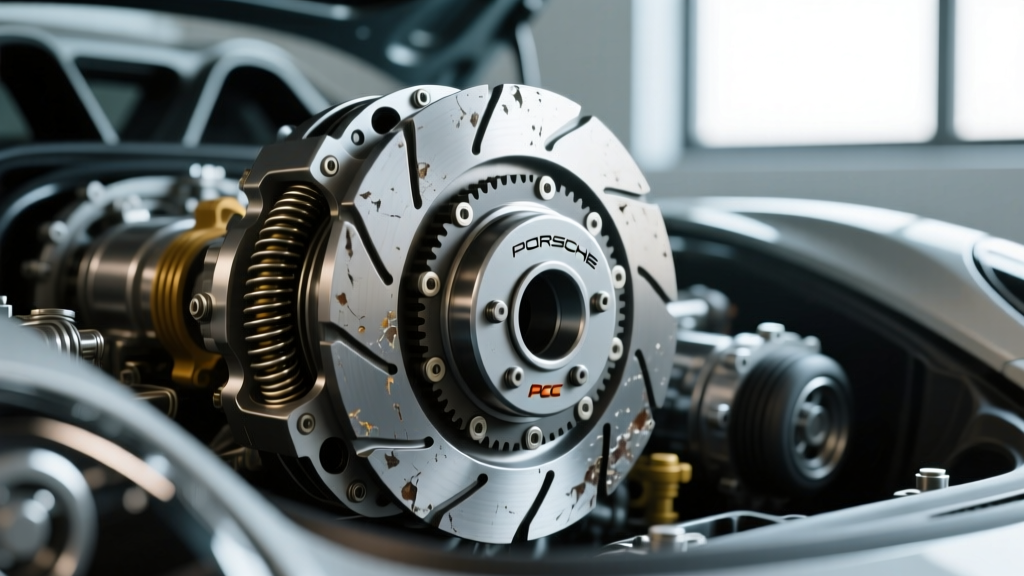
The most iconic example of a three-pedal hypercar is the Porsche Carrera GT (chassis code 980). Produced between 2004 and 2007, this 5.5-liter V10 masterpiece utilizes a physical clutch pedal linked to the notorious Porsche Ceramic Composite Clutch (PCCC) system. Because it uses a traditional pedal-to-hydraulic-to-fork mechanism, it is subject to the same mechanical vulnerabilities as standard manual cars, most notably: throw-out bearing (release bearing) noise and failure.
In this model-specific repair guide, we will bypass the DCTs of the modern era and dive deep into the diagnostics, failure modes, and engine-out replacement protocols for the Carrera GT’s throw-out bearing, providing exact torque specs, part numbers, and 2026 market cost analyses.
The Anatomy of the PCCC and Release Bearing
Before diagnosing throw-out bearing noise, it is critical to understand the environment in which it operates. The Carrera GT does not use a standard organic or Kevlar clutch disc. It uses a ceramic composite friction surface designed to handle the V10’s 612 horsepower while maintaining an incredibly small diameter, allowing the engine to sit lower in the carbon-fiber monocoque chassis.
The throw-out bearing (officially termed the clutch release bearing in Porsche workshop manuals) is a hydraulic concentric slave cylinder assembly. Unlike older cable-driven setups, hydraulic fluid pressure pushes the bearing against the diaphragm spring fingers of the PCCC pressure plate. Because the Carrera GT’s engine bay is tightly packaged and the V10 generates immense radiant heat, the bearing’s internal grease and seals are subjected to extreme thermal cycling. Over time, the PCCC sheds microscopic carbon-ceramic dust, which infiltrates the bellhousing and contaminates the bearing’s raceways, leading to catastrophic failure.
Identifying Release Bearing Noise vs. PCCC Wear
Diagnosing a failing throw-out bearing in a hypercar requires a trained ear, as the acoustic signature of a carbon-ceramic clutch can mask early bearing degradation. In 2026, master technicians utilize wireless endoscopic microphones routed through the bellhousing inspection cover to isolate frequencies without dropping the engine.
- The Idle Chirp: A high-pitched chirping or squealing noise at idle that disappears when the clutch pedal is slightly depressed. This indicates the bearing is dry or the internal race is pitted. Depressing the pedal loads the bearing, temporarily silencing the rattle.
- The Engagement Grind: A harsh, metallic grinding sensation transmitted through the carbon-fiber shift knob and clutch pedal during 1st-to-2nd gear shifts. This points to bearing seizure or severe spalling on the contact face.
- Pedal Vibration: A high-frequency buzzing felt in the left foot at the friction bite-point, indicating the bearing is no longer spinning concentrically against the pressure plate fingers.
Diagnostic Matrix: Bearing Chirp or Clutch Slip?
Misdiagnosing a throw-out bearing as a worn PCCC friction disc (or vice versa) is a costly mistake, as both require an engine-out service. Use the following diagnostic matrix to isolate the fault:
| Symptom Profile | Probable Fault | Diagnostic Action |
|---|---|---|
| Chirp at idle, vanishes with pedal pressure | Throw-Out Bearing / Release Cylinder | Inspect bellhousing via endoscope for bearing dust; check hydraulic fluid for metallic particulates. |
| Slipping under load (3rd gear, full throttle) | PCCC Friction Disc Wear | Measure clutch disc thickness through inspection port (Spec: Min 1.2mm remaining). |
| Harsh vibration at engagement, no slip | Pressure Plate Finger Wear / Bearing Spalling | Check pedal travel; inspect diaphragm spring fingers for uneven wear grooves. |
| Spongy pedal, intermittent disengagement | Concentric Slave Cylinder Seal Leak | Pressure test hydraulic clutch circuit at 4 bar; check for DOT 4 fluid weeping at bellhousing weep hole. |
Model-Specific Repair Protocol: Engine-Out Bearing Replacement
Replacing the throw-out bearing on a Porsche Carrera GT is not a weekend driveway project. The vehicle’s carbon-fiber engine cover and structural rear subframe dictate that the entire powertrain must be lowered out of the chassis. According to Rennlist Carrera GT technical archives, attempting to separate the transmission while the engine is in the car risks cracking the magnesium bellhousing or damaging the fragile carbon-fiber rear diffuser.
Step 1: Powertrain Extraction and Separation
- Drain the transmission fluid (Porsche Pentosin FFL-3 equivalent) and engine oil.
- Disconnect the hybrid-style high-voltage telemetry lines (if equipped with aftermarket data loggers) and the main engine harness.
- Support the engine/transmission assembly on a specialized 980-chassis lifting table.
- Remove the rear subframe mounting bolts (M14, 160 Nm) and lower the assembly.
- Unbolt the bellhousing from the engine block. Note: The Carrera GT uses a dry-sump system; ensure the oil scavenging lines are capped immediately to prevent contamination.
Step 2: Bearing Removal and Surface Prep
The release bearing (Part Number: 980.116.711.00) is mounted directly to the transmission input shaft sleeve. Once removed, the aluminum sleeve must be polished with 600-grit emery cloth. If the sleeve is scored deeper than 0.05mm, the transmission front bearing retainer must be replaced. According to SACHS engineering guidelines for high-performance release bearings, installing a new bearing on a scored sleeve will result in immediate seal failure and hydraulic fluid loss within 500 miles.
Critical Torque Specifications & Clearances
When reassembling the PCCC system and mating the transmission to the V10, adherence to factory torque specifications is non-negotiable. The Carrera GT’s lightweight components are highly susceptible to thread stripping and warping.
- Flywheel to Crankshaft (M8x1 bolts): 23 Nm + 90 degrees (Torque-to-yield; must use new bolts).
- Clutch Pressure Plate to Flywheel (M8 bolts): 25 Nm in a star pattern.
- Bellhousing to Engine Block (M10 bolts): 65 Nm.
- Engine Mounts to Subframe: 85 Nm.
- Concentric Slave Cylinder to Bellhousing: 10 Nm (Do not overtighten; housing is cast aluminum).
Expert Tip: Before installing the transmission, you must pre-fill and bench-bleed the concentric slave cylinder. The Carrera GT’s hydraulic line routing features a high-point trap near the firewall that makes traditional pedal-pumping bleeding nearly impossible without introducing air into the PCCC actuation circuit.
2026 Cost Analysis: The Hypercar Tax
Why does a throw-out bearing that costs less than $400 result in a five-figure repair bill? The answer lies in the "hypercar tax"—the mandatory preventative maintenance and labor intensity required when the engine is out of a million-dollar chassis.
| Component / Service | 2026 Estimated Cost (USD) | Notes |
|---|---|---|
| OEM Release Bearing (980.116.711.00) | $380 - $450 | Often backordered; requires dealer allocation. |
| PCCC Clutch Kit (If replaced concurrently) | $4,500 - $6,000 | Highly recommended if disc is below 1.5mm. |
| Engine-Out Labor (15-20 Hours) | $3,000 - $5,000 | Requires specialized 980 lift table and 2 techs. |
| Fluids, Gaskets, and Hardware | $600 - $900 | Includes FFL-3 fluid, DOT 4, exhaust gaskets. |
| Total Repair Estimate | $8,480 - $12,350 | Varies by region and independent vs. dealer. |
With Carrera GT values in 2026 routinely exceeding $1.8 million at auction, a $12,000 clutch and bearing service is considered standard preservation. However, ignoring the early signs of throw-out bearing noise can lead to the bearing seizing against the pressure plate fingers, destroying the $6,000 PCCC assembly and potentially scoring the magnesium bellhousing—a part that is virtually irreplaceable today.
Final Verdict on Hypercar Clutch Diagnostics
So, do hypercars have a clutch pedal? The digital ones do not, but the analog legends like the Carrera GT certainly do, and they demand immense respect during diagnostics. Throw-out bearing noise in a mid-engine V10 hypercar is never just a simple squeak; it is a warning of impending hydraulic failure and ceramic dust contamination. By utilizing endoscopic diagnostics, adhering strictly to Porsche’s torque-to-yield specifications, and understanding the thermal realities of the PCCC system, technicians can preserve the visceral, three-pedal hypercar experience for the next generation of collectors.