The Hidden Clutch Packs Inside Your Automatic Transmission
When drivers hear the word "clutch," they immediately picture a manual gearbox, a heavy pedal, and a single friction disc. However, modern automatic transmissions rely on a complex, hidden network of internal hydraulic clutch packs to execute gear changes. Units like the GM 6L80, Ford 10R80, and ZF 8HP utilize anywhere from four to six distinct multi-disc clutch packs. When these internal frictions glaze, wear out, or suffer from hydraulic piston failure, the result is severe slipping, torque converter shudder, and limp-mode defaults.
In the 2026 aftermarket rebuild space, the Carmount Clutch X performance friction module kit has emerged as a highly debated upgrade. Marketed as a high-energy, carbon-Kevlar woven replacement for failing OEM cellulose frictions, it promises to eliminate recurring slip issues in heavy-duty and modified vehicles. In this comprehensive Carmount Clutch X review and buyer's guide, we will dissect its material science, compare it to OEM paper frictions, and provide transmission-specific installation data to determine if it is the ultimate fix for automatic transmission clutch problems.
Diagnostic Framework: Isolating Internal Automatic Clutch Failures
Before investing in a premium friction upgrade kit, it is critical to verify that your automatic transmission is actually suffering from clutch pack degradation rather than a simple solenoid or valve body issue. Modern Transmission Control Modules (TCMs) continuously monitor the Input Shaft Speed (ISS) and Output Shaft Speed (OSS) sensors. If the TCM commands a specific gear and the calculated ratio deviates by more than 5% from the expected parameter, it sets a diagnostic trouble code (DTC).
Common Clutch Slip Codes
- P0730 (Incorrect Gear Ratio): A generic slip code indicating the TCM cannot verify the current gear state, often pointing to severe 3-5-R or 4-5-6 clutch pack burnout.
- P0733 (Gear 3 Incorrect Ratio): In the GM 6L80, this almost exclusively isolates the 3-5-R clutch pack or the corresponding wave plate failure.
- P0735 (Gear 5 Incorrect Ratio): Typically points to the 4-5-6 clutch pack or the 5th gear one-way roller clutch failing to hold.
- P0741 (Torque Converter Clutch Stuck Off): While technically a TCC issue, severe TCC shudder in units like the Ford 10R80 is often exacerbated by degraded Clutch C and D apply pressures.
According to diagnostic frameworks published by ATSG, verifying clutch failure requires hooking up a transmission pressure gauge to the specific clutch apply tap. If line pressure is at spec (e.g., 180-220 PSI in Drive) but the clutch tap pressure drops during the slip event, you have confirmed internal seal failure or friction burnout, necessitating a teardown.
Carmount Clutch X Review: Material Science and Engineering
Standard OEM automatic transmission frictions are typically manufactured from a cellulose-based paper composite bonded to a steel core. While excellent for smooth, comfortable shifts in stock daily drivers, cellulose frictions are highly susceptible to thermal degradation. When subjected to the immense heat generated by heavy towing, aftermarket tuning, or frequent stop-and-go traffic, the resin in paper frictions breaks down, leading to glazing and rapid slip.
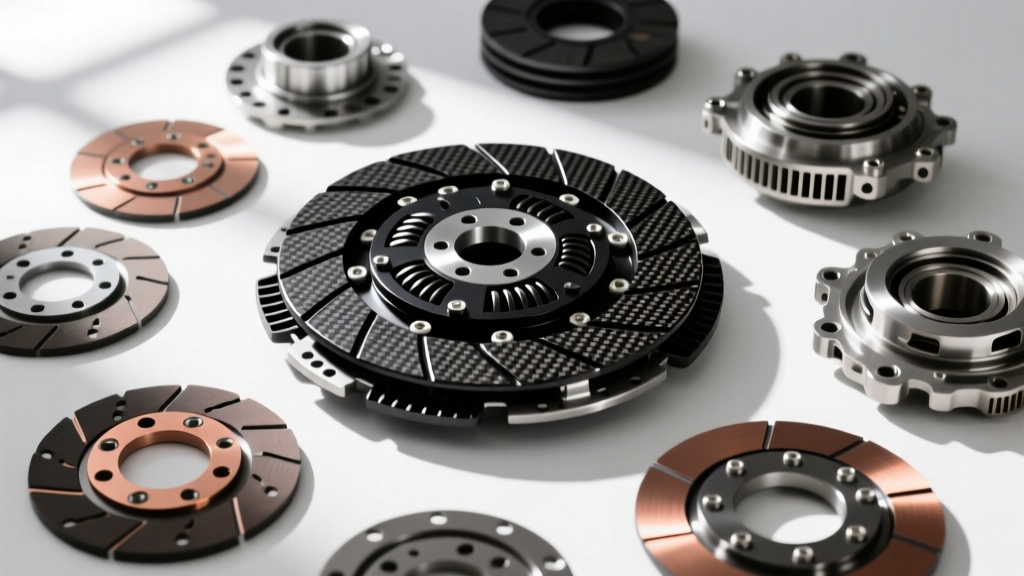
The Carmount Clutch X kit utilizes a proprietary carbon-fiber and Kevlar woven matrix. Carbon-fiber frictions offer a significantly higher coefficient of friction (mu) and possess thermal stability ratings exceeding 400°F (204°C) without experiencing the fade characteristic of paper frictions. Furthermore, the porous nature of the carbon weave allows for superior transmission fluid retention, ensuring the friction surface remains lubricated and cooled during high-RPM apply events.
OEM vs. Carmount Clutch X: 2026 Technical Comparison
For transmission rebuilders and DIY enthusiasts weighing their options, understanding the mechanical trade-offs is essential. Below is a direct comparison of standard OEM cellulose modules versus the Carmount Clutch X carbon-Kevlar kit.
| Specification | OEM Cellulose Friction Pack | Carmount Clutch X (Carbon/Kevlar) |
|---|---|---|
| Material Composition | Cellulose paper / Phenolic resin | Woven Carbon-Fiber / Kevlar matrix |
| Max Thermal Threshold | ~280°F (137°C) | ~425°F (218°C) |
| Coefficient of Friction | 0.12 - 0.14 (Dynamic) | 0.16 - 0.18 (Dynamic) |
| Shift Quality | Smooth, OEM-compliant | Firmer, more aggressive engagement |
| Break-in Procedure | Minimal (10-20 miles) | Mandatory (50 miles, no WOT) |
| Best Application | Stock daily drivers, light towing | Towing, tuned vehicles, off-road |
Transmission-Specific Applications and Known Failure Points
The true test of any aftermarket friction kit is how it addresses the inherent mechanical flaws of specific transmission models. Here is how the Carmount Clutch X performs in the most prevalent automatic transmissions on the road today.
GM 6L80 / 6L90: The 3-5-R Wave Plate Dilemma
The GM 6L80 and 6L90 are notorious for premature 3-5-R clutch pack failure. As documented by Sonnax, the OEM 3-5-R wave plate is prone to metal fatigue, causing it to fracture or over-compress. This allows the apply piston to over-stroke, bottoming out and instantly burning the cellulose frictions. When rebuilding a 6L80, simply replacing the burnt paper frictions is a band-aid. Upgrading to the Carmount Clutch X carbon frictions, paired with a heavy-duty Kolene-coated steel plate and an upgraded wave plate eliminator, drastically increases the torque capacity of the 3-5-R pack, making it virtually bulletproof for trucks pulling heavy loads.
Ford 10R80: Clutch C/D Degradation and TCC Shudder
Ford’s 10-speed automatic is an engineering marvel but suffers from severe Torque Converter Clutch (TCC) shudder and Clutch C/D hub wear. The tight packaging and ultra-low viscosity Mercon ULV fluid often lead to boundary lubrication starvation during the C-to-D shift overlap. The Carmount Clutch X kit for the 10R80 features micro-grooved carbon frictions designed to channel the ultra-thin ULV fluid more efficiently across the friction surface, reducing the micro-slip that causes the infamous 10R80 highway shudder.
ZF 8HP: Clutch Drum Scoring
In the ZF 8HP (used in Ram, BMW, and Jaguar applications), the aluminum clutch drums are prone to scoring where the steel friction tabs ride. If the OEM paper frictions wear through to the steel core, the drum is often destroyed. The Carmount Clutch X utilizes a slightly softer, resin-impregnated backing plate on its carbon frictions, which transmission experts featured in Transmission Digest have noted is more forgiving on aging ZF aluminum drums, potentially saving rebuilders hundreds of dollars in hard-part replacements.
Rebuilder’s Guide: Installation Specs and Clearances
Installing high-energy carbon frictions requires strict adherence to clearance specifications. Carbon-fiber frictions do not compress or "wear in" to the same degree as paper frictions. If pack clearance is too tight, the transmission will experience drag, overheating the fluid and warping the steels. If it is too loose, you will experience delayed, harsh engagements.
Critical Assembly Data
- Pre-Soaking: Carmount Clutch X frictions MUST be submerged in the exact specified transmission fluid (e.g., Dexron ULV or Mercon ULV) for a minimum of 2 hours prior to assembly. Carbon weaves are highly porous and will draw fluid out of the valve body upon first startup if installed dry, causing immediate cavitation and pump starvation.
- Pack Clearance Formula: Target 0.050" to 0.070" of total clearance per friction disc in the pack. For a 5-disc clutch pack, your total clearance (measured with a feeler gauge between the snap ring and the top pressure plate) should be between 0.250" and 0.350".
- Snap Ring Selection: Most OEM and aftermarket kits provide selective snap rings ranging from 2.0mm to 3.2mm in 0.2mm increments. Always measure and select the thickest snap ring that still allows you to hit your target clearance to maximize piston travel efficiency.
- Valve Body Modifications: Because carbon frictions have a higher coefficient of friction, shift overlap times may need to be adjusted. For vehicles utilizing aftermarket TCM tuning, request a 10-15% reduction in shift apply pressure ramp times to prevent tire chirp and driveline shock.
Cost Analysis: Is the Carmount Clutch X Worth the Premium?
When budgeting for an automatic transmission rebuild or a targeted clutch pack repair in 2026, cost is a major factor. A standard OEM master rebuild kit (including paper frictions, steels, and paper gaskets) for a GM 6L80 typically retails between $280 and $350. The Carmount Clutch X premium friction module kit commands a higher price, generally ranging from $450 to $600, depending on the specific transmission application and included Kolene steels.
However, viewing the cost in isolation is a mistake. If your 6L80 requires a teardown due to a burnt 3-5-R pack, the labor cost to remove, disassemble, clean, and rebuild the transmission at a reputable shop ranges from $1,800 to $2,500. Paying an extra $200 for the Carmount Clutch X carbon-Kevlar upgrade during that rebuild provides massive ROI by preventing a repeat failure, especially if the vehicle is used for towing, off-roading, or features aftermarket engine tuning that exceeds the OEM torque limits of the paper frictions.
Final Diagnostic Verdict
Clutch problems in automatic transmissions are rarely just a simple wear issue; they are usually the result of thermal overload, hydraulic piston failure, or inadequate OEM material design. The Carmount Clutch X is not a magic cure for a cracked piston seal or a worn valve body bore—those mechanical faults must be addressed with appropriate ZIP kits or bore sleeving. However, as a friction upgrade material, the carbon-Kevlar weave of the Carmount Clutch X represents a significant leap forward in thermal stability and torque capacity. For fleet vehicles, heavy-duty trucks, and performance applications suffering from recurring automatic clutch slip and shudder, the Carmount Clutch X is a highly recommended, premium-tier solution for 2026 and beyond.