Fluid Forensics: The First Line of Defense for Drivetrain Longevity
The hypoid sliding action inside a modern axle generates extreme localized pressures, often exceeding 50,000 PSI at the gear tooth contact patch. To survive this, your car differential gear set relies entirely on the protective boundary film provided by API GL-5 rated gear oil. As of 2026, while factory fill intervals have stretched in some owner's manuals, preventive maintenance remains the single most cost-effective way to avoid catastrophic ring and pinion failure. By learning to read the color, consistency, and odor of your differential fluid, you can diagnose internal wear, water intrusion, and thermal breakdown long before they result in a $2,000 rebuild.
The Baseline: What New Gear Oil Should Look Like
Before diagnosing a problem, you must understand the baseline. Fresh SAE 75W-90 or 75W-140 synthetic gear oil typically ranges from clear amber to a rich, translucent honey color. Some premium synthetics use proprietary dyes; for instance, Royal Purple is distinctly violet, and Red Line ShockProof is opaque red. Conventional mineral-based 80W-90 fluids tend to be a darker, opaque brown straight out of the bottle. Regardless of the initial hue, new fluid should always be translucent enough to see through when held up to a light source in a clear catch pan.
Decoding Fluid Color: The Visual Diagnostic Chart
When you pull the fill or drain plug, the fluid's appearance tells a detailed story about the internal health of the axle. Use this diagnostic matrix to interpret your findings:
| Fluid Appearance | Texture / Consistency | Probable Cause | Required Action |
|---|---|---|---|
| Dark Brown / Black | Smooth, normal viscosity | Normal thermal aging, oxidation, and accumulation of carbon over 30k-50k miles. | Standard drain and refill with fresh GL-5 fluid. |
| Milky / Chocolate Milk | Emulsified, thick, opaque | Water intrusion. The axle breather tube is clogged or submerged, causing water to mix with the oil. | Flush immediately. Clear or replace the axle breather valve. Inspect bearings for rust. |
| Metallic Glitter / Silver Sheen | Smooth but reflective in sunlight | Normal break-in wear (if under 5k miles) or early-stage bearing/crown gear wear (if high mileage). | Change fluid and inspect drain plug magnet. Monitor closely at next 5,000-mile interval. |
| Suspended Brass/Gold Flakes | Visible metallic chips | Thrust washer or synchronizer degradation (common in transaxles, rare in standard open diffs). | Immediate teardown inspection required. Do not drive under load. |
| Chunky / Gritty Sludge | Feels like sandpaper between fingers | Catastrophic spalling. Ring and pinion teeth are shearing, or bearing cages are disintegrating. | Axle rebuild or replacement. Fluid change will not save the hardware. |
The Magnet Test: Interpreting the Drain Plug
Almost all modern differentials, from the GM 10-bolt to the Dana 44 and Ford 8.8, feature a magnetic drain plug or a magnetic internal catch pad. The material clinging to this magnet is a direct indicator of your car differential gear health.
- Fine, black, paste-like fuzz: This is completely normal. It is the result of microscopic wear from the clutch packs (in limited-slip differentials) and standard gear meshing. Wipe it off with a rag and proceed with the fluid change.
- Sharp metallic shards or needles: This indicates severe mechanical failure. You are seeing pieces of bearing rollers, cage material, or the edges of hypoid gear teeth shearing off under load. A rebuild is imminent.
- Large, flat metallic scales: Often a sign of thrust washer wear or severe pitting on the spider gears inside the carrier.
Olfactory Diagnostics: The Smell Test
Gear oil is notorious for its pungent odor, but distinguishing between 'normal' and 'burnt' is a critical diagnostic skill. API GL-5 fluids rely on sulfur-phosphorus Extreme Pressure (EP) additives to protect the gears. According to API Lubricant Standards, these sulfur compounds naturally smell like rotten eggs. However, if the fluid smells sharply acrid, like burnt toast or scorched brake pads, the oil has exceeded its thermal limits. This frequently occurs in trucks and SUVs used for heavy towing without an aftermarket differential cover or fluid cooler. Overheated fluid loses its shear stability, meaning the 75W-140 oil may have permanently thinned to a 75W-90 or lower, leaving the gear teeth vulnerable to metal-on-metal contact.
Step-by-Step Preventive Inspection Protocol
Performing a condition check requires minimal tools but strict adherence to procedure. Always follow the golden rule of differential service: Always remove the fill plug before removing the drain plug. If the fill plug is seized and you drain the axle first, you will be stranded with an empty differential and no way to refill it.
1. Preparation and Safety
Drive the vehicle for 10-15 minutes to bring the axle up to operating temperature. Warm fluid flows faster and carries suspended contaminants out of the housing. Secure the vehicle on heavy-duty jack stands on a level surface.
2. Extraction and Visual Analysis
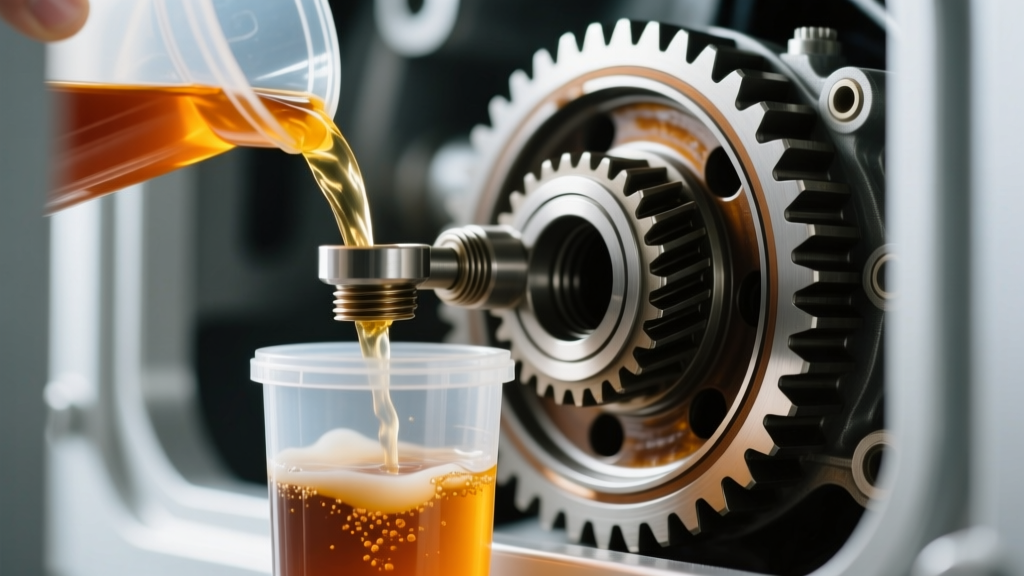
Place a clear or white catch pan under the differential. Remove the fill plug, then the drain plug. Allow the fluid to drain completely. Shine a high-lumen LED flashlight into the drain hole to inspect the ring gear teeth for pitting or scoring while the housing is empty.
3. Torque Specifications for Reassembly
Stripping the threads on an aluminum differential cover or a cast-iron housing is a costly mistake. Use a calibrated torque wrench for reassembly. Refer to this reference table for common axle platforms:
| Axle Platform | Fill / Drain Plug Torque | Cover Bolt Torque (if applicable) |
|---|---|---|
| GM 8.5 / 8.6 / 10-Bolt | 25 lb-ft | 22 lb-ft |
| Ford 8.8 / 9.75 | 33 lb-ft | 28-38 lb-ft |
| Dana 35 / 44 | 25-35 lb-ft | 30-35 lb-ft |
| Chrysler 8.25 | 25 lb-ft | 30 lb-ft |
Note: Always use a new crush washer or a high-quality RTV silicone (like Permatex Ultra Black) depending on whether your axle uses a plug seal or a stamped cover.
Real-World Case Studies: Catching Failure Early
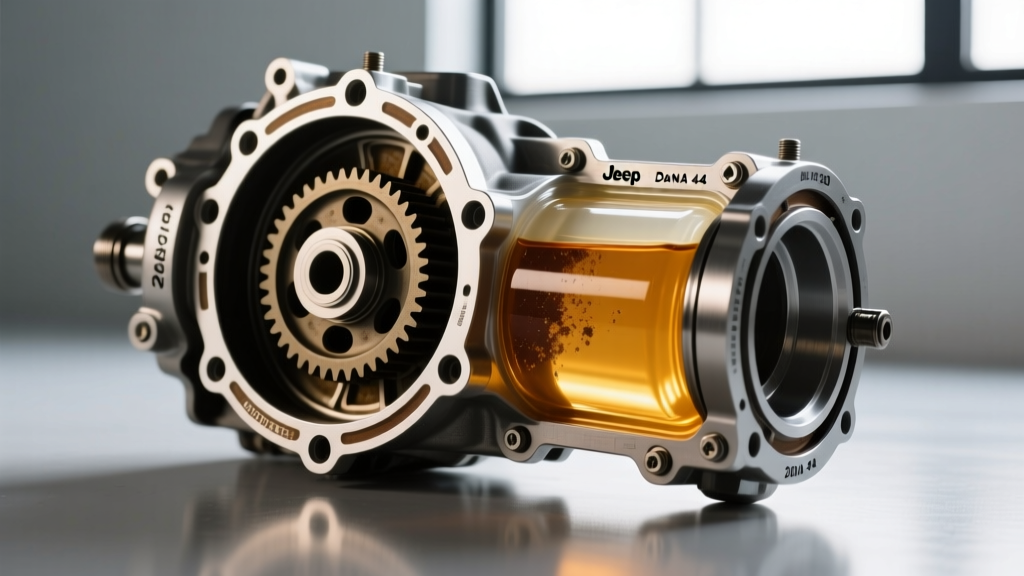
Case 1: The Submerged Jeep Wrangler (Dana 44)
A customer brought in a 2021 Jeep Wrangler Rubicon complaining of a howling noise from the rear axle at 45 mph. Upon pulling the drain plug, a quart of frothy, milky sludge poured out. The owner frequently forded deep mud and water, but the factory axle breather tube was routed too low and had become clogged with debris. As the hot axle cooled after a water crossing, it created a vacuum that sucked water past the axle seals. The water emulsified the GL-5 fluid, destroying the boundary lubrication. The ring and pinion showed early micro-pitting, but because it was caught before severe spalling occurred, a thorough flush with cheap 80W-90, followed by a refill with premium synthetic 75W-140 and a rerouted breather tube, saved the $1,800 gear set.
Case 2: The Overworked Ford F-150 (9.75 Rear End)
A fleet F-150 used for towing a 7,000 lb trailer through mountain passes presented with fluid weeping from the axle seals. The drained fluid was jet black, exceptionally thin, and smelled severely burnt. The OEM 75W-140 synthetic had sheared down due to chronic thermal overload. Upgrading to an aftermarket finned aluminum differential cover to increase surface area cooling, combined with a high-viscosity, shear-stable racing gear oil, dropped operating temperatures by 40°F and halted the seal leaks.
The Economics of Preventive Maintenance
The financial argument for monitoring your car differential gear fluid is undeniable. A standard DIY fluid change requires 2 to 3 quarts of high-quality synthetic GL-5 gear oil (roughly $15 to $25 per quart) and perhaps a $5 bottle of limited-slip friction modifier if your vehicle is equipped with a clutch-type LSD. Total cost: under $80. Conversely, replacing a ruined ring and pinion set, along with crushed carrier bearings and axle seals, requires specialized pressing tools, precision backlash shimming, and hundreds of dollars in parts. Professional axle rebuilds routinely range from $1,500 to $3,000 depending on labor rates and vehicle complexity.
Conclusion
Do not wait for a whining, howling, or clunking noise to remind you that your differential exists. By incorporating a visual and tactile fluid inspection into your annual preventive maintenance routine, you can easily extend the life of your drivetrain to well over 200,000 miles. For a comprehensive visual walkthrough on extracting and refilling these assemblies, consult MotorTrend's Differential Service Guide or review baseline maintenance intervals via Car and Driver's Maintenance Advice. Your gears will thank you with years of silent, reliable operation.