The 2026 Reality: Preventive Axle Maintenance for the JK Platform
As we navigate through 2026, the 2014 Jeep Wrangler (JK generation) has firmly cemented its legacy as one of the most capable and heavily modified off-road vehicles on the planet. However, with these rigs now well over a decade old, the condition of the drivetrain fluids is no longer just a matter of mileage—it is a critical indicator of mechanical survival. Whether your JK is a stock daily driver or a heavily modified trail rig running 35-inch tires, understanding the 2014 Jeep Wrangler differential fluid type and, more importantly, its physical condition, is the cornerstone of preventive axle maintenance.
Gear oil does not merely lubricate; it acts as a coolant, a debris suspension medium, and a protective boundary layer for the hypoid ring and pinion gears. In this comprehensive guide, we will decode the visual and olfactory clues your differential fluid provides, outline exact factory specifications, and provide actionable diagnostic frameworks to prevent catastrophic axle failure.
Baseline Specifications: Identifying the Correct Fluid
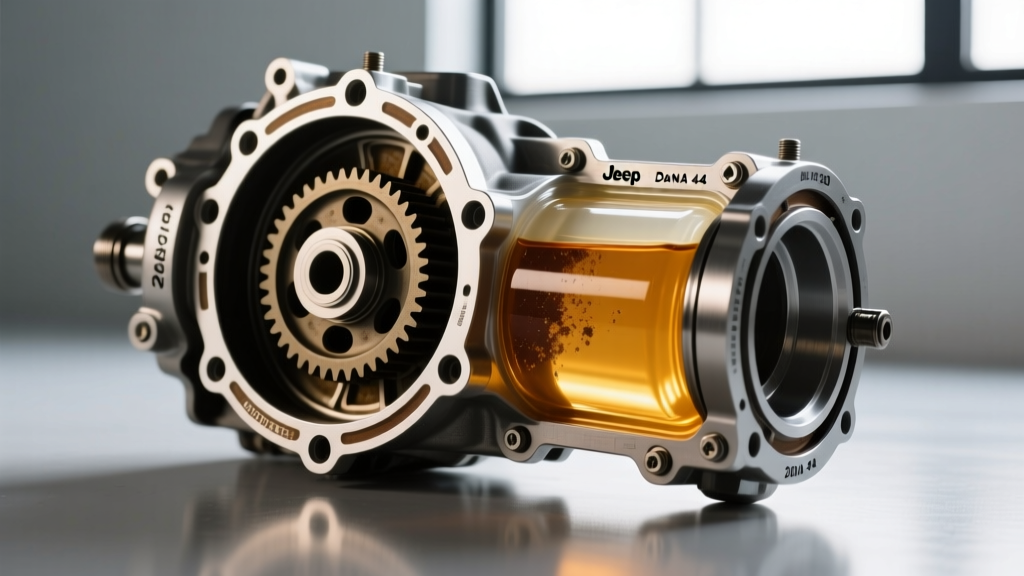
Before you can diagnose fluid condition, you must know what the baseline should look, feel, and smell like. The 2014 Wrangler typically features a Dana 30 front axle and a Dana 44 rear axle. Due to the hypoid gear design, both require API GL-5 rated gear oil, which contains high levels of sulfur-phosphorus Extreme Pressure (EP) additives.
| Axle Model | Factory Viscosity | Severe/Off-Road Viscosity | Capacity | Cover Bolt Torque |
|---|---|---|---|---|
| Front Dana 30 | 75W-85 or 80W-90 GL-5 | 75W-90 Synthetic GL-5 | 1.25 Qt (1.2L) | 20 lb-ft |
| Rear Dana 44 | 80W-90 GL-5 | 75W-140 Synthetic GL-5 | 2.0 Qt (1.9L) | 20 lb-ft (Cover) / 25 lb-ft (Plug) |
Note: If your 2014 Wrangler is equipped with the Trac-Lok limited-slip differential (LSD), a friction modifier is required to prevent clutch pack chatter. Many premium synthetic fluids, such as those found in the AMSOIL Gear Lube lineup or Valvoline Gear Oil synthetics, already include the necessary friction modifiers. If using standard Mopar fluid, add Mopar Friction Modifier (Part #4318060AD).
Visual Inspection: Decoding Differential Fluid Color and Condition
Pulling a fluid sample is a diagnostic goldmine. You do not always need to drop the differential cover to assess condition; using a fluid extractor pump through the fill hole can provide a highly accurate representation of the fluid's health. Here is how to interpret what you pull from the axle.
1. The "Chocolate Milk" Phenomenon (Water Intrusion)
Appearance: Opaque, milky, tan, or resembling a coffee creamer.
Diagnosis: Severe water contamination.
The Science: When water mixes with GL-5 gear oil, it emulsifies. This destroys the fluid's ability to maintain a hydrodynamic lubrication film. Furthermore, water reacts with the sulfur-phosphorus EP additives to form mild sulfuric and phosphoric acids. These acids will actively etch and pit the polished surfaces of your ring and pinion gears and accelerate bearing cage corrosion.
Common Culprits: Submerged water crossings, degraded axle shaft seals, or a failing pinion seal. More commonly, it is caused by a clogged or disconnected axle breather tube. When a hot axle is suddenly plunged into cold water, the rapid temperature drop creates a vacuum inside the housing, literally sucking water past the seals if the breather is blocked.
2. Metallic Sheen vs. Chunky Debris
Appearance: A glittery, metallic sparkle in the light vs. visible metal shards or needle-like rollers.
Diagnosis: Normal break-in/wear vs. Imminent catastrophic failure.
The Science: A slight metallic glitter is completely normal, especially on a high-mileage 2014 JK or one that was recently regear to 4.56 or 4.88 ratios for larger tires. This is the result of microscopic wear from the clutch packs (in LSDs) and normal gear meshing. However, if you feel distinct metallic chunks, or if your drain plug magnet (if equipped on the rear Dana 44) is covered in needle-like shards, your pinion or carrier bearings are disintegrating. According to Dana Spicer engineering guidelines, bearing spalling will rapidly destroy the gear tooth contact pattern, leading to total axle lockup if ignored.
3. Thermal Breakdown and Burnt Gear Oil
Appearance: Pitch black, highly viscous, or sludge-like.
Smell: Acrid, sharp, burnt toast odor.
Diagnosis: Extreme thermal shearing and oxidation.
The Science: If you are towing a camper or running heavy trails in low-range 4WD with 80W-90 conventional oil, the fluid temperatures can easily exceed 250°F (121°C). At these temperatures, conventional base oils oxidize rapidly, forming varnish and sludge. The burnt smell is the off-gassing of depleted EP additives. For heavily modified 2014 Wranglers, upgrading to a 75W-140 full synthetic is mandatory to maintain film strength under extreme thermal loads.
4. Normal Aged Fluid
Appearance: Dark brown, opaque, but still translucent at the edges of the dipstick.
Smell: Strong sulfur/rotten egg odor (inherent to GL-5 additives).
Diagnosis: Normal service life. The fluid has accumulated carbon soot and wear particles but has not suffered thermal breakdown or water emulsification.
Step-by-Step Preventive Condition Assessment
To perform a proper condition assessment on your 2014 Wrangler without committing to a full fluid change, follow this extraction protocol:
- Warm the Axles: Drive the vehicle for 15-20 minutes. Warm fluid suspends particulates evenly and flows much easier through an extractor tube.
- Level the Vehicle: Ensure the Wrangler is on a flat surface so the fluid level accurately reflects the fill plug height.
- Clean the Fill Area: Use brake cleaner and a wire brush on the fill plug. You must prevent external dirt from entering the housing.
- Extract the Sample: Insert a manual fluid extractor tube down into the housing. Pull the tube back slightly from the very bottom to avoid sucking up the heavy sludge layer immediately, allowing you to read the condition of the active lubricant.
- The Rub Test: Smear a drop between your thumb and index finger. Rub them together. You should feel zero grit. If it feels like sandpaper, your axle requires an immediate cover-drop, internal flush, and magnetic cleaning.
Expert Preventive Tip: Never remove the differential drain plug or drop the cover without first verifying that the fill plug can be loosened. A seized fill plug on a 12-year-old JK is a common trail-side nightmare. If the fill plug is seized, you will be left with an empty axle and a stranded vehicle. Always apply a high-quality anti-seize compound to the fill and drain plug threads during reassembly.
When to Replace: Mileage vs. Condition-Based Intervals
While the factory manual may suggest differential fluid changes every 30,000 to 40,000 miles for severe duty, the 2026 preventive maintenance paradigm relies heavily on condition-based intervals. If your fluid extraction reveals clear, amber-colored synthetic oil with no water or grit, it can safely remain in service. Conversely, if you frequently ford water deeper than the axle centerline, your service interval should be dictated by the first water crossing of the season, regardless of mileage.
For those running aftermarket alloy axle shafts or upgraded chromoly joints, remember that these components place different stress vectors on the carrier bearings. Upgrading to a high-quality 75W-140 synthetic gear oil provides the necessary shear stability to protect your investment, ensuring your 2014 Wrangler continues to conquer the trail for years to come.