The Olfactory Diagnostic: Decoding the Burning Clutch Smell
Few automotive symptoms induce panic quite like the acrid, unmistakable odor of a burning clutch. Whether you are navigating stop-and-go traffic in a manual daily driver or towing a heavy payload with an automatic-equipped truck, a burning smell indicates severe friction material degradation or mechanical binding. However, a common diagnostic trap in 2026 is immediately assuming the transmission is the culprit. Engine-bay components, specifically the engine cooling fan assembly, can produce strikingly similar odors when they fail.
As automotive transmission and drivetrain specialists, we frequently see misdiagnoses where owners pull the transmission bellhousing, only to realize the friction material is perfectly intact, and the actual issue requires them to replace fan clutch components that have seized, leaked silicone fluid, or suffered an electromagnetic coil failure. This comprehensive diagnostic guide will help you isolate the exact source of the burning odor, differentiate between transmission slip and engine cooling failures, and execute the correct repair.
Scenario A: Transmission Clutch Pack Degradation
When an automatic or manual transmission clutch slips, the kinetic energy that should be transferred to the drivetrain is instead converted into intense thermal energy. Organic friction materials begin to break down and off-gas at temperatures exceeding 500°F (260°C), producing a sharp, acrid odor often compared to burnt toast or overheated brake pads.
Manual Transmission: Glazing vs. Burning
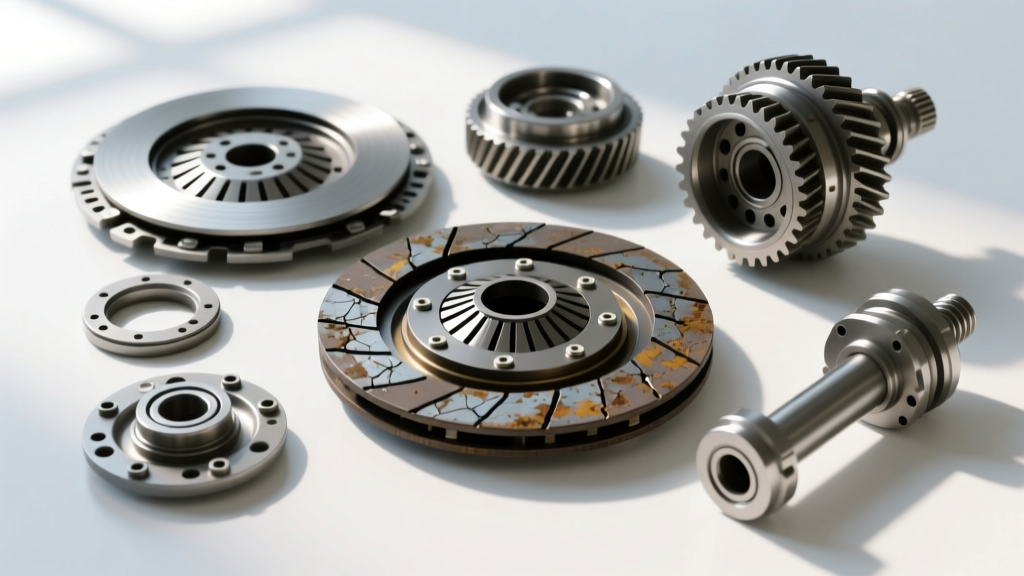
In manual applications, a slipping clutch disc (such as an Exedy or Sachs organic replacement) will generate a heavy, sulfurous smoke. If the clutch is merely glazed from improper break-in, the smell may be mild and accompanied by high-RPM engagement shudder. However, if the pressure plate diaphragm springs have weakened or the flywheel has developed hot spots, the friction facing will physically burn away, exposing the steel rivets and scoring the flywheel.
Automatic Transmission: Hydraulic Slip and Clutch Burnout
Automatic transmissions rely on hydraulic pressure to apply multi-disc clutch packs. When line pressure drops, the clutch discs slip against the steel separator plates, instantly burning the friction lining and contaminating the Automatic Transmission Fluid (ATF).
- GM 4L60E / 4L65E: The 3-4 clutch pack is notoriously weak. A worn apply piston seal or a depleted boost valve will cause slip in 3rd and 4th gears. The resulting burnout turns the ATF black and fills the cabin with a severe burnt-toast odor.
- ZF 8HP (8HP45 / 8HP70): Widely used in modern BMW, Chrysler, and Ford applications, the ZF 8-speed relies on a mechatronic unit. A common failure point is the ZF adapter sleeve (part number 68365050AA on Chrysler applications), which cracks and leaks hydraulic fluid internally. This causes low line pressure to Clutch Pack A or C, resulting in slip, overheating, and a distinct burning smell from the degraded ZF Lifeguard 8 fluid.
Pro-Tip from the Bench: Always pull the transmission dipstick or drain a small fluid sample into a clear glass. If the ATF smells burnt and has lost its translucent red or amber hue, turning dark brown or black, the transmission clutch packs are actively burning. According to Sonnax technical bulletins, dark fluid indicates the friction material's binding resins have broken down, necessitating a complete rebuild.
Scenario B: Engine Bay Heat and the Fan Clutch
If the transmission fluid smells clean and the vehicle shifts firmly without RPM flaring, the burning smell is likely originating from the front of the engine. The engine cooling fan clutch operates under extreme thermal and rotational stress, and its failure modes produce distinct olfactory signatures.
Viscous (Thermal) Fan Clutch Failures
Viscous fan clutches use a silicone-based fluid and a bi-metal thermostatic strip to engage the fan based on radiator air temperature. When the internal bearings seize or the fluid seal fails, two things happen:
- Silicone Fluid Leak: High-viscosity silicone fluid slings onto the hot radiator or exhaust manifolds, producing a sweet, acrid, melting-rubber smell.
- Bearing Seizure: If the clutch locks up completely at high RPM, the immense rotational force can shear the fan blades or cause the bearing grease to boil and burn, creating a heavy, metallic friction smell that mimics a slipping drivetrain clutch.
When diagnosing these thermal units, technicians often find that the only viable solution is to replace fan clutch assemblies with OEM-equivalent units, such as those manufactured by Hayden Automotive, to restore proper thermal cycling and eliminate the burning odor.
Electromagnetic Fan Clutch Failures
Modern light-duty trucks (e.g., 2014+ GM Silverado/Sierra and Ram EcoDiesel) utilize electromagnetic fan clutches controlled by a Pulse Width Modulation (PWM) signal from the ECM. These units contain an internal copper coil and a friction liner. If the internal coil shorts out, or if the wiring pigtail melts against the hot engine block, it produces a sharp, electrical ozone smell mixed with melting plastic. This is frequently misdiagnosed as an alternator or wiring harness fire, but it is localized entirely to the fan clutch assembly.
Diagnostic Decision Matrix: Isolating the Odor
Use the following matrix to cross-reference the smell profile, driving conditions, and visual evidence to pinpoint the exact failing component.
| Symptom / Smell Profile | Transmission Clutch Pack | Viscous Fan Clutch | Electromagnetic Fan Clutch |
|---|---|---|---|
| Odor Type | Burnt toast, acrid brake dust, hot ATF | Sweet hot silicone, melting rubber, boiling grease | Electrical ozone, melting plastic, hot copper |
| Trigger Condition | Heavy load, towing, uphill slip, RPM flaring | Stop-and-go traffic, high ambient heat, AC on MAX | ECM PWM signal fault, high fan command, coil short |
| Visual Evidence | Dark, burnt-smelling ATF on dipstick; shift flares | Silicone fluid sling on radiator; fan wobble; sheared blades | Melted wiring pigtail; scorched coil housing; DTC P0526 |
| Required Action | Transmission teardown / Clutch pack replacement | Replace fan clutch (viscous thermal unit) | Replace fan clutch (electromagnetic unit) & repair pigtail |
Actionable Troubleshooting Procedures
Before ordering parts or dropping the transmission, perform these three physical tests to verify the source of the burning smell.
1. The Newspaper Test (Viscous Fan Clutch)
With the engine completely cold and off, attempt to spin the engine fan by hand. It should have slight resistance but turn relatively freely. Next, start the engine and let it idle. Roll up a newspaper or use a long wooden dowel and gently push it into the fan blades (exercise extreme caution). A properly functioning viscous clutch will not engage fully when cold, and the newspaper will stop the fan. If the fan instantly shreds the newspaper and roars like a jet engine upon a cold start, the internal valve is stuck open, or the clutch is seized. A seized clutch will overheat the bearing and cause the burning smell.
2. The Stall Test (Automatic Transmission)
As outlined by the Automatic Transmission Service Group (ATSG), a stall test measures the maximum RPM the engine can achieve in Drive or Reverse with the brakes fully applied. Warning: Only perform this for 3-5 seconds to prevent catastrophic heat buildup. If the engine RPM flares significantly higher than the manufacturer's specification (e.g., exceeding 2,200 RPM on a standard passenger car) before the drivetrain loads up, the transmission clutch packs or torque converter are slipping internally. This confirms the transmission is the source of the burning smell.
3. Multimeter PWM Verification (Electromagnetic Fan Clutch)
For modern electromagnetic clutches, back-probe the fan clutch wiring connector with a digital multimeter set to Duty Cycle or Hertz. With the engine running and the AC turned to MAX, the ECM should command a high PWM signal (usually 70-90% duty cycle). If the signal is present but the fan is not engaging and you smell burning ozone, the internal coil has failed, and you must replace the fan clutch assembly immediately to prevent engine overheating.
2026 Repair Costs and Component Specifications
Understanding the financial and mechanical scope of the repair is critical for accurate diagnosis and customer approval.
- Automatic Transmission Rebuild (e.g., 4L60E / ZF 8HP): Replacing burnt clutch packs requires a full teardown. Expect parts (master rebuild kit, new steels, frictions, and solenoids) to cost between $450 and $900. Labor for R&R and bench rebuild averages 12-16 hours. Total Estimated Cost: $2,200 - $3,800.
- Viscous Fan Clutch Replacement: A heavy-duty thermal fan clutch (e.g., Hayden 2733 or Motorcraft YB-3145) costs between $60 and $140. Labor is typically 0.8 to 1.2 hours, requiring removal of the fan shroud and a specialized 32mm or 36mm fan clutch wrench to break the reverse-threaded water pump nut (torque spec usually 40-50 ft-lbs). Total Estimated Cost: $180 - $350.
- Electromagnetic Fan Clutch Replacement: OEM electromagnetic units (e.g., GM part #84136016) are more expensive, ranging from $250 to $450. Labor is roughly 1.5 hours, plus the potential cost of a new pigtail connector if the old one melted. Total Estimated Cost: $400 - $650.
By systematically isolating the odor profile and performing targeted mechanical tests, you can avoid the costly mistake of rebuilding a healthy transmission when the true fix is simply to replace fan clutch hardware at the front of the engine.