The Intersection of Gear Ratios and Active Clutch Hydraulics
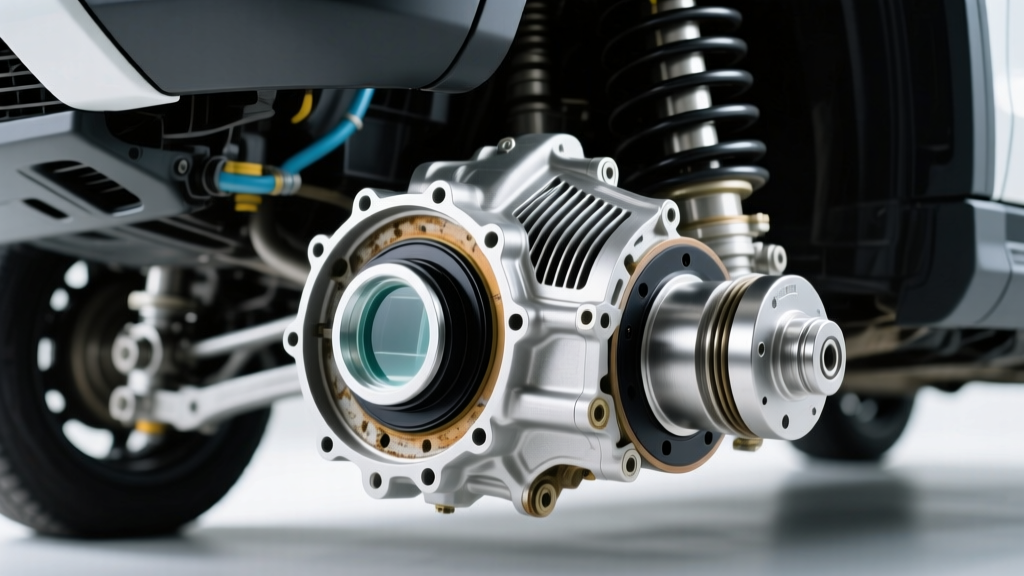
When extracting maximum performance from the 2021-2026 BMW G80 M3 and G82 M4 platforms, enthusiasts and tuning shops frequently look toward the final drive. Swapping the factory 3.15 or 3.46 ring and pinion for a more aggressive 3.91 or 4.10 gear ratio drastically improves off-the-line acceleration and corner-exit thrust. However, because these vehicles utilize the ZF Active M Differential—an electronically controlled, hydraulically actuated multi-plate clutch system—altering the mechanical leverage fundamentally breaks the factory torque mapping. This is where real-time differential pressure monitoring becomes an absolute necessity for both performance calibration and hardware survival.
In an open or traditional mechanical limited-slip differential, gear ratio changes are purely mechanical. In the ZF Active M Differential, the vehicle's ECU calculates required clutch clamping force based on engine torque output, steering angle, yaw rate, and the factory-programmed final drive ratio. If you install a 4.10 gear set without recalibrating the differential control module (DSC/EGS), the ECU will under-pressurize the clutch pack. The resulting slip will instantly overheat the differential fluid, glaze the friction plates, and trigger limp mode. To prevent this, technicians must employ live differential pressure monitoring via the CAN-bus to verify hydraulic clamping forces against the new multiplied axle torque.
BMW G80/G82 Active M Differential: Technical Baseline
Before initiating any gear ratio upgrade or hydraulic recalibration, it is critical to understand the baseline hardware and fluid dynamics of the ZF unit. The Active M Differential relies on an internal electro-hydraulic pump and a proportional pressure control valve to modulate clamping force from 0 bar (fully open) to over 45 bar (fully locked).
Hardware and Fluid Specifications
- Differential Fluid: BMW SAF-XJ 75W-110 (Part # 83222446673). Do not substitute with standard 75W-90 GL-5; the friction modifiers in SAF-XJ are specifically engineered for the ZF carbon-coated friction plates.
- Fluid Capacity: 1.2 Liters (1.27 US Quarts).
- Drain/Fill Plug Torque: 60 Nm (44 lb-ft).
- Ring Gear Bolts (M10x1.25): 65 Nm + 90 degrees (Torque-to-yield; must be replaced upon removal).
- Hydraulic Pump Operating Pressure: Base system pressure ~12 bar; Peak clutch engagement pressure up to 50 bar.
- Max Fluid Temperature Threshold: 130°C (266°F) before ECU initiates torque reduction to protect the clutch pack.
The Physics of Ratio Changes and Clutch Slip
To understand why differential pressure monitoring is mandatory post-upgrade, we must look at torque multiplication. If your S58 engine is producing 650 Nm of torque at the crank, a factory 3.15 gear ratio multiplies this to roughly 2,047 Nm at the ring gear (excluding drivetrain loss and transmission gear multiplication). The ECU expects this value and commands a specific hydraulic pressure—say, 28 bar—to lock the clutch pack and prevent slip.
If you upgrade to a 4.10 final drive, that same 650 Nm of engine torque now results in 2,665 Nm at the ring gear. If the ECU is still operating on the 3.15 map, it will only command 28 bar of hydraulic pressure. This pressure is entirely insufficient to hold 2,665 Nm of torque. The clutch pack will slip microscopically under load. This slip generates immense shear heat, rapidly degrading the SAF-XJ 75W-110 fluid and permanently destroying the friction surfaces. According to engineering data published by SAE International regarding torque vectoring differentials, a slip rate of just 5% under high-load cornering can elevate localized fluid temperatures past the thermal breakdown point of synthetic gear oils within seconds.
Step-by-Step: Recalibration and Differential Pressure Monitoring
Following the physical installation of the new ring and pinion, the vehicle must undergo a software adaptation and dynamic validation. This requires BMW ISTA+ (Integrated Service Technical Application) and a capable OBD2 logging tool (such as MHD, Bootmod3, or a dedicated CAN-bus logger).
Phase 1: Software Adaptation via ISTA+
- Connect to the vehicle via a stable ICOM or ENET cable and launch ISTA+.
- Navigate to Service Functions > Chassis > Final Drive > Active M Differential.
- Execute the test plan for 'Final Drive Ratio Adaptation'. Input the exact numerical ratio of the new aftermarket gear set (e.g., 4.10).
- Perform the 'Clutch Pack Break-in and Calibration' routine. This requires driving the vehicle in a controlled environment (typically a series of low-speed figure-eights and high-speed sweepers) to allow the proportional valve to learn the physical bite point of the hydraulic circuit.
Phase 2: Live Differential Pressure Monitoring
Once the baseline adaptation is complete, you must validate the hydraulic response under load. Using your telemetry logger, monitor the following CAN-bus PIDs (Parameter IDs):
- DIFF_PRESS_ACT: Actual hydraulic pressure at the clutch pack (measured in bar).
- DIFF_PRESS_TGT: Target pressure requested by the ECU.
- DIFF_PWM_DUTY: Pulse Width Modulation duty cycle sent to the proportional valve (0-100%).
- DIFF_TEMP: Differential fluid temperature sensor reading.
- DIFF_SLIP_SPD: Delta speed between left and right axle shafts.
During a wide-open-throttle (WOT) pull in 3rd gear, the DIFF_PRESS_TGT and DIFF_PRESS_ACT should track within 1.5 bar of each other. If you observe the actual pressure lagging behind the target, or if the DIFF_SLIP_SPD shows variance while under high torque load, the hydraulic pump may be cavitating, or the fluid is aerated due to improper fill procedures.
Gear Ratio vs. Target Clutch Pressure Matrix
The following table illustrates the necessary shift in hydraulic mapping when moving between common final drive ratios on the G80 M3 platform, assuming a peak engine torque output of 730 Nm (typical of an M-HP tune).
| Final Drive Ratio | Peak Axle Torque (Nm) | Target Peak Clutch Pressure (bar) | PWM Duty Cycle Target | Fluid Temp Threshold (°C) |
|---|---|---|---|---|
| 3.15 (OEM Auto) | 2,299 | 32.0 | 68% | 130°C |
| 3.46 (OEM Manual) | 2,525 | 36.5 | 74% | 130°C |
| 3.91 (Aftermarket) | 2,854 | 42.0 | 85% | 125°C |
| 4.10 (Aftermarket) | 2,993 | 46.5 | 94% | 120°C |
Note: As the ratio increases, the required hydraulic pressure approaches the physical limit of the ZF pump. At 4.10, the ECU must be tuned to lower the differential temperature threshold to 120°C to prevent clutch glazing, as the safety margin for slip is virtually zero.
Fluid Dynamics: Managing Thermal Load Post-Upgrade
The importance of the correct fluid cannot be overstated when pushing the boundaries of the Active M Differential. BMW's SAF-XJ 75W-110 is a highly specialized synthetic gear oil designed with specific friction modifiers that allow the carbon-fiber clutch plates to engage smoothly without chatter, while maintaining shear stability under extreme hydraulic pressure.
When utilizing a 4.10 gear ratio, the internal hydraulic pump works significantly harder, cycling fluid at higher pressures and generating more parasitic heat. If a generic 75W-90 GL-5 fluid is used, the lack of specific friction modifiers will cause aggressive clutch engagement (chatter), while the lower viscosity at high temperatures will lead to internal pump cavitation. Cavitation introduces air bubbles into the hydraulic circuit, making differential pressure monitoring erratic, as the compressible air prevents the proportional valve from achieving rigid clamping force. Always source OEM fluid via verified channels like the RealOEM BMW Parts Catalog to ensure batch authenticity.
Common Failure Modes and Diagnostic Codes
When gear ratio upgrades are performed without adequate recalibration or when the hydraulic system degrades, the DSC module will log specific fault codes. Understanding these codes is vital for accurate diagnosis.
Addressing Code 0x480294 (Clutch Pressure Plausibility)
This is the most common fault code encountered after an improperly mapped gear ratio swap. The ECU detects that the actual hydraulic pressure (measured by the internal transducer) does not match the expected pressure based on the PWM signal sent to the valve.
Diagnostic Flow:
- Verify the fluid level. The ZF Active M Differential does not have a traditional dipstick; it must be filled until fluid weeps from the fill hole while the vehicle is perfectly level and the fluid temperature is between 20°C and 30°C.
- Check for external leaks at the axle seals and the hydraulic pump O-ring.
- Perform a hydraulic bleed procedure via ISTA+ to purge trapped air from the clutch actuator circuit.
- If the code persists, the internal pressure transducer may be faulty, or the proportional valve screen may be clogged with debris from the ring gear swap. (Always use a magnetic drain plug and flush the housing with fresh SAF-XJ fluid after installing new gears to remove metallic machining residue).
Code 0x4801C2 (Differential Temperature Sensor Plausibility)
If the ECU reads a static temperature or a value that spikes impossibly fast, it will default to a 'safe mode' hydraulic map, limiting clutch pressure to 15 bar to prevent perceived thermal damage. This results in massive wheel spin under cornering loads. This typically indicates a damaged thermistor wiring harness, which is easily pinched between the differential housing and the subframe during reinstallation.
Conclusion: Precision is Non-Negotiable
Upgrading the differential gear ratio on a BMW G80 M3 or G82 M4 is a highly effective method for transforming the vehicle's acceleration profile and track performance. However, the integration of the ZF Active M Differential means this is no longer a simple mechanical swap. It is a complex cyber-physical modification. By adhering to strict fluid specifications, utilizing factory-level software adaptation, and employing rigorous differential pressure monitoring to validate the hydraulic clamping forces, tuners and owners can ensure that their drivetrain handles the multiplied torque reliably for years to come. For further reading on the engineering principles behind these driveline components, refer to the ZF Driveline Portfolio documentation.