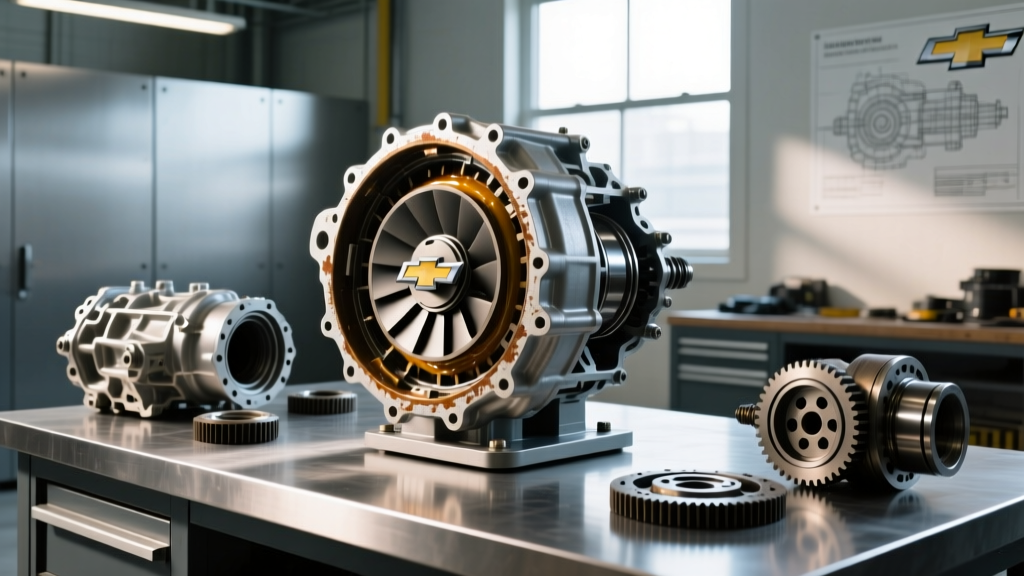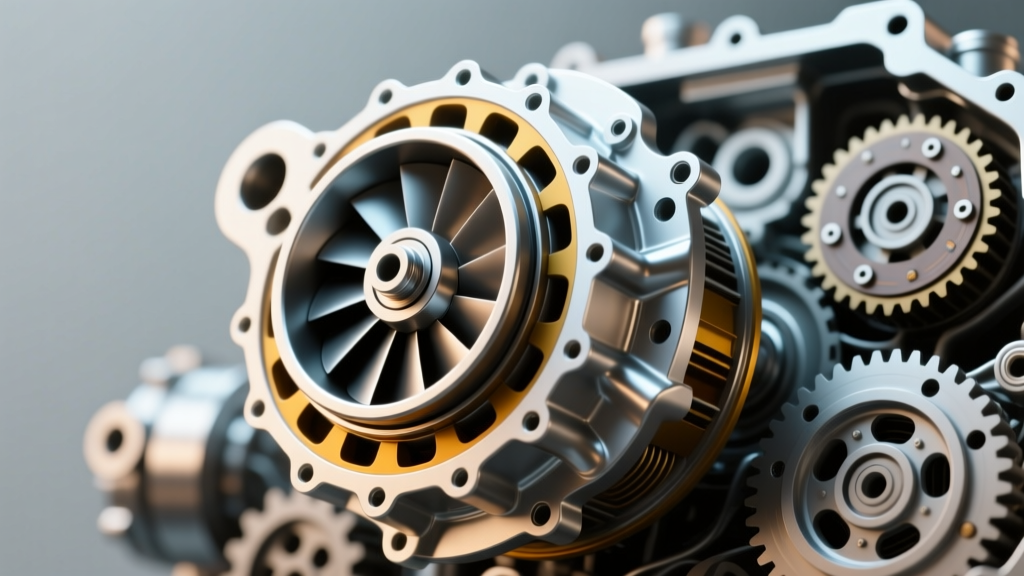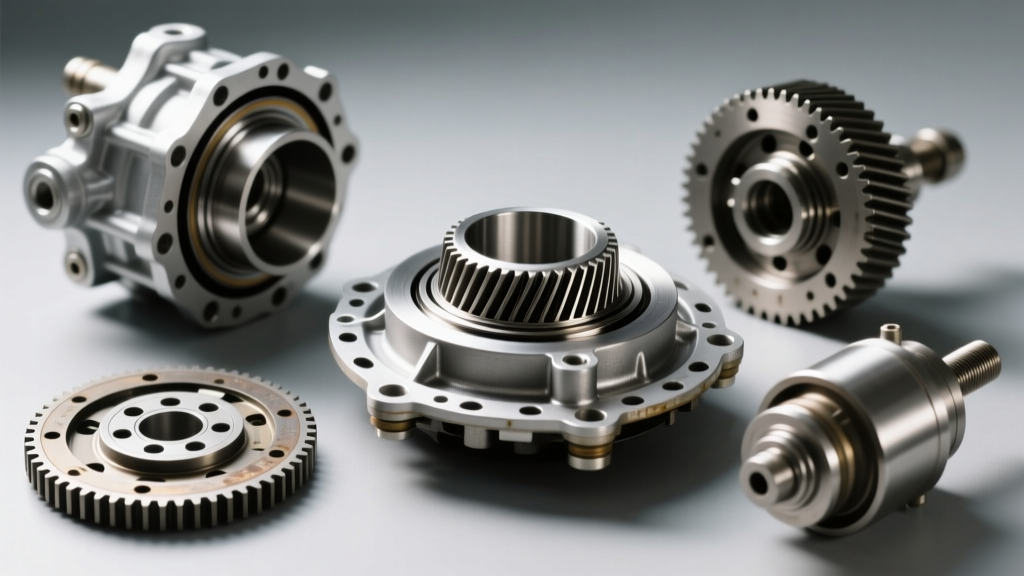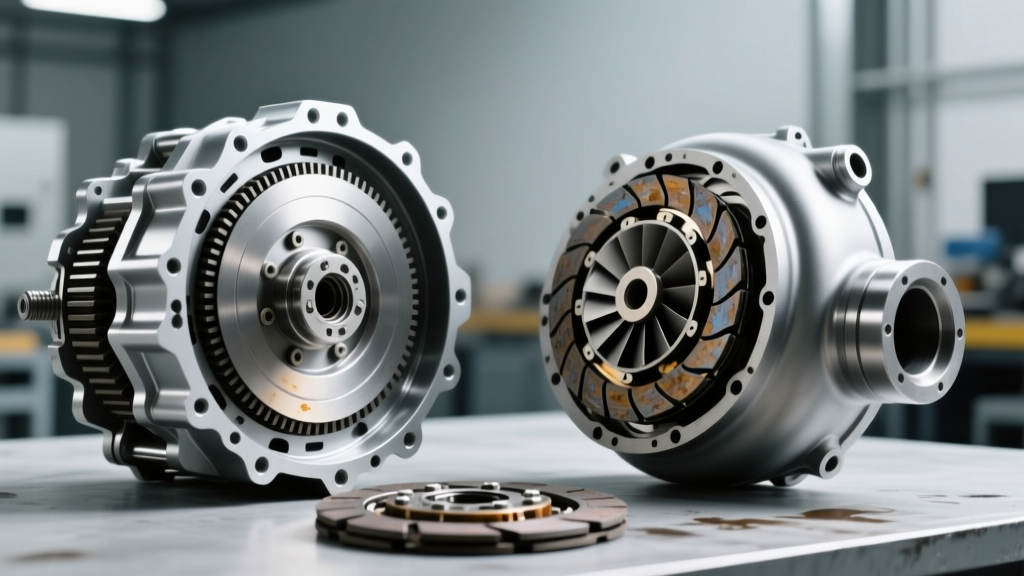
When pushing 600+ wheel horsepower in a modern street or track car, drivetrain efficiency dictates your 60-foot times and overall reliability. But what happens when your setup starts slipping, shuddering, or overheating under load? Enthusiasts and builders frequently debate the dual clutch transmission vs torque converter paradigm, especially when diagnosing drivetrain failures and planning the next phase of their build. Before committing to a complex and expensive DCT swap, you must accurately identify bad torque converter symptoms, understand the mechanical differences in failure modes, and weigh your performance upgrade options for the 2026 aftermarket landscape.
Identifying Bad Torque Converter Symptoms in Performance Builds
A traditional torque converter is a fluid coupling device that multiplies torque via a stator and relies on a Torque Converter Clutch (TCC) for 1:1 lockup. When pushed beyond its OEM design limits, or when internal clearances degrade, specific symptoms emerge that can easily be misdiagnosed as transmission or engine issues.
TCC Shudder and Slip (The 6L80 & ZF 8HP Plight)
The most common symptom of a failing torque converter in modern performance applications is TCC shudder. This occurs when the friction material on the TCC piston glazes or the apply pressure drops, causing a rapid 20-40 RPM slip oscillation. In GM's ubiquitous 6L80 and 6L90 transmissions, this often triggers a P0741 (TCC Stuck Off) or P2763 (TCC Pressure Control Solenoid High) code. You will feel this as a rhythmic vibration, similar to driving over highway rumble strips, typically occurring between 45-65 mph in top gear under light throttle.
Overheating and Fluid Shearing
High-stall torque converters generate immense heat when operated unlocked. If your transmission fluid temperatures are consistently exceeding 220°F (104°C) during highway cruising or track sessions, the internal clearances may be too large, or the stator one-way clutch is failing to freewheel. This causes severe fluid shearing. Upgrading to a high-quality synthetic fluid, such as those formulated by Red Line Synthetic Oil (like their D6 ATF), can mitigate thermal breakdown, but it will not fix a mechanically failing stator.
Physical Debris and 'Glitter' in the Pan
If you drop the transmission pan and find a fine, metallic, gold-colored glitter suspended in the fluid, your torque converter is actively destroying itself. This glitter is typically brazing material from the internal fin tabs breaking away due to high-RPM centrifugal force. Once this debris enters the transmission valve body, it will score solenoids and ruin the mechatronic unit, turning a simple torque converter replacement into a full transmission rebuild.
Dual Clutch Transmission vs Torque Converter: Failure Modes Compared
The dual clutch transmission vs torque converter comparison extends beyond shift speeds and torque multiplication; it fundamentally changes how your drivetrain fails under high-horsepower abuse.
A DCT (such as the Tremec TR-9077 found in the C8 Corvette or the Getrag 7DCL750 in the Shelby GT500) relies on wet or dry friction clutches and a highly complex mechatronic control unit. When a DCT fails, symptoms include harsh engagement, gear position sensor faults, mechatronic pressure loss, and clutch pack degradation. DCTs do not 'shudder' in the same fluid-dynamic way a torque converter does; instead, they exhibit harsh mechanical clunks or enter limp mode when clutch adaptation limits are exceeded.
Expert Insight: While a DCT offers lightning-fast shifts and direct mechanical coupling, it is notoriously difficult to tune for high-horsepower, low-speed street manners. A properly built billet torque converter remains the undisputed king of street/strip drivability for builds in the 800-1,500 whp range.
Conversely, a traditional torque converter fails via fluid cavitation, fin deformation, or TCC friction burnout. Companies like Sonnax produce extensive line-bore repair kits and reinforced valve body components to handle the increased line pressure required to keep a high-stall torque converter's TCC locked under heavy boost, highlighting the hydraulic complexity inherent to fluid-coupled systems.
Diagnostic Steps Before Pulling the Transmission
Do not order a replacement unit or plan a DCT swap until you have verified the torque converter is the actual culprit. Follow this diagnostic protocol:
- Monitor TCC Slip Speed: Using a bi-directional OBD2 scanner, command TCC lockup in 4th, 5th, or 6th gear at a steady 55-65 mph. OEM specification for TCC slip is typically under 20 RPM. If you observe 50-150 RPM of slip, or if the slip speed oscillates wildly, the TCC friction surface is compromised.
- Check Stall Speed: Perform a safe, controlled stall test (brake-torqueing) to verify the converter is still flashing at its rated RPM. If a 3,200 RPM stall converter is now only flashing at 2,200 RPM, the internal stator one-way clutch has likely seized or the fins have deformed, altering the fluid dynamics.
- Inspect the Flexplate and Pilot Bearing: A cracked flexplate or a seized torque converter pilot bearing can mimic TCC shudder and cause severe harmonic vibrations at the crankshaft.
Performance Upgrade Paths: Billet TC vs. DCT Swap
Once you have confirmed bad torque converter symptoms, you face a critical decision. As we navigate the 2026 performance aftermarket, the availability of drop-in DCT adaptation kits for legacy V8 platforms has expanded, but traditional billet torque converters remain the most cost-effective and reliable path for the vast majority of builds.
| Upgrade Path | Estimated Cost (Parts) | Power Limit (RWHP) | Installation Complexity | Best Application |
|---|---|---|---|---|
| OEM Replacement TC | $250 - $450 | 400 - 500 | Low | Daily drivers, mild bolt-ons |
| Billet Performance TC (e.g., Circle D, Vigilante) | $900 - $1,800 | 800 - 1,500+ | Medium | Street/Strip, Boosted V8s, Drag |
| Full DCT Swap (e.g., Tremec Magnum F / PDK) | $8,000 - $15,000+ | 900 - 1,200 (Wet) | Extreme (Fabrication/Wiring) | Time-attack, Road course, OEM+ Restomods |
Why Billet is the Answer for Most Builds
If you are upgrading from a failing OEM unit, a billet-covered torque converter with carbon-fiber TCC friction material is mandatory. OEM converters use stamped steel covers that balloon under high line pressure, leading to immediate TCC failure. Billet covers maintain structural integrity, allowing the transmission tuner to command 120+ PSI of TCC apply pressure without clutch slip. Furthermore, upgrading to a multi-disc TCC design (common in ZF 8HP70 performance builds) distributes the clamping force across three friction surfaces instead of one, virtually eliminating shudder under high torque loads.
Critical Installation Specs and Torque Values
When replacing a bad torque converter, precision during reassembly is non-negotiable. Reusing hardware or guessing torque specs will lead to catastrophic drivetrain failure.
- Flexplate to Crankshaft Bolts: Always use new OEM or ARP hardware. Torque to 74 lb-ft (GM LS/LT) or follow specific OEM yielding procedures.
- Torque Converter to Flexplate Bolts: Use Grade 10.9 or higher. For GM 6L80/6L90 applications, torque to 37 lb-ft and apply a medium-strength threadlocker (Loctite 243).
- Transmission to Block (Bellhousing): Torque to 37 lb-ft. Ensure the torque converter is fully seated into the transmission oil pump before tightening. Rule of thumb: You should have to pull the converter forward 1/8th to 1/4th of an inch to meet the flexplate. If it is already touching the flexplate before the trans is bolted to the block, it is not seated, and you will instantly destroy the oil pump upon tightening.
- Fluid Selection: Avoid generic 'multi-vehicle' ATFs. Use the exact OEM spec (e.g., Dexron ULV for GM 10-speeds, ZF Lifeguard 8 for 8HPs) or a dedicated performance equivalent to ensure correct TCC friction coefficients.
Ultimately, while the dual clutch transmission vs torque converter debate will continue in high-end motorsport circles, diagnosing and upgrading a failing torque converter with a precision-built billet unit remains the smartest, most reliable investment for 90% of high-horsepower street and track enthusiasts. Address the bad symptoms early, verify your hydraulic data, and choose the upgrade path that matches your actual power goals and driving style.