The AX15 Legacy and the 2026 Dilemma
The Aisin Warner AX15 is widely regarded as one of the most robust manual transmissions ever bolted behind the AMC/Jeep 4.0L inline-six and the Dodge 3.9L V6. Found in the Jeep Wrangler (YJ/TJ), Cherokee (XJ), Comanche (MJ), and Dodge Dakota from 1989 to 1999, this 5-speed workhorse has earned its legendary status. However, as we navigate the classic and off-road vehicle market in 2026, owners face a critical crossroads: the supply of pristine, low-mileage used AX15 cores has dried up, and remanufactured units carry a hefty premium.
If your AX15 is grinding, whining, or popping out of gear, you must make the ultimate AX15 transmission rebuild vs replacement decision. This step-by-step guide will walk you through diagnosing the failure, crunching the real-world numbers, sourcing exact OEM and aftermarket part numbers, and evaluating heavy-duty swap alternatives.
Step 1: Diagnose Your AX15 Failure Mode
Before dropping the transmission crossmember and unhooking the clutch linkage, you need to verify exactly what has failed inside the aluminum case. The AX15 has three primary failure points, each dictating a different repair strategy.
The Infamous 5th Gear Nut Failure
If your transmission whines exclusively in 5th gear, or if 5th gear pops out under deceleration, the 5th gear mainshaft nut has likely backed off. From the factory, this nut was not adequately staked or secured with threadlocker. When it loosens, the 5th gear and 5th/reverse slider assembly wobble, destroying the needle bearings and the gear teeth. Decision Point: If caught early, this can sometimes be fixed by removing the extension housing and re-torquing the nut without a full teardown. If the teeth are sheared, a full rebuild or replacement is mandatory.
Synchro and Bearing Wear
Grinding during 2nd or 3rd gear shifts usually indicates worn brass blocker rings (synchros). Conversely, a constant whining that changes pitch with vehicle speed—but not engine RPM in neutral—points to failing mainshaft or countershaft bearings. According to the Novak Conversions AX15 Guide, bearing failure is often accelerated by owners mistakenly using API GL-5 gear oil, which contains sulfur additives that corrode the yellow metals inside the AX15.
Step 2: Run the Rebuild vs. Replacement Cost Matrix
To make an informed financial decision, we must compare the actual 2026 market costs for rebuilding your existing unit versus replacing it. Below is a breakdown based on current parts pricing and average machine shop labor rates.
| Repair Path | Estimated Cost (2026) | Pros | Cons |
|---|---|---|---|
| DIY Rebuild (Master Kit) | $350 - $450 (Parts) | Lowest cost; you know exactly what went inside. | Requires specialized tools, snap-ring pliers, and patience. |
| Professional Rebuild | $1,200 - $1,600 | Warranty included; no special tools required. | Fewer manual transmission shops willing to rebuild older units. |
| Remanufactured AX15 | $1,900 - $2,500 + Core | Bolt-in solution; updated factory flaws addressed. | Massive core charges ($400+); availability is highly sporadic. |
| NV3550 Swap (Used) | $1,400 - $2,200 | Stronger gears; readily available from 2000-2004 TJs. | Requires bellhousing, flywheel, and hydraulic throwout bearing mods. |
Step 3: Sourcing the Right AX15 Rebuild Components
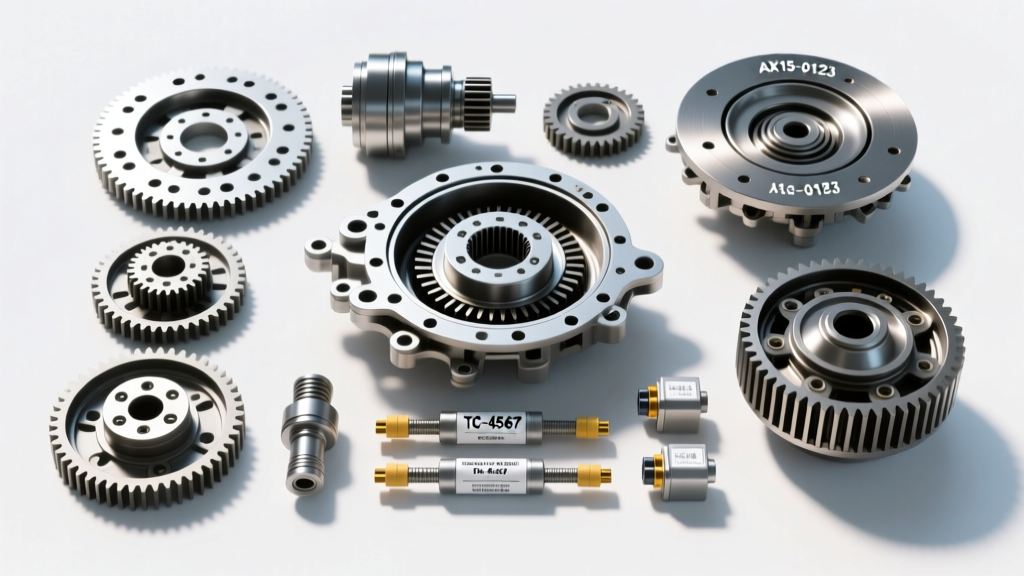
If the cost matrix points you toward a rebuild, do not buy cheap, unbranded kits from generic online marketplaces. The AX15 requires precise bearing tolerances to prevent mainshaft deflection. The gold standard for this transmission is the JB Conversions ADK15 Master Rebuild Kit.
What to Look for in a Premium Kit:
- Bearings: Must be Timken or Koyo. The input shaft bearing (Timken LM603049) and countershaft bearings take massive radial loads. Cheap bearings will shatter under the torque of a modified 4.0L stroker engine.
- Synchro Rings: Look for carbon-fiber lined blocker rings if available, or high-quality OEM-spec brass. The AX15 uses specific synchro strut designs that differ between early (1989-1993) and late (1994-1999) models.
- Seals and Gaskets: Ensure the kit includes the updated 5th gear fork pad inserts, which are notorious for wearing down and causing 5th gear pop-out.
Step 4: Critical Rebuild Assembly Specs and Fluids
Rebuilding an AX15 is a mechanical puzzle that requires adherence to strict torque specifications and assembly protocols. If you are executing the DIY rebuild route, follow these non-negotiable rules:
WARNING: Never use API GL-5 gear oil in an AX15. The extreme pressure (EP) additives in GL-5 will eat away at the brass synchro rings, leading to catastrophic shifting failure within 5,000 miles. Always use an API GL-4 rated 75W-90 fluid, such as Red Line MT-90 or Pennzoil Synchromesh. Total dry capacity is approximately 3.4 pints (1.6 Liters).
Essential Torque Specifications:
- 5th Gear Mainshaft Nut: 150 ft-lbs. Critical Step: You must stake the nut collar into the mainshaft groove after torquing, or apply high-strength red Loctite (Threadlocker 271) to prevent it from backing off again.
- Countershaft Front/Rear Bolts: 15 ft-lbs.
- Extension Housing Bolts: 22 ft-lbs.
- Bellhousing to Engine Block Bolts: 35 ft-lbs (Ensure you use the correct metric or standard bolts depending on your specific engine block year).
Step 5: Evaluating the NV3550 and NV4500 Swap Alternatives
Sometimes, the AX15 transmission rebuild vs replacement decision leans toward replacement because the AX15 simply isn't strong enough for your current setup. If you are running 35-inch tires, locking differentials, and a supercharged 4.0L, the AX15's aluminum case and relatively small gearset will eventually grenade.
The NV3550 Route (Direct-ish Replacement)
Jeep replaced the AX15 with the New Venture NV3550 in 2000. The NV3550 features a stronger case and better gear ratios. However, swapping it into an older YJ or XJ is not a simple bolt-in. The NV3550 uses an internal hydraulic throwout bearing, whereas 1994-1999 AX15 applications use an external slave cylinder. To complete this swap, you will need to source an external slave bellhousing (rare) or utilize an aftermarket adapter kit to convert your external slave setup to an internal hydraulic bearing.
The NV4500 Heavy-Duty Upgrade
For extreme rock crawling and towing, swapping to the cast-iron NV4500 (found in Dodge Ram and GM trucks) is the ultimate replacement. Companies like Novak Conversions offer adapter plates and input shafts to mate the NV4500 to the AMC/Jeep bellhousing. While this pushes the replacement budget well past $3,500, it effectively bulletproofs the drivetrain for the next three decades.
Final Verdict: Which Path Should You Take?
The decision ultimately comes down to your budget, mechanical confidence, and horsepower goals.
- Choose the DIY Rebuild if: Your transmission case is uncracked, the 5th gear teeth are intact, and you have a weekend, a bench vise, and $400 for a JB Conversions ADK15 kit.
- Choose the Remanufactured Replacement if: You lack the time or tools, your current AX15 case is cracked near the bellhousing dowels, and you need the Jeep back on the road immediately for a daily commute.
- Choose the NV3550/NV4500 Swap if: You have added forced induction, significantly increased your tire size, and frequently subject the drivetrain to high-shock loading on the trails.
By accurately diagnosing the failure mode and weighing the long-term costs, you can ensure your classic Jeep or Dodge stays on the road with a manual transmission that shifts exactly as the engineers intended.