The Role of the Center Differential in Modern AWD Systems
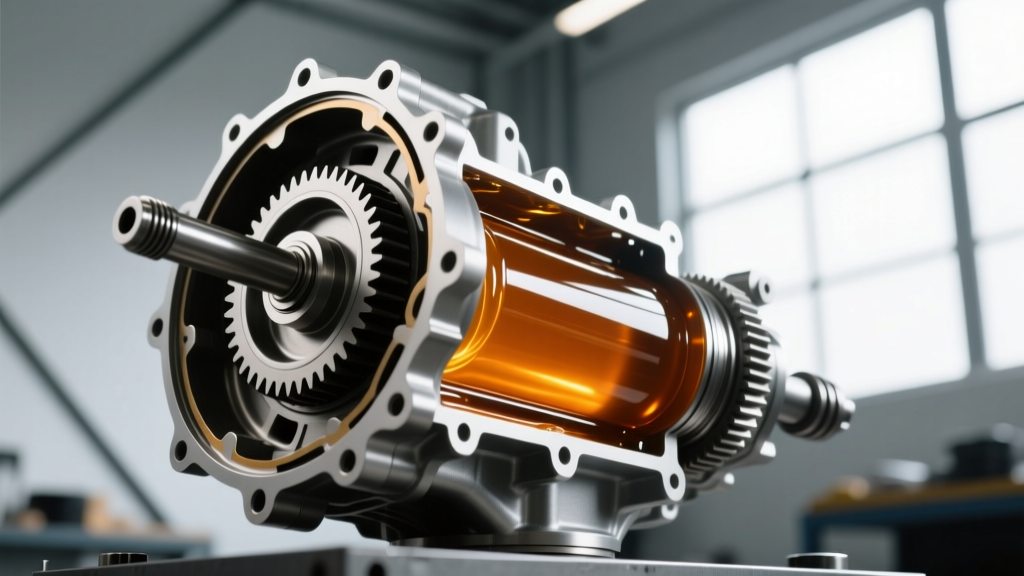
As we navigate the 2026 automotive landscape, All-Wheel Drive (AWD) architectures have evolved from rudimentary mechanical linkages to highly integrated electro-mechanical torque-vectoring networks. Despite these advancements, the foundational physics governing the center differential remain unchanged. The center diff is the critical nexus of any longitudinal or transverse AWD system, responsible for apportioning torque between the front and rear axles while allowing for rotational speed differences during cornering.
When this component degrades, it compromises not only traction but the structural integrity of the entire driveline. Recognizing the precise symptoms of failure is the first step in determining whether a simple fluid service will suffice, or if a complete center differential change is mandatory to prevent catastrophic transfer case or transmission damage.
Top Symptoms Indicating a Center Differential Change is Needed
Center differential degradation rarely happens overnight. It manifests through specific kinesthetic and auditory feedback that trained technicians and observant drivers can identify. Below are the primary failure indicators across popular AWD platforms like Subaru Symmetrical, Audi Quattro, and Toyota Dynamic Torque systems.
1. Low-Speed Cornering Bind (Torque Bind)
The most classic symptom of a failing viscous or mechanical center differential is "torque bind" during tight, low-speed maneuvers, such as pulling into a parking space or executing a U-turn. Because the front and rear axles must rotate at different speeds when cornering, a locked or binding center diff forces the tires to scrub, resulting in a rhythmic hopping or skipping sensation. This is often misdiagnosed as a suspension issue or uneven tire wear, but it originates from the center unit failing to differentiate speed.
2. High-Frequency Shudder Under Load
In AWD systems utilizing multi-plate clutch packs (such as Haldex-based transverse systems or modern active torque-vectoring rear/center modules), degraded friction material or contaminated fluid causes a high-frequency shudder during hard acceleration. This shudder, typically felt between 1,500 and 2,500 RPM, indicates that the clutch packs are slipping and grabbing rapidly. If a fluid and filter service does not resolve the shudder, a full center differential change is required.
3. Drivetrain Whine or Howl at Highway Speeds
Mechanical center differentials, such as the Torsen Type C or Crown Gear units found in ZF and Audi Quattro systems, rely on precise gear meshing and planetary sets. When lubrication breaks down or bearing preloads shift due to wear, a distinct whine or howl emerges, typically peaking between 65 and 75 MPH. Unlike an open differential whine that changes on throttle lift-off, a center diff whine often remains constant regardless of load, pointing directly to the transfer case center bearing or planetary gear wear.
Diagnostic Matrix: Center Differential Failure Modes
Use the following troubleshooting matrix to isolate the root cause before committing to a teardown or parts order.
| Observed Symptom | Probable Root Cause | Diagnostic Verification Test | Recommended Action |
|---|---|---|---|
| Low-speed cornering hop (Figure-8 bind) | Viscous coupling fluid shear breakdown or locked clutch pack | Perform a slow-speed Figure-8 test on dry asphalt. Note binding or hopping. | Center differential change (Viscous unit replacement) |
| Acceleration shudder (1,500 - 2,500 RPM) | Contaminated fluid, worn friction discs, or failed PWM solenoid | Scan for AWD solenoid codes; inspect fluid for metallic/friction particulate. | Fluid/Filter service; if unresolved, clutch pack rebuild or unit swap |
| Constant highway whine (65+ MPH) | Center diff carrier bearing failure or planetary gear pitting | Chassis ear diagnosis on lift; isolate noise from front/rear diffs. | Complete center differential change and bearing preload reset |
| AWD Warning Light + Front-Wheel Drive only | Failed transfer clutch temperature sensor or severed wiring harness | OBD-II bidirectional scan; check transfer clutch duty cycle and temp data. | Sensor replacement or wiring repair (No diff change needed) |
Viscous Coupling vs. Active Clutch Pack Degradation
Understanding the specific technology inside your vehicle's transfer case dictates the repair strategy. A Subaru Symmetrical AWD manual transmission, for example, utilizes a fundamentally different center differential than a modern electro-mechanical system.
Viscous Fluid Shear Breakdown (Subaru 5MT/6MT)
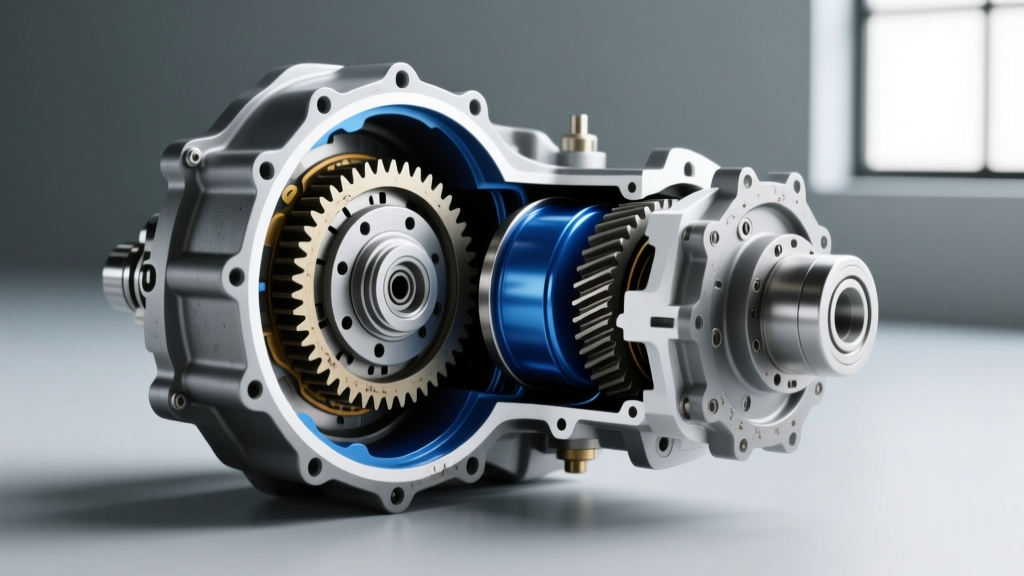
Legacy and modern manual Subaru models utilize a viscous coupling center differential. This unit relies on a dilatant (shear-thickening) silicone fluid sandwiched between interleaved metal plates. When a speed differential occurs between the front and rear output shafts, the fluid shears, thickens, and locks the plates together to transfer torque. Over 80,000 to 120,000 miles, thermal cycling causes the silicone fluid to permanently degrade and lose its shear properties. The result is either a completely open center diff (no AWD traction) or, more commonly, a permanently locked unit causing severe torque bind. Because these units are sealed at the factory, a fluid flush is impossible; a complete center differential change is the only factory-approved repair.
Multi-Plate Clutch Burnout (Electromagnetic Systems)
Systems like the Toyota Dynamic Torque Vectoring AWD or GM's Twin-Clutch rear/center modules use electronically controlled multi-plate clutches bathed in specialized gear oil. These clutches generate immense heat during slip events. If the thermal management parameters are exceeded repeatedly, the friction material glazes or delaminates. Unlike viscous units, many of these can be serviced by dropping the transfer case pan, replacing the clutch pack assembly (e.g., Toyota part #04362-30010 for certain RAV4 Adventure models), and flushing the system, avoiding a full housing replacement.
Performing the Center Differential Change: Costs and Procedures
When diagnosis confirms internal mechanical failure, executing a center differential change requires precision, specific tooling, and adherence to strict torque specifications.
Fluid Service vs. Complete Unit Replacement Costs
- Routine Fluid Service: $150 – $280. This involves draining the center diff/transfer case (typically 0.8 to 1.5 quarts), inspecting the magnetic drain plug for ferrous shavings, and refilling with OEM-specified fluid.
- Viscous Center Diff Replacement (e.g., Subaru WRX): $1,400 – $2,200. The OEM center differential assembly (Part #38300AA102 or updated revisions) costs between $900 and $1,300. Labor requires separating the transmission from the engine crossmember and removing the extension housing (3 to 5 hours).
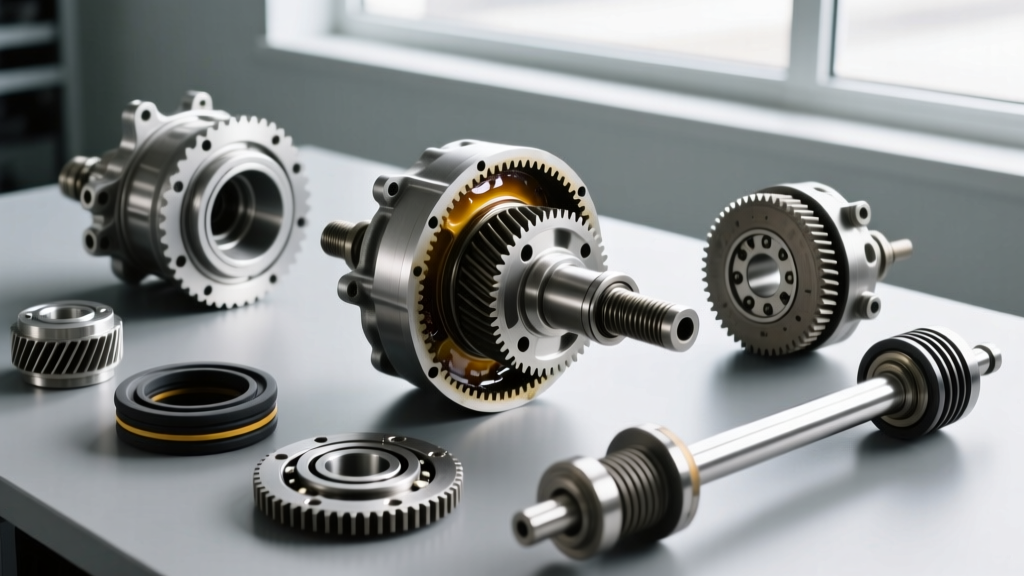
- Active Clutch Pack Rebuild (e.g., Haldex/ZF): $800 – $1,500. Includes the clutch pack kit, specialized flush fluid, and labor to drop the transfer case or rear drive module.
Critical Torque Specifications and Clearances
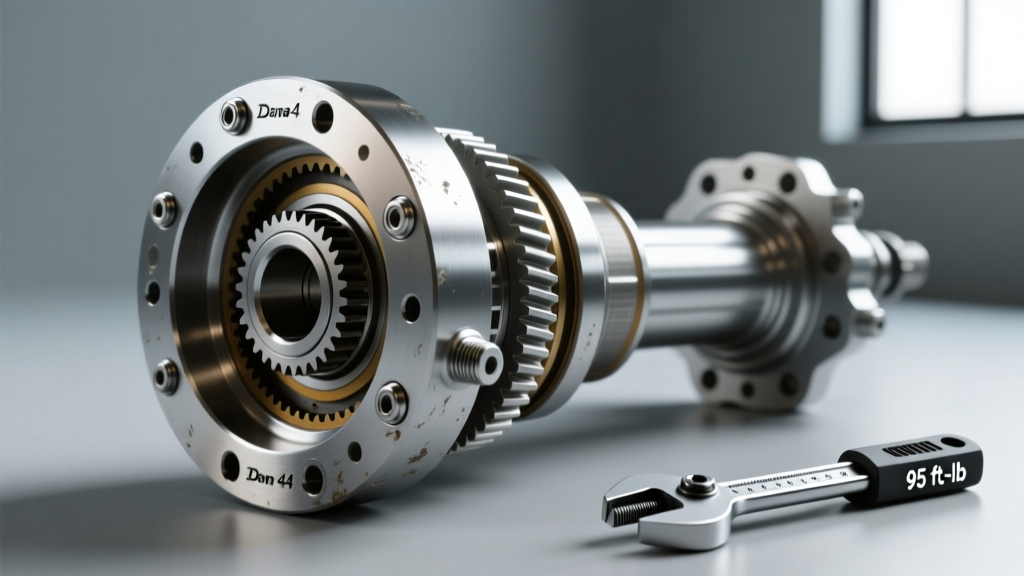
Improper reassembly during a center differential change will lead to immediate case leakage or gear misalignment. Always consult the specific factory service manual, but reference these baseline specifications for common platforms:
- Subaru 6MT Center Diff Extension Housing: The M10 flange bolts securing the center diff housing to the main transmission case must be torqued to 37 Nm (27.3 lb-ft) in a crisscross pattern. The center diff lock sleeve must be verified for smooth engagement before final assembly.
- Audi ZF Torsen Center Diff Housing: Many ZF transfer cases utilize Torx stretch bolts for the center differential housing. These are Torque-To-Yield (TTY) and must be replaced. Typical spec: 40 Nm + 90-degree turn.
- Output Flange Nut (Driveshaft connection): Often a staked nut requiring upwards of 180 - 220 lb-ft. A high-torque 1/2-inch impact or a specialized holding tool and breaker bar is mandatory. Always stake the nut collar into the shaft groove post-torque.
OEM Fluid Specifications for Longevity
If your diagnosis points to fluid degradation rather than mechanical failure, using the exact OEM formulation is non-negotiable. The friction modifiers in AWD center differentials are highly specific to the clutch materials used.
- Subaru Manual Transmissions (Center Diff integrated): Requires Subaru Extra MT 75W-80 GL-5 (Part #SOA8609100) or a high-quality equivalent like Motul Gear 300 75W-90. Standard GL-5 automotive gear oil lacks the specific friction modifiers required for the synchros and can cause notchy shifting, even if it protects the center diff gears.
- Audi Quattro (Torsen / Crown Gear): Audi G 052 145 S2 (or equivalent Fuchs TITAN SINTOPOID 75W). This is a specialized synthetic hypoid oil designed to handle the extreme sliding friction of worm gears without foaming.
- Toyota / Lexus Active Torque Vectoring: Toyota Genuine Hypoid Gear Oil LSD GL-5 75W-85 (Part #08885-81060). The LSD friction modifiers are critical to prevent the electromagnetic clutch packs from chattering during torque vectoring events.
Final Diagnostic Takeaways
Ignoring the early symptoms of center differential bind or shudder will inevitably transfer destructive harmonic loads to the front and rear ring-and-pinion sets, turning a localized repair into a multi-thousand-dollar drivetrain catastrophe. By utilizing the Figure-8 bind test, monitoring fluid condition on the magnetic drain plug, and adhering to strict OEM fluid and torque specifications, you can accurately diagnose the issue and perform a center differential change that restores factory AWD performance and longevity.