The AWD Drivetrain Leak Dilemma: Center Diff or Rear Pinion?
When a puddle of pungent, sulfur-scented fluid appears beneath the rear half of an All-Wheel Drive (AWD) vehicle, the immediate assumption by many DIYers and quick-lube technicians is that the rear axle has failed. They quickly decide they need to replace seal on rear differential assemblies, ordering a standard pinion seal and gear oil. However, in modern AWD architectures—ranging from Subaru’s Symmetrical AWD to BMW’s xDrive and Audi’s Quattro systems—the center differential or active transfer case is positioned directly in front of the rear driveshaft. A leak from the center differential’s rear output housing will coat the driveshaft and sling fluid directly onto the rear differential pinion flange, perfectly mimicking a rear axle leak.
Misdiagnosing this issue leads to wasted labor, incorrect fluid levels in the AWD coupling, and eventual destruction of the center differential clutch packs. As we navigate the 2026 automotive landscape, where AWD systems are increasingly complex and integrated with hybrid drivetrains, precise symptom diagnosis is non-negotiable. This guide provides an expert-level breakdown of how to differentiate a center differential leak from a rear differential pinion leak, complete with OEM part numbers, torque specifications, and diagnostic frameworks.
Anatomical Breakdown: Where AWD Systems Actually Leak
To accurately diagnose the leak, you must understand the physical layout of the AWD drivetrain. According to ZF Group's AWD technical documentation, modern torque-on-demand and permanent AWD systems utilize a center differential or an active transfer case (ATC) bolted to the rear of the transmission. The rear output shaft exits this housing via a yoke or flange, which is sealed by a high-pressure elastomeric lip seal.
- Center Diff / Transfer Case Rear Output Seal: Located at the very rear of the transmission or center diff housing. Leaks here coat the front half of the rear driveshaft and the center support bearing.
- Rear Differential Pinion Seal: Located where the rear driveshaft mates to the rear axle’s pinion gear. Leaks here coat the differential housing and the rear U-joint.
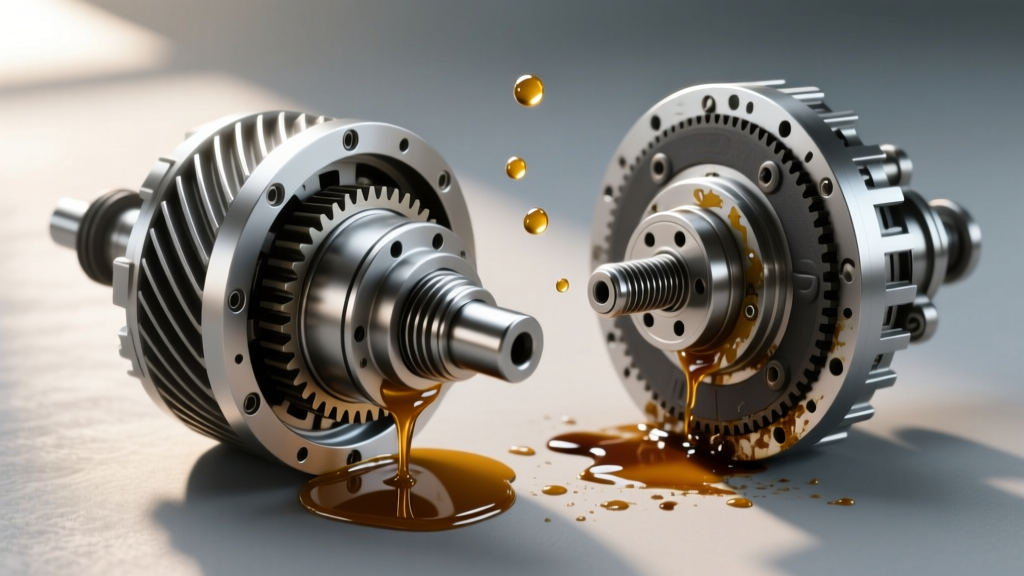
- Driveshaft Sling Effect: Because the driveshaft rotates at high RPMs, fluid from a failing center diff seal will travel rearward via centrifugal force, pooling on top of the rear differential pinion flange and dripping down the axle housing.
Symptom Matrix: Center Differential vs. Rear Differential Leaks
Before you order parts, use this diagnostic matrix to evaluate the fluid and leak characteristics. Relying on visual location alone is a rookie mistake; fluid analysis is the key to E-E-A-T level troubleshooting.
| Diagnostic Factor | Center Diff / Transfer Case Leak | Rear Differential Pinion Leak |
|---|---|---|
| Fluid Type & Smell | Often ATF, CVTF, or specific AWD coupling fluid (e.g., BMW TF 0870). Sweeter or sharper chemical odor. | GL-5 Gear Oil (75W-90 or 75W-85). Distinct, harsh sulfur/rotten egg odor. |
| Leak Origin Point | Rear extension housing or ATC rear output flange. | Pinion shaft entry point on the differential pumpkin. |
| Drivetrain Symptoms | AWD system warning lights, binding during low-speed turns, clutch pack shudder. | Whining noise on deceleration, gear lash, localized axle noise. |
| Fluid Level Check | Checked via transmission dipstick or specific ATC fill plug. | Checked via rear differential fill plug (often 10mm or 3/8" square). |
Deep Dive: Diagnosing Specific AWD Architectures
Subaru Symmetrical AWD (Viscous & Active Torque Split)
As outlined in Subaru's Symmetrical AWD engineering primers, the center differential is integrated into the transmission extension housing. On manual models with a Viscous Limited Slip Center Differential (VLSD), or CVT models with an Active Torque Split (ACT) system, the rear output shaft exits the transmission case. The OEM rear extension housing seal (Part Number 38342AA040, superseding the older 38342AA030) is a notorious failure point around 85,000 miles. If this seal fails, gear oil or CVTF will run down the driveshaft tube. Because the rear differential on Subarus uses a separate 75W-90 GL-5 fluid, a fluid smell test will immediately confirm if the leak is from the transmission/center diff (CVTF/ATF smell) or the rear axle (sulfur smell).
BMW xDrive (ATC Transfer Cases)
BMW’s xDrive system relies on an Active Transfer Case (like the ATC35L or ATC45L) manufactured by ZF or Magna. These are bolted to the rear of the ZF 8HP transmission. The rear output seal (Corteco Part 01033798B) seals the propeller shaft to the rear axle. If this seal weeps, the fluid (BMW TF 0870 or similar transfer case fluid) will coat the guibo (flex disc) and the rear differential pinion flange. A UV dye test injected into the ATC fill plug is the definitive way to confirm this leak before touching the rear axle.
Step-by-Step: When You Actually Need to Replace Seal on Rear Differential
If your UV dye test, fluid smell analysis, and visual inspection confirm that the center differential is dry and the leak is genuinely originating from the rear axle pinion, you must proceed with the pinion seal replacement. However, this is not a simple "pull and push" job. Modern rear differentials require strict adherence to rotational preload specifications.
The Crush Sleeve Trap
Most passenger and light truck rear differentials (including the Ford 8.8, GM 8.6, and Chrysler ZF rear axles) use a crush sleeve to maintain pinion bearing preload. When you remove the pinion nut to pull the flange and replace the seal, the crush sleeve’s structural integrity is compromised. Reusing a crushed sleeve by simply torquing the old nut back down will result in catastrophic pinion bearing failure within 5,000 miles.
- Mark the Flange: Use a paint pen to mark the exact position of the pinion flange relative to the pinion shaft splines. This ensures the U-joint alignment is maintained.
- Use a Flange Holding Tool: Never use an impact gun to remove the pinion nut, as the shock loading can damage the ring and pinion gear teeth. Use a dedicated flange holding tool (e.g., OTC 71503) and a 1/2" drive torque wrench.
- Extract and Prep: Remove the old seal. Clean the bore with brake cleaner. Apply a thin film of RTV silicone to the outer edge of the new seal to prevent outer-case weeping.
- The Solid Spacer Conversion (Expert Recommendation): Instead of installing a new OEM crush sleeve (which requires a massive torque wrench to "crush" to spec, often exceeding 250 lb-ft), professional drivetrain builders recommend installing a Solid Pinion Spacer Kit (e.g., Ratech 1000 series). This allows you to set the exact rotational drag using shims and safely torque the pinion nut without destroying the preload.
- Verify Rotational Preload: Using an inch-pound torque wrench, measure the rotational drag of the pinion gear. For most used bearing sets, the target drag is between 14 to 19 inch-pounds. If it is too loose, add a thinner shim; if too tight, use a thicker shim.
Fluid Cross-Contamination: The Silent AWD Killer
One of the most severe risks of misdiagnosing an AWD leak is fluid cross-contamination. In older AWD systems, mechanics would occasionally "top off" a leaking center differential with standard 75W-90 GL-5 gear oil because it was readily available. In modern active AWD systems, the center differential or ATC relies on highly specific friction-modified fluids to engage the clutch packs. Introducing GL-5 gear oil (which contains sulfur-phosphorus additives that can corrode yellow metals and lacks the necessary friction modifiers) into an active center coupling will cause the clutch packs to glaze, shudder, and eventually weld together. This turns a $40 seal replacement into a $3,500 center differential rebuild.
Cost & Part Number Reference Guide (2026 Market Data)
Below is a reference table for common AWD and rear differential seals, including OEM part numbers and average 2026 retail pricing. Note that labor costs will vary wildly depending on whether subframe dropping is required for clearance.
| Vehicle / System | Component | OEM / Premium Part Number | Est. Part Cost (2026) |
|---|---|---|---|
| Subaru WRX / Outback | Center Diff Rear Extension Seal | Subaru 38342AA040 | $18 - $25 |
| BMW X3 / X5 (xDrive) | ATC Transfer Case Rear Output Seal | Corteco 01033798B | $35 - $50 |
| Ford F-150 / Mustang | Rear Diff Pinion Seal (8.8" / 9.75") | Timken 710470 / Motorist BR3Z-4851-A | $15 - $28 |
| GM Silverado / Tahoe | Rear Diff Pinion Seal (8.6" / 9.5") | SKF 23144 / ACDelco 19299570 | $20 - $35 |
| Universal Solid Spacer | Crush Sleeve Eliminator Kit | Ratech 1000 Series (Varies by axle) | $45 - $65 |
Expert Verdict: Don't Guess, Clean and Trace
As noted by Car and Driver's drivetrain analysis, the mechanical complexity of modern AWD systems demands a methodical approach to maintenance. Never assume a leak location based solely on where the fluid hits the ground. The rotational dynamics of a driveshaft can carry center differential fluid up to two feet rearward before gravity pulls it down onto the axle housing.
Spend $15 on a can of aerosol brake cleaner, a UV dye kit, and a blacklight flashlight. Clean the entire driveline from the center differential output to the rear axle pinion. Drive the vehicle for 10 miles under load, and trace the highest point of the fluid trail. If the trail originates at the transfer case output yoke, leave the rear differential alone and service the center diff. If the trail begins precisely at the pinion flange, prepare your inch-pound torque wrench, order a solid pinion spacer kit, and execute a precision rear differential seal replacement. By respecting the distinct engineering boundaries of the center diff and the rear axle, you ensure the longevity and seamless torque-vectoring performance of your AWD system.