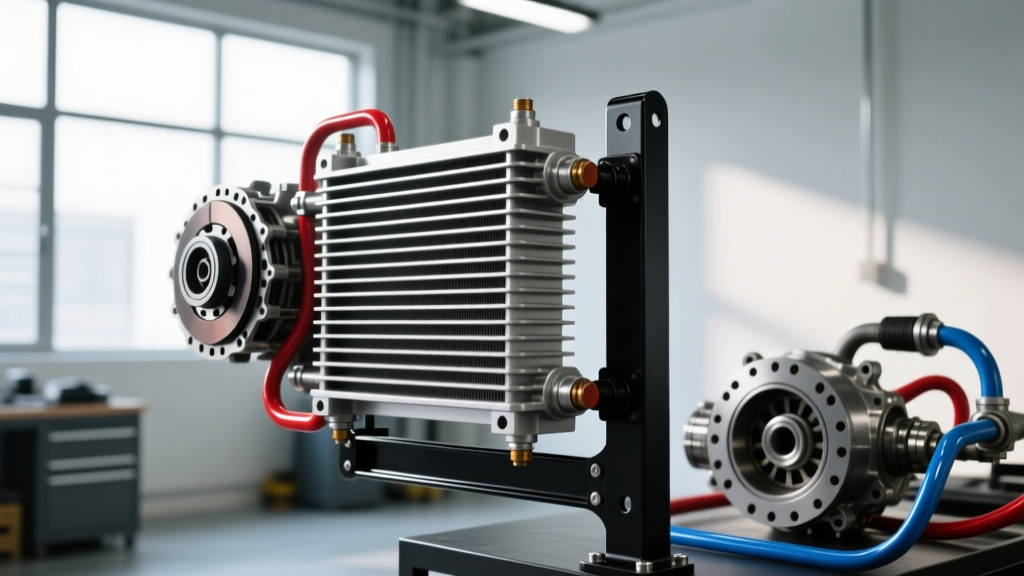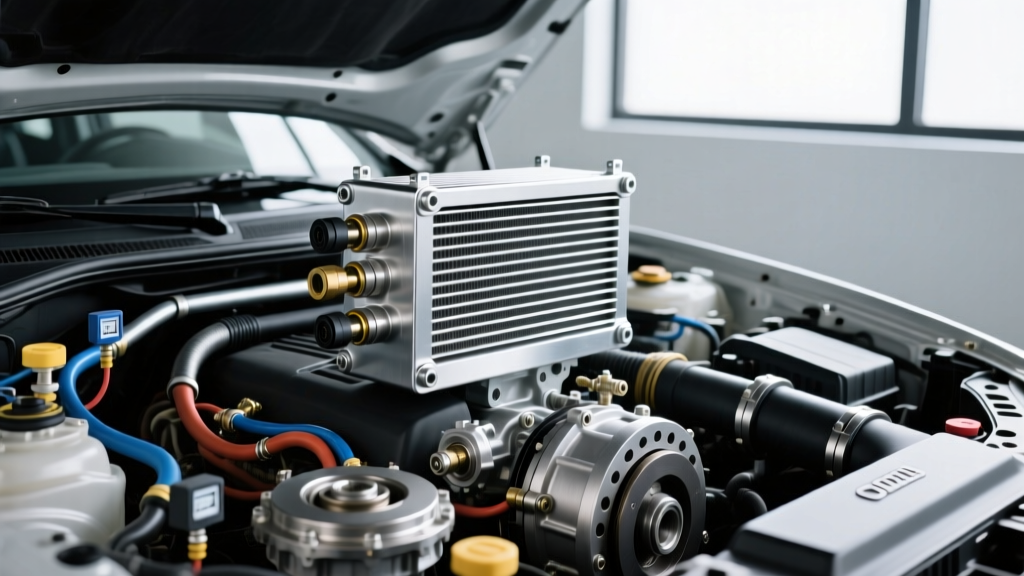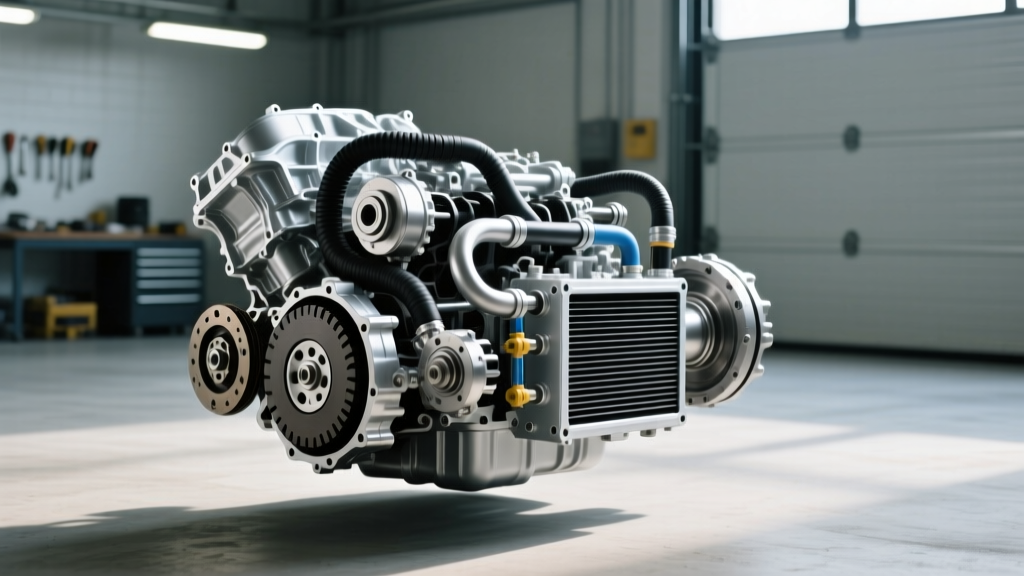
The Thermal Threat: Why OEM Cooling Falls Short
Modern automatic transmissions, from the GM 8L90 to the Ford 10R80 and ZF 8HP, are engineering marvels that prioritize shift speed, torque capacity, and fuel economy. However, this efficiency often comes at a severe thermal cost. As a core component of your preventive maintenance strategy, understanding the symbiotic relationship between auxiliary coolers and your transmission cooling lines is critical for long-term drivetrain survival.
OEM transmission oil coolers (TOC) are typically integrated into the engine's radiator. While this helps the transmission reach operating temperature quickly in cold climates, it severely limits maximum cooling capacity during heavy towing, stop-and-go traffic, or high-RPM driving. When automatic transmission fluid (ATF) temperatures exceed 220°F (104°C), the fluid begins to oxidize rapidly, losing its frictional modifiers and anti-wear additives.
The Hidden Casualty: Thermal Degradation of Transmission Cooling Lines
Most enthusiasts and mechanics focus exclusively on the transmission internals when discussing heat, but the transmission cooling lines are equally vulnerable to thermal abuse. OEM lines typically consist of steel hard-lines mated to SAE J1532-rated rubber hose segments, secured by spring clamps or crimp fittings. Continuous exposure to fluid temperatures exceeding 230°F accelerates the vulcanization and hardening of these rubber compounds.
Over time, the rubber loses its elasticity, leading to micro-cracks at the crimp junctions. When paired with the aggressive line pressures of modern units—such as the GM 6L80, which can command line pressures up to 235 psi during heavy torque converter clutch (TCC) apply—these degraded lines are prone to catastrophic blowouts. An auxiliary cooler drops the fluid temperature before it cycles back through the return lines, drastically extending the service life of these vulnerable rubber segments and preventing sudden fluid loss on the highway.
Core Benefits of Auxiliary Transmission Coolers
The general rule of thumb in tribology is that for every 20°F drop in operating temperature, the lifespan of the ATF doubles. But the benefits of installing an auxiliary stacked-plate or plate-and-fin cooler extend far beyond the fluid itself.
- Varnish Prevention: Overheated ATF forms a sticky varnish that clogs the micro-valves in the mechatronic unit (especially critical in ZF 8HP transmissions). Cooler fluid keeps solenoids operating crisply.
- Seal Preservation: High temperatures cause O-rings and piston seals inside the clutch packs to harden and shrink, leading to slip codes (e.g., P0730). Lowering system temps maintains seal pliability.
- Line Pressure Stability: As ATF overheats, it thins out. The transmission control module (TCM) must continuously ramp up line pressure to compensate, putting immense mechanical stress on the pump and the transmission cooling lines.
- Towing Confidence: For vehicles frequently pulling loads over 5,000 lbs, an auxiliary cooler prevents the TCM from triggering 'limp mode' due to over-temperature protection protocols.
Real-World Failure Mode: A common issue on the 2015-2019 GM Silverado equipped with the 8L90 is torque converter shudder. This is often traced back to degraded fluid and varnished TCC solenoids caused by inadequate OEM cooling. Upgrading to a high-capacity auxiliary cooler and flushing the lines is the primary preventive fix recommended by Sonnax Transmission Tech Resources.
Sizing Your Auxiliary Cooler by GVWR
Selecting the correct cooler size is paramount. An undersized cooler won't manage the thermal load, while a massively oversized cooler without a bypass can cause overcooling in winter, leading to delayed shifts and poor fuel economy. Below is a standard sizing matrix based on Gross Vehicle Weight Rating (GVWR) and towing demands.
| Vehicle GVWR | Towing Capacity | Recommended Cooler Type | Example Part Number |
|---|---|---|---|
| Under 6,000 lbs | None / Light | Tube-and-Fin (Class I) | Hayden 676 |
| 6,000 - 10,000 lbs | Up to 5,000 lbs | Plate-and-Fin (Class II) | Derale 13906 |
| 10,000 - 16,000 lbs | Up to 10,000 lbs | Stacked-Plate (Class III) | Derale 13960 |
| Over 16,000 lbs | Heavy / 5th Wheel | Stacked-Plate w/ Fan (Class IV) | Mishimoto MMTC-F2D |
Data sourced from general application guidelines provided by the Derale Performance Tech Center.
Upgrading Transmission Cooling Lines: OEM vs. PTFE
When installing an auxiliary cooler, you are presented with the perfect opportunity to upgrade your transmission cooling lines from OEM rubber to high-performance alternatives. While OEM rubber hoses are adequate for stock applications, they are the weak link in high-pressure, high-heat environments.
The PTFE / AN-6 Advantage
Upgrading to AN-6 (Automotive Number 6) lines featuring a PTFE (Teflon) inner core with a 304 stainless steel outer braid offers massive preventive maintenance benefits. PTFE lines can withstand continuous temperatures up to 400°F and burst pressures exceeding 3,000 psi. This completely eliminates the risk of thermal blowouts. Furthermore, the stainless braid protects the lines from road debris, salt corrosion, and chafing against the chassis.
Fitting Adapters and Quick-Disconnects
Modern vehicles often use plastic quick-disconnect fittings at the radiator and transmission case (e.g., the GM 5/8" quick-connect). These plastic collars become brittle with age and heat. When rerouting your transmission cooling lines to an auxiliary cooler, replace these plastic OEM clips with CNC-machined aluminum or brass retention fittings to ensure a secure, leak-free seal under maximum line pressure.
Thermal Bypass Valves and Cold-Climate Maintenance
A critical, often overlooked aspect of auxiliary cooler installation is the thermal bypass valve. Many modern transmissions route fluid directly back to the pan when cold to allow for rapid warm-up. If you install a massive stacked-plate cooler in a cold climate without retaining the OEM bypass (or using a cooler with an integrated thermostat bypass, like the Mishimoto MMTC-F2D), your transmission will struggle to reach its optimal 180°F operating temperature.
Running ATF too cold (below 150°F) prevents the fluid from properly expanding and lubricating the clutch packs, leading to harsh shifts and accelerated wear. For preventive maintenance in northern climates, always plumb the auxiliary cooler in series after the OEM radiator cooler, ensuring the radiator acts as a thermal buffer to maintain baseline temperatures during winter months.
Installation Specs and Torque Requirements
Proper installation is just as important as the hardware itself. When fabricating or routing new transmission cooling lines to your auxiliary cooler, adhere to the following specifications to prevent leaks and vibration fatigue:
- AN-6 Aluminum Fittings: Torque to 12-15 ft-lbs using a crowfoot wrench. Do not overtighten, as aluminum threads will strip easily.
- Hose Clamps (if using push-lock): Use constant-tension T-bolt clamps rather than standard worm-gear clamps to accommodate thermal expansion and contraction of the hose.
- Routing Clearance: Maintain a minimum of 2 inches of clearance from exhaust manifolds and catalytic converters. If crossing an exhaust pipe, use a heat-shielded hose sleeve rated for 500°F+.
- Zip Ties and Brackets: Never use plastic zip-ties to secure lines near the radiator fans. Vibration will snap them over time. Use rubber-cushioned Adel clamps bolted to the chassis or radiator support.
Cost vs. Longevity: The ROI of Auxiliary Cooling
A high-quality stacked-plate auxiliary cooler kit typically ranges from $120 to $280, while a complete set of custom PTFE transmission cooling lines and billet adapters will cost between $150 and $350. Compared to the $3,500 to $6,000 cost of replacing a burned-out Ford 10R80 or GM 8L90 transmission, this preventive maintenance upgrade offers an undeniable return on investment. By managing thermal loads, you not only preserve the chemical integrity of your ATF but also ensure your cooling lines remain supple, sealed, and ready to handle the immense pressures of modern automatic transmissions for hundreds of thousands of miles.