The Preventive Maintenance Mindset: Manual Drivetrain Longevity
When discussing manual transmission longevity, the friction disc is only half the battle. Modern manual drivetrains rely on a complex symphony of rotating mass, torsional damping, and hydraulic actuation. For advanced DIYers and professional technicians, a proactive approach to drivetrain health means understanding that a clutch replacement with flywheel service is not just a reactive repair—it is a critical preventive maintenance milestone. By addressing the entire clutch assembly ecosystem before catastrophic failure occurs, you protect the transmission input shaft, the bellhousing, and the engine crankshaft from secondary damage.
Automotive Flywheel & Clutch Replacement vs. GE Washer Clutch Replacement
Many DIY mechanics cut their teeth on home appliance repair. A common weekend project is the GE washer clutch replacement, which typically involves swapping a worn agitator drive hub or clutch assembly on a top-load washing machine. While replacing a $35 GE washer clutch teaches basic mechanical sympathy and requires little more than a 3/8-inch socket and a putty knife, an automotive clutch replacement with flywheel service is an entirely different echelon of precision engineering.
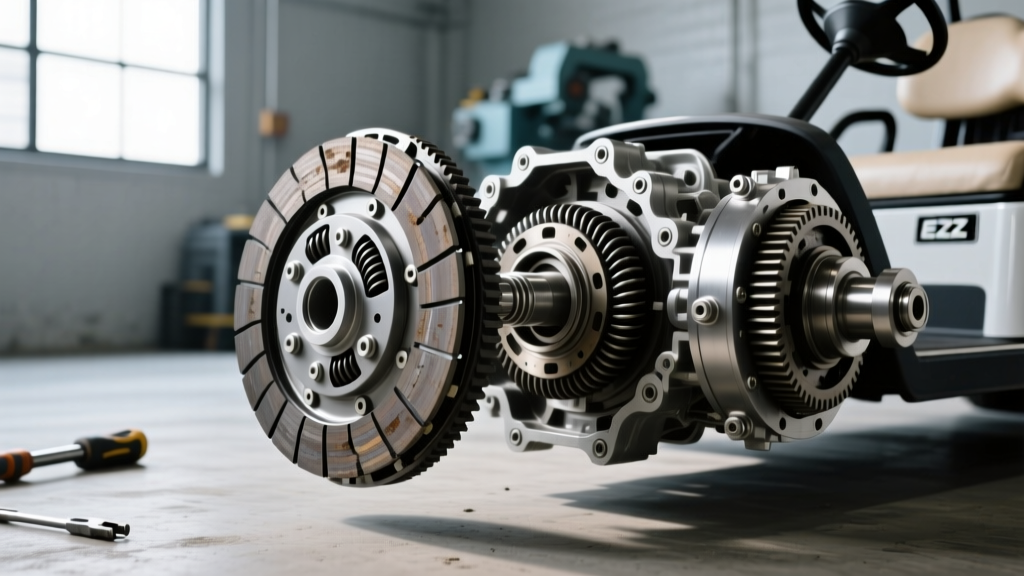
Unlike a washing machine agitator clutch that simply engages a planetary gearset, a modern automotive Dual-Mass Flywheel (DMF) manages severe torsional vibrations from the crankshaft before they reach the transmission input shaft. Treating a ZF 6-speed or Tremec T56 Magnum clutch job with the same casual approach as an appliance repair will result in catastrophic drivetrain failure, excessive NVH (Noise, Vibration, and Harshness), and premature transmission bearing wear. Below, we outline the strict preventive maintenance and replacement protocols required for modern automotive flywheel and clutch systems.
Dual-Mass vs. Single-Mass Flywheels: The Preventive Approach
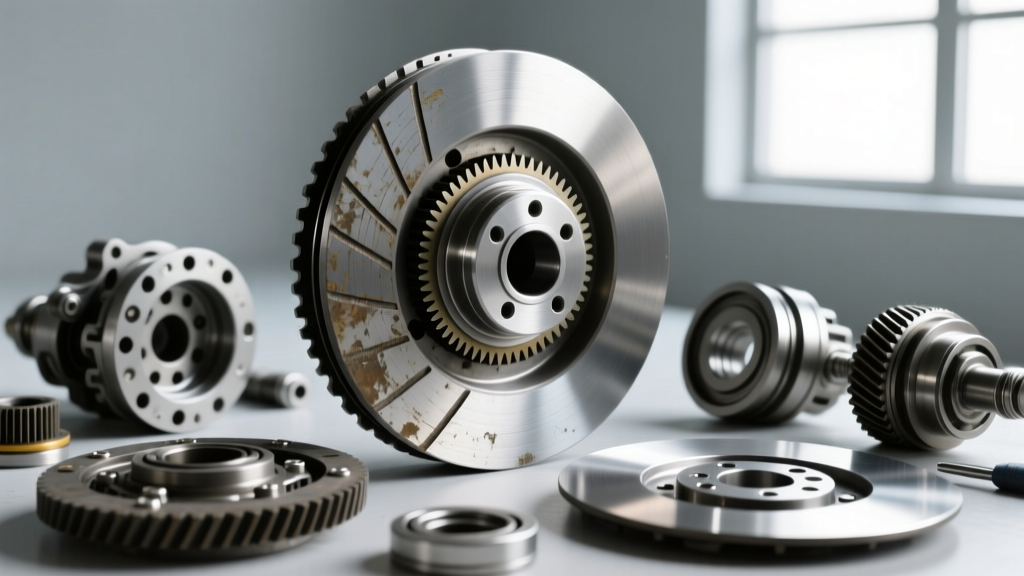
The transition from Single-Mass Flywheels (SMF) to Dual-Mass Flywheels (DMF) was driven by the need to isolate low-frequency torsional vibrations inherent in modern, high-torque, low-RPM engines. According to Schaeffler LuK RepXpert, a DMF contains an internal arc spring package that dampens these vibrations. However, this internal complexity introduces new failure modes that require preventive monitoring.
- Grease Migration and Thermal Breakdown: The internal bearing of a DMF is packed with a specific high-temperature grease. Aggressive driving, frequent towing, or riding the clutch generates excess heat, causing the grease to break down or leak onto the friction surface, leading to clutch chatter and internal bearing seizure.
- Spring Pack Fatigue: Over 80,000 to 120,000 miles, the internal arc springs lose their damping tension. This manifests as a distinct 'clunk' when shutting off the engine or a gear rollover rattle at idle.
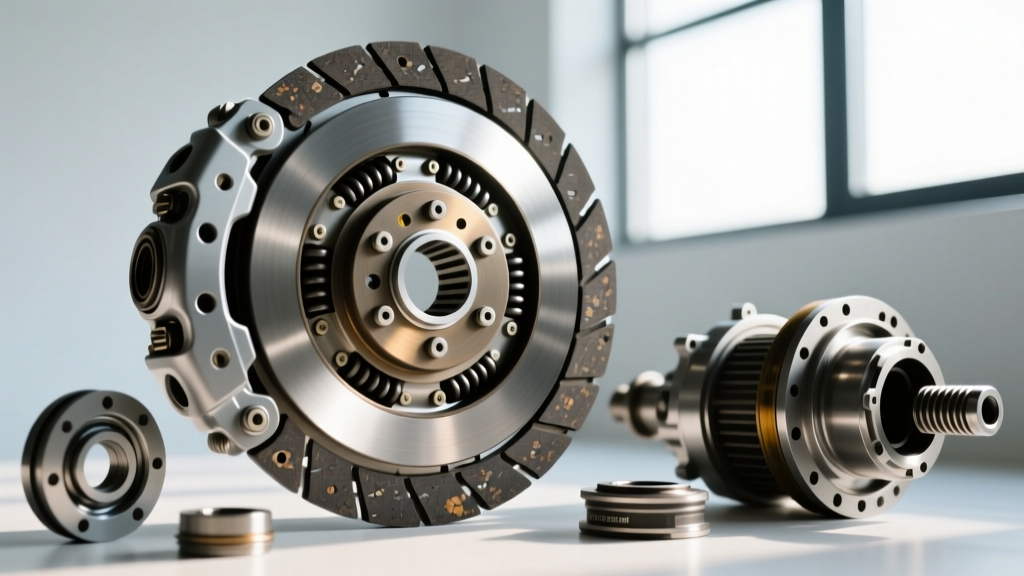
From a preventive standpoint, Sachs Automotive strongly advises against resurfacing a DMF. Unlike a solid SMF, which can be machined if it falls within minimum thickness tolerances, a DMF must be replaced as a complete unit alongside the clutch disc and pressure plate to maintain the precise mass balance and damping characteristics engineered for transmissions like the VW 02M or the BMW ZF S6-45.
Preventive Inspection Protocol: Before the Drop
Before unbolting the transmission crossmember, a thorough diagnostic evaluation can confirm whether the flywheel requires replacement or if the issue lies solely within the hydraulic system or friction materials.
1. The Free-Play and Runout Test
With the transmission removed, use a dial indicator mounted to the bellhousing to measure the lateral runout of the flywheel friction surface. The service limit for most OEM DMFs is 0.10mm (0.004 inches). Additionally, use a specialized DMF free-play gauge to check the radial and axial play between the primary and secondary masses. Radial play exceeding 1.5mm indicates internal spring pack failure.
2. The Gear Rattle Diagnostic
With the vehicle in neutral and the clutch pedal released (engaged), listen for a metallic rattling from the bellhousing that disappears when the clutch pedal is depressed. This is the hallmark of a failing DMF arc spring or a worn release bearing, signaling that a clutch replacement with flywheel renewal is immediately necessary to prevent the secondary mass from separating and destroying the bellhousing.
| Preventive Component | Inspection Method | Replacement Threshold | Estimated Part Cost (2026) |
|---|---|---|---|
| Dual-Mass Flywheel (DMF) | Dial Indicator Runout & Free-Play Gauge | > 0.10mm runout or > 1.5mm radial play | $450 - $950 |
| Pilot Bearing / Bushing | Spin test & visual check for brinelling | Any gritty resistance or lateral play | $15 - $45 |
| Rear Main Seal (RMS) | Visual inspection for oil weeping | Any sign of moisture or dust accumulation | $20 - $60 |
| Clutch Fork & Pivot Ball | Check for wear grooves and dry joints | Visible scoring or missing anti-friction pads | $30 - $85 |
The 'While You're In There' Preventive Checklist
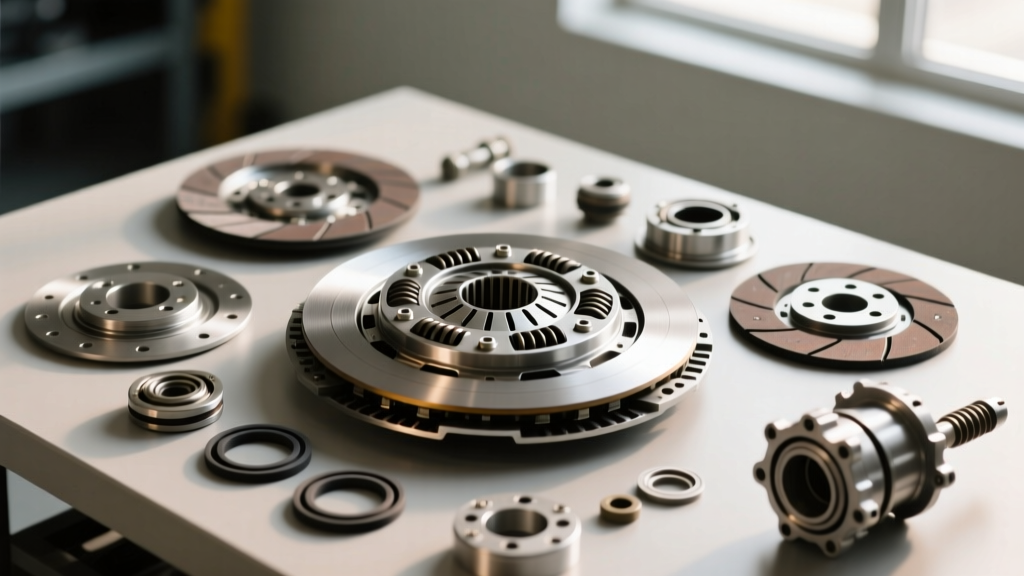
The labor cost to access the clutch assembly represents roughly 60% to 70% of the total job cost. Therefore, preventive maintenance dictates that several ancillary components must be addressed simultaneously, regardless of their current condition.
- Rear Main Seal (RMS): A $30 seal that takes 5 minutes to install with the flywheel removed. If it leaks 20,000 miles later, engine oil will contaminate the new clutch disc, requiring a complete teardown.
- Pilot Bearing/Bushing: A seized pilot bearing will prevent the transmission input shaft from freewheeling when the clutch is disengaged, causing gear grinding and potentially tearing the input shaft seal. Always extract and replace this bearing using a blind-hole puller or the traditional grease-and-dowel method.
- Concentric Slave Cylinder (CSC): Never reuse an old CSC. As the clutch disc wears over its lifespan, the CSC piston extends further out of its bore to maintain hydraulic pressure. Installing a new, thicker clutch disc pushes the piston back into its bore; an old, worn CSC may over-extend or fail to seal properly under this new stroke length, leading to internal fluid leaks.
Expert Transmission Tip: When installing a new LuK RepSet PRO or Sachs DMF kit, never use an impact wrench to seat the flywheel or pressure plate bolts. Impact guns can easily over-stress the internal DMF springs or warp the pressure plate diaphragm. Always use a calibrated torque wrench and follow the OEM star-pattern sequence.
Precision Assembly: Torque Specifications and Alignment
Automotive fasteners are highly specific. The flywheel-to-crankshaft bolts on most modern engines (such as the GM LS-series or BMW N54/N55) are Torque-to-Yield (TTY). They stretch permanently during installation and must never be reused. For example, the ZF S6-45 manual transmission mated to a BMW inline-six requires new M10x1.25 flywheel bolts torqued to 60 Nm, followed by an additional 90-degree angle turn. The pressure plate bolts, typically M8, are torqued to 25 Nm in a gradual, alternating star pattern to ensure the diaphragm spring seats evenly without warping. Proper alignment of the clutch disc is equally critical. Using the alignment tool included in premium kits ensures the transmission input shaft will slide through the disc splines and into the pilot bearing without binding. Forcing the transmission into place with the bellhousing bolts can instantly crack the clutch disc hub or damage the transmission case.
Hydraulic System Preventive Maintenance
A flawless mechanical installation will still result in poor shift quality if the hydraulic system is neglected. Clutch hydraulic fluid (usually DOT 4) is highly hygroscopic, meaning it absorbs moisture from the atmosphere over time. This moisture lowers the fluid's boiling point and promotes internal corrosion within the master and slave cylinders. During your clutch replacement with flywheel service, completely flush the hydraulic system. If your vehicle utilizes an internal CSC, bench-bleed the slave cylinder before installing the transmission to ensure no air pockets are trapped in the bore, which would result in a spongy pedal and incomplete clutch disengagement.
Conclusion: Protecting Your Drivetrain Investment
While home appliance repairs like a GE washer clutch replacement are excellent for building basic mechanical confidence, the modern automotive manual transmission demands rigorous adherence to engineering tolerances, precise torque specifications, and comprehensive preventive component renewal. By treating the flywheel, pilot bearing, rear main seal, and hydraulic system as a single, interdependent ecosystem, you ensure that your vehicle's drivetrain will deliver crisp, reliable power delivery for another 100,000 miles. Always source OEM-equivalent components from trusted manufacturers and verify current pricing and availability via major catalogues like RockAuto before beginning your teardown.