The True Cost of Drivetrain Failure: Why Modern Transmissions Are Expensive
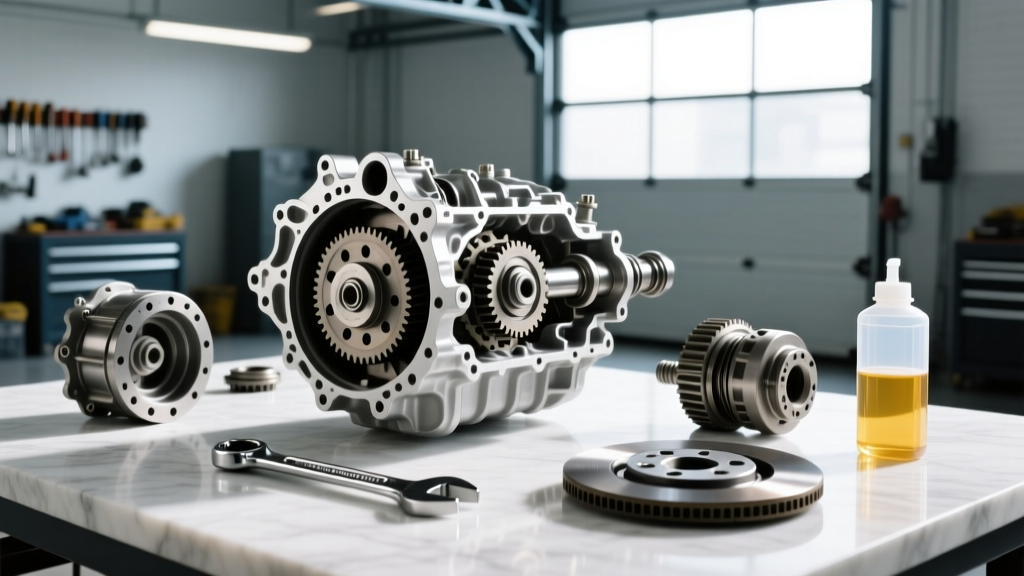
When a vehicle's drivetrain fails, the most common question owners ask is how much does an automatic transmission cost to replace or rebuild? In 2026, the days of the simple, inexpensive mechanical rebuild are largely behind us. Modern automatic transmissions are highly complex, computer-controlled assemblies where hydraulic valve bodies, integrated solenoids, and internal transmission control modules (TCMs) dictate shift quality and torque management.
Because of this technical complexity, a catastrophic internal failure rarely results in a quick fix. Instead, it requires a full remanufactured unit swap, specialized J2534 pass-through programming, and precise fluid fill procedures. When repair estimates easily eclipse $3,500 to $5,000, understanding both the mechanical justification for the cost and the available transmission repair financing options becomes critical for vehicle owners.
Technical Breakdown: Where the Money Actually Goes
To understand the financing required, we must first look at the hard parts and labor intensity of modern transmission replacements. Let us examine two of the most common platforms on the road today: the GM 6L80E and the ZF 8HP.
Case Study 1: The GM 6L80E (Silverado, Sierra, Tahoe)
The 6-speed 6L80E is notorious for 3-5-R clutch wave plate failures, which send metal debris through the TEHCM (Transmission Control Module) located inside the fluid pan. A remanufactured 6L80E typically costs between $2,400 and $2,900 for the unit alone.
- Fluid & Filtration: The filter is integrated into the plastic pan, meaning a new pan ($160) and 11.2 quarts of Dexron VI fluid ($90) are mandatory.
- Torque Converter: Reusing an old converter contaminated with clutch material will destroy the new unit. A new remanufactured torque converter adds $450.
- Labor & Calibration: R&R (Remove and Replace) takes roughly 6.5 hours. Pan bolts must be torqued to exactly 11 Nm (97 lb-in) to prevent cracking the TEHCM housing.
Total Estimated Cost: $3,800 - $4,500.
Case Study 2: The ZF 8HP (BMW, Dodge, Jeep, Audi)
The ZF 8-speed is an engineering marvel but features a highly sensitive mechatronic unit (a combined valve body and TCM). A common failure point is the cracking of the plastic adapter seal (sleeve), which causes low line pressure and burnt clutch packs.
- The Mechatronic Penalty: If the mechatronic unit is damaged by debris, the replacement part alone is $1,800 to $2,200.
- Fluid Specifications: The ZF 8HP requires specific ZF LifeguardFluid 8. Furthermore, the fill procedure is incredibly labor-intensive: the fluid level must be checked with the engine running and the transmission fluid temperature precisely between 30°C and 50°C.
- Hardware: The aluminum mechatronic-to-case bolts are torque-to-yield and must be replaced and torqued to 10 Nm.
Total Estimated Cost (Full Reman Swap): $4,200 - $5,500.
Navigating Transmission Repair Financing Options
Because these repairs represent a massive, unexpected capital expense, most drivers cannot pay out of pocket. Below is a technical and financial comparison of the most viable financing methods for drivetrain repairs in 2026.
| Financing Method | Typical APR (2026) | Best Use Case | Technical Caveat |
|---|---|---|---|
| Shop-Affiliated Credit Cards | 0% (Deferred) / 28.99% | Repairs under $3,000 if paid within 6 months | Retroactive interest applies if the J2534 programming or additional seals push the bill over your payoff timeline. |
| Personal Auto Repair Loans | 8.5% - 16.0% | Full 6L80E or ZF 8HP remanufactured swaps | Fixed terms allow you to align the loan payoff with the 3-year/100k mile warranty of the new transmission. |
| Home Equity Line (HELOC) | 7.0% - 10.5% | Classic car restorations or heavy-duty diesel trucks | Best for high-torque builds (e.g., Allison 1000PK) where costs exceed $8,000. |
| Buy Here Pay Here (BHPH) | 22% - 30%+ | None (Avoid at all costs) | Predatory terms that often exceed the residual value of the vehicle's drivetrain. |
The Deferred Interest Trap of Shop Credit Cards
Many transmission shops offer in-house financing through Synchrony Car Care or Wells Fargo Auto. These cards heavily promote 'No Interest if Paid in Full within 12 Months.' However, according to the Consumer Financial Protection Bureau (CFPB), this is deferred interest, not true 0% APR. If your ZF 8HP repair bill is $4,800 and you only pay off $4,500 by the promotional end date, you will be hit with retroactive interest at roughly 28.99% on the entire original $4,800 balance.
Mechanic's Tip: Never use a deferred-interest shop card for a transmission rebuild unless you have the cash in a savings account to pay it off on day one. Unexpected complications—like a seized flexplate bolt requiring torching, or a failed rear main seal discovered during R&R—will inflate your final bill and disrupt your payoff timeline.
Personal Loans: The Safest Route for Major Drivetrain Swaps
For a full remanufactured transmission swap, an unsecured personal loan from a credit union or online lender (like LightStream or SoFi) is generally the most financially sound option. By securing a 24- or 36-month fixed-rate loan, you protect yourself from retroactive interest traps. Furthermore, a 36-month loan term perfectly mirrors the standard 36-month/unlimited-mileage warranty provided by premium remanufacturers like Jasper or ETE Reman.
Hidden Technical Expenses That Break Budgets
When applying for transmission repair financing, drivers often request exactly the amount quoted for the 'transmission.' This is a critical error. You must finance the complete drivetrain integration. Ensure your loan amount accounts for the following hidden technical expenses:
1. J2534 Pass-Through Programming
Modern transmissions are not plug-and-play. The TEHCM in a GM or the Mechatronic unit in a ZF must be flashed with the vehicle's specific VIN and calibration files. Shops must purchase OEM subscription tokens to perform this J2534 pass-through programming, adding $150 to $250 to the final invoice.
2. Flexplate and Rear Main Seal
While the transmission is out, the flexplate (which connects the engine to the torque converter) must be inspected for micro-cracks around the crankshaft mounting bolts. If the rear main seal is weeping, replacing a $25 seal while the transmission is already removed saves hundreds in future labor. Budget an extra $300 for these preventative measures.
3. Drivetrain Fluids and Cooling Line Flushes
A new transmission will be instantly destroyed if old, contaminated fluid is left in the transmission cooler lines. A mandatory cooler line flush using a specialized solvent and compressed air is required. Additionally, transfer case fluid (e.g., AutoTrak II for GM AWD models) and differential gear oil are often disturbed or require simultaneous servicing. Add $200 to your financing request for ancillary fluids.
Final Verdict: Matching the Loan to the Drivetrain
When determining how much an automatic transmission costs to repair, you are ultimately buying the vehicle's future mobility. If you are driving a heavy-duty truck with a 6L80E or a luxury sedan with a ZF 8HP, the cost of a remanufactured unit is an investment in the vehicle's structural longevity.
Avoid predatory financing, read the fine print on deferred interest shop cards, and always pad your loan request by 15% to cover J2534 programming, torque-to-yield hardware, and mandatory fluid flushes. By treating your transmission repair as a major mechanical capital project, you can secure the right financing and get back on the road with confidence. For more technical specifications and failure modes, refer to the ZF Aftermarket technical documentation or your vehicle's OEM service manual.