The Allure and the Aftermath: Burnouts and Automatic Transmissions
Every year, thousands of enthusiasts search for how to do a burnout automatic transmission style, hoping to lay down a massive cloud of tire smoke without stalling out. The typical method involves holding the brake pedal, mashing the throttle to spike the RPMs, and abruptly releasing the brakes. While this might look great on camera, the hidden casualty is often your transmission's hydraulic and friction systems. If you have recently performed a burnout and are now experiencing delayed engagement—a hesitation of 1.5 to 4 seconds when shifting from Park to Drive or Reverse—you have likely triggered a cascade of thermal and mechanical failures.
Delayed engagement is not a quirk; it is a definitive symptom of hydraulic pressure loss or friction material degradation. In this technical deep-dive, we will explore the exact thermodynamics of a burnout, how it destroys automatic transmission internals, and the step-by-step diagnostic protocol to identify the damage.
The Thermodynamics of a Burnout: Why ATF Fails
To understand the failure, we must look at the torque converter. During a burnout, the engine-side impeller spins at 2,500 to 4,000 RPM, while the transmission-side turbine is held completely stationary by the brakes and drivetrain inertia. This 100% slippage condition generates immense parasitic heat.
Normal Automatic Transmission Fluid (ATF) operating temperatures hover between 175°F and 195°F. A sustained 10-second burnout can spike the fluid temperature inside the torque converter past 280°F. Modern synthetic fluids like Dexron VI or Mercon LV rely on complex friction modifier packages to maintain the precise coefficient of friction required for clutch pack engagement. When ATF exceeds 250°F, the fluid begins to oxidize rapidly, and the friction modifiers shear and burn off. The fluid loses its shear stability, effectively becoming as thin as water under pressure, which leads directly to delayed hydraulic actuation.
Core Culprits of Post-Burnout Delayed Engagement
1. Forward Clutch Pack Glazing and Piston Seal Blowout
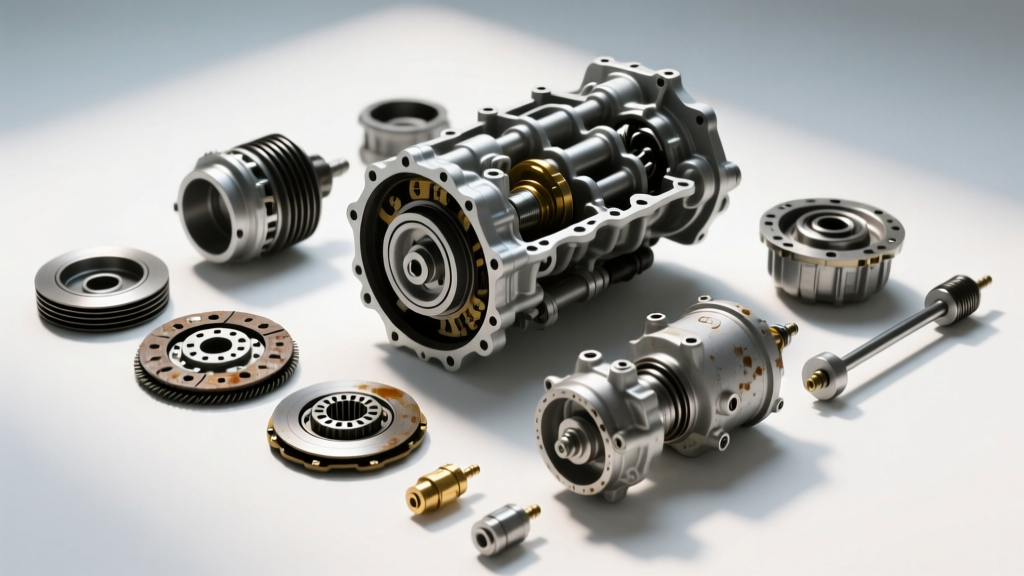
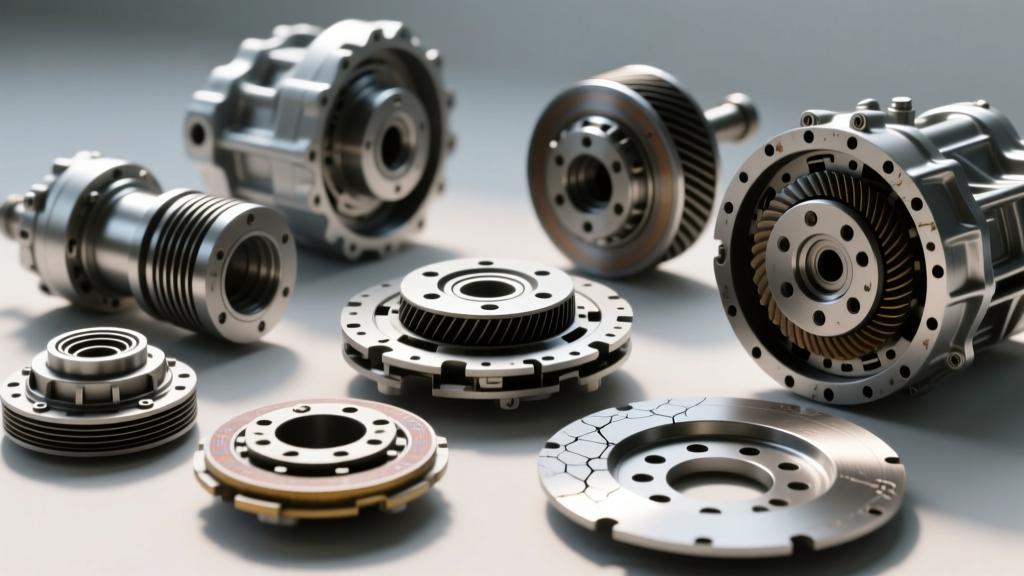
The forward clutch pack is responsible for engaging all forward gears. When the degraded, overheated ATF is forced into the forward clutch drum, the friction materials (typically cellulose or Kevlar-based composites) overheat and glaze. Glazing creates a glass-like surface on the friction discs. When you shift into Drive, the PCM commands the solenoid to apply pressure, but the glazed clutches slip until line pressure builds high enough to force a mechanical grab. Furthermore, the extreme heat can melt or deform the nitrile or Teflon piston O-rings inside the clutch drum, causing internal cross-leaks that delay pressure buildup.
2. Valve Body Separator Plate Warping
The valve body is the hydraulic brain of the transmission. It consists of an aluminum casting and a steel separator plate. Aluminum and steel expand at drastically different rates under thermal stress. The intense heat soak from a burnout can cause the steel separator plate to warp. This warping prevents the small check balls (typically 0.250-inch or 0.297-inch in GM units) from seating properly in their orifices. When you shift into gear, hydraulic fluid bleeds past the unseated check ball rather than actuating the clutch piston, resulting in a 2-to-3 second delay before the gear engages.
3. Torque Converter Stator Clutch Failure
Inside the torque converter is a stator supported by a one-way roller clutch. The stator redirects fluid flow to multiply torque. The extreme rotational forces and heat of a burnout can cause the stator one-way clutch to weld itself shut or, conversely, strip its inner races and freewheel in both directions. While this primarily causes a loss of low-end torque multiplication, the metallic debris generated from a failing stator clutch circulates through the transmission, clogging the valve body solenoids and delaying engagement.
Step-by-Step Diagnostic Protocol
If you are facing delayed engagement post-burnout, skip the 'miracle in a bottle' additives. You need empirical data. Follow this diagnostic sequence:
- Fluid Inspection: Pull the dipstick or overflow plug. If the ATF is dark brown or black and smells like burnt toast, the friction modifiers are destroyed, and the clutch packs are likely glazed. A milky appearance indicates coolant intrusion, but a burnt smell confirms thermal destruction.
- Scan Tool PID Analysis: Connect a bi-directional OBD2 scanner. Monitor the Transmission Fluid Temperature (TFT) and Line Pressure Solenoid Duty Cycle. If the PCM is commanding a high duty cycle (max pressure) but the transmission is slipping, you have a mechanical or hydraulic leak.
- Hydraulic Line Pressure Test: This is the definitive test. Screw a 0-300 PSI mechanical pressure gauge into the mainline pressure tap on the transmission case.
| Test Condition | Normal PSI Range | Post-Burnout Failure PSI | Probable Damage Source |
|---|---|---|---|
| Idle in Park | 50 - 75 PSI | < 40 PSI | Worn pressure regulator valve or warped valve body |
| Idle in Drive (Foot on Brake) | 110 - 160 PSI | 80 - 100 PSI (Slow Rise) | Blown forward clutch piston seal or cross-leak |
| Idle in Reverse | 150 - 220 PSI | < 120 PSI | Burnt reverse band or leaking low/reverse clutch drum |
| Stall Speed (Flash) | 200 - 280 PSI | Fails to exceed 150 PSI | Failed torque converter stator or severe pump cavitation |
Transmission-Specific Failure Modes
GM 6L80 and 6L90 (2006-Present)
The GM 6L80 is notorious for heat-related failures. The 6L80 utilizes a Transmission Electro-Hydraulic Control Module (TEHCM) mounted directly inside the transmission pan. During a burnout, the heat-soaked ATF bakes the TEHCM. The internal pressure switches (specifically the 1-2-3-4 and 2-6 clutch pressure switches) melt or deform, leading to delayed engagement and harsh shifts. According to data from the Automatic Transmission Rebuilders Association (ATRA), heat-induced TEHCM failure is a leading cause of 6L80 engagement complaints. Furthermore, the 1-2-3-4 clutch hub is prone to cracking under the extreme torque shock of a burnout launch.
ZF 8HP (8HP45 / 8HP70)
Found in everything from Dodge Chargers to BMWs, the ZF 8HP is an engineering marvel but highly sensitive to fluid degradation. The ZF relies on a Mechatronic unit with intricate plastic adapter seals that mate the valve body to the clutch drums. The thermal expansion from a burnout can crack these plastic adapters or deform the rubber sealing sleeves. When the sealing sleeves fail, the hydraulic fluid meant to apply the 'A' clutch (forward drive) bleeds off into the pan, causing a distinct 2-second delay when shifting into Drive. Replacing the Mechatronic sealing sleeve kit (often requiring ZF-specific alignment tools) is mandatory after severe overheating.
Real-World Repair Costs and Part Numbers
Diagnosing the issue is only half the battle; fixing it requires precise parts and realistic budgets. Here is what you can expect to pay in 2026 for post-burnout repairs:
- Fluid and Filter Service (Minor Glazing): If the delay is under 1 second and caused purely by sheared fluid, a pan-drop and filter change (using OEM fluid only) may restore friction. Cost: $150 - $250. (e.g., AC Delco 24236933 Filter Kit for 6L80).
- Valve Body and Boost Valve Replacement: If line pressure is low at idle but rises with RPM, the pressure regulator valve is worn or the separator plate is warped. Upgrading to a hardened Sonnax boost valve (Part No. 104740-03K for GM 4L60E/4L80E) or replacing the entire valve body is required. Cost: $600 - $1,200. You can find detailed valve body bore repair instructions at Sonnax Industries.
- TEHCM / Mechatronic Replacement: For 6L80 or ZF 8HP units with melted solenoids or pressure switches. Cost: $900 - $1,800 (includes part and programming/flashing to the VIN).
- Full Transmission Rebuild: If the line pressure test confirms blown piston seals or the fluid is packed with metallic debris from a destroyed torque converter stator, the unit must be removed. This includes a full master rebuild kit, new steels, frictions, and a billet torque converter. Cost: $2,800 - $4,500+.
The Final Verdict on Burnouts
Learning how to do a burnout automatic transmission style is a rite of passage for many car enthusiasts, but automatic transmissions are designed for seamless torque transfer, not prolonged, stationary slippage. The delayed engagement you are experiencing is the transmission's hydraulic system screaming for help. By performing a mechanical line pressure test and inspecting the specific thermal weak points of your transmission model, you can accurately diagnose whether you need a simple valve body repair or a full-scale rebuild. Respect the thermodynamics of your drivetrain, or prepare your wallet for the consequences.
For more technical specifications and OEM torque converter stall ratings, consult your vehicle's factory service manual or visit the ZF Group aftermarket portal for Mechatronic troubleshooting guides.