The Progression from Delayed Shifts to Locked Gears
The GM 6L80 (RPO MYC) and 6L90 (RPO MYD) six-speed automatic transmissions are engineering marvels of clutch-to-clutch shifting, widely deployed in Silverados, Camaros, Corvettes, and Cadillacs. However, as these units age, they develop a notorious reputation for erratic shift behavior. When owners and technicians ask what causes delayed shifting in an automatic transmission like the 6L80, the answer is rarely a single failing component. Instead, it is a cascading sequence of electro-hydraulic degradation that, if ignored, culminates in the transmission becoming physically or electronically stuck in a single gear.
A delayed shift is the canary in the coal mine. It indicates that hydraulic line pressure is bleeding off, solenoid response times are lagging, or clutch pack clearances have exceeded specifications. When the Transmission Control Module (TCM) detects that the actual gear ratio does not match the commanded gear ratio for a predetermined duration, it triggers a fail-safe protocol. The unit enters "Limp Mode," defaulting to a locked state—often stuck in 3rd or 5th gear—to protect the drivetrain from catastrophic friction material destruction. Understanding the exact failure points of the 6L80 is critical for accurate diagnosis and repair.
Diagnostic Matrix: DTCs and Physical Symptoms
Before tearing into the valve body or removing the transmission, a bi-directional scan tool (such as GM's GDS2 or a high-end aftermarket equivalent like Autel or Snap-on) is mandatory. The 6L80 relies heavily on internal speed sensors and pressure switches. Below is a diagnostic matrix correlating specific Diagnostic Trouble Codes (DTCs) with physical symptoms and their primary root causes.
| DTC Code | Physical Symptom | Primary Root Cause (6L80/6L90) |
|---|---|---|
| P0711 / P0716 | Harsh 1-2 shift, delayed engagement, stuck in 3rd gear limp mode. | Input/Turbine Speed Sensor failure inside the TEHCM. |
| P2714 / P2715 | Flare on 3-5 upshift, delayed reverse, eventual lock in 5th gear. | 3-5-R clutch pressure switch circuit malfunction or fluid leak. |
| P0733 / P0735 | Slipping in 3rd or 5th, followed by a hard mechanical bind (stuck). | 3-5-R wave plate disintegration or clutch hub physical failure. |
| P0741 / P0742 | TCC shudder, delayed lockup, overheating, limp mode activation. | TCC control valve bore wear in the valve body or failed TCC solenoid. |
Electrical & Hydraulic: TEHCM Pressure Switch Degradation
Unlike older transmissions that utilized external solenoids and a separate TCM, the 6L80 integrates the Transmission Electro-Hydraulic Control Module (TEHCM) directly inside the transmission pan. This unit houses the TCM, the solenoid body, and the critical pressure switches.
The most common answer to what causes delayed shifting in an automatic transmission of this architecture is the failure of the TEHCM's internal pressure switches. Over time, the microscopic diaphragms inside these switches fatigue and crack. When the 3-5-R pressure switch fails to register hydraulic pressure accurately, the TCM miscalculates clutch apply times. This results in a delayed, flaring shift. If the TCM detects a persistent discrepancy between commanded pressure and switch feedback, it will intentionally lock the transmission in a single gear to prevent clutch burnout.
Expert Insight: According to Sonnax Technical Resources, attempting to replace individual pressure switches on the TEHCM circuit board is a temporary fix at best. The industry standard for a reliable repair is replacing the entire TEHCM assembly or utilizing a comprehensive recalibration kit if the valve body bores are also compromised.
Mechanical Bind: The Infamous 3-5-R Wave Plate Disintegration
If your 6L80 is not just electronically stuck in limp mode, but is physically bound and refuses to rotate or shift even with the engine off, you are likely dealing with a mechanical catastrophe. The 3-5-R clutch pack utilizes a specific wave plate (cushion spring) designed to smooth out the engagement of 3rd and 5th gears.
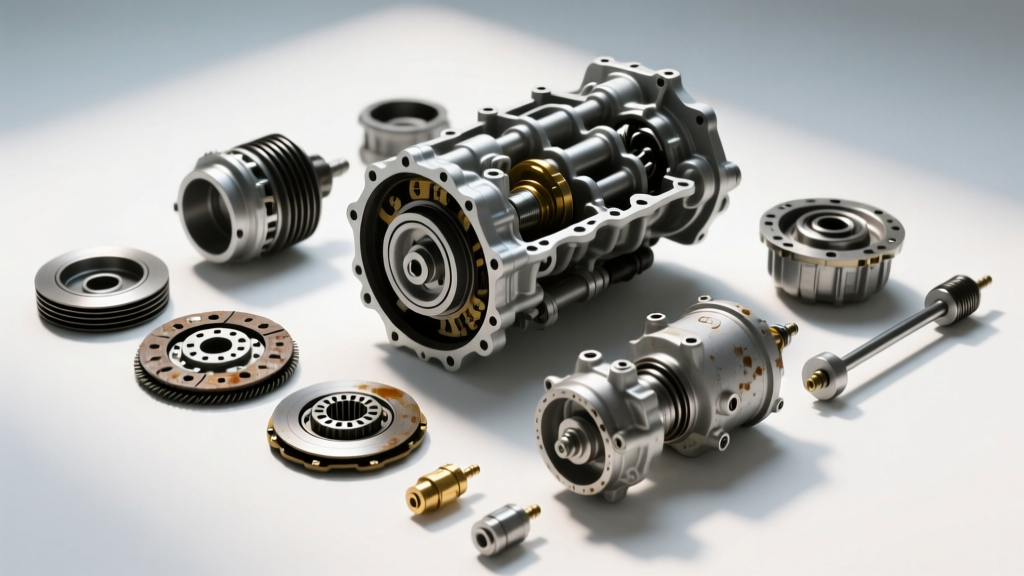
In early to mid-production 6L80 units, this wave plate was manufactured with insufficient fatigue resistance. Under heavy thermal cycling and high-torque applications (common in tuned Camaros or lifted Silverados), the wave plate fractures into multiple metallic shards. These shards migrate into the clutch pack, physically wedging the friction and steel plates together. The result is a transmission that is mechanically locked in 3rd or 5th gear. No amount of electrical resetting or fluid flushing will resolve this; the transmission must be removed, torn down, and the 3-5-R clutch hub, steels, frictions, and backing plates must be replaced.
Technician Warning: If you find metallic debris resembling curved, shattered washers in the 6L80 transmission pan during a fluid service, do not clear the codes and send the customer down the road. The 3-5-R wave plate has failed, and a mechanical lock-up is imminent. Immediate teardown is required to save the planetary gearsets from scoring.
Valve Body Bore Wear and Pump Cavitation
Delayed shifting is also heavily influenced by the physical condition of the aluminum valve body. The 6L80 valve body utilizes aluminum spool valves operating in aluminum bores. Over 100,000+ miles, the constant oscillation of the valves, combined with microscopic debris in the Dexron VI fluid, causes the bores to wear oval.
When the TCC (Torque Converter Clutch) regulator valve bore or the clutch select valve bores wear out, hydraulic pressure bypasses the valve and vents to the pan. The transmission pump (a high-volume gerotor design) cannot keep up with the internal leak, leading to a drop in line pressure. The TCM responds by commanding maximum line pressure via the Pressure Control Solenoid, resulting in harsh, delayed, and banging shifts before the unit eventually defaults to limp mode.
OEM Repair Protocol and Torque Specifications
Addressing a 6L80 stuck in gear requires strict adherence to GM's engineering specifications. The clutch-to-clutch timing is measured in milliseconds; even minor deviations in fastener torque or fluid levels will alter hydraulic volume and trigger immediate shift DTCs.
Fastener Torque Specifications
- Transmission Pan to Case: 10 Nm (89 lb-in). Note: Do not overtighten. The pan is stamped steel or cast aluminum and will distort, crushing the reusable gasket and causing pan leaks.
- TEHCM to Valve Body: 11 Nm (97 lb-in). Use a calibrated inch-pound torque wrench. Uneven torque will warp the TEHCM housing, pinching the internal electrical connectors.
- Valve Body to Transmission Case: 11 Nm (97 lb-in).
- Torque Converter to Flexplate: 51 Nm (38 lb-ft). Always use new bolts and apply medium-strength threadlocker.
Fluid and Filtration
The 6L80 requires strictly Dexron VI Automatic Transmission Fluid (ACDelco Part # 10-9395). Do not use universal fluids or older Dexron III formulations, as the friction modifiers will destroy the specialized 6L80 clutch linings.
- Dry Fill Capacity: 11.2 Quarts (10.6 Liters)
- Pan Drop & Filter Change: 6.0 Quarts (5.7 Liters)
- Filter: The filter is integrated into the plastic transmission pan assembly. You must replace the entire pan/filter unit (ACDelco Part # 24236933) during any TEHCM or valve body service.
TEHCM Programming and the "Service Fast Learn" Procedure
If your diagnosis points to a failed TEHCM causing the delayed shifts and subsequent limp mode, simply bolting on a new unit (such as ACDelco Part # 24273266 or the latest superseded revision) is not enough. The TEHCM contains the TCM, which is VIN-locked and calibrated to the specific hydraulic characteristics of your transmission.
According to ACDelco's official service guidelines, a replacement TEHCM must be flashed with the exact calibration file from GM's TIS2Web (or Techline Connect) system using an MDI (Multiple Diagnostic Interface). Once flashed, you must perform the "Service Fast Learn" procedure using a bi-directional scanner. This procedure commands the transmission to cycle through all clutch apply volumes, allowing the TCM to map the exact fluid volume required to achieve a 0.3-second shift time for your specific wear state. Skipping this step will result in immediate P2714/P2715 codes and a return to stuck-in-gear limp mode.
2026 Repair Cost Breakdown
As we navigate the automotive repair landscape in 2026, the cost of 6L80 repairs has stabilized, but parts availability for the TEHCM and specialized hard parts remains a bottleneck. Below is a realistic cost framework for resolving a stuck-in-gear scenario based on the root cause.
- TEHCM Replacement & Programming (Independent Shop): $1,100 – $1,600. (Includes the $750-$900 TEHCM unit, 2 hours of labor, and Techline Connect programming fees).
- Valve Body & Zip Kit Installation: $1,400 – $1,900. (Addresses bore wear without requiring a full transmission removal).
- Complete Transmission Teardown & 3-5-R Clutch Pack Overhaul: $3,500 – $4,800. (Required if the wave plate has disintegrated and caused internal mechanical binding).
- Dealer Network Premium: Expect a 30-45% markup on the above independent pricing, as dealerships typically replace the entire transmission assembly with a factory remanufactured unit rather than performing internal valve body or clutch pack repairs.
Final Diagnostic Takeaways
When diagnosing a GM 6L80 or 6L90 that is stuck in gear, resist the urge to immediately condemn the entire transmission. By analyzing the freeze frame data associated with the shift DTCs, inspecting the pan for 3-5-R wave plate debris, and testing the TEHCM pressure switches, you can accurately pinpoint the fault. Understanding what causes delayed shifting in an automatic transmission of this complexity is the key to separating a simple $1,200 TEHCM swap from a $4,500 mechanical overhaul. Always rely on bi-directional data, OEM torque specs, and precise fluid volumes to ensure a lasting repair.
For further reading on hydraulic circuit diagnostics and valve body wear patterns, industry professionals frequently consult Transmission Digest for ongoing case studies and teardown analysis of the 6L80 platform.