Understanding Powersports Clutches: Wet Multi-Plate vs. Dry CVT
Whether you are riding a 2026 motocross bike or tearing through mud trails on a side-by-side, powersports clutch diagnostics require a completely different mindset than automotive manual transmissions. In this beginner-friendly explainer, we break down the most common powersports clutch failures, drawing on diagnostic patterns frequently seen at regional Midwest repair hubs like the Clutch Cargo collective in Pontiac, MI—a locale famous for its harsh freeze-thaw cycles that wreak havoc on neglected drivetrains after long winter storage.
Before grabbing a wrench, you must identify which of the two primary powersports clutch systems your machine uses:
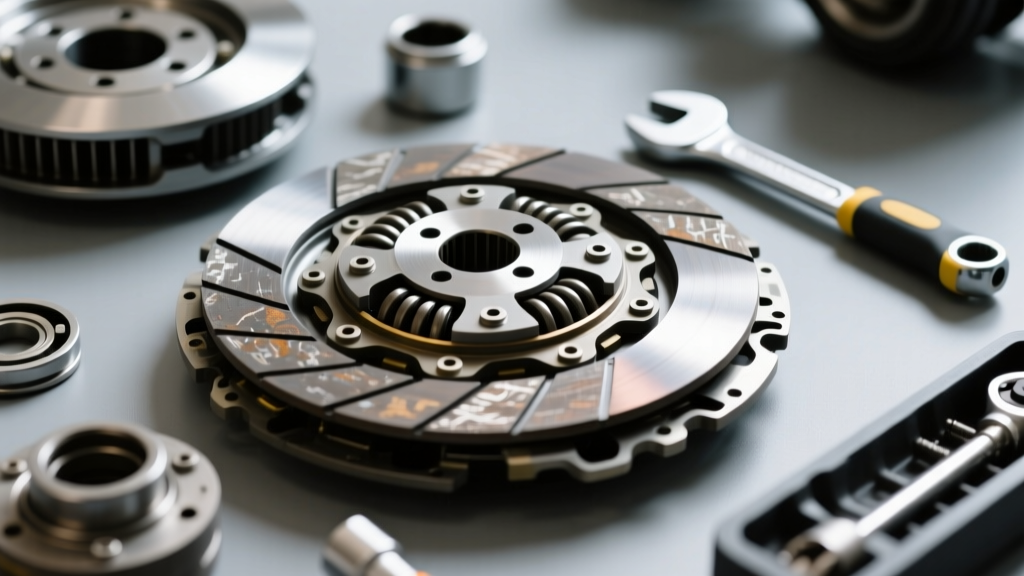
- Wet Multi-Plate Clutches: Found in almost all manual motorcycles, dirt bikes, and utility ATVs (like the Honda Foreman). These operate inside an oil bath, using alternating friction and steel plates clamped together by heavy springs.
- Dry CVT (Continuously Variable Transmission) Clutches: Found in most modern recreational ATVs and UTVs (like the Polaris RZR or Can-Am Maverick). These use a primary (drive) and secondary (driven) pulley system connected by a rubber Kevlar belt, relying on centrifugal force and roller weights rather than oil immersion.
Motorcycle Wet Clutch Diagnostics (Manual Transmissions)
Wet clutches are incredibly durable, but they are highly sensitive to maintenance and environmental factors. Here is how to diagnose the two most common beginner complaints.
Symptom 1: Slipping Under Hard Acceleration
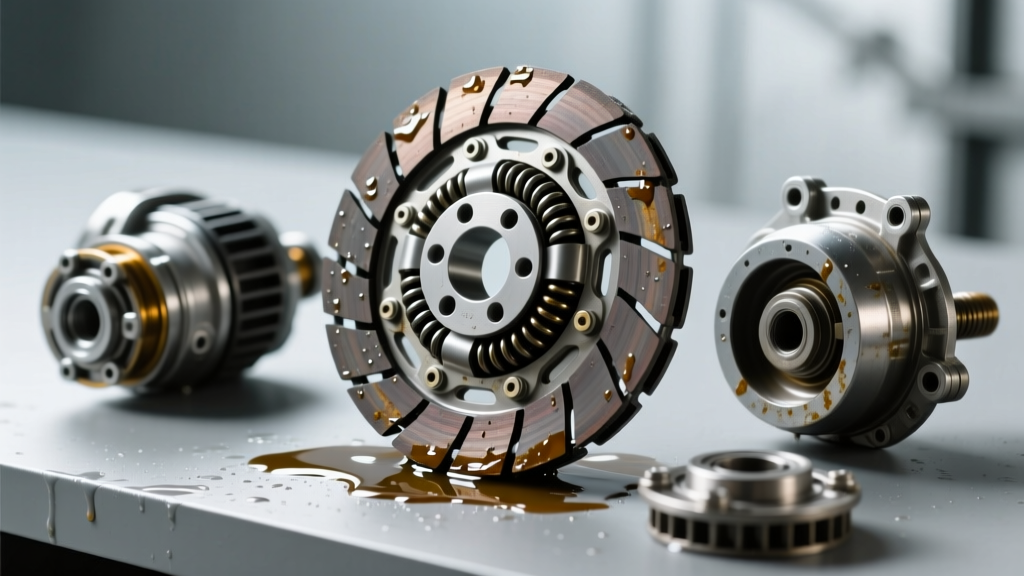
If you roll on the throttle and the engine RPMs surge without a proportional increase in wheel speed, your clutch is slipping. In 90% of beginner cases, this is not a mechanical failure but a lubrication error. Standard automotive motor oils contain friction modifiers designed to improve fuel economy. In a wet clutch, these modifiers prevent the friction plates from gripping.
Expert Rule: Always verify your oil meets the JASO MA or MA2 specification. If you accidentally filled your Yamaha YZ450F or Kawasaki KX450 with automotive 10W-40, the clutch will slip immediately. Drain it, flush with JASO MA2 oil, and the friction plates may recover if they haven't glazed from excessive heat.
If the correct oil is installed and slipping persists, the friction plates are worn or glazed. Using a micrometer, measure the friction plates. For most Japanese dirt bikes, the new thickness is 3.0mm and the service limit is 2.6mm. If they are below the limit, or if the steel plates show blue heat spots, replace the entire pack. An EBC CK Series Kevlar Clutch Kit typically costs between $120 and $180.
Symptom 2: Notchy Shifting and Lever Stiffness
If the clutch lever feels incredibly stiff, or the bike clunks and refuses to find neutral when stopped, the issue is often mechanical binding. Over time, the aluminum fingers of the inner clutch basket develop deep notches from the steel plates slamming into them during shifts. These notches prevent the plates from sliding apart smoothly when you pull the lever.
The Fix: Remove the right-side crankcase cover. Take out the clutch pack and inspect the basket fingers. If the notches are minor, you can carefully file them flat with a flat mill bastard file. If your fingernail catches deeply in the grooves, the basket must be replaced (approx. $200-$280 for an OEM Hinson or Wiseco basket).
Torque Spec Note: When reassembling, clutch spring bolts are small (usually 6mm). The torque specification for Honda CRF and Yamaha YZF models is typically very low—around 7 to 10 Nm (62-88 lb-in). Over-torquing these will strip the aluminum threads out of the pressure plate, ruining the part.
ATV & UTV CVT Clutch Problems (Primary & Secondary)
Diagnosing a CVT clutch is less about oil and more about geometry, springs, and belt condition. Let's look at the classic symptoms seen on trail machines.
Symptom 1: High RPM Engagement and Belt Squeal
When you press the throttle, the engine revs high, the machine lurches forward abruptly, and you hear a burning rubber squeal. This indicates that the primary clutch is not closing smoothly to grab the belt, or the secondary clutch is stuck open.
- Primary Clutch (Drive): The moveable sheave may be scored, or the roller weights (or sliders on newer 2026 models) have developed flat spots. If a 24x24mm roller weight loses its round profile, it won't push the sheave inward efficiently, causing the belt to slip and squeal before violently engaging.
- The Belt: A glazed or stretched belt will slip. Always use OEM or high-end aftermarket belts (like the Gates Carbon Drive). An OEM Polaris belt (e.g., Part #3211142) runs about $160-$210. Never cheap out on CVT belts.
Symptom 2: Loss of Top Speed and Sluggish Backshifting
If your UTV feels like it is stuck in a high gear and struggles to accelerate from a stop, or it fails to "backshift" (return to a low gear ratio) when you slow down, the secondary clutch is the usual culprit. The secondary clutch relies on a large torsion spring and a plastic helix to force the sheaves together. If grease, dirt, or moisture contaminates the helix ramp, the secondary clutch binds.
The Fix: Remove the secondary clutch. Disassemble it using a clutch compression tool (never attempt to remove the secondary clutch retaining ring without a press tool, or the spring will launch across your garage). Clean the helix ramps with brake cleaner, apply a very light coat of dry graphite lubricant (never use wet grease, which attracts dirt), and reinstall. According to official Polaris maintenance schedules, the secondary clutch bolt requires approximately 40-50 ft-lbs of torque and often utilizes a left-hand thread or requires a specific holding tool.
The Midwest Storage Effect: Lessons from Pontiac, MI
Why reference the Clutch Cargo Pontiac MI diagnostic patterns? Because Midwest winters destroy neglected powersports clutches. When an ATV or motorcycle sits in an unheated Pontiac garage from November to April, two things happen:
- Clutch Cable Corrosion: Moisture wicks into the clutch cable housing. By spring, the inner cable rusts to the outer sheath, resulting in a stiff lever or a snapped cable. Always pull the cable, lubricate it with a cable luber tool and white lithium grease, and store the machine with the lever released (un-tensioned).
- CVT Moisture and Rust: Condensation builds up inside the CVT cover. The primary clutch spider threads can rust to the crankshaft. When a beginner tries to remove the primary bolt in the spring without a proper puller (like the OTC 7253 or OEM equivalent), they often snap the bolt head off or strip the spider. Always use a puller tool and apply anti-seize to the spider threads during reassembly.
Diagnostic Quick-Reference Table
Use this chart to quickly narrow down your powersports clutch issue before ordering parts.
| Symptom | System | Probable Cause | Beginner Fix / Check | Est. Cost (2026) |
|---|---|---|---|---|
| RPMs rise, speed doesn't | Wet Moto | Glazed plates or wrong oil | Drain oil, replace with JASO MA2 | $40 (Oil) / $150 (Plates) |
| Notchy lever feel / hard to find neutral | Wet Moto | Notched clutch basket fingers | Inspect basket, file grooves or replace | $60 (File) / $250 (Basket) |
| High RPM engagement & lurching | ATV CVT | Flat-spotted primary rollers | Replace roller weights / sliders | $45 (Rollers) |
| Belt squeal at low speed | ATV CVT | Glazed belt or dirty sheaves | Scotch-Brite sheaves, replace belt | $180 (OEM Belt) |
| Loss of top speed / no backshifting | ATV CVT | Bound secondary helix / weak spring | Clean helix, replace torsion spring | $35 (Spring) |
Final Thoughts for Beginners
Diagnosing motorcycle and ATV clutches is highly rewarding and entirely manageable for beginners who respect the engineering. The golden rules are simple: never put friction-modified oil in a wet clutch, never pry open a CVT clutch without a compression tool, and always torque to factory specifications. For more in-depth visual guides on powersports drivetrains, resources like CycleWorld's How-To section offer excellent step-by-step teardowns. By keeping your system clean, properly lubricated, and free of Midwest winter moisture, your clutch will deliver thousands of miles of flawless power delivery.