The Hidden Link: Allison Transmission Temp Sensor and Shifting Problems
When diagnosing erratic shifting, harsh engagements, or sudden limp-mode events in medium-duty trucks, RVs, and GM Duramax applications, mechanics often overlook a critical data point: fluid temperature. The Allison transmission temp sensor is a vital input for the Transmission Control Module (TCM). While speed sensors and pressure switches frequently dominate diagnostic conversations, a failing temperature sensor can wreak havoc on shift scheduling, line pressure modulation, and torque converter clutch (TCC) lockup. In this 2026 buyer's guide and diagnostic framework, we break down exactly how a faulty temp sensor causes shifting problems, compare OEM versus aftermarket replacement options, and provide the exact torque specs and resistance curves needed for a permanent repair.
How the TCM Uses Temperature Data for Shift Scheduling
The Allison 1000, 2000, and 3000 series transmissions rely on an NTC (Negative Temperature Coefficient) thermistor to monitor internal fluid temperatures. The TCM uses this data to dynamically adjust shift adapt cells and line pressure. When the fluid is cold (below 40°F), the TCM intentionally delays upshifts and increases line pressure to ensure clutch pack engagement in thick, viscous fluid. Conversely, when the fluid reaches optimal operating temperatures (160°F to 200°F), the TCM shortens shift times, lowers line pressure for smoother engagements, and enables TCC lockup to maximize fuel economy.
If the sensor fails and reports an artificially cold reading (e.g., -40°F), the TCM will command maximum line pressure, resulting in bone-jarring 1-2 and 2-3 shifts. If the sensor reports an overheated condition (e.g., 300°F), the TCM will trigger a thermal protection strategy, locking out overdrive, disabling TCC lockup, and eventually forcing the transmission into limp mode to prevent catastrophic clutch burnout.
Common Shift Symptoms of a Failing Temp Sensor
Before throwing expensive valve body solenoids at the problem, look for these hallmark symptoms of a compromised temp sensor circuit:
- Erratic Line Pressure: Harsh forward or reverse engagements immediately after startup, even when the truck has been idling for 20 minutes.
- TCC Lockup Failure: The torque converter refuses to lock in 3rd, 4th, or 5th gear, causing high RPMs and excessive heat generation.
- False Overheating Codes: DTC P0218 (Transmission Fluid Over Temperature) or P0711 (Temp Sensor Performance/Stuck) stored in the TCM, despite the fluid pan being cool to the touch.
- Open Circuit Limp Mode: DTC P0713 (Temp Sensor High Voltage) triggers a default limp mode, limiting the transmission to 3rd gear.
2026 Buyer’s Guide: OEM vs. Aftermarket Allison Temp Sensors
Choosing the right replacement sensor is critical. The internal environment of an Allison transmission is harsh, with constant exposure to TES-295 synthetic fluid, high pressures, and thermal cycling. Below is our 2026 comparison of the top options on the market.
| Brand / Manufacturer | Part Number | Avg. Price (2026) | Connector Quality | Verdict |
|---|---|---|---|---|
| Allison OEM | 29539566 | $48 - $65 | Factory Sealed | Best Overall: Guaranteed thermistor curve accuracy and long-term fluid resistance. |
| Delphi | TS10324 | $35 - $45 | OEM Equivalent | Runner Up: Delphi is often the original manufacturer for GM/Allison sensors. Excellent value. |
| Standard Motor Products | AX158 | $28 - $35 | Good | Budget OEM: Reliable for standard duty cycles, but may drift slightly in extreme towing. |
| Generic / Unbranded | Various (eBay/Amazon) | $12 - $18 | Poor / Brittle | Avoid: High failure rate, incorrect resistance curves cause immediate P0711 codes. |
Expert Tip: Never replace the sensor without inspecting the internal wiring harness pigtail. On early Allison 1000 series models, the harness frequently chafes against the valve body casting, causing a short to ground (P0712). Always have the OEM pigtail (Allison 29542708) on hand before starting the job.
Diagnostic Framework: Testing the Sensor Before You Buy
Do not replace the sensor based on a scan tool reading alone. Scan tools display the TCM's interpreted data, which can be skewed by wiring resistance or a failing TCM internal pull-up resistor. You must test the physical thermistor using a digital multimeter (DMM) set to Ohms.
Multimeter Resistance Testing (Thermistor Curve)
Disconnect the sensor and measure the resistance across the two terminals. Compare your findings to the official Allison thermistor curve below. If your readings deviate by more than 5% from this chart, the sensor is internally degraded and must be replaced.
| Fluid Temperature | Expected Resistance (Ohms) | Common Failure Mode |
|---|---|---|
| 0°C (32°F) | 1618 Ω | Sensor reads artificially cold; triggers high line pressure and harsh shifts. |
| 20°C (68°F) | 858 Ω | Baseline room temp. If reading is infinite (OL), the thermistor is cracked open. |
| 40°C (104°F) | 483 Ω | Normal warm-up phase. TCC lockup remains disabled. |
| 80°C (176°F) | 177 Ω | Optimal operating temp. If reading is near 0 Ω, sensor is shorted (triggers P0713). |
| 100°C (212°F) | 105 Ω | Heavy towing temp. TCC lockup fully enabled. |
Installation Protocol: Torque Specs and Harness Inspection
Replacing the temp sensor on an Allison 1000/2000 series requires dropping the transmission fluid pan. The sensor is threaded directly into the valve body assembly. Because the valve body is constructed of cast aluminum and the sensor is steel, cross-threading and over-torquing are common mistakes that lead to catastrophic valve body damage.
Step-by-Step Replacement & Torque Specifications
- Fluid Drain and Pan Removal: Remove the 16 pan bolts (10mm heads). Expect to drain approximately 7.4 quarts of fluid for a shallow pan, or 12.7 quarts for a deep pan. Inspect the magnetic pickup for excessive clutch material.
- Filter Removal: Twist and pull the internal spin-on or drop-in filter. Replace with an OEM Allison filter (Part #29537965).
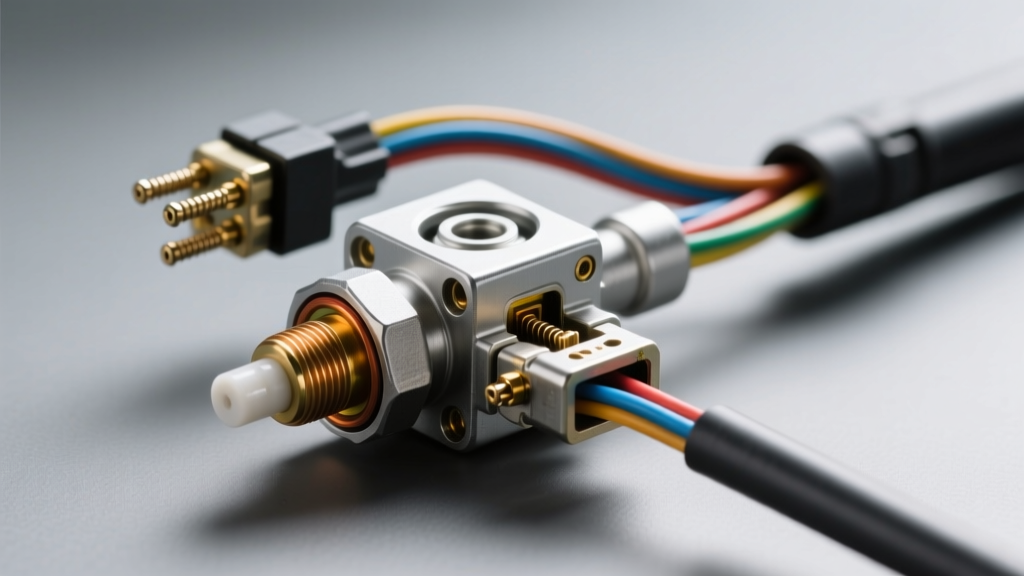
- Sensor Extraction: Disconnect the two-pin weather-pack connector. Use a deep-well 14mm or 1/2-inch socket to carefully back the sensor out of the valve body.
- Thread Preparation: Clean the valve body port with compressed air. Do not use Teflon tape or liquid thread sealant on the new sensor threads; the sensor uses a pre-installed O-ring for sealing.
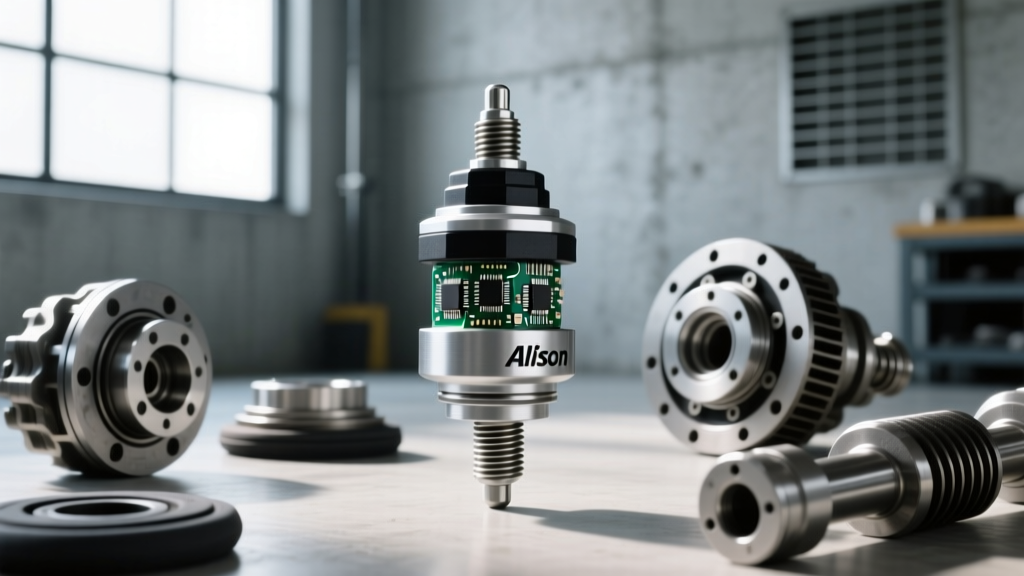
- Torque Specification: Install the new OEM sensor (29539566). The factory torque specification is 11 Nm (97 lb-in)
- Pigtail Splicing: If the wiring harness is brittle or shows copper corrosion, cut back to clean wire and solder the new 29542708 pigtail. Use marine-grade, adhesive-lined heat shrink tubing. Never use crimp-only butt connectors inside the transmission pan, as vibration and fluid immersion will cause capillary action to wick fluid up into the TCM connector.
Fluid Selection and TCM Relearn Procedures
After reinstalling the pan and torquing the pan bolts to 24 Nm (18 lb-ft) in a crisscross pattern, refilling with the correct fluid is non-negotiable. For all heavy-duty and Duramax applications, you must use a TES-295 approved synthetic fluid, such as Allison TranSynd or Mobil Delvac Synthetic ATF. Standard Dexron VI is not approved for extended drain intervals in TES-295 specified commercial applications and can lead to clutch glazing.
Clearing Codes and Shift Adapt Reset
Simply clearing the P0711 or P0713 code with a basic OBD2 scanner is not enough. The TCM has likely adapted its shift pressures to compensate for the faulty sensor data over thousands of miles. Using a bidirectional scan tool (like a Snap-on Zeus, Autel MaxiSys, or GM Tech2/Tech3), you must perform a Transmission Shift Adapt Reset. This forces the TCM to wipe its learned clutch volume indices (CVI) and begin the relearn process from scratch.
Drive the vehicle through all forward gears at light, medium, and heavy throttle positions for the first 50 miles. This allows the TCM to map the new, accurate temperature data against the clutch apply times, restoring the smooth, imperceptible shifts that the Allison platform is famous for.
Final Thoughts for Fleet Owners and Owner-Operators
Transmission sensor and shifting problems are rarely isolated to internal mechanical wear. In the modern era of electronically controlled hydraulics, a $50 thermistor holds the key to your entire shift schedule. By insisting on OEM Allison components, verifying the thermistor curve with a multimeter, and adhering to strict aluminum torque specifications, you can eliminate erratic shifting and protect your drivetrain for hundreds of thousands of miles. For more community-driven diagnostic threads and wiring diagrams, resources like The Diesel Garage remain invaluable for cross-referencing TCM pinouts and harness routing.