Native FWD vs. Rear-Wheel Drive System Operation
The Acura Integra is globally revered for its high-revving engines, agile chassis, and highly efficient front-wheel-drive (FWD) layout. From the classic DA and DB generations to the modern DE5 platform, the native Acura Integra drivetrain relies on a transverse engine configuration, sending power through a transaxle to the front wheels via constant velocity (CV) axles. However, in the pursuit of ultimate track balance, drift capability, or high-horsepower drag racing, a growing subset of the aftermarket community has turned to a radical modification: converting the Integra to a rear-wheel drive (RWD) system.
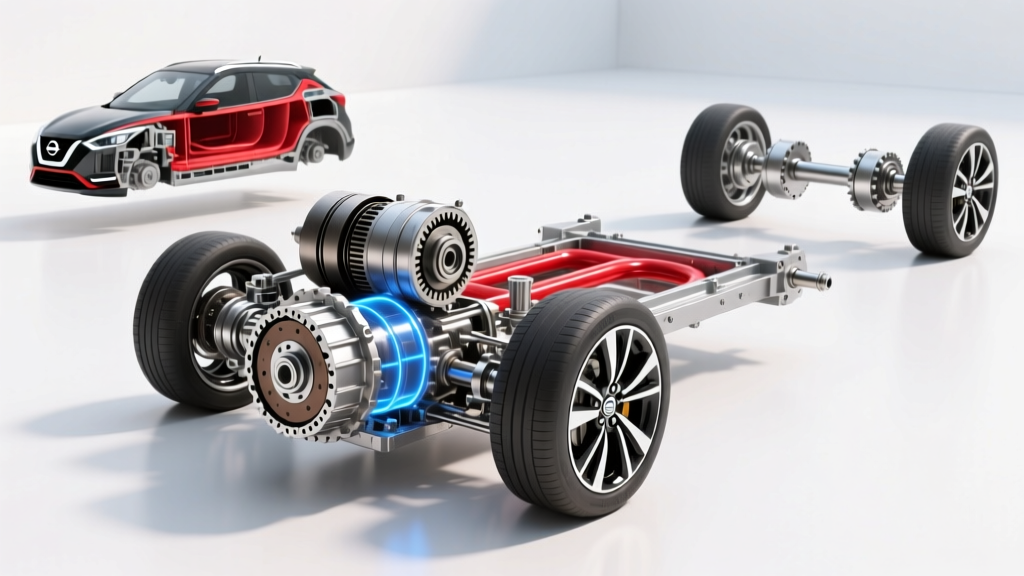
Understanding rear-wheel drive system operation is critical before committing to this complex engineering challenge. Unlike a transverse FWD setup where the transmission and differential are housed together in a single transaxle casing, a longitudinal RWD layout separates these components. Power flows from the engine’s crankshaft into a longitudinal transmission, out through a slip yoke or flange, into a driveshaft, and finally into a rear-mounted differential that distributes torque to the rear wheels. This fundamental shift in weight distribution and mechanical routing requires extensive chassis modification, custom fabrication, and a significant financial investment.
The Physics and Mechanics of RWD Operation
In a properly engineered RWD system, the drivetrain must manage longitudinal torque loads that the Integra’s unibody was never designed to handle. The front subframe must be modified or replaced to accommodate a longitudinal engine mount setup, while the rear chassis requires a reinforced subframe to house the differential and manage the anti-squat and anti-lift geometry inherent to RWD vehicles.
The mechanical operation relies heavily on precise driveline angles. The transmission output shaft and the rear differential pinion shaft must be parallel to one another to ensure the universal joints (U-joints) cancel out cyclic vibrations. If the pinion angle is incorrect, the driveshaft will induce severe harmonic vibrations at high speeds, ultimately destroying the U-joints and the transmission’s output shaft bearing.
2026 Cost Breakdown: Acura Integra RWD Swap
Converting an Acura Integra to RWD is not a bolt-on affair; it is a custom fabrication project. Below is a comprehensive cost analysis for a high-quality, track-capable RWD conversion using a popular K-series or LS-based longitudinal setup, paired with a robust manual transmission and a custom rear end.
| Component Category | Specific Part / Specification | Estimated Cost (USD) |
|---|---|---|
| Transmission | Tremec T56 Magnum (Longitudinal) | $3,400 - $3,900 |
| Bellhousing & Clutch | QuickTime RM-8020 & Twin-Disc Clutch | $1,200 - $1,800 |
| Driveshaft | Custom 6061-T6 Aluminum (1310 U-Joints) | $650 - $950 |
| Rear Differential | Strange Engineering Ford 9-Inch IRS | $3,200 - $4,500 |
| Axles & Hubs | Custom CV Axles & 5x114.3 Hub Conversion | $1,400 - $2,200 |
| Fabrication & Mounts | Custom Trans Crossmember & Rear Subframe | $2,500 - $4,000 |
| Fuel Cell & Routing | Relocated Rear Fuel Cell & AN Lines | $800 - $1,200 |
Note: Prices reflect 2026 aftermarket averages and do not include the cost of the engine block, ECU tuning, or specialized labor rates, which typically range from $120 to $180 per hour for custom fabrication shops.
Transmission and Bellhousing Selection
The heart of any RWD conversion is the transmission. While some builders opt for the Nissan CD009 transmission due to its lower entry cost (around $1,500 used), the Tremec T56 Magnum remains the gold standard for high-horsepower Integra builds. Rated for 700 lb-ft of torque, the T56 Magnum provides six forward gears with optimized ratios for both track acceleration and highway cruising. Pairing this with a QuickTime SFI-approved bellhousing ensures safety in the event of a catastrophic clutch failure, a necessary precaution when moving the transmission into the cabin area behind a heavily modified firewall.
Driveshaft, U-Joints, and Pinion Angle Geometry
Because the Integra’s wheelbase varies significantly between generations (e.g., 99.6 inches for the DC2 vs. 103.1 inches for the DE5), every driveshaft must be custom-measured and manufactured. A 6061-T6 aluminum driveshaft is preferred for its high strength-to-weight ratio and reduced rotational mass. Builders typically utilize 1310-series U-joints, which offer a superior balance of angularity and tensile strength compared to smaller 1300-series joints.
Expert Fabrication Note: When setting up the rear differential, ensure the transmission output angle and the pinion gear angle are within 1 to 3 degrees of each other, but pointing in opposite directions. This 'phase cancellation' is the fundamental principle of smooth rear-wheel drive system operation. Failure to shim the differential correctly will result in driveline binding and premature U-joint failure.
Rear Differential and Axle Integration
The Integra’s factory rear beam axle (on older models) or multi-link independent rear suspension (on newer models) cannot accommodate a driven differential without massive modification. Most high-end swaps utilize a custom Independent Rear Suspension (IRS) setup built around a Ford 9-inch or 8.8-inch differential center section. Companies like Strange Engineering provide heavily fortified differential housings and limited-slip internals (such as the Detroit Truetrac or Wavetrac) that can handle the shock loads of drag racing or the sustained lateral G-forces of circuit racing. Custom CV axles must then be fabricated to mate the differential output flanges to the Integra’s rear wheel hubs, often requiring a 5-lug hub conversion to accommodate larger brake rotors and aftermarket wheels.
Labor, Fabrication, and Hidden Drivetrain Expenses
The parts list is only half the battle. The true cost of altering the Acura Integra drivetrain layout lies in the labor and fabrication. The factory transmission tunnel must be cut and widened to clear the Tremec T56 and its shifter mechanism. This requires precise TIG welding to maintain the structural rigidity of the unibody, often necessitating the addition of a custom 6-point roll cage tied directly into the new rear subframe mounts.
Furthermore, relocating the fuel tank is mandatory. The factory Integra fuel tank sits directly in the path of the rear differential and driveshaft. Builders must install a rear-mounted fuel cell or custom tank in the trunk or behind the rear seats, requiring new high-flow fuel pumps, AN braided fuel lines, and vapor recovery systems to remain street-legal and safe. Expect fabrication and welding labor to add between $4,000 and $8,000 to the final invoice, depending on the shop's hourly rate and the level of finish required.
Maintenance: Fluids and Torque Specifications
Once the RWD swap is complete, maintaining the new drivetrain requires strict adherence to specific fluid and torque parameters. The Tremec T56 Magnum, for instance, requires exactly 3.9 quarts of Tremec HP-MTF (High-Performance Manual Transmission Fluid) or a high-quality synthetic equivalent like Amsoil Synchromesh. Using standard gear oil (like 75W-90) will degrade the synchronizers and void the warranty.
Critical Drivetrain Torque Specs
- Bellhousing to Engine Block (M10x1.5 bolts): 35 lb-ft
- Transmission Crossmember to Chassis: 45 lb-ft (with Grade 8 hardware)
- Driveshaft U-Joint Strap Bolts: 18 - 20 lb-ft (Apply blue Loctite 242)
- Differential Pinion Flange Nut: 180 - 220 lb-ft (Crush sleeve dependent)
- Differential Cover Bolts: 25 - 30 lb-ft (RTV Silicone sealed)
- Rear Axle CV Flange Bolts: 55 - 65 lb-ft
Is the RWD Integra Drivetrain Swap Worth the Investment?
Transitioning an Acura Integra to a rear-wheel drive system operation is a labor of love, reserved for dedicated track cars, drift missiles, or high-budget show builds. With total parts and labor costs frequently exceeding $15,000 to $25,000 (excluding the engine and turbocharging systems), it is far from a budget-friendly endeavor. However, for those seeking the perfect 50/50 weight distribution, the ability to run massive rear tires, and the unmatched mechanical grip of a true longitudinal RWD layout, the financial and mechanical investment yields a driving experience that no factory FWD Integra can replicate. As always, consult with professional chassis fabrication experts to ensure your unibody modifications meet safety and performance standards before hitting the track.