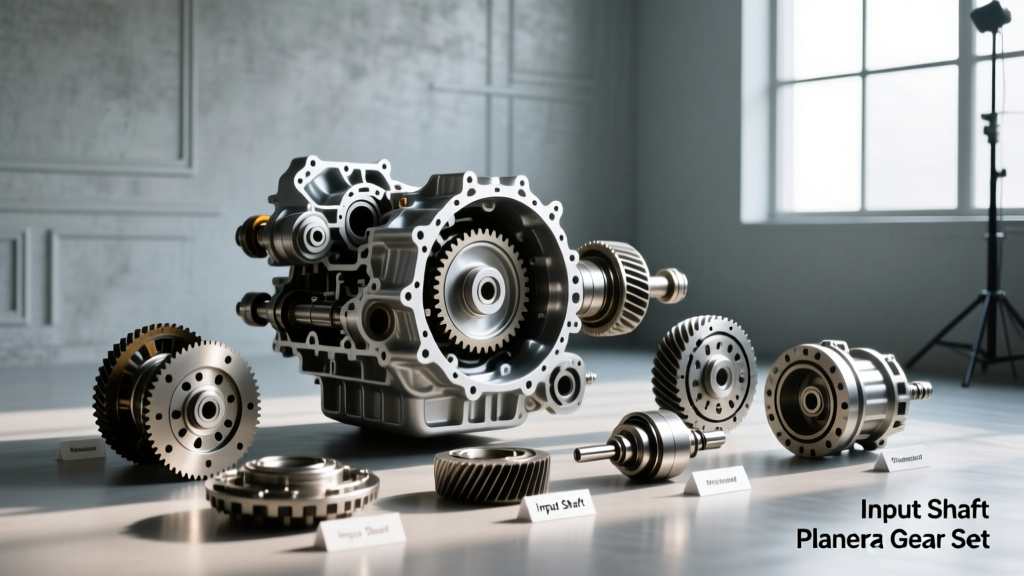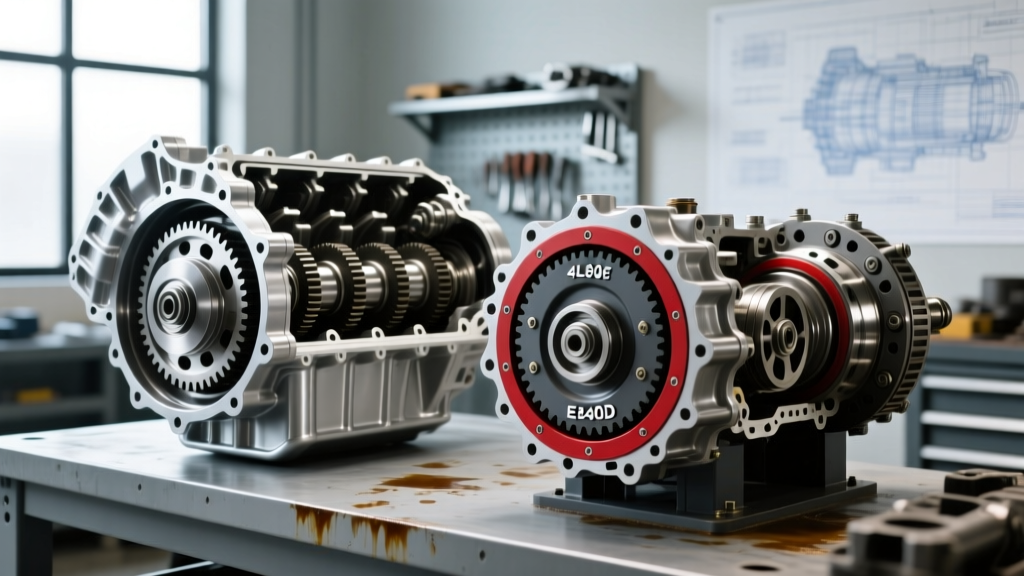
When your Chevy Silverado, Tahoe, or Camaro suddenly drops into limp mode, the search for a reliable repair shop begins. A frequent question we receive at AutoGear Nexus is: does AAMCO rebuild transmissions in-house, or do they simply swap in remanufactured units? The reality of the national franchise model is that each location is independently owned. While some franchises employ master rebuilders who tear down units on-site, many operate as 'R&R' (Remove and Replace) shops that install wholesale remanufactured transmissions.
Understanding this distinction is critical when evaluating repair costs and longevity. To illustrate the difference between a master-level rebuild and a rushed franchise swap, we are diving deep into the GM 4L60E (and its later 4L65E/4L70E variants). This guide explores the true cost of repairs in 2026 and exposes the five most catastrophic 4L60E rebuild mistakes that separate the experts from the parts-changers.
Franchise vs. Independent: 4L60E Rebuild Cost Breakdown
Before handing over your keys, you need to understand the financial landscape. Pricing varies wildly based on whether the shop is actually machining and rebuilding your core, or simply bolting in a unit sourced from a wholesale remanufacturer like Jasper or Powertrain Products.
| Repair Route | Average 4L60E Cost (2026) | Typical Warranty | Core Requirement |
|---|---|---|---|
| National Franchise (e.g., AAMCO) | $3,200 - $4,500 | 3 Yr / 100k Mi (Parts/Labor) | Strict; high core charge |
| Independent Specialist | $2,400 - $3,400 | 1-2 Yr / 12-24k Mi | Negotiable; often waived |
| DIY Home Rebuild | $550 - $850 (Parts/Fluid) | None | Keep your old core |
Note: Franchise warranties often require you to return to an affiliated shop for warranty labor, which can be a nightmare if you break down out of state. Independent shops usually offer more flexible labor reimbursement networks.
5 Fatal 4L60E Rebuild Mistakes (And How Shops Miss Them)
Whether you are vetting a local AAMCO franchise or attempting a DIY rebuild in your garage, the 4L60E is unforgiving of corner-cutting. Here are the most common technical failures we see in units that experience 'comebacks' within 10,000 miles.
1. Ignoring the Pump Slide and Boost Valve Wear
The 4L60E is notorious for soft aluminum pump stator support tubes. The stock steel boost valve oscillates rapidly, eventually wearing an oval shape into the aluminum bore. This causes internal fluid leaks, resulting in low line pressure and burned clutches. Budget rebuilders simply clean the old valve and reuse it. A proper rebuild requires installing a hardened steel sleeve and an O-ringed boost valve, such as the Sonnax 77450-01K Sure Cure Kit. Torque Spec: Pump bolts must be torqued to 10-12 Nm (89-106 in-lbs) in a crisscross pattern to prevent stator binding.
2. Mismanaging the 3-4 Clutch Pack Clearance
The 3-4 clutch pack is the Achilles heel of the 4L60E, responsible for the infamous 3-4 shift flare and eventual loss of 3rd and 4th gears. Many generalist mechanics stack the frictions and steels without measuring the final clearance. The factory specification demands a clearance between 0.045" and 0.060". Furthermore, the stock piston lacks adequate check-ball regulation; upgrading to a heavy-duty 3-4 clutch drum with a precision-machined piston and using Select-A-Size snap rings is mandatory for any unit seeing over 300 horsepower.
3. Reusing the Stock PWM Solenoid and Separator Plate
The Pulse Width Modulation (PWM) solenoid and the valve body separator plate are high-wear items. The factory separator plate features soft aluminum orifices that erode over time, causing cross-leaks and mushy shifts. Rebuilders who skip the TransGo SK-4L60E-HD2 shift kit and fail to install a new, laser-cut steel separator plate (GM Part # 24230271) are guaranteeing a premature failure. Valve Body Torque: All valve body to case bolts must be tightened to exactly 8-10 Nm (70-88 in-lbs). Over-torquing will warp the valve body casting, causing immediate binding.
4. Guessing Input Shaft Endplay
Endplay is the axial movement of the internal geartrain. If it is too tight, the thrust washers melt; if it is too loose, the planetary gears hammer themselves to death. The correct 4L60E endplay specification is 0.010" to 0.025". This must be measured using a dial indicator mounted to the bellhousing before the pump is installed. Amateur rebuilders often guess the thrust washer thickness (selectable washers range from 0.067" to 0.113"), leading to catastrophic planetary failure under heavy towing loads.
5. Inadequate Cooler Line Flushing
According to industry data published by Transmission Digest, over 40% of transmission comebacks are caused by contaminated cooling systems. When a 4L60E fails, it packs the torque converter and radiator cooler lines with metallic debris and friction material. Simply blowing out the lines with compressed air is a fatal mistake. The cooler circuit must be flushed with a heated, pressurized solvent machine to achieve a minimum flow rate of 1.0 Gallon Per Minute (GPM) at 1500 RPM. Furthermore, the torque converter must be replaced or cut open and remanufactured; flushing a used 4L60E torque converter is physically impossible due to its internal stator and clutch fins.
The Modern Shift: 6L80E and TEHCM Nightmares
While the 4L60E ruled the roads for two decades, GM's transition to the 6L80 and 6L90 (and later the 8L90 and 10L80) changed the rebuild landscape entirely. If you are asking 'does AAMCO rebuild transmissions' for a 2018 Silverado with a 6L80E, the answer is usually no—at least not in the traditional sense.
The 6L80E utilizes a TEHCM (Transmission Electro-Hydraulic Control Module) bolted directly inside the pan. This unit contains the TCM (computer) and the solenoid pack. When a 6L80 experiences a 'shudder' or solenoid performance code (like P0741 or P0796), the issue is rarely worn clutch packs. It is almost always a failed TEHCM or a worn clutch wave plate in the 1-2-3-4 clutch assembly. Rebuilding a 6L80E requires proprietary GM software to flash and marry a new TEHCM to the vehicle's VIN. Most generalist franchise shops lack the OEM licensing to perform this programming, forcing them to replace the entire transmission assembly rather than rebuild the mechanical core.
How to Vet Your Rebuilder Before Signing the Estimate
Whether you choose a national franchise or a local specialist, protect your investment by asking these three diagnostic questions before authorizing the rebuild:
- "Do you replace the torque converter, or flush it?" (If they say flush, walk away immediately).
- "Do you install a shift kit or hardened boost valve on the 4L60E?" (Look for mentions of Sonnax, TransGo, or Superior).
- "How do you measure endplay and clutch clearances?" (They should explicitly mention dial indicators and feeler gauges, not 'eyeballing it').
Final Verdict: Franchise Convenience vs. Specialist Precision
So, does AAMCO rebuild transmissions? Yes, but the depth of that rebuild depends entirely on the local owner's investment in machining equipment and technician training. For a daily-driven commuter vehicle under warranty, a franchise R&R swap might offer peace of mind through their national warranty network. However, for heavy-duty trucks, modified vehicles, or owners seeking maximum longevity, an independent transmission specialist who meticulously measures 4L60E endplay and upgrades the pump stator will always yield a superior, longer-lasting result.
For more in-depth teardowns and torque specifications, we highly recommend consulting the Automatic Transmission Service Group (ATSG) technical manuals before attempting any DIY transmission repair.