The AAM 11.5 Lube System and 4.30 Gear Ratio Upgrades
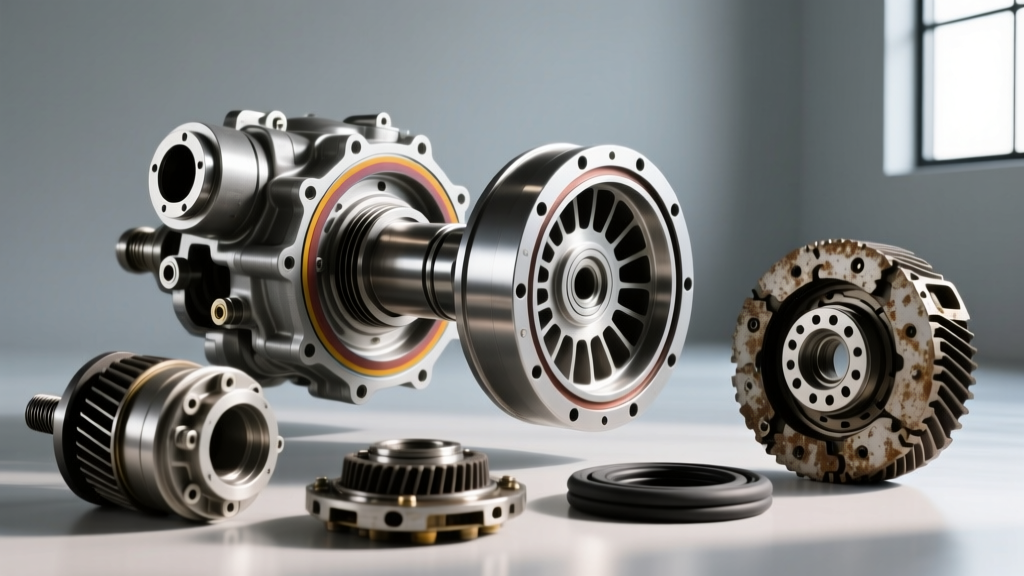
When upgrading the rear axle gear ratio on a 2020-2026 Ram 3500 equipped with the AAM 11.5 rear axle, most owners focus on the ring and pinion swap, pinion depth shims, and backlash tolerances. However, changing from a factory 3.73 ratio to a heavier 4.30 ratio fundamentally alters the thermal dynamics and lubrication requirements of the differential. The AAM 11.5 is unique among heavy-duty truck axles; unlike the Ford Dana S130 which relies heavily on splash lubrication and basic slinger rings, the AAM 11.5 utilizes a pinion-driven positive displacement gerotor lube pump. This pump forces gear oil through an internal circuit, out to the axle tubes, and through an inline fluid filter or cooler assembly before returning to the sump.
Why Higher Numerical Ratios Demand Perfect Lubrication
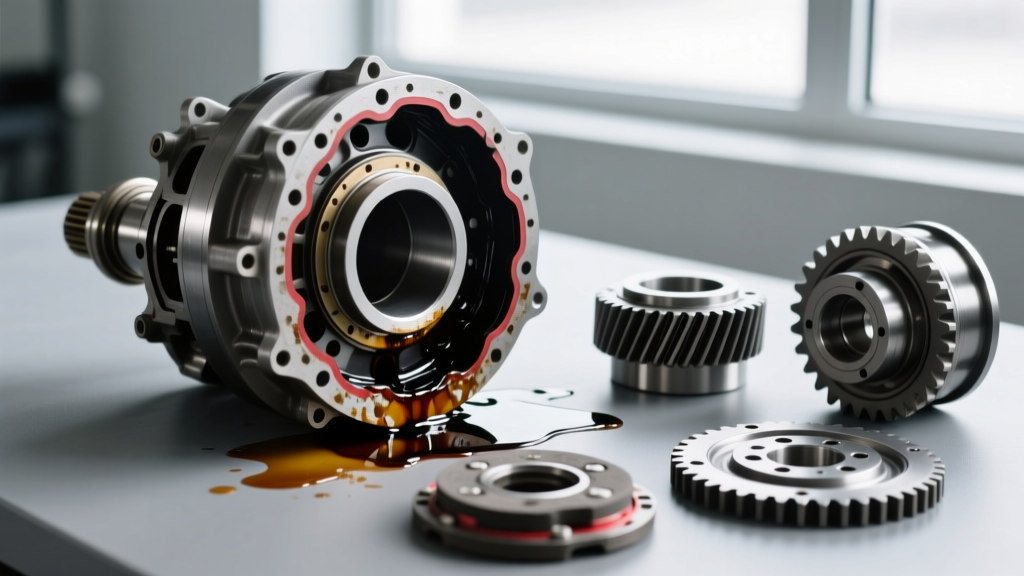
Installing a 4.30 ring and pinion set (such as the Yukon Gear YG D11.5-430) increases the number of teeth on the ring gear while reducing the pinion gear diameter. This smaller pinion gear sits deeper in the housing and generates significantly higher Hertzian contact stress under heavy towing loads (e.g., pulling a 25,000 lb 5th wheel). The increased friction generates immense heat. If the gerotor pump is unable to push the 75W-90 synthetic gear oil through a clogged or overly restrictive aftermarket axle filter, the internal bypass valve will crack open. When this happens, unfiltered, metal-laden oil is routed directly to the pinion bearings, leading to catastrophic premature failure. This is where precise fluid dynamic diagnostics become mandatory.
Diagnosing Flow with a Differential Pressure Manometer
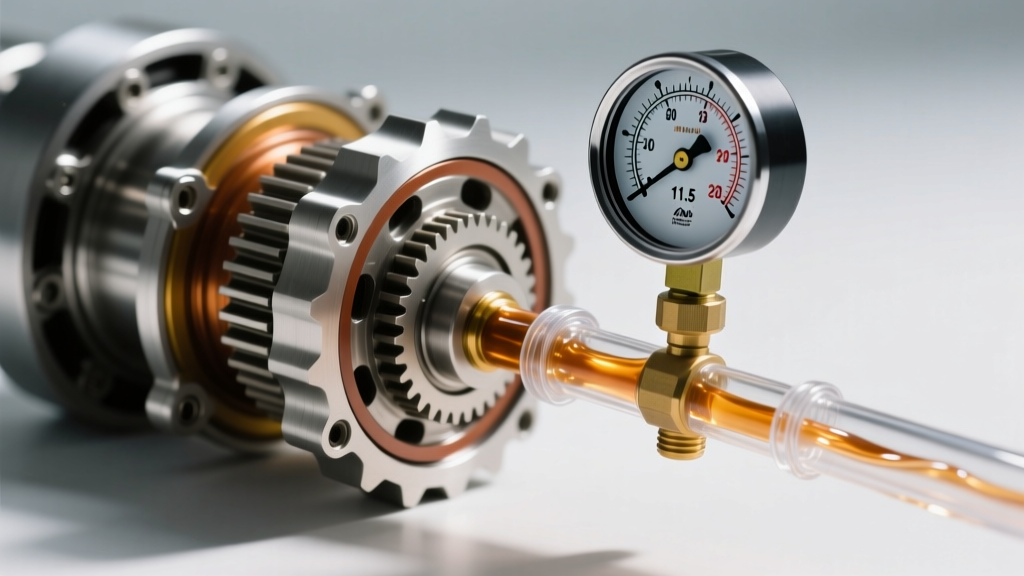
To verify that the AAM 11.5 lube pump is moving adequate fluid volume across the filtration circuit after a regear, professional drivetrain technicians use a differential pressure manometer. A differential pressure manometer is a precision instrument designed to measure the pressure drop (Delta P, or ΔP) between two points in a fluid system. By connecting the high-pressure port to the pre-filter test line and the low-pressure port to the post-filter return line, you can determine exactly how much restriction the filter or cooler core is introducing to the system.
According to fluid dynamics principles outlined by Dwyer Instruments, measuring ΔP is the only reliable way to assess filter health and fluid viscosity restrictions without dismantling the hydraulic circuit. If the pressure drop across the AAM 11.5 filter exceeds the bypass valve's cracking pressure (typically 8 to 12 PSI on heavy-duty axle cooler kits), the filter is effectively bypassing, starving the new 4.30 pinion bearings of clean, cool oil.
Selecting the Right Manometer for Axle Diagnostics
For automotive gear oil circuits, you need a manometer capable of reading low-pressure differentials in viscous fluids. A standard HVAC manometer reading in inches of water column (WC) is often insufficient for cold gear oil. Instead, opt for a digital differential pressure manometer with a 0-15 PSI or 0-30 PSI range, equipped with standard 1/8-inch NPT or Schrader valve adapters. The Dwyer 475-1 Digital Manometer is a staple in heavy-duty drivetrain shops for this exact application.
Step-by-Step: Hooking Up the Manometer on a Ram 3500
Performing this diagnostic requires the vehicle to be on a lift with the rear wheels off the ground, or utilizing a chassis dyno to simulate road load and heat. Never perform this test with the axle completely cold, as 75W-90 synthetic gear oil will naturally show a massive, misleading pressure drop until it reaches operating temperature.
- Install Test Ports: If your AAM 11.5 aftermarket cooler kit (e.g., PPE or BDS) does not have pre-installed Schrader valves on the filter inlet and outlet lines, install 1/4-inch brass T-fittings with Schrader cores.
- Connect the Manometer: Attach the high-pressure (red) hose of the differential pressure manometer to the pre-filter (inlet) port. Attach the low-pressure (blue) hose to the post-filter (outlet) port.
- Run the Axle to Operating Temp: Spin the rear wheels via the driveshaft or dyno until the differential housing reaches 140°F - 160°F. Use an infrared thermometer on the pinion bearing cap to verify.
- Record Delta P (ΔP): Observe the manometer reading. The displayed value is the exact pressure drop across the filter media.
- Evaluate Bypass Threshold: Compare your reading against the manufacturer's bypass valve specification. If your ΔP reads 10 PSI and the bypass spring is rated for 8 PSI, your filter is clogged or the oil viscosity is too high, and dirty oil is currently circulating through your new 4.30 gears.
AAM 11.5 Filter Pressure Drop Specifications
The following data table provides baseline targets for a healthy AAM 11.5 gerotor pump and filtration circuit using standard 75W-90 Full Synthetic Gear Oil (e.g., Mopar Part # 68218655AB or Amsoil Severe Gear). These metrics are critical when verifying lube flow after changing gear ratios, as the altered pinion geometry can slightly shift internal oil aeration and pump suction dynamics.
| Fluid Temperature | Expected ΔP (Clean Filter) | Bypass Valve Cracking Pressure | Diagnostic Action Required |
|---|---|---|---|
| 70°F (Cold Start) | 6.0 - 9.0 PSI | 8.0 - 12.0 PSI | Normal; avoid heavy towing until warm. |
| 140°F (Operating) | 1.5 - 3.0 PSI | 8.0 - 12.0 PSI | Optimal flow; filter is healthy. |
| 180°F (Heavy Towing) | 1.0 - 2.5 PSI | 8.0 - 12.0 PSI | Optimal; monitor for fluid degradation. |
| 140°F+ (Any Temp) | > 5.0 PSI | 8.0 - 12.0 PSI | Filter restriction detected; replace immediately. |
Crucial Torque Specs and Gear Setup Data
Verifying fluid flow with a differential pressure manometer is only half the battle. The physical setup of the 4.30 ring and pinion must be flawless to prevent the excessive heat that makes the lube pump work so hard. The AAM 11.5 is notorious for requiring meticulous pinion depth adjustments. As noted in technical service bulletins and drivetrain engineering resources from American Axle & Manufacturing (AAM), improper pinion depth will result in edge-loading on the gear teeth, generating enough localized heat to scorch the gear oil and permanently degrade its viscosity.
Ring and Pinion Setup Tolerances
- Pinion Depth: Must be set using the master bearing kit and dial indicator. Target the exact etching on the pinion head (usually +/- 0.001 to 0.003 inches from nominal).
- Backlash: 0.006" - 0.010" (0.15 - 0.25 mm). Measure at four equidistant points on the ring gear. Variance between points must not exceed 0.002".
- Pinion Bearing Preload: 25 - 35 in-lbs of rotating torque (measured with a beam-style inch-pound torque wrench with the axle seals removed to prevent drag interference).
- Side Bearing Preload: Achieved via threaded adjusters. Total rotating torque (pinion + side bearings + ring gear) should read 45 - 55 in-lbs.
- Pinion Nut Torque: 250 - 275 lb-ft. Pro-Tip: Discard the OEM crush sleeve. Install a Ratech 1001 Crush Sleeve Eliminator kit to maintain precise pinion preload during high-torque towing scenarios.
Real-World Costs and OEM Part Numbers
Budgeting for a proper AAM 11.5 regear and lube system verification requires accounting for both the hard parts and the specialized diagnostic tooling. Below is a realistic 2026 pricing breakdown for a shop-quality repair.
- Yukon Gear 4.30 R&P Kit (YG D11.5-430): $450 - $520
- AAM Master Bearing & Seal Kit: $180 - $240
- Ratech Crush Sleeve Eliminator: $45
- Mopar 75W-90 Synthetic Gear Oil (4 Quarts): $85
- Digital Differential Pressure Manometer (0-15 PSI): $150 - $300
- Shop Labor (Regear + Setup + Flow Test): $800 - $1,200 (Typically 6-8 hours at $135/hr)
For comparative references on heavy-duty axle architecture and alternative lube slinger designs, technicians often cross-reference Dana Spicer engineering manuals, though the AAM 11.5 gerotor system remains unique to the Ram HD platform. By utilizing a differential pressure manometer to validate your lube pump's Delta P, you guarantee that your newly installed 4.30 gears receive the exact volume of clean, cool oil required to survive the brutal demands of modern heavy-duty towing.