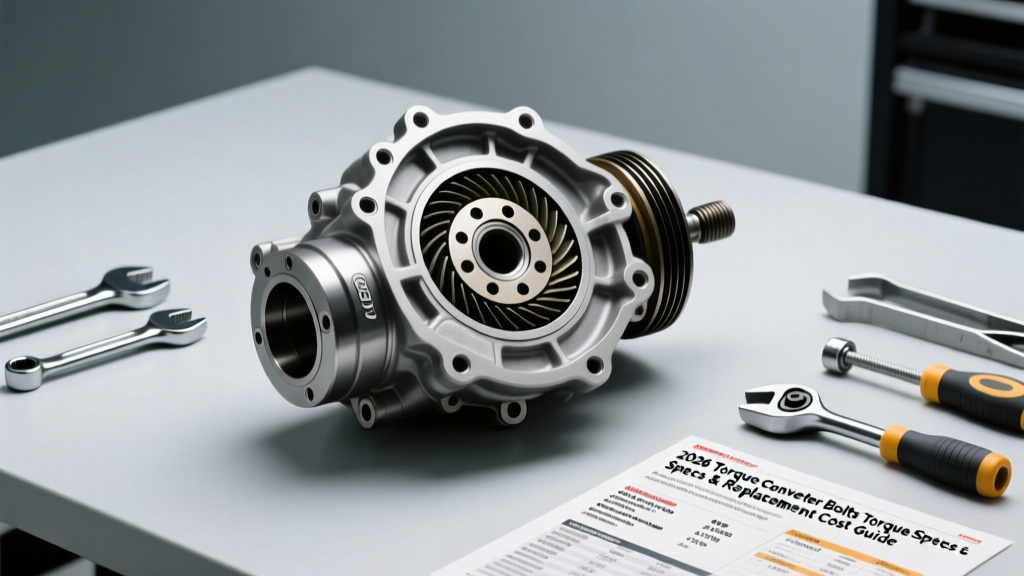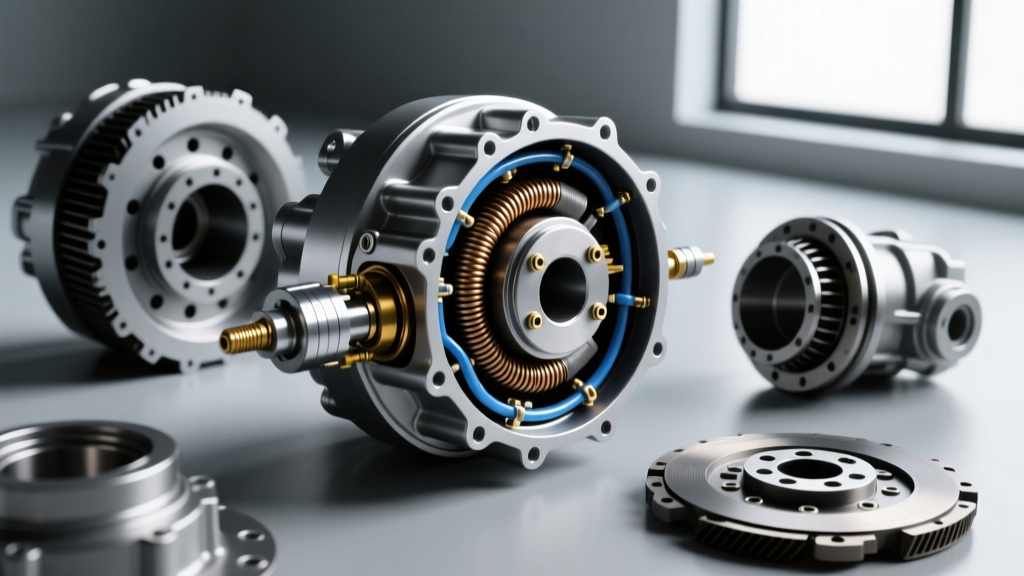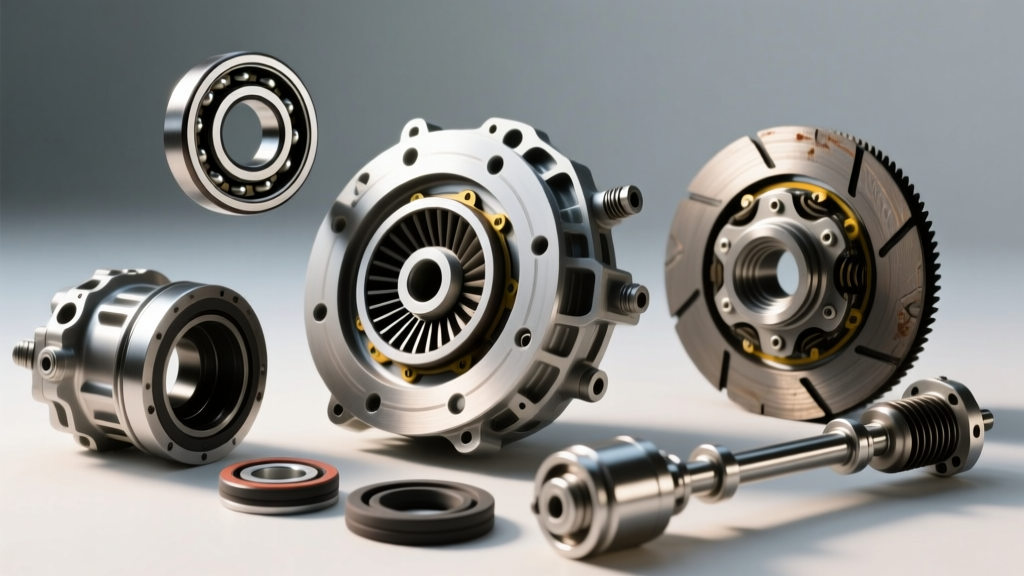
The Engineering Reality of High-Capacity 780 Torque Converters
In the modern heavy-duty and high-performance automotive landscape of 2026, the term '780 torque converter' generally refers to high-capacity billet or heavily reinforced units rated to handle up to 780 lb-ft of torque. These converters are the backbone of tuned diesel platforms (such as the 6.7L Cummins paired with the 68RFE or Aisin AS69RC) and high-output gasoline applications utilizing the 10L900 or Allison 10-speed architectures. While the external billet covers and forged steel stators are built to handle immense twisting forces, the internal weak points remain the same: the thrust bearings and the impeller hub seals. When these components fail, the cost analysis shifts from a simple fluid change to a major drivetrain intervention.
Identifying Bearing and Seal Failure Symptoms
Before diving into the financial breakdown, it is critical to accurately diagnose the failure. Bearing and seal issues inside a high-torque converter present distinct, often overlapping symptoms that mimic broader transmission failures.
The Stator and Turbine Bearing Whine
A failing Torrington thrust bearing inside the converter will emit a high-pitched whine or howl that correlates directly with engine RPM, not vehicle speed. Because a 780-rated converter experiences massive axial loading during torque multiplication, the needle bearings can flatten or cage. If you hear a metallic growl that disappears when the Torque Converter Clutch (TCC) locks up, the internal bearings are likely disintegrating. Left unchecked, this sends metallic debris through the stator support shaft and into the transmission's hydraulic valve body, turning a $1,500 repair into a $4,500 transmission rebuild.
Impeller Hub Seal Leaks and TCC Slip
The impeller hub seal rides on the transmission's stator support shaft, maintaining the hydraulic boundary between the converter and the transmission pump. When this seal fails—often due to a scored shaft or excessive heat degradation from high-stall slip—you will experience a severe loss of line pressure. This manifests as delayed engagements, slipping in higher gears, and persistent TCC slip codes (such as P0741 or P0742). The hydraulic volume required to clamp the TCC friction material drops below the threshold needed to maintain the 0.040" to 0.060" clutch pack clearance, leading to rapid friction material glazing. You may also notice fluid weeping from the bellhousing inspection cover, often misdiagnosed as a rear main engine seal leak.
2026 Cost Breakdown: Repair, Rebuild, or Replace?
When a 780 torque converter suffers bearing or seal failure, you have three primary routes: installing a standard remanufactured unit, upgrading to a new billet heavy-duty unit, or having a specialized machine shop cut, repair, and rebalance your existing converter. Below is a detailed cost analysis based on current 2026 market rates for heavy-duty applications.
| Cost Category | Standard Reman Unit | Billet 780-Rated Upgrade | Machine Shop Rebuild |
|---|---|---|---|
| Torque Converter Assembly | $450 - $650 | $1,350 - $1,950 | $400 - $650 (Labor & Parts) |
| Stator Support Shaft (if scored) | $90 - $140 (OEM) | $220 - $300 (Billet/Coated) | $90 - $140 (OEM) |
| Hub Seal & Bearing Kit | Included | Included | $65 - $110 |
| Transmission R&R Labor | $900 - $1,400 | $900 - $1,400 | $900 - $1,400 |
| Fluid, Filter & Cooler Flush | $180 - $280 | $180 - $280 | $180 - $280 |
| Total Estimated Cost | $1,620 - $2,470 | $2,650 - $4,030 | $1,635 - $2,580 |
Deep Dive: The Impeller Hub Seal and Stator Shaft Dilemma
The most critical E-E-A-T insight for transmission specialists dealing with high-torque units is understanding that the seal is rarely the root cause of the leak. In 90% of 780 torque converter seal failures, the PTFE (Teflon) or Viton seal has worn a groove into the stator support shaft. According to technical bulletins from Sonnax, if the stator shaft diameter measures below the factory specification (typically under 1.574 inches for many GM and heavy-duty applications), a new seal will leak immediately upon installation.
Expert Measurement Protocol: Always use a digital micrometer to measure the stator support shaft at the exact point where the hub seal rides. Check for out-of-round conditions. If the shaft is scored, you must replace the stator support tube or use a proven speedi-sleeve repair kit before installing the rebuilt converter.
Furthermore, when reinstalling the converter, hub endplay must be verified. Using a dial indicator, measure the turbine hub endplay. The specification for most heavy-duty applications is between 0.010" and 0.030". Excessive endplay will cause the internal thrust bearings to hammer, leading to premature failure of your newly installed 780-rated unit.
Machine Shop Rebuilds: The Hidden Costs of Balancing
If you opt to have your existing high-capacity converter cut open and repaired, the machine shop costs involve more than just TIG welding and new bearings. A 780 torque converter is significantly heavier than a stock unit, often featuring a forged steel cover and a billet stator. When the shop slices the cover off on a lathe to replace the crushed Torrington bearings and the hub seal, they alter the rotational mass.
Re-welding the cover introduces thermal distortion. Therefore, the unit must be dynamically balanced on a high-RPM balancing machine. A poorly balanced heavy-duty converter will destroy the transmission's front pump bushing and the engine's rear main bearing. Expect to pay a premium of $150 to $250 specifically for dynamic balancing and truing the flexplate mating surface. Always verify that your machine shop utilizes a dynamic balancer capable of handling the increased mass of billet diesel converters.
Collateral Costs: Fluids, Flushes, and Torque Specs
A bearing failure inside the converter guarantees that metallic particulate has entered the transmission cooler and the valve body. Simply swapping the converter and topping off the fluid is a guaranteed path to a comeback repair. A complete cost analysis must include a mandatory hot-flush of the transmission cooler lines and a pan drop to inspect the transmission filter. Heavy-duty deep pans require 12 to 15 quarts of premium synthetic fluid (such as Mobil 1 LV ATF HP or Castrol Transynd TES-295), which costs between $12 and $18 per quart, adding a significant material cost to the invoice.
Crucial Reinstallation Torque Specifications
- Flexplate to Crankshaft Bolts: Typically 65 lb-ft (heavy-duty diesel) or 35 lb-ft + 90 degrees (GM LS/LT gas). Always use new stretch bolts or medium-strength threadlocker.
- Converter to Flexplate Bolts: 35 to 45 lb-ft, depending on the manufacturer. Ensure the converter is fully seated into the transmission pump (you should feel two distinct 'clunks' as the turbine splines and pump drive gear engage) before tightening these bolts. Pulling the converter forward with the bolts will instantly crack the transmission pump housing.
- Bellhousing to Engine Block: 37 to 50 lb-ft, following a star pattern to prevent case distortion.
Final Verdict: Protecting Your Drivetrain Investment
When dealing with bearing and seal issues in a 780 torque converter, the cheapest upfront option is rarely the most economical long-term solution. While a standard remanufactured unit might save you $800 today, it will likely shatter under the 780 lb-ft load within 20,000 miles. Investing in a properly engineered billet upgrade, paired with a meticulous inspection of the stator support shaft and a rigorous cooler flush, is the only way to ensure longevity. For further diagnostic procedures on torque converter clutch apply and hydraulic leaks, refer to the Automatic Transmission Rebuilders Association (ATRA) technical archives.