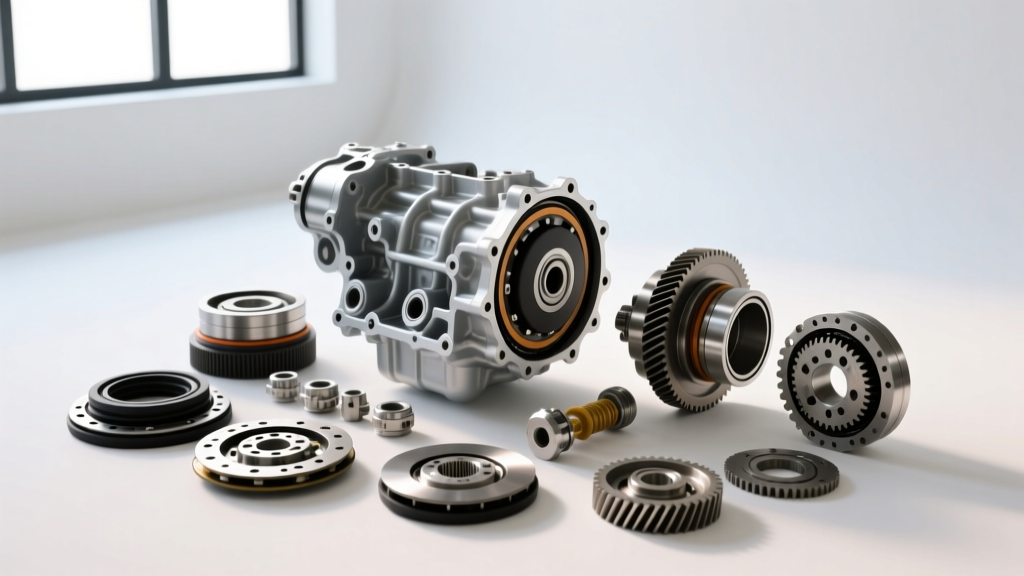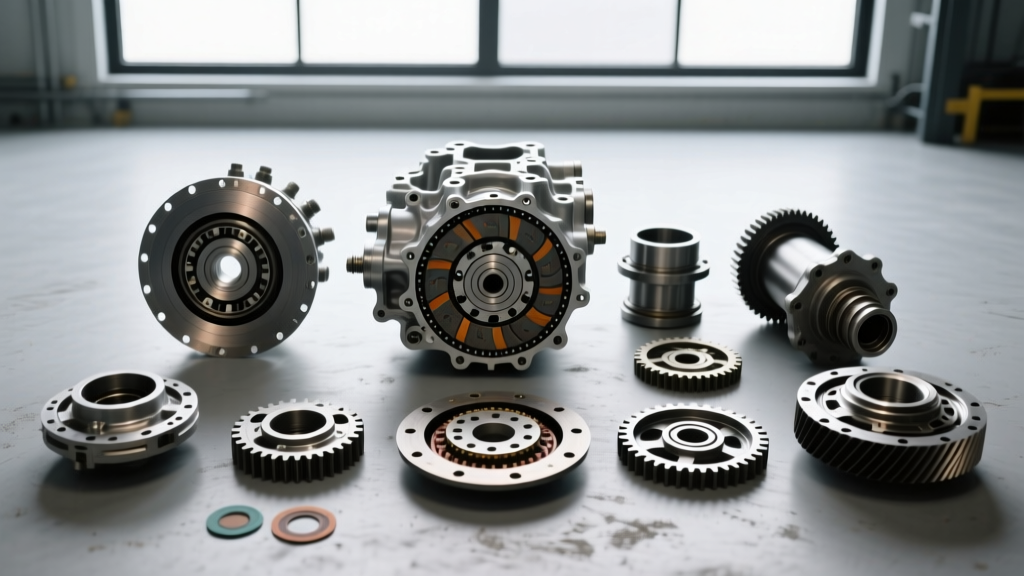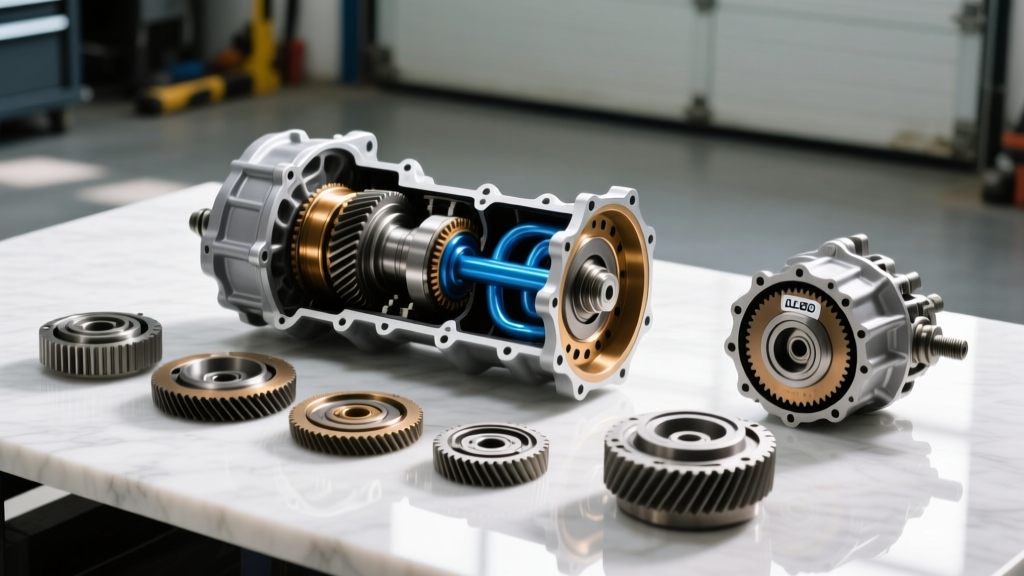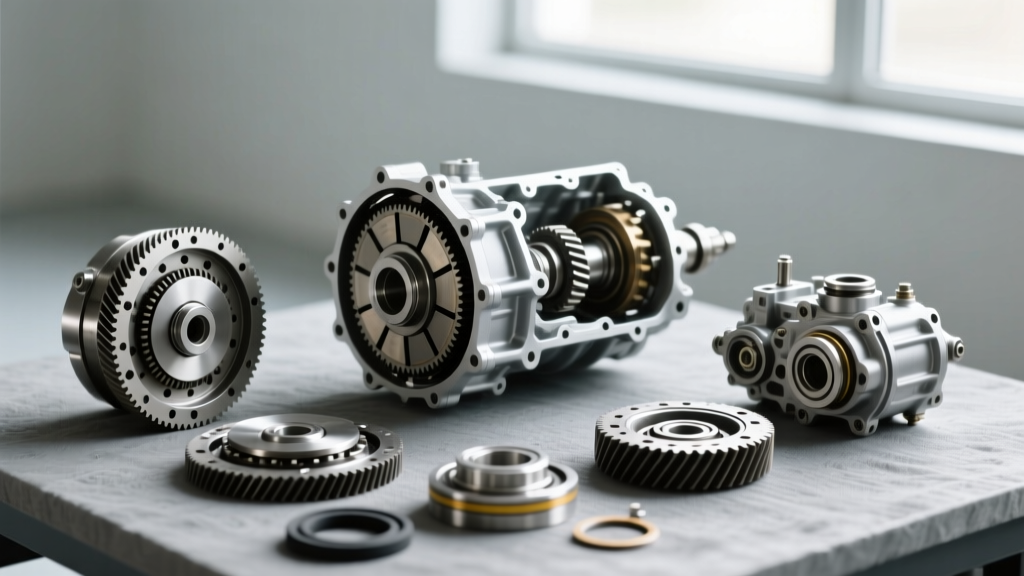
The Intersection of Warranty Coverage and Preventive Care
The Chrysler A727 TorqueFlite remains one of the most robust three-speed automatic transmissions ever engineered. Whether it is powering a restored 1970s Mopar muscle car, a heavy-duty Dodge Ram, or a custom hot rod, a professional 727 transmission rebuild in 2026 represents a significant financial investment. Depending on torque converter upgrades, shift kits, and labor rates, you can expect to pay between $2,400 and $3,800 for a comprehensive rebuild. However, handing over the keys after the installation is only half the battle. The longevity of your freshly machined drum assemblies, new Kevlar friction clutches, and hardened sun gear shells relies entirely on strict adherence to preventive maintenance. More importantly, your maintenance habits directly dictate the validity of your transmission rebuild warranty.
Most reputable rebuilders and ATRA-certified shops offer a standard 12-month/12,000-mile or an upgraded 36-month/36,000-mile warranty. These warranties cover internal mechanical failures, such as premature clutch pack wear, seal blowouts, or planetary gear disintegration. Yet, warranty administrators are notorious for scrutinizing maintenance records when a claim is filed. If the teardown reveals burnt fluid, a clogged filter, or heat-glazed steels, the claim will be instantly denied under the improper maintenance or abuse clause.
Decoding the Standard 727 Rebuild Warranty
When you purchase a rebuilt A727, the warranty is essentially a conditional guarantee. The shop guarantees their assembly, machining, and parts selection, but they cannot guarantee how the transmission is treated once it leaves the bay. Understanding the exclusions in your warranty contract is the first step in preventive maintenance.
The "Improper Maintenance" Clause
This is the most common reason warranty claims are denied on classic hydraulic transmissions. If a forward clutch pack burns up at 8,000 miles, the rebuilder will check the fluid condition and service history. If you cannot prove that the fluid and filter were changed after the initial 1,000-mile break-in period, or if you used an incompatible fluid type, the warranty is void. Furthermore, modifications that increase line pressure beyond factory specifications without upgrading the internal hard parts can void coverage. While installing Sonnax line pressure boost valves is a popular upgrade for heavy towing, doing so without the rebuilder's explicit approval may invalidate your coverage for cracked cases or sheared sun gear shells.
Critical Preventive Maintenance to Keep Your Warranty Intact
To ensure your 727 transmission rebuild warranty remains fully enforceable, you must follow a strict, documented maintenance protocol tailored to the specific components used in your build.
Fluid Selection and Capacity
The single most critical factor in preserving your warranty is using the exact fluid specified by your builder. Historically, the A727 utilized Type A Suffix A, which later transitioned to Dexron and Mercon formulations. Today, modern rebuilds utilizing high-energy Kevlar or carbon-fiber friction materials require specific friction modifiers. If your rebuilder installed Raybestos GPZ or Alto Red Eagle clutches, they will likely mandate a high-quality synthetic ATF+4 (such as Mopar 68218058AB) or a dedicated Type F equivalent (like Mobil 1 112980) for firmer shifts and higher heat tolerance. Using the wrong fluid alters the coefficient of friction, leading to slip, excessive heat generation, and immediate warranty voidance. The A727 typically requires 8 to 10 quarts for a dry rebuild with a stock torque converter, or up to 12 quarts if equipped with a high-stall aftermarket converter from manufacturers like TCI Automotive.
Filter Replacement and Pan Torque Specifications
The 727 utilizes a deep, stamped-steel pan and a simple sock-style or rigid plastic filter. When performing your first 1,000-mile break-in fluid change, you must use a high-quality filter assembly like the Wix 51850 or the OEM Mopar 5285291. Avoid cheap, no-name filters that can collapse under the suction of the high-volume A727 gear pump. Furthermore, the 18 pan bolts must be torqued to exactly 150 in-lbs (12.5 ft-lbs). Over-tightening these bolts is a common DIY mistake that warps the thin steel pan and, more critically, distorts the cast-aluminum valve body sitting just above it. A warped valve body causes internal cross-leaks, dropping line pressure and burning out the forward clutch pack—a failure your warranty will not cover if improper torque is suspected.
Mechanical Band Adjustments
Unlike modern electronically controlled units like the ZF 8HP or GM 6L80, the hydraulic 727 relies on mechanical band adjustments to maintain proper clutch apply times. As the friction material wears in during the first 3,000 miles, the bands require adjustment to prevent slip and flare. The front (kickdown) band adjusting screw should be tightened to 72 in-lbs, then backed off exactly 1-3/4 to 2 turns, and the locknut torqued to 25 ft-lbs. The rear (low-reverse) band requires 72 in-lbs of torque, backed off 1-1/2 to 2-5/8 turns depending on the specific year and drum configuration. Failing to perform this adjustment allows the bands to slip, generating catastrophic heat that will melt the sealing rings on the direct clutch drum.
727 Maintenance vs. Warranty Compliance Matrix
Use the following matrix to ensure your maintenance schedule aligns perfectly with standard warranty requirements.
| Maintenance Task | Required Interval | Warranty Impact if Neglected |
|---|---|---|
| Break-in Fluid & Filter Change | 1,000 Miles | Immediate voidance; metal shavings score valve body. |
| Front & Rear Band Adjustment | 3,000 Miles | Voidance for burnt bands or direct clutch failure. |
| Routine Fluid Inspection | Every 5,000 Miles | Claim denial for heat damage or oxidation. |
| Auxiliary Cooler Flush | Every 30,000 Miles | Voidance for thermal degradation of seals and clutches. |
| Shift Linkage & Throttle Valve Adjustment | Annually | Claim denial for late shifts and over-rev damage. |
Cooling System Upgrades and Thermal Management
Heat is the ultimate enemy of any automatic transmission. To maintain warranty compliance, especially on vehicles producing over 350 horsepower or those used for towing, an auxiliary transmission cooler is mandatory. Relying solely on the factory radiator integrated cooler is insufficient for a modern, high-clamp-load 727 build. Installing a dedicated cooler, such as the Hayden 678 or Derale 13503, ensures fluid temperatures remain below the critical 180°F threshold. For every 20°F increase above 180°F, the life of your ATF is cut in half, and the risk of seal hardening increases exponentially. Many rebuilders now require proof of an auxiliary cooler installation and a functioning transmission temperature gauge before honoring a long-term warranty claim on high-performance builds.
Real-World Costs: Out-of-Pocket Maintenance vs. Voided Warranty
Understanding the financial reality of preventive maintenance highlights why cutting corners is a false economy. Below is a cost breakdown comparing routine maintenance against the out-of-pocket expenses of a denied warranty claim.
- 1,000-Mile Break-In Service: $120 - $180 (Includes 10 quarts of synthetic ATF+4 and OEM filter).
- Band Adjustment Labor: $85 - $150 (If performed by a shop; free if done in your driveway with an inch-pound torque wrench).
- Auxiliary Cooler Installation: $250 - $450 (Parts and labor for a heavy-duty plate-and-fin cooler).
- Out-of-Pocket Rebuild (If Warranty Voided): $2,800 - $4,200 (Includes removal, R&R, hard parts replacement, and new torque converter).
Investing less than $500 in the first year of ownership protects you from a potential $4,000 liability. Furthermore, a well-documented maintenance history increases the resale value of your classic Mopar or custom truck, as prospective buyers will have verifiable proof that the drivetrain was cared for properly.
Expert Tips for Documenting Your Maintenance
"A warranty is only as strong as the paper trail that supports it. In the event of a catastrophic failure, the first thing a warranty administrator will ask for is a log of fluid services, band adjustments, and cooling system upgrades. Without receipts, your claim is dead on arrival."
To bulletproof your 727 transmission rebuild warranty, maintain a dedicated physical folder and a digital backup of all service receipts. When purchasing fluid, ensure the receipt clearly shows the brand, specification (e.g., ATF+4), and quantity purchased. If you perform your own band adjustments or fluid changes, log the exact date, odometer reading, torque specifications used, and take timestamped photographs of the work. By treating your 727 TorqueFlite with the precision it demands, you ensure that your investment remains protected, delivering thousands of miles of flawless, tire-shredding performance.