The True 6R140 Transmission Rebuild Cost: Where Does Dyno Testing Fit?
When a heavy-duty Ford Super Duty equipped with the 6R140 TorqShift transmission requires a complete overhaul, fleet managers and truck owners face a critical decision regarding the rebuild process. The 6R140, designed to handle the massive torque output of the 6.7L Power Stroke diesel and 7.3L Godzilla gas V8, is an engineering marvel. However, its complex solenoid strategy and tight hydraulic tolerances mean that a standard bench build and an in-vehicle road test are no longer sufficient guarantees of reliability. This brings us to a vital question in modern drivetrain repair: how does transmission dyno testing impact the overall 6R140 transmission rebuild cost, and is the investment genuinely worth it?
In 2026, with shop labor rates for heavy-duty diesel R&R (Remove and Replace) frequently exceeding $150 per hour, the financial risk of a post-installation failure is staggering. This comprehensive cost analysis breaks down the economics of 6R140 rebuilds, the technical necessity of dynamometer verification, and the exact assembly specifications that separate a premium rebuild from a catastrophic comeback.
Baseline 6R140 Transmission Rebuild Pricing
Before evaluating the dyno testing premium, we must establish the baseline costs associated with rebuilding a 6R140. Unlike lighter-duty units like the 4L60E or 6L80, the 6R140 requires heavy-duty hard parts, specialized clutch materials, and precise valve body modifications to survive modern towing demands.
- Master Rebuild Kit (Clutches, Steels, Seals, Gaskets): $450 - $700 (Premium Raybestos or Alto kits)
- Billet Input and Intermediate Shafts: $600 - $950 (Crucial for trucks tuned over 500 lb-ft)
- Upgraded Valve Body / Zip Kit: $250 - $450 (e.g., Sonnax Zip Kits to address TCC shudder and line pressure leaks)
- OEM Solenoid Body Assembly: $400 - $650 (Aftermarket solenoids are notorious for premature PWM failure in the 6R140)
- Remanufactured Torque Converter: $600 - $900 (Must feature a billet stator and upgraded clutch friction)
- Standard Machine Work & Labor: $1,800 - $2,500
A standard, non-dyno-tested 6R140 rebuild typically ranges from $4,100 to $6,100 out the door, depending on hard part wear and regional labor rates. But what happens when you introduce dynamometer testing to the workflow?
The Mechanics of Transmission Dyno Testing
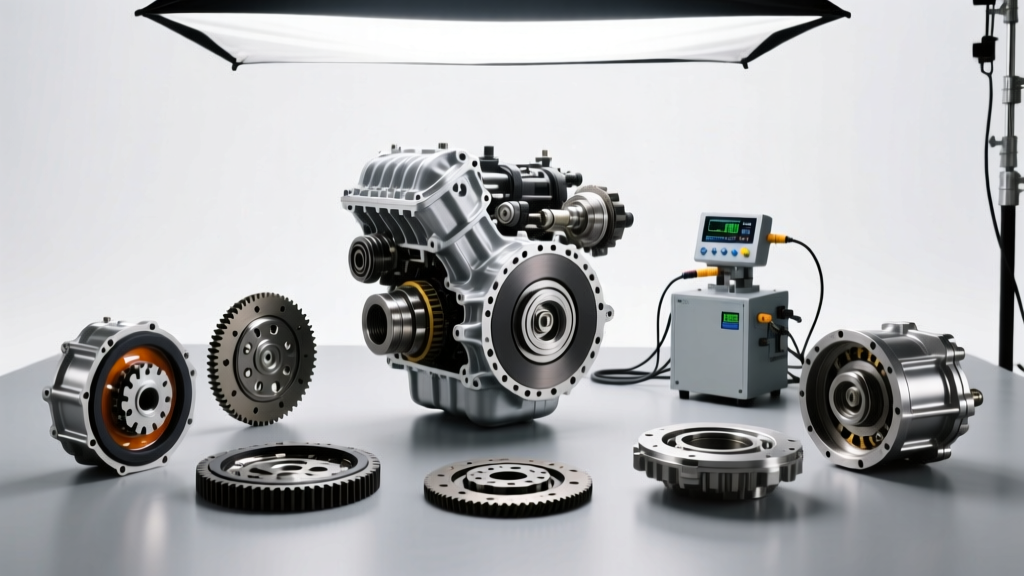
A transmission dynamometer is essentially a test bench that simulates the engine and the road. The rebuilt 6R140 is bolted to a prime mover (an electric motor or industrial engine) that drives the input shaft. The output shaft is connected to an eddy-current or water brake, which applies variable resistance to simulate vehicle weight, aerodynamic drag, and towing loads.
During a dyno session, the transmission is filled with its exact operational fluid capacity (approximately 17.5 quarts of Motorcraft MERCON LV for most 6R140 applications). A TCM (Transmission Control Module) simulator or a pre-flashed PCM is used to command shifts, manipulate Pulse Width Modulation (PWM) solenoids, and monitor line pressure via the Transmission Fluid Pressure (TFP) sensors. This allows the rebuilder to verify shift timing, clutch apply rates, and torque converter lockup under controlled, measurable conditions before the unit ever sees the underside of a truck.
Cost Breakdown: Standard Rebuild vs. Dyno-Tested Rebuild
Adding a dyno test to the build sheet introduces an upfront cost, but it fundamentally alters the financial risk profile of the repair. Below is a comparative cost analysis for a 2018 F-350 6.7L Power Stroke 4WD.
| Cost Category | Standard Rebuild (Road Test Only) | Dyno-Verified Rebuild |
|---|---|---|
| Parts & Machine Work | $3,200 | $3,200 |
| Bench Assembly Labor | $1,200 | $1,200 |
| Dyno Setup & Testing Time | $0 | $450 - $650 |
| Vehicle R&R Labor (12-14 hrs) | $1,800 - $2,100 | $1,800 - $2,100 |
| Initial Total Investment | $6,200 - $6,500 | $6,650 - $7,150 |
| Cost of a 'Comeback' Failure | $1,800+ (Wasted R&R) + Parts | $0 (Caught on the bench) |
As the data illustrates, the dyno testing fee represents roughly 6% to 9% of the total job cost. However, it insures 100% of the R&R labor investment against hydraulic or electronic assembly errors.
Critical 6R140 Parameters Verified on the Dyno
The 6R140 is highly sensitive to hydraulic cross-leaks and solenoid calibration. According to guidelines from the Automatic Transmission Rebuilders Association (ATRA), modern 6-speed and 10-speed units require electronic verification that a simple driveway road test cannot safely replicate. The dyno specifically targets the following 6R140 failure modes:
- TCC Apply and Shudder: The Torque Converter Clutch uses a sophisticated PWM apply strategy. The dyno measures exact TCC slip RPM during the 4-5 and 5-6 shifts under load, ensuring the apply rate is smooth and shudder-free.
- Solenoid Body Calibration: The 6R140 solenoid body contains the Transmission Range (TR) sensor and output speed sensors. The dyno verifies that the TR sensor voltages align perfectly with the physical gear selector detents, preventing neutral-bang or no-start conditions.
- Direct and Overdrive Clutch Pack Timing: By monitoring input vs. output shaft RPM during the 3-4 and 5-6 shifts, the rebuilder can calculate clutch volume and apply time. A delayed shift indicates a leaking drum seal or incorrect clutch clearance.
- PTO Gear Clearance Verification: The Power Take-Off gear on the 6R140 can bind if endplay is incorrect. The dyno's load-bearing capabilities will immediately reveal PTO gear whine or binding under torque.
Precision Assembly Specs: The Foundation of a Successful Dyno Test
A transmission will only pass a dyno test if the internal clearances and torque specifications are adhered to with absolute precision. The 6R140 leaves zero margin for error. Below are the critical assembly specifications that master rebuilders follow to ensure dyno success:
Clutch Pack Clearances
- Direct Clutch (4 Friction / 5 Steel): 0.045' - 0.065' (Too tight will cause drag and overheating; too loose will cause 3-4 flare).
- Overdrive Clutch: 0.035' - 0.055'
- Forward Clutch: 0.040' - 0.060'
Critical Torque Specifications
- Oil Pump Bolts (10mm): 10 Nm (89 in-lbs). Over-torquing will warp the pump housing and cause immediate pressure loss on the dyno.
- Valve Body to Case Bolts: 8 Nm (71 in-lbs). Must be tightened in the factory-specified crisscross sequence to prevent valve body distortion.
- Bellhousing to Engine Block: 47 Nm (35 lb-ft).
- Torque Converter to Flexplate: 35 Nm (26 lb-ft) using new Grade 10.9 bolts.
Fluid and Lubrication
The 6R140 requires Motorcraft MERCON LV (XT-10-QLVC) automatic transmission fluid. Do not use MERCON ULV, which is reserved for the later 10R140 10-speed transmissions. Total dry fill capacity is approximately 17.5 quarts, though a standard pan-drop and filter change requires about 12 quarts. On the dyno, the unit is filled to the exact operating level, and the fluid is brought to 180°F (82°C) to verify thermal expansion and pressure regulation at operating temperature.
The Financial ROI: Avoiding the Comeback Nightmare
Consider the logistics of a failed road test on a 4WD F-350. If a rebuilder installs a 6R140, fills it with $200 worth of MERCON LV, and discovers a 2-3 shift flare or a TCC shudder during the neighborhood test drive, the truck must return to the bay. The driveshafts, crossmember, cooler lines, wiring harness, and transfer case must be disconnected again. The transmission is dropped, drained, and torn back down.
This single 'comeback' event costs the shop upwards of $1,500 in wasted labor, fluids, and bay occupancy time, entirely erasing the profit margin of the job. Furthermore, if a line pressure leak was present during the road test, the resulting friction heat may have already glazed the new clutches or damaged the newly rebuilt torque converter, turning a minor seal error into a major parts replacement expense.
By investing $450 to $650 in dyno testing, the rebuilder shifts the diagnostic phase from the truck (where access is terrible and variables are high) to the bench (where access is perfect and data is quantifiable). If a shift solenoid is sticky or a clutch drum O-ring is nicked, it is discovered in 15 minutes on the dyno, not 15 hours into the installation process.
Sourcing a Dyno-Equipped Rebuilder
Not every local transmission shop possesses a heavy-duty transmission dynamometer capable of handling the torque and physical size of the 6R140. When evaluating a rebuilder, explicitly ask about their testing protocol. A reputable facility will provide a dyno sheet with your rebuilt unit, detailing line pressures across all six forward gears, TCC slip data, and solenoid PWM duty cycles.
Ultimately, when calculating your 6R140 transmission rebuild cost, view dyno testing not as an unnecessary upsell, but as an essential quality control metric. In the high-stakes world of heavy-duty diesel towing, verifying the hydraulic and electronic integrity of your transmission before it is bolted to the engine is the smartest insurance policy you can buy.