The Diagnostic Imperative: Why Symptoms Dictate Your Rebuild
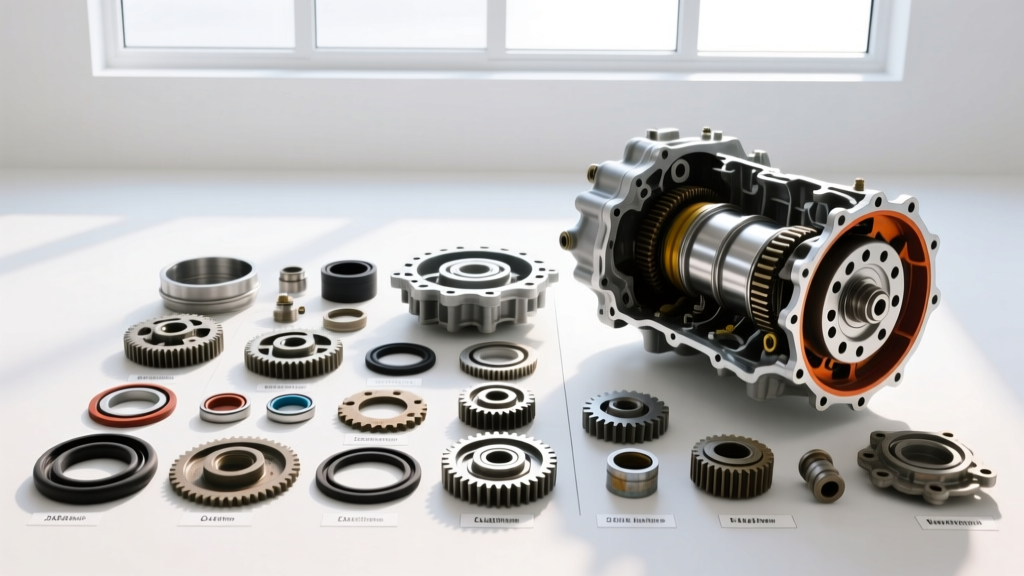
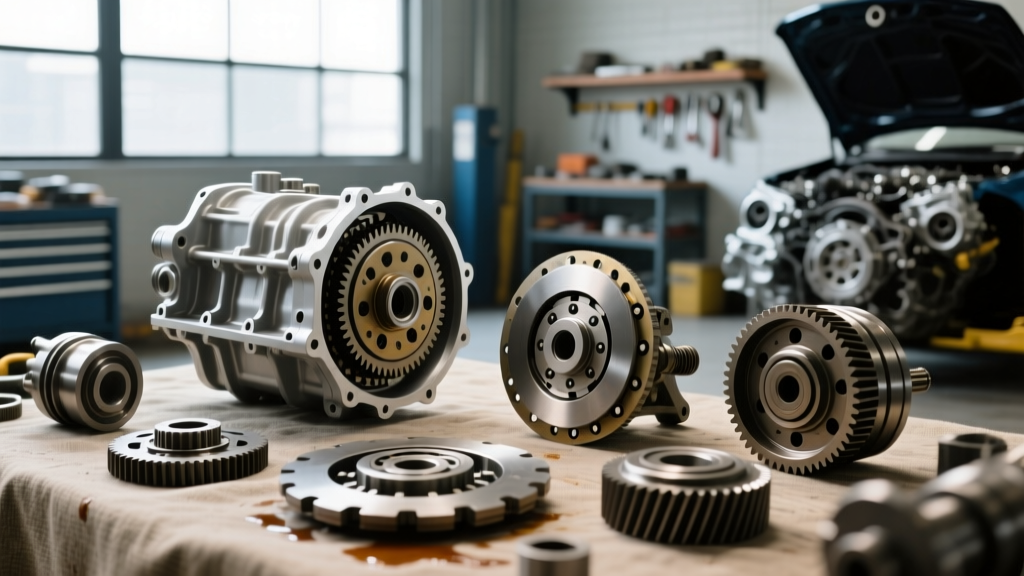
The GM 6L90E is a formidable heavy-duty 6-speed automatic transmission, engineered to handle the massive torque output of the Duramax diesel and supercharged LS/LT V8s found in the Silverado 2500/3500, Camaro ZL1, and Corvette. However, when internal wear or hydraulic failures occur, blindly handing the unit to the first local shop you find is a financial gamble. A proper 6L90E transmission rebuild requires a shop that understands the intricate relationship between the Transmission Electro-Hydraulic Control Module (TEHCM), the 3-5-Reverse clutch pack, and the torque converter.
As a vehicle owner or fleet manager in 2026, your first step before soliciting quotes is to perform or commission a precise symptom diagnosis. The specific diagnostic trouble codes (DTCs) and drivability complaints you experience will directly dictate the parts required, the machine work needed, and ultimately, the final invoice. Understanding these failure modes is your primary weapon for vetting a qualified rebuilder.
Common 6L90E Failure Modes & Diagnostic Codes
The 6L90E shares its basic architecture with the 6L80, but features a strengthened case, an additional pinion gear in the planetary sets, and wider clutch packs. Despite these upgrades, it suffers from specific, well-documented failure points. Use a capable bi-directional scan tool (like a Snap-on Zeus or GM GDS2) to pull data before the transmission is removed.
| Symptom / Complaint | Common DTC | Likely Mechanical Culprit | Rebuild Implication |
|---|---|---|---|
| Shudder at 40-55 mph (TCC Slip) | P0741 | TCC lining failure, debris in TEHCM solenoids | Mandatory converter replacement, TEHCM flush/test, complete cooler line flush. |
| No Reverse / Slip in 3rd or 5th | P2715, P0733 | 3-5-Reverse clutch wave plate fracture or piston seal blowout | Requires case machining if piston bore is scored; upgraded wave plate installation. |
| Harsh 1-2 or 2-3 Shifts | P0877, P2723 | Worn valve body separator plate, fatigued accumulator springs | TEHCM solenoid flow testing, separator plate replacement, Zip Kit installation. |
| Whining Noise in Park/Neutral | N/A | Transmission pump cavitation, scored pump gears | Pump assembly replacement, pickup tube O-ring replacement, pan drop inspection. |
The TCC Slip RPM Test
If your primary complaint is a shudder, you must verify Torque Converter Clutch (TCC) slip RPMs. With the vehicle cruising in 6th gear at a steady throttle on a flat road, monitor the TCC Slip RPM parameter. A healthy 6L90E should show slip between 0 and 20 RPM. If your scan tool reads slip consistently above 100 RPM, the friction material inside the torque converter has degraded. This debris is now circulating through the TEHCM. If a rebuilder quotes you a 'standard overhaul' without explicitly including a new torque converter and a pressurized cooler flush, walk away.
Vetting a Rebuilder: Questions to Ask Based on Your Diagnosis
Finding a specialist for a 6L90E transmission rebuild means filtering out generalist mechanics who treat this complex unit like an old TH350. When calling shops, use your diagnostic findings to ask targeted, technical questions. Their answers will immediately reveal their expertise.
1. The TEHCM and Solenoid Body Test
Unlike older transmissions where the valve body and TCM were separate, the 6L90E integrates the solenoids, pressure switches, and TCM into a single TEHCM unit bolted to the top of the valve body.
Ask the rebuilder: 'How do you test the TEHCM solenoids and pressure switches before reassembly?'
The Expert Answer: They should mention using a specialized TEHCM tester (like the Sonnax TEHCM Test Plate or a proprietary dyno simulator) to verify solenoid PWM (Pulse Width Modulation) response and check for internal cross-leaks. If they say 'we just clean it and reuse it,' they are risking an immediate comeback due to microscopic debris trapped in the 3-5-Reverse solenoid screen.
2. The 3-5-Reverse Clutch Wave Plate
The 3-5-Reverse clutch pack is the Achilles heel of the 6L80/6L90E family. The factory wave plate is prone to fatigue and fracturing, which sends steel shrapnel through the rear planetary and destroys the reverse clutch housing.
Ask the rebuilder: 'Do you use the factory 3-5-Reverse wave plate, or do you install an upgraded heavy-duty cushion plate?'
The Expert Answer: A top-tier rebuilder will reference upgrading to a reinforced wave plate (such as those offered by Sonnax) or modifying the clutch pack clearance to eliminate the wave plate entirely in high-horsepower applications, replacing it with an additional friction and steel to increase clutch volume and heat dissipation.
3. Cooler Line Flushing Protocol
Ask the rebuilder: 'What is your procedure for the transmission cooler lines?'
The Expert Answer: Blowing out the lines with compressed air is entirely insufficient for the 6L90E. The shop must use a pressurized, heated solvent flush machine to reverse-flow the cooler circuit. Failure to remove trapped TCC friction material from the radiator cooler will destroy the new torque converter within 500 miles.
Decoding the 6L90E Transmission Rebuild Quote
As of 2026, labor rates and hard-part scarcity have shifted the pricing landscape. A legitimate, warranty-backed 6L90E rebuild is not cheap, but it should be transparent. Below is a realistic cost breakdown for a professional overhaul addressing common failure points.
- Base Master Rebuild Kit (Frictions, Steels, Seals, Gaskets): $450 - $650 (Look for premium kits like the BorgWarner 74460A or Raybestos 74000F).
- Billet / Upgraded Hard Parts: $300 - $800 (Includes upgraded 3-5-Reverse wave plate, Sonnax Zip Kit for valve body wear, and heavy-duty pump slide springs).
- Remanufactured Torque Converter: $500 - $850 (Must include upgraded TCC lining and billet stator supports for diesel applications).
- TEHCM Service / Replacement: $250 (Cleaning/Testing) to $950 (New OEM unit + GM programming).
- Machine Work & Labor: $1,400 - $2,200 (Includes teardown, cleaning, air-checking, assembly, and R&R labor).
- Fluid & Consumables: $150 - $200 (Requires ~11.2 quarts of Dexron VI for a dry fill).
Total Expected Range: $3,050 to $5,650, heavily dependent on TEHCM viability and hard-part damage. If a shop quotes you $1,800 for a 6L90E, they are likely only replacing the burnt frictions, ignoring the TEHCM, and reusing the contaminated torque converter.
Expert Torque Spec Check: Want to know if the tech assembling your unit actually reads the service manual? The TEHCM-to-case bolts are torqued to 89 lb-in (inch-pounds), NOT foot-pounds. Overtorquing these bolts will crack the TEHCM plastic housing or warp the valve body casting, causing immediate hydraulic cross-leaks and P0877 codes. Furthermore, the transmission pan bolts require exactly 18 lb-ft, and the bellhousing-to-engine block bolts must be tightened to 37 lb-ft.
Red Flags When Sourcing a 6L90E Specialist
Avoid shops that exhibit the following warning signs during your consultation:
- The 'Universal' Rebuilder: If the shop claims they rebuild 'everything from Hondas to Heavy Duty Diesels' using the same bench and tools, they lack the specific TEHCM programming equipment and 6L90E holding fixtures required.
- No Dyno or Air-Check Verification: According to the Automatic Transmission Rebuilders Association (ATRA), air-checking clutch packs before installing the valve body is a non-negotiable step. If the 3-5-Reverse piston seal is nicked during assembly, an air-check will reveal the leak immediately. Skipping this guarantees a teardown if the unit fails in the vehicle.
- Ignoring the Input Shaft: In high-torque applications (like tuned Duramax or supercharged LT4 engines), the factory input shaft is prone to twisting or snapping. A reputable shop will suggest a billet input shaft upgrade (e.g., from Input Shaft Engineering or Sonnax) if your vehicle exceeds 600 lb-ft of torque.
Final Thoughts on the 6L90E Overhaul
A 6L90E transmission rebuild is a highly technical procedure that bridges the gap between heavy mechanical engineering and sensitive electronic calibration. By diagnosing your symptoms accurately, understanding the underlying mechanical failures, and interrogating potential rebuilders about their TEHCM and 3-5-Reverse clutch procedures, you transition from a vulnerable consumer to an informed project manager. Demand transparency, insist on upgraded wear components, and ensure your shop respects the precise torque specifications and flushing protocols that this heavy-duty transmission demands.