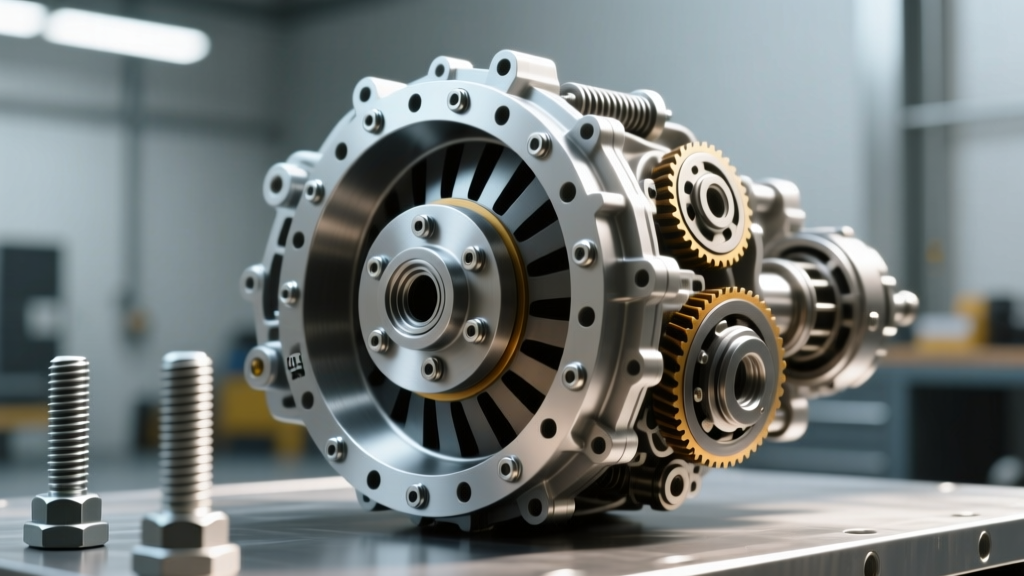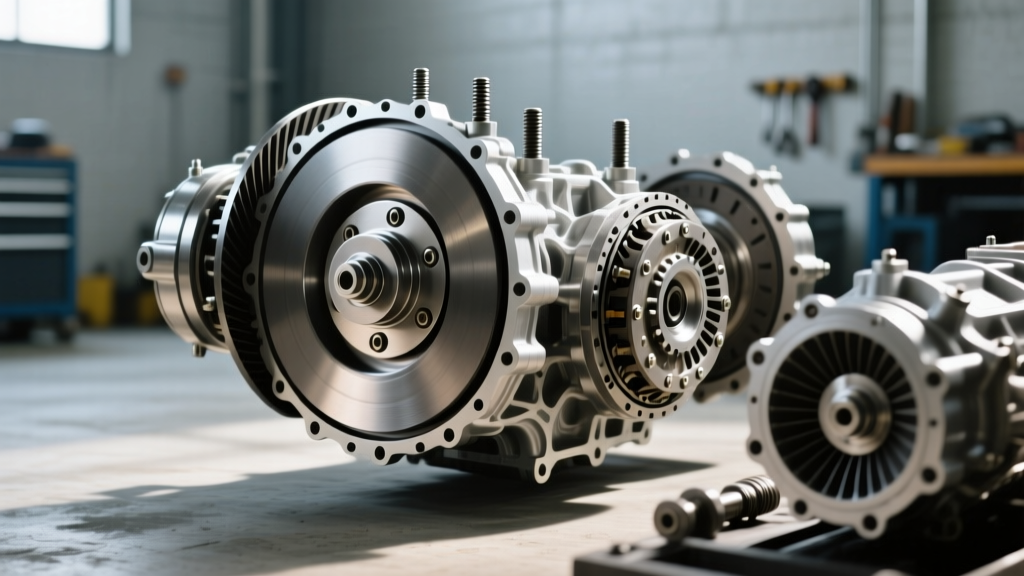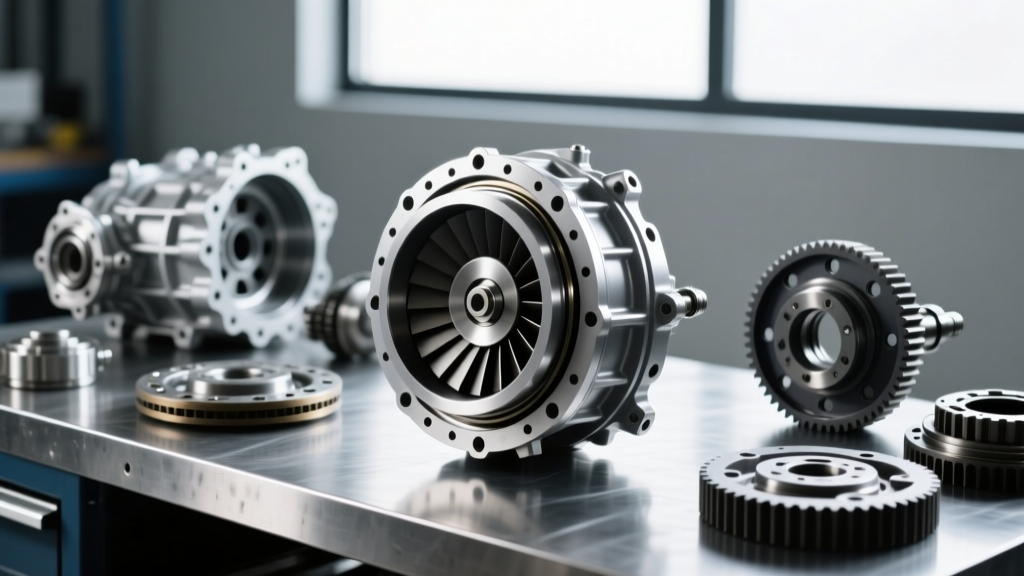
The Science of the 6L90: Why Stall Speed Dictates Performance
The GM 6L90 (RPO MYD) is a formidable heavy-duty six-speed automatic transmission. Originally designed to handle the massive torque output of the Duramax diesel and supercharged 6.2L V8s in vehicles like the Cadillac CTS-V and Chevrolet Silverado HD, the 6L90 features a wider case, strengthened planetary gearsets, and a robust 300mm torque converter compared to its 6L80 sibling. However, as automotive enthusiasts push into the 2026 era of high-horsepower LS and LT engine swaps, forced induction kits, and aggressive camshaft profiles, the factory torque converter quickly becomes the primary bottleneck in the drivetrain.
Upgrading your torque converter is not simply a matter of buying the highest stall speed available. A properly matched 6L90 torque converter upgrade multiplies engine torque efficiently, keeps the engine in its optimal powerband, and manages thermal loads. Conversely, a mismatched stall speed will result in catastrophic transmission fluid overheating, premature torque converter clutch (TCC) failure, and sluggish off-the-line performance. This step-by-step guide will demystify torque converter stall speed and walk you through the exact process of selecting, installing, and tuning a high-performance 6L90 converter.
Step 1: Demystifying Stall Speed Terminology
Before selecting a part number, it is critical to understand that 'stall speed' is not a single, fixed mechanical limit. It is a dynamic fluid-coupling threshold that changes based on engine torque output. When browsing aftermarket catalogs, you will encounter three distinct definitions:
- True Stall: The RPM at which the engine reaches peak torque while the transmission output shaft is held completely stationary (e.g., against a trans-brake or locked rear axle). This is the most accurate metric for racers but is impossible to measure on a street vehicle without breaking parts.
- Flash Stall: The RPM the engine 'flashes' to when you mat the throttle from a dead stop in Drive. This is the most practical metric for street and street/strip builds, as it represents the actual launch RPM under maximum throttle input.
- Foot-Brake Stall: The maximum RPM the engine can reach while holding the brake pedal and applying throttle. This is highly deceptive for modern vehicles; the 6L90's massive braking systems and factory ECU torque-management protocols will often limit RPM to 2,000-2,500, regardless of the converter's actual capability.
When aftermarket manufacturers like Circle D Specialties or Yank Performance list a '2800 RPM stall,' they are typically referring to the flash stall rating when paired with a specific baseline engine torque curve.
Step 2: Matching Stall Speed to Your Camshaft and Powerband
The golden rule of torque converter selection is that your flash stall speed should align with the bottom end of your camshaft's operating range, or sit roughly 500 to 800 RPM below your engine's peak torque RPM. If you install a high-duration camshaft that makes no power below 3,500 RPM, but retain a stock 1,800 RPM stall converter, the vehicle will feel incredibly sluggish off the line because the engine is bogged down in a vacuum state where it produces no torque.
Use the data table below to identify the target stall RPM for your specific 6L90 application:
| Engine Build Profile | Camshaft Duration (@ .050') | Peak Torque RPM | Recommended 6L90 Stall Speed |
|---|---|---|---|
| Stock / Mild Bolt-Ons | Stock - 210° | 4,200 - 4,600 | 1,800 - 2,200 RPM (Stock) |
| Towing / Off-Road (HD Trucks) | 212° - 218° | 3,800 - 4,200 | 2,400 - 2,600 RPM |
| Street/Strip (Camaro ZL1 / CTS-V) | 224° - 232° | 4,800 - 5,200 | 2,800 - 3,200 RPM |
| Forced Induction / Race Prep | 238°+ | 5,500+ | 3,400 - 4,000+ RPM |
Step 3: Sourcing the Right 6L90 Torque Converter Upgrade
The 6L90 utilizes a unique bellhousing pattern and a specific input shaft spline count compared to older GM transmissions. You must source a converter explicitly machined for the 6L90 platform. Expect to spend between $895 and $1,650 depending on the internal components.
- Billet Front Cover: Essential for any 6L90 upgrade. The factory stamped steel cover will flex and balloon under high line pressure, leading to TCC apply failure. A billet aluminum or steel cover ensures a rigid mounting surface for the TCC friction material.
- Furnace-Brazed Fins: High-stall converters generate immense internal hydraulic shear. Furnace-brazed stator and turbine fins prevent the fins from peeling back under the stress of 700+ lb-ft of torque.
- Upgraded TCC Clutch Material: For street-driven vehicles that still utilize lockup in overdrive gears, ensure the converter features high-friction carbon or Kevlar-lined TCC material to handle the increased slip RPM during apply.
Popular part numbers include the Circle D 312-426L series (ranging from 2200 to 3200 stall) and the Yank Performance SS series. Always verify the pilot pad diameter and ensure it matches your specific flexplate (LS vs. LT pattern).
Step 4: Mechanical Installation and Precision Torque Specs
Installing a 6L90 torque converter requires strict adherence to GM's fastening specifications to prevent catastrophic drivetrain vibration or flexplate cracking. The 6L90 is heavy; ensure the transmission is fully supported and the converter is fully seated into the transmission oil pump before mating it to the engine block.
Critical Torque Specifications:
- Torque Converter to Flexplate Bolts: 46 lb-ft (62 Nm). Use M10 x 1.5 bolts with a medium-strength threadlocker (e.g., Loctite 243). Never use impact guns to seat these bolts.
- Flexplate to Crankshaft Flange: 74 lb-ft plus an additional 60-degree turn (Yield spec for most GM LS/LT applications). Always use a new flexplate bolt kit.
- Bellhousing to Engine Block: 37 lb-ft (50 Nm) for the M12 mounting bolts.
- Cooler Line Fittings: 20 lb-ft. Over-tightening will crack the 6L90 transmission case cooler port.
After installation, the 6L90 requires a specific fluid fill procedure. The dry-fill capacity with a new aftermarket converter is approximately 11.2 quarts (10.6 liters). Fill with a high-quality synthetic Dexron VI, such as Mobil 1 Synthetic ATF, which offers superior shear stability for high-stall applications.
Step 5: TCM Calibration and TCC Lockup Strategy
The most common point of failure in a 6L90 torque converter upgrade is neglecting the Transmission Control Module (TCM) calibration. The 6L90 utilizes an Electronically Controlled Capacity Clutch (ECCC) system, which allows the TCC to slip slightly to absorb torsional engine vibrations. If you install a 3,200 RPM stall converter but leave the factory TCC apply tables intact, the TCM will attempt to lock the converter at 1,800 RPM in 3rd gear. Because the engine cannot physically produce enough torque to drive the wheels at 1,800 RPM with that cam profile, the TCC will slip violently, generating massive heat and burning out the clutch lining within 50 miles.
Using tuning software like HP Tuners VCM Suite, you must modify the following tables:
- TCC Apply/Release Speeds: Raise the minimum TCC apply RPM in gears 1 through 4 to at least 400 RPM above your new flash stall speed. For a 3,200 stall, do not allow TCC apply until 3,600+ RPM in lower gears.
- TCC Slip RPM Targets: Adjust the commanded slip. While 20-40 RPM of slip is standard for NVH (Noise, Vibration, Harshness) reduction, high-horsepower builds may require locking the TCC to 0 RPM slip in 5th and 6th gears to prevent clutch glazing.
- Line Pressure Multipliers: Increase base line pressure by 10-15% to ensure the clutch packs and TCC piston are clamped firmly against the increased hydraulic shear of the loose converter.
Diagnosing Symptoms of a Mismatched or Failing Stall Setup
Because this guide falls under our torque converter symptoms diagnostic framework, it is vital to recognize the warning signs of a poorly chosen or failing 6L90 converter upgrade. If you experience any of the following, immediately scan the TCM for diagnostic trouble codes (DTCs) and log your TCC slip data.
1. Severe TCC Shudder and Slip (Codes P0741, P1870)
If the vehicle vibrates violently between 40-60 mph while in overdrive, the TCC is failing to achieve full lockup. This is often caused by the TCM commanding lockup below the converter's stall threshold, or by degraded friction material on the TCC piston due to excessive parasitic heat.
2. Transmission Fluid Overheating (Code P0218)
A 'loose' high-stall converter generates significant heat through fluid shear. If your 6L90 fluid temperatures consistently exceed 220°F (104°C) during highway cruising, your TCC lockup tables are likely configured incorrectly, forcing the converter to operate in an unlocked, fluid-coupling state at high speeds. An upgraded auxiliary transmission cooler is highly recommended for any 6L90 running a stall speed above 2,800 RPM.
3. RPM Flare and Lazy Launch
Conversely, if you install a 4,000 RPM race converter in a heavy Silverado HD with a stock camshaft, the vehicle will experience 'RPM flare'—the engine will rev freely to 3,500 RPM off the line without transferring proportional torque to the wheels, resulting in a lazy, slipping sensation and terrible fuel economy. The engine simply lacks the low-end torque to 'load' the converter.
Conclusion
A successful 6L90 torque converter upgrade requires a holistic approach that balances mechanical hardware, camshaft dynamics, and precise TCM tuning. By understanding the true definition of stall speed, matching the RPM threshold to your engine's torque curve, and adhering to strict installation and calibration protocols, you can unlock the full potential of GM's heavy-duty six-speed platform. Always consult with the converter manufacturer regarding your specific dyno sheet or cam card before making a final purchase, ensuring your drivetrain operates reliably for years to come.