The 545RFE Dilemma: Spot Repair vs. Full Overhaul
When your Dodge Ram 1500, Jeep Grand Cherokee, or Chrysler Aspen starts exhibiting harsh shifts, flaring between gears, or throwing a P0731 (Gear 1 Incorrect Ratio) code, the 545RFE transmission is demanding immediate attention. As a transmission specialist, the most common question I field from owners and independent shop managers is whether to perform a targeted spot repair or invest in a comprehensive 545RFE transmission rebuild kit. In 2026, with the rising cost of remanufactured units and the increasing scarcity of low-mileage core exchanges, making the right diagnostic and financial decision is critical.
The 545RFE is a unique beast. Unlike traditional automatic transmissions, it features a dual-planetary gearset design that actually provides six forward speeds (though the 6th gear is often locked out by the TCM in earlier 545RFE iterations, acting as a true 5-speed). This complex architecture means that a failure in one clutch pack or hydraulic circuit can quickly cascade into catastrophic hard-part damage if ignored. Below, we break down the technical and financial realities of spot repairs versus a full master rebuild.
Understanding 545RFE Failure Modes: Where Do They Leak and Slip?
Before deciding on a rebuild kit, you must understand what typically fails on the 545RFE. Diagnosing the root cause dictates whether a spot repair is a viable band-aid or a waste of money.
1. The Integrated Solenoid Pack and Pressure Switch Assembly
The most frequent culprit for erratic shifting and electrical codes (like P0750 or P0871) is the solenoid/pressure switch assembly mounted directly to the valve body. Over time, the internal diaphragms in the pressure switches rupture, and the solenoid pintles wear out. Because this is an external-ish component (accessible by dropping the transmission pan and valve body), it is the prime candidate for a spot repair.
2. Valve Body Cross-Leaks and Bore Wear
The cast aluminum valve body is notorious for bore wear, specifically in the switch valve and pressure regulator bores. When these bores wear out, hydraulic pressure bleeds off, leading to delayed engagements and clutch slippage. According to hydraulic experts at Sonnax, ignoring valve body bore wear while simply replacing frictions will result in a rebuilt transmission that burns up its new clutches within 5,000 miles.
3. The 2C and Underdrive (UD) Clutch Hubs
On high-mileage 545RFE units (typically 120,000+ miles), the splines on the input hub and the 2C clutch hub begin to strip or wear. Furthermore, the Underdrive (UD) piston seals harden and leak. When internal hard parts and multiple clutch packs are compromised, spot repairs are no longer mathematically or mechanically sound.
Option 1: The Targeted Spot Repair Route
A spot repair involves removing the transmission pan, diagnosing the specific failing component, and replacing only that part without pulling the transmission from the vehicle.
Common Spot Repair: Solenoid Pack & Filter Replacement
- Parts Required: OEM Mopar Solenoid Pack (Part #52119436AB or newer revision), two spin-on filters (cooler return and sump), pan gasket, and 6-8 quarts of ATF+4.
- Parts Cost: $280 - $380.
- Labor Time: 2.5 - 3.5 hours.
- Total Shop Cost: $550 - $850.
The Verdict on Spot Repairs: If your transmission has under 90,000 miles, the fluid is bright red (not burnt), and a bi-directional scanner confirms a single failed pressure switch, a spot repair is highly effective. However, if the fluid smells burnt or contains heavy metallic glitter on the magnetic drain plug, a spot repair will not fix the underlying mechanical destruction.
Option 2: Investing in a 545RFE Transmission Rebuild Kit
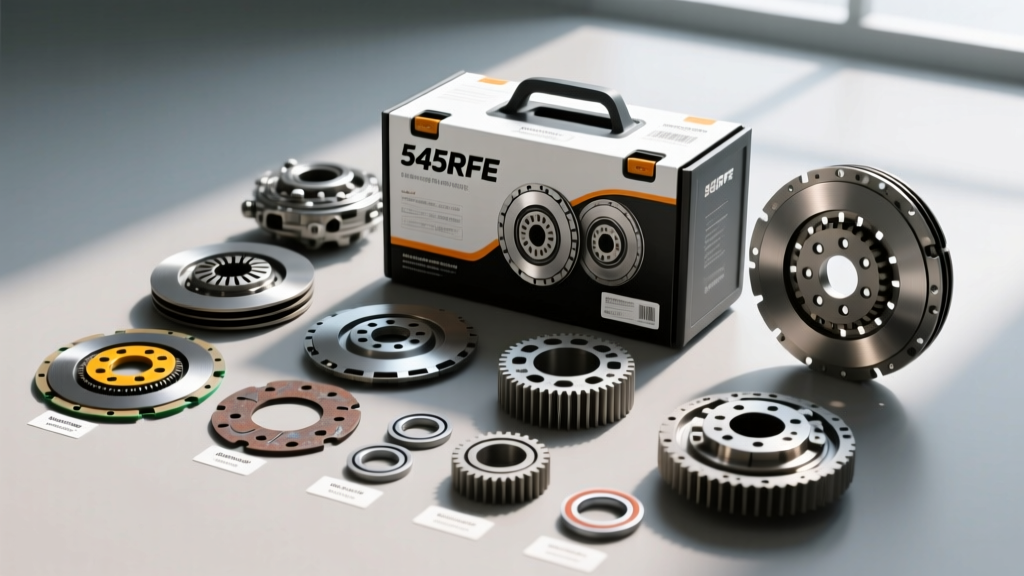
When the transmission requires removal, teardown, and a complete overhaul, purchasing a 545RFE transmission rebuild kit is the most cost-effective way to restore the unit to factory (or better-than-factory) specifications.
What is in a Master Rebuild Kit?
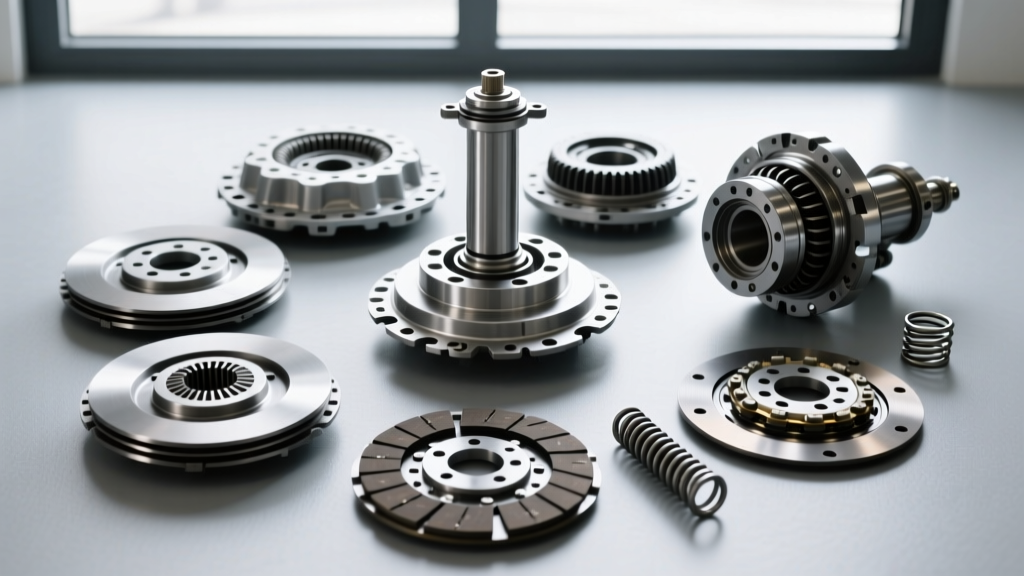
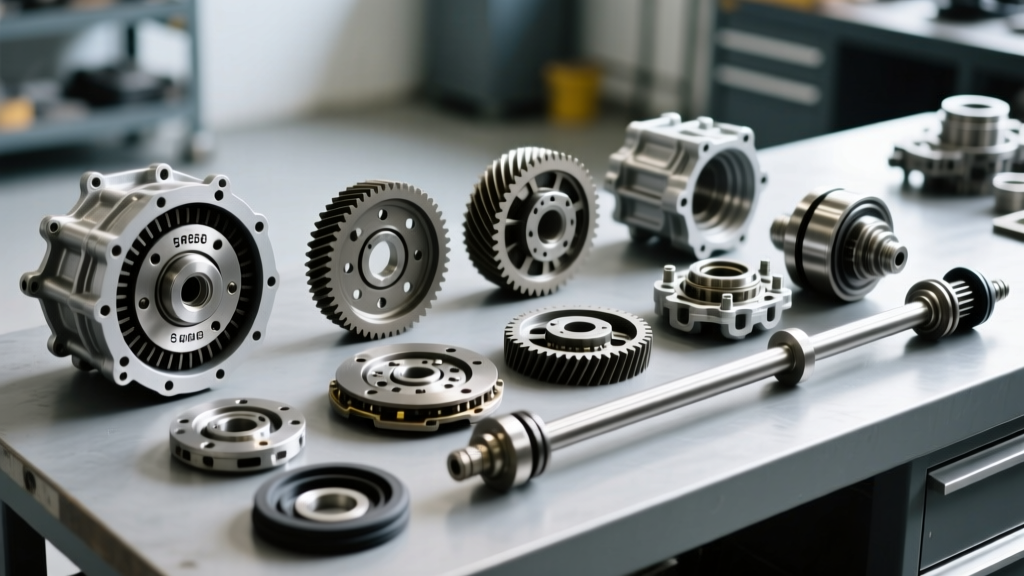
A premium Master Rebuild Kit (such as those sourced from Transtar Industries or utilizing Raybestos Powertrain Z-Pak frictions) includes everything needed for a complete hydraulic and friction overhaul:
- Friction Clutches: Complete sets for the UD, 2C, Overdrive (OD), Reverse, and 4C packs. Upgrading to Raybestos Z-Pak high-energy frictions is highly recommended for heavy-duty Ram applications.
- Steel Separator Plates: Thick and thin steels for all packs.
- Overhaul Gasket & Seal Kit: Every O-ring, lip seal, piston seal, and bonded piston required.
- Bushings & Thrust Washers: Complete bushing kit to eliminate planetary gear wobble.
Note: Master kits typically do not include hard parts (planetary gears, hubs, shafts) or the valve body. If the 2C hub is stripped, it must be ordered separately as a "hard part" add-on.
Head-to-Head Comparison: Repair vs. Rebuild Kit
| Factor | Spot Repair (Solenoid/Valve Body) | Full Rebuild (Master Kit) |
|---|---|---|
| Parts Cost | $250 - $600 | $450 - $750 (Kit + Hard Parts) |
| Labor Hours | 3 - 5 Hours | 14 - 18 Hours (R&R + Bench) |
| Total Est. Cost (2026) | $600 - $1,200 | $2,200 - $3,400 |
| Expected Lifespan | 10,000 - 50,000 Miles | 100,000+ Miles |
| Warranty Coverage | Parts Only (Usually) | Full Labor & Parts (12-36 Months) |
Critical Teardown & Assembly Specs for the 545RFE
If you opt for the rebuild kit route, adhering to exact factory specifications is non-negotiable. The 545RFE is highly sensitive to hydraulic leaks and clutch pack clearances. Below are the critical specifications every rebuilder must follow:
Torque Specifications
- Valve Body to Case: 105 in-lbs (inch-pounds, NOT foot-pounds). Over-torquing these bolts will warp the aluminum valve body, causing immediate cross-leaks and shift solenoid binding.
- Oil Pump to Case: 18 ft-lbs. Ensure the pump gears are properly aligned and lubricated with assembly gel before tightening.
- Transmission Pan Bolts: 105 in-lbs. Use a new gasket and ensure the magnet is placed correctly to catch metallic debris.
- Flexplate to Torque Converter: 35 ft-lbs (Always replace torque converter bolts; they are stretch-to-yield).
Clutch Pack Clearances
Measuring clutch pack clearance with a dial indicator and feeler gauges is mandatory. If clearances are too tight, the transmission will drag and overheat; if too loose, it will flare and burn the frictions.
- Underdrive (UD) Pack: 0.035" - 0.055"
- 2nd Clutch (2C) Pack: 0.040" - 0.070"
- Overdrive (OD) Pack: 0.030" - 0.050"
- Reverse (R) Pack: 0.035" - 0.065"
- 4th Clutch (4C) Pack: 0.025" - 0.045"
Pro-Tip: Always soak the new friction discs in OEM Mopar ATF+4 (or a licensed equivalent like Valvoline ATF+4) for at least 45 minutes prior to assembly. Installing dry frictions will cause immediate glazing upon the first test drive.
The Diagnostic Decision Matrix: Which Route Should You Take?
To finalize your decision, hook up a bi-directional scan tool and a transmission pressure gauge. Check the main line pressure. At idle in Drive, line pressure should sit around 40-55 PSI. Under heavy throttle or stall testing, it should spike to 120-145 PSI.
If your line pressure is normal, but the TCM is reporting a specific pressure switch rationality code, and the mileage is under 100k, proceed with the spot repair (solenoid pack replacement). However, if your line pressure is erratic, dropping below 30 PSI at idle, or if the fluid is black and smells of burnt clutch material, the internal piston seals and clutch packs have failed. In this scenario, ordering a 545RFE transmission rebuild kit, pulling the unit, and performing a full bench overhaul is the only way to guarantee the vehicle's reliability for the next decade.
Final Thoughts on 545RFE Longevity
The 545RFE is an incredibly robust transmission when properly maintained and rebuilt with precision. While the upfront cost of a master rebuild kit and the associated 15+ hours of labor is daunting compared to a simple solenoid swap, the long-term ROI heavily favors the rebuild. By upgrading to Z-Pak frictions, addressing valve body wear with Sonnax Zip Kits, and strictly adhering to inch-pound torque specs, you can build a 545RFE that outlasts the original factory unit by tens of thousands of miles.