The Great Drivetrain Misconception
If you are diving into your first automatic transmission rebuild, the terminology can be incredibly confusing. As of 2026, the GM 6L80E remains one of the most popular 6-speed automatics on the road and in the swap community, powering millions of Silverados, Sierras, Camaros, and Corvettes. When sourcing parts, many beginners mistakenly start shopping for a clutch slave cylinder rebuild kit before tearing down their 6L80E. Stop right there and put your wallet away.
Why? Because the 6L80E does not have an external clutch slave cylinder. That component belongs to manual transmissions or automated-manual hybrids. In this beginner-friendly explainer, we will clear up this hydraulic misconception, break down how the 6L80E actually actuates its clutches, and provide a comprehensive, cost-aware guide to rebuilding the internal clutch packs.
Manual vs. Automatic: Where is the Slave Cylinder?
To understand why you don't need a clutch slave cylinder rebuild kit for a 6L80E, you need to understand the fundamental difference in hydraulic actuation between manual and automatic transmissions.
- Manual Transmissions: When you press the clutch pedal, hydraulic fluid is pushed from the master cylinder to an external slave cylinder. This slave cylinder pushes a fork that engages the throw-out bearing, disconnecting the engine from the transmission.
- The 6L80E Automatic: There is no clutch pedal, no external fork, and no slave cylinder. Instead, the 6L80E uses an internal hydraulic pump to pressurize fluid, which is routed through the valve body and the TEHCM (Transmission Electro-Hydraulic Control Module) to apply internal piston seals inside the clutch drums.
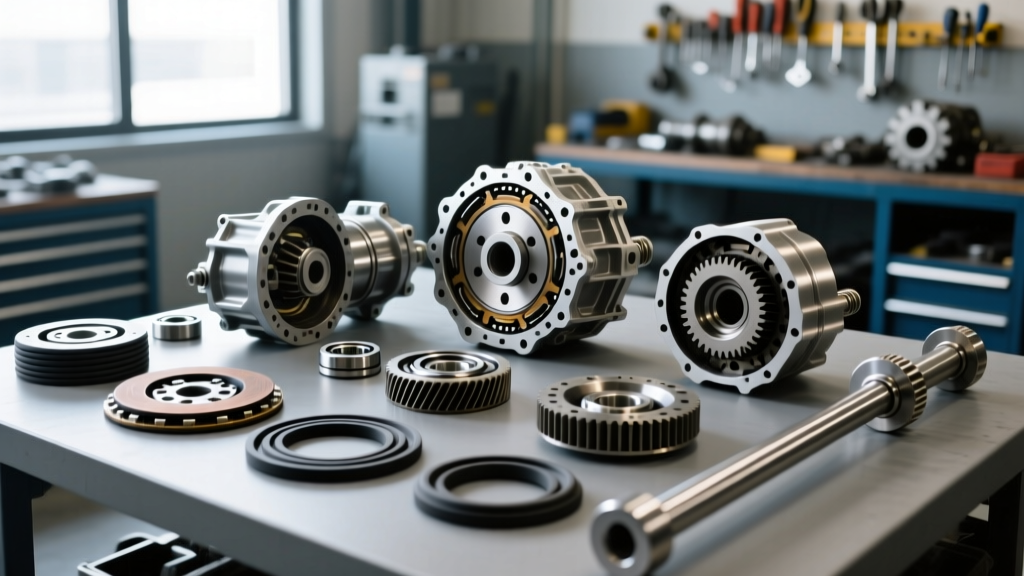
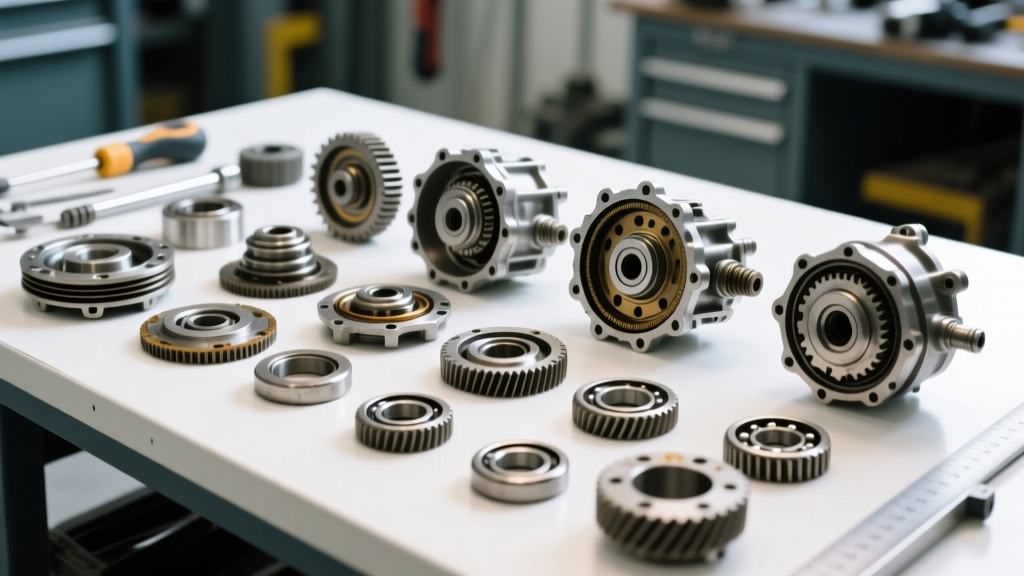
Therefore, what you are actually looking for is a 6L80E Master Overhaul Kit, which includes the internal piston seals, O-rings, lip seals, and friction/steel plates required to rebuild the internal hydraulic clutches.
Inside the 6L80E: The Internal Clutch Pack System
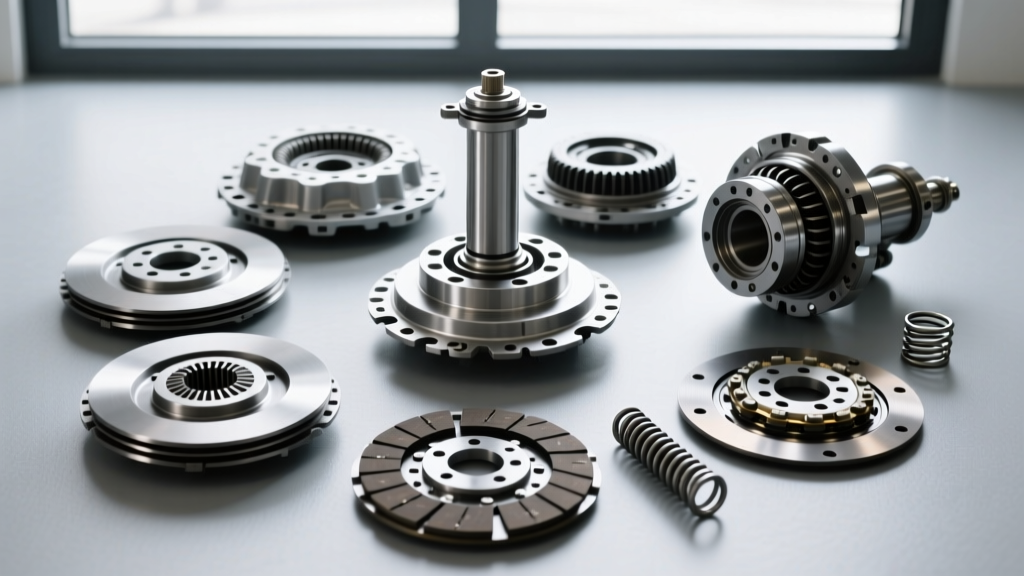
The 6L80E utilizes five distinct internal clutch packs to achieve its six forward speeds and one reverse gear. According to Sonnax Technical Resources, understanding these packs is critical for diagnosing shift flares and slip codes (like P0796 or P2714).
- 1-2-3-4 Clutch Pack: Applied in 1st, 2nd, 3rd, and 4th gears. This is the most common failure point in the 6L80E. The aluminum housing is prone to cracking and the piston seal rings can wear the housing bore, requiring a reinforced aftermarket drum or a Sonnax Zip Kit to correct.
- 3-5-R Clutch Pack: Applied in 3rd, 5th, and Reverse.
- 4-5-6 Clutch Pack: Applied in 4th, 5th, and 6th gears. This pack handles significant torque and requires precise clearance settings.
- 2-6 Clutch Pack: Applied only in 2nd and 6th gears.
- Low/Reverse Clutch Pack: Applied in 1st gear and Reverse.
Step-by-Step 6L80E Internal Clutch Rebuild (Beginner Overview)
Rebuilding the internal clutches of a 6L80E requires precision, cleanliness, and specific measurements. Here is the workflow you will follow when using a master rebuild kit.
1. Teardown and Drum Inspection
Once the transmission case is split and the TEHCM is removed, you will extract the clutch drum assemblies. The most critical step here is inspecting the 1-2-3-4 and 3-5-R clutch housings. If you see deep scoring where the piston seal rings ride, the drum must be replaced. Installing new seals into a scored aluminum drum will result in immediate hydraulic pressure loss and burnt clutches upon startup.
2. Piston Seal and O-Ring Replacement
This is the automatic transmission equivalent of rebuilding a slave cylinder. You must carefully pry out the old square-cut O-rings and lip seals from the internal pistons. Lubricate all new seals with Dexron VI transmission fluid before installation to prevent cutting or rolling the rubber during assembly. Never use petroleum jelly or assembly lube on these seals, as it can clog the TEHCM solenoids.
3. Friction and Steel Assembly
The Automatic Transmission Service Group (ATSG) strictly mandates that all new friction plates must be soaked in Dexron VI fluid for at least two hours prior to installation. Alternate the installation of friction plates and steel separator plates, ensuring the steels are perfectly flat and free of heat spots. If a steel plate shows any bluing or warping, it must be replaced to ensure proper clutch pack clamping force.
4. Clearance Verification
You cannot simply stack the clutches and snap the retaining ring into place. You must use a dial indicator to measure the clutch pack clearance. For the 6L80E, typical clearance specifications range between 0.040" and 0.070" depending on the specific clutch pack. If the clearance is too tight, the clutch will drag and overheat; if it is too wide, you will experience delayed, flaring shifts. Selective-thickness backing plates are available from suppliers like RockAuto to dial in this measurement perfectly.
Cost Breakdown: Internal Rebuild vs. External Slave Cylinder
To highlight the difference in scope and cost between a manual transmission's external hydraulic repair and a 6L80E's internal clutch rebuild, review the comparison table below.
| Repair Type | Components Replaced | Average Parts Cost (2026) | Labor / Skill Level |
|---|---|---|---|
| Manual Clutch Slave Cylinder Rebuild Kit | External cylinder, pushrod, seals, hydraulic line | $35 - $85 | Beginner (1-2 Hours) |
| 6L80E Master Overhaul Kit (Internal Clutches) | Piston seals, O-rings, frictions, steels, gaskets, TEHCM filters | $250 - $450 | Advanced (15-25 Hours) |
| 6L80E Reinforced 1-2-3-4 Drum (Common Upgrade) | Aftermarket billet or reinforced aluminum housing, new piston | $180 - $320 | Intermediate (During Rebuild) |
Critical 6L80E Torque Specifications
When reassembling the 6L80E, adhering to exact torque specifications is non-negotiable. The aluminum case and TEHCM components are highly sensitive to warping and cracking. Always use a calibrated inch-pound torque wrench for internal components.
| Component | Torque Specification |
|---|---|
| Oil Pump to Case Bolts | 11 Nm (97 lb-in) |
| Valve Body / TEHCM to Case Bolts | 11 Nm (97 lb-in) |
| Extension Housing to Case | 34 Nm (25 lb-ft) |
| Bellhousing to Engine Block | 50 Nm (37 lb-ft) |
| Transmission Oil Pan Bolts | 10 Nm (89 lb-in) |
Fluid, Filters, and 2026 Market Realities
Once your 6L80E internal clutch packs are rebuilt and the transmission is reinstalled, fluid selection is paramount. The 6L80E requires strictly Dexron VI ATF. Do not use older Dexron III or generic multi-vehicle fluids, as the friction modifiers in Dexron VI are specifically calibrated for the 6L80E's clutch pack materials and TEHCM solenoid operation.
Expert Tip: The 6L80E dry fill capacity is approximately 11.2 quarts (10.6 liters). However, if you are only dropping the pan and replacing the internal filter (AC Delco Part #24236933), you will only need about 6 to 7 quarts. Always measure exactly what drains out, and use the transmission dipstick or the side-fill plug method to verify the final level at operating temperature (180°F - 200°F).
As we navigate the 2026 automotive landscape, the 6L80E is aging out of late-model daily drivers, replaced by the 8L90 and 10-speed platforms. However, its massive presence in the used truck market, heavy-duty towing applications, and V8 swap communities means that knowing how to rebuild its internal hydraulic clutches is a highly valuable, money-saving skill. Forget the slave cylinder kits; invest in a quality master overhaul kit, a dial indicator, and a comprehensive service manual to bring your 6L80E back to factory-fresh shifting performance.