The Drivetrain Handoff: Transfer Case vs. Differential
For beginners stepping into the world of 4WD and AWD trucks, the underside of the vehicle can look like a maze of heavy iron and aluminum housings. Two of the most critical components in this system are the transfer case and the differentials. While they work in tandem to get your vehicle moving over slippery or uneven terrain, they serve entirely different mechanical purposes. Understanding the transfer case and differential relationship is the first step toward proper drivetrain maintenance. As we look at truck ownership in 2026, where advanced synthetic lubricants and tighter manufacturing tolerances are the norm, knowing how these components interact—and how to service them—is more important than ever.
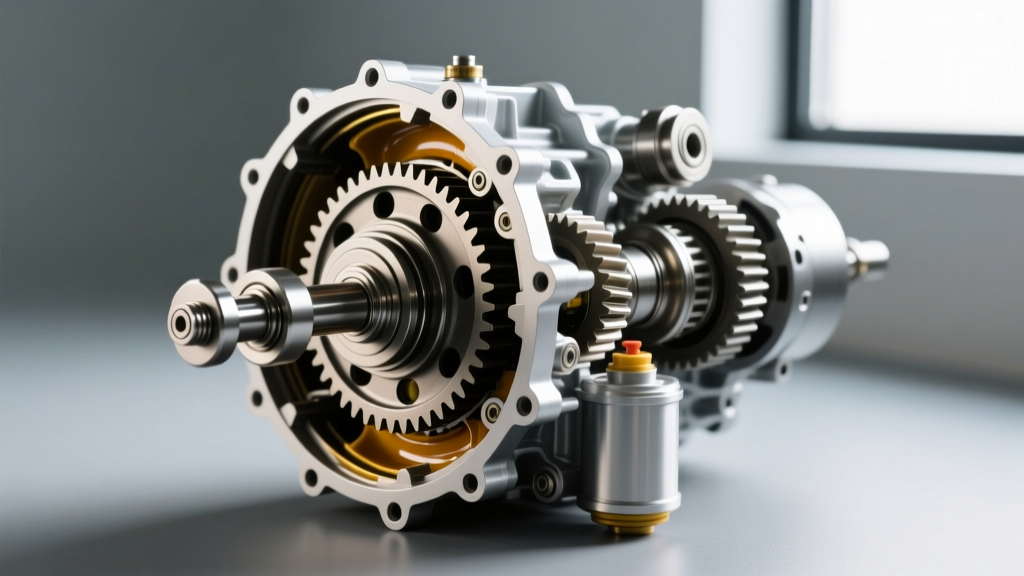
Think of the drivetrain as a delivery network. The transmission is the main highway, sending raw torque from the engine. The transfer case acts as the regional sorting facility, deciding whether to split that torque between the front and rear axles (in 4WD) or actively managing front-to-rear slip (in modern AWD). Finally, the differentials act as the local delivery routes, taking that torque and splitting it left and right between the wheels, while allowing them to rotate at different speeds during cornering.
How the Transfer Case and Differential Work Together
To grasp their relationship, let us look at a classic part-time 4WD system, such as the BorgWarner 4406 found in many Ford F-150s, or the GM NP261 found in Silverados. When you shift the transfer case into 4-High, an internal Morse chain engages the front output shaft. Torque is now traveling down both the front and rear driveshafts simultaneously.
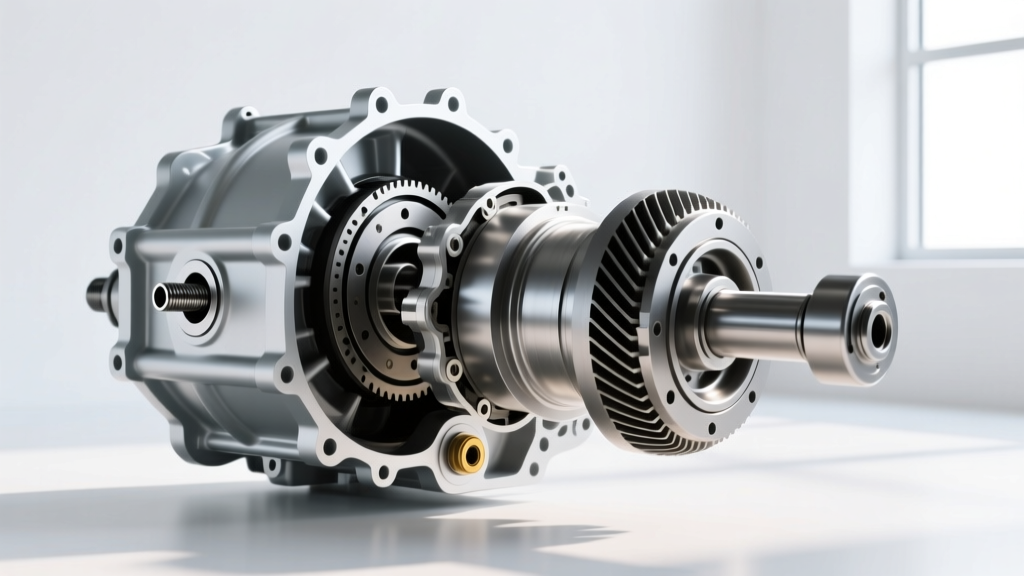
However, if the front and rear axles were locked solid, the vehicle would bind and hop on dry pavement because the front and rear tires travel different distances through a turn. This is where the differentials step in. The rear differential (often an open or limited-slip unit like the Ford 8.8-inch or GM 9.5-inch 14-bolt) uses a spider gear set to allow the left and right wheels to compensate for cornering. According to the Car and Driver 4WD vs AWD Guide, without the speed-differentiating action of the axle differentials, the transfer case would quickly destroy its internal chain or bind the driveline, leading to catastrophic failure.
The Maintenance Link: Why Fluid Service Matters
Because the transfer case and the differentials are subjected to immense shearing forces, thermal cycling, and moisture contamination, their fluids break down over time. A worn transfer case chain will shave metallic particulates into the fluid, which can clog the pickup tube for the internal lubrication pump. Similarly, the hypoid gears in the rear differential generate extreme sliding friction, requiring specialized extreme-pressure (EP) additives found in gear oils. Neglecting either component compromises the entire 4WD system.
Locating the Rear Differential Fill Plug: A Beginner's Guide
When it is time to perform a fluid service on the rear axle, identifying the exact rear differential fill plug location is your critical first step. Many beginners make the costly mistake of draining the differential first, only to discover the fill plug is seized, stripped, or hidden behind a corroded bracket, leaving the vehicle stranded on jack stands.
The Golden Rule of Drivetrain Service: Always remove the fill plug before you remove the drain plug or drop the differential cover.
Common Axle Configurations and Plug Locations
The rear differential fill plug location varies depending on the axle manufacturer and the specific housing design. Here is a breakdown of the most common 4WD truck axles:
- Ford 8.8-Inch and 9.75-Inch (Super Duty): These axles typically do not have a traditional threaded fill plug on the side. Instead, the 'fill plug' is actually the large 3/8-inch square drive bolt located dead center on the differential cover. You must remove this cover bolt to fill the axle until fluid weeps out of the hole.
- GM 9.5-Inch 14-Bolt (Semi-Floating): Common on 1500/2500 series trucks, this axle features a distinct threaded fill plug on the passenger-side axle tube, usually positioned about three to four inches above the drain plug. It requires a 3/8-inch square drive ratchet to remove.
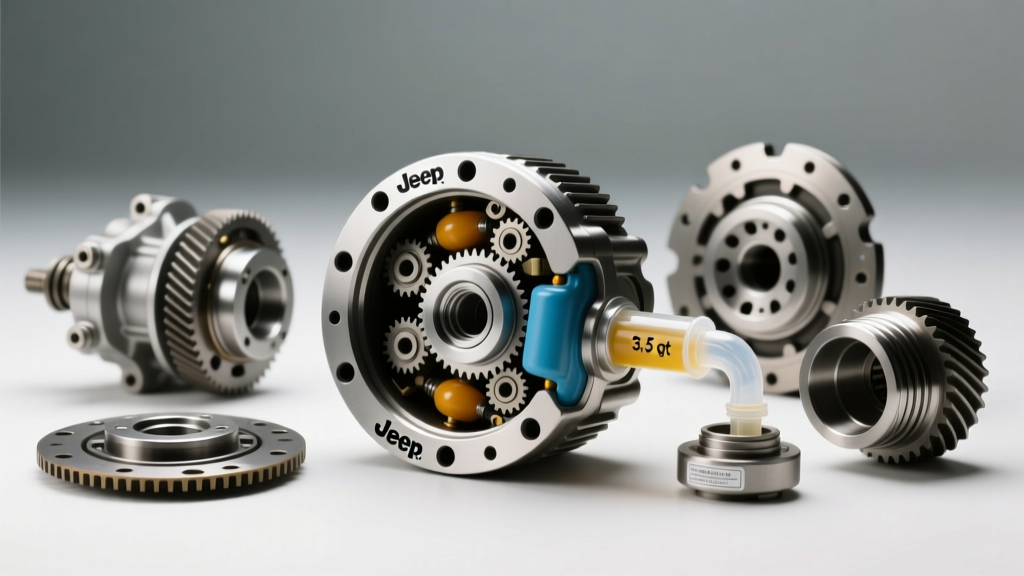
- Dana 44 / Dana 60 (Jeep & Ram): Many Dana axles use a rubber or silicone expansion plug located on the upper face of the differential housing or the front-facing side of the center section. You simply pry this out with a flathead screwdriver or pick tool. Some newer Dana axles, however, use a standard threaded 13mm or 15mm hex plug on the side of the housing.
For a deeper dive into specific axle identification and plug configurations, the Ring-Pinion Differential Tech Library offers excellent visual guides for spotting these access points on aftermarket and OEM housings.
Fluid Specifications and Capacity Chart
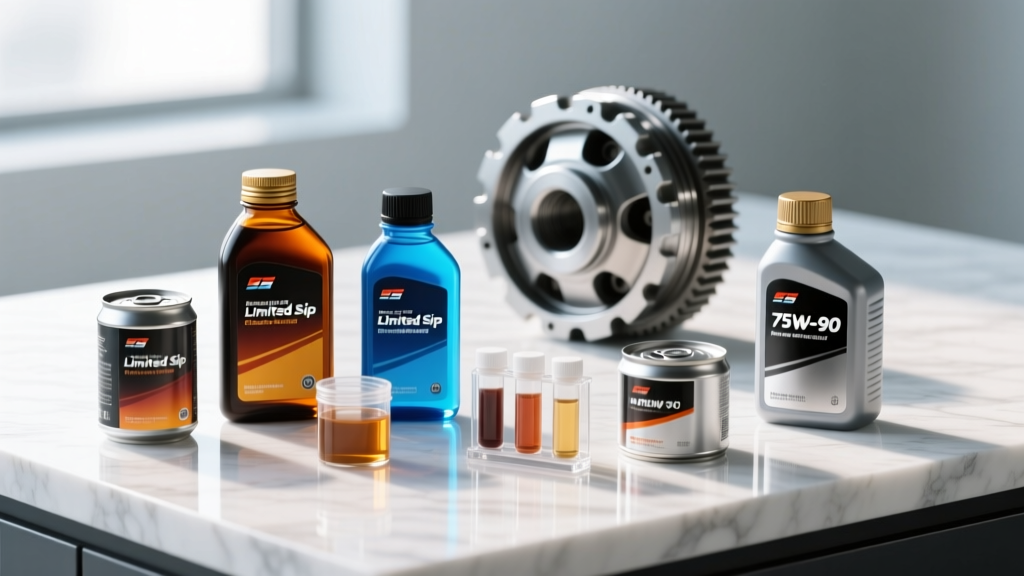
Using the correct fluid is paramount. Transfer cases generally require low-viscosity, anti-foaming automatic transmission or specialized transfer case fluids, while differentials require high-viscosity, extreme-pressure gear oils. Below is a comparative guide for common 2026-era 4WD trucks:
| Component | Typical Fluid Spec | Avg. Capacity | Avg. Cost (2026) | Service Interval |
|---|---|---|---|---|
| Transfer Case (e.g., GM NP261) | ACDelco AutoTrak II | 2.0 Quarts | $22 - $28 / qt | 50,000 Miles |
| Transfer Case (e.g., Ford BW4406) | Motorcraft XL-12 | 2.0 Quarts | $18 - $24 / qt | 60,000 Miles |
| Rear Diff (Ford 8.8) | 75W-140 Synthetic Gear Oil | 2.5 - 3.0 Quarts | $16 - $22 / qt | 50,000 Miles |
| Rear Diff (GM 9.5' 14-Bolt) | 75W-90 Synthetic Gear Oil | 2.75 Quarts | $15 - $20 / qt | 50,000 Miles |
Note: If your rear differential is equipped with a Limited Slip Differential (LSD), such as Ford's Traction-Lok or GM's G80, you must add a friction modifier additive (usually 4 oz) to prevent clutch-pack chatter during tight turns, unless your chosen synthetic gear oil already includes it.
Step-by-Step Rear Differential Service
Now that you understand the relationship between the drivetrain components and have located the rear differential fill plug location, follow this beginner-friendly service procedure:
- Prep and Safety: Park the truck on a level surface. Engage the parking brake and chock the front wheels. Jack up the rear axle and support it securely on jack stands placed under the axle tubes (never under the center pumpkin).
- Remove the Fill Plug First: Using the appropriate 3/8-inch square drive, 15mm socket, or pick tool (depending on your axle), remove the fill plug. If it is seized, apply penetrating oil like PB Blaster and let it sit for 15 minutes. Do not proceed until the fill plug is out.
- Drain the Old Fluid: Place a drain pan capable of holding at least 4 quarts beneath the axle. Remove the lower drain plug (if equipped) or remove the 10 or 12 differential cover bolts, leaving the top two bolts slightly loose. Pry the bottom of the cover gently with a flathead screwdriver to let the fluid drain into the pan.
- Clean and Inspect: Wipe out the inside of the differential housing with lint-free shop towels. Inspect the magnetic drain plug or the magnet inside the differential cover. A fine, gray metallic paste is normal wear. Large metal chunks or shiny needle bearings indicate severe internal failure requiring a rebuild.
- Reseal and Refill: If you dropped the cover, clean the mating surfaces with brake cleaner and apply a 1/4-inch bead of RTV silicone gasket maker (like Permatex Black or Gray). Reinstall the cover and torque the bolts in a crisscross pattern to 35-45 lb-ft (check your specific service manual). Allow the RTV to cure for the time specified on the tube (usually 1-2 hours) before refilling.
- Fill to the Brim: Using a fluid transfer pump, pump the new 75W-90 or 75W-140 gear oil into the fill hole. The differential is full when the fluid reaches the exact bottom lip of the fill plug hole and begins to weep out. This typically takes 2.5 to 3 quarts.
- Final Torque: Reinstall the fill plug. For GM 9.5-inch axles, torque the fill plug to 18 lb-ft (24 Nm). For Ford axles with a threaded cover plug, torque to 24 lb-ft (33 Nm). Wipe away any excess spilled gear oil, as its sulfur smell is notoriously difficult to remove from concrete or skin.
Final Thoughts for Drivetrain Longevity
The transfer case and the differentials are a matched set; one cannot function properly without the other. By understanding how the transfer case distributes torque and how the differentials manage wheel speed, you gain a profound appreciation for the engineering beneath your truck. More importantly, by mastering the basics of maintenance—starting with the simple but vital habit of verifying your rear differential fill plug location before draining the system—you ensure that your 4WD vehicle remains reliable, quiet, and capable for hundreds of thousands of miles. Whether you are driving a daily-commuter Silverado or a trail-built Wrangler, fresh fluid and proper torque specs are the cheapest insurance policies you can buy for your drivetrain.