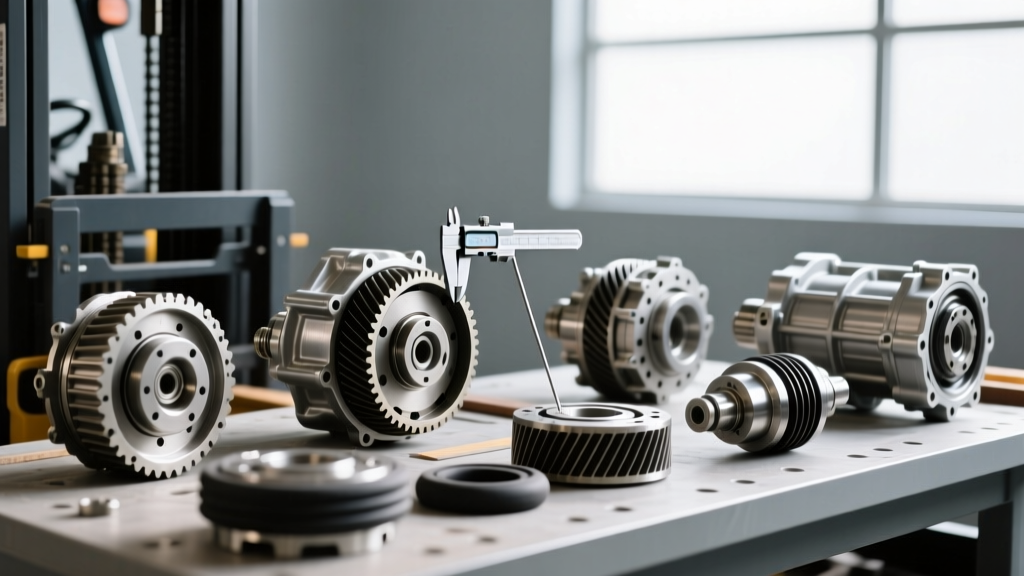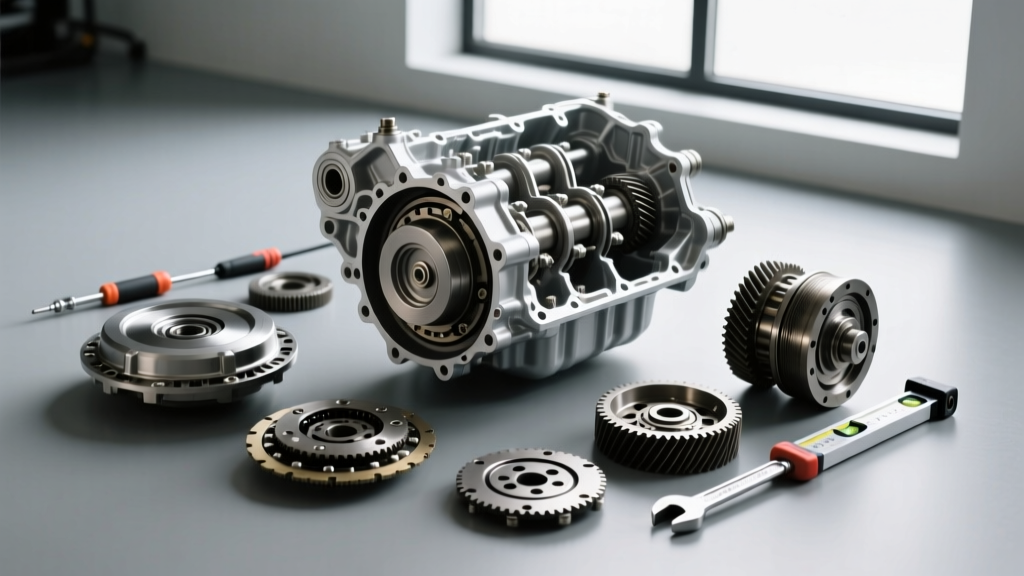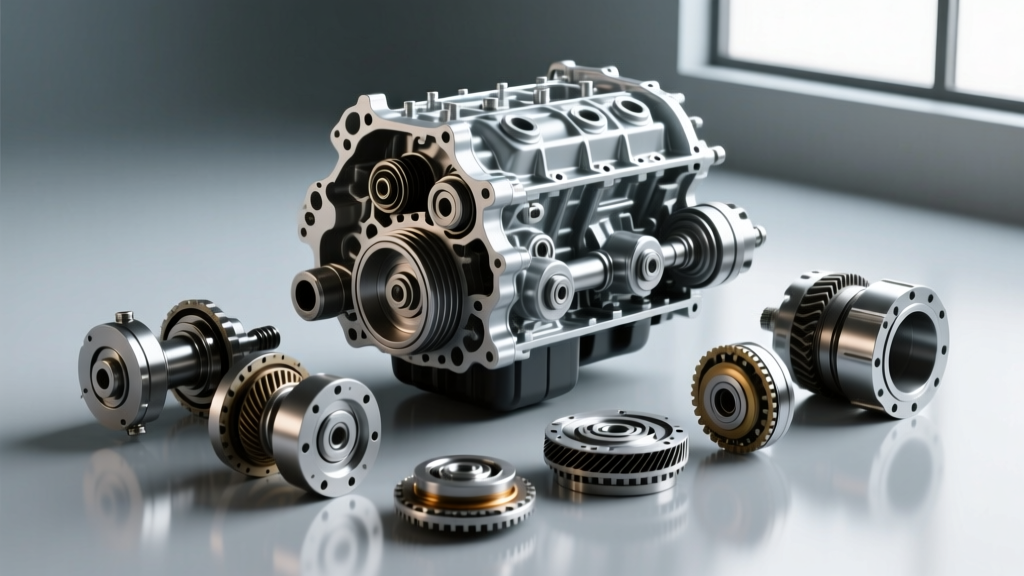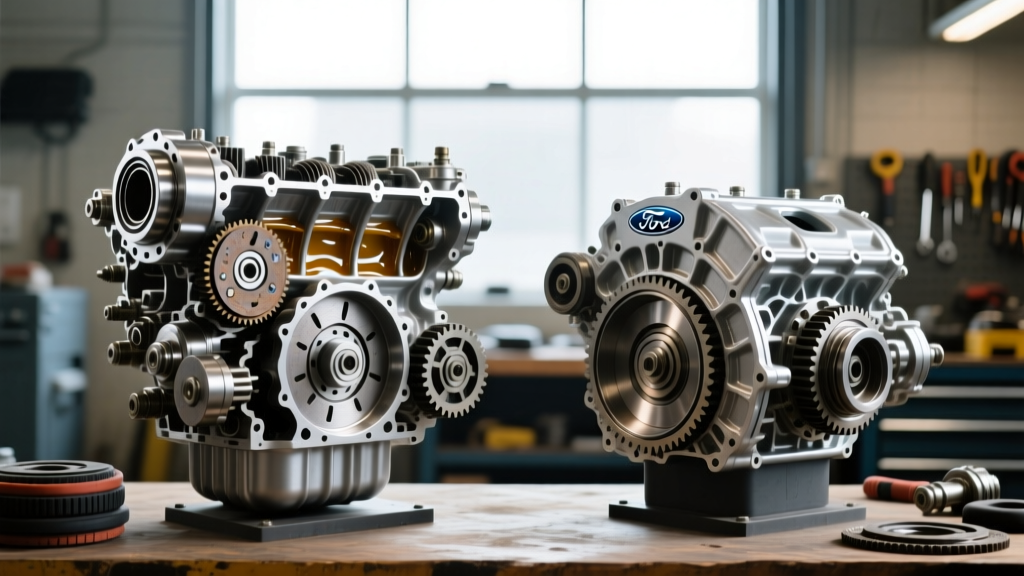
The Hot Rodder's Dilemma: Modern Overdrive vs. Classic 3-Speed
When building a high-horsepower classic truck or Pro-Touring muscle car in 2026, the drivetrain is just as critical as the engine. For decades, the heavy-duty automatic transmission debate has circled around two legendary General Motors and Ford units. On one side, enthusiasts weigh the merits of a traditional Ford C6 transmission rebuild for their Blue Oval projects. On the other, GM loyalists and swap-happy fabricators look to the GM 4L80E—a TH400 with an overdrive gear and electronic controls. While the C6 is a masterpiece of 1960s hydraulic engineering, the lack of an overdrive gear makes highway cruising at 75 MPH a deafening, fuel-burning nightmare. This comprehensive 4L80E performance rebuild guide breaks down the costs, upgrade paths, and technical specifications required to build a 1,000+ horsepower 4L80E, while comparing it directly to the economics of a Ford C6 transmission rebuild.
Cost Breakdown: 4L80E Performance Build vs. Ford C6 Transmission Rebuild
Understanding the financial commitment is step one. A standard Ford C6 transmission rebuild is relatively inexpensive because the unit is entirely hydraulic, requiring no solenoids, sensors, or complex wiring harnesses. However, the 4L80E requires electronic integration and substantially more friction material. Below is a realistic 2026 cost comparison for a DIY performance rebuild of both units, capable of handling 600–800 rear-wheel horsepower.
| Component / Service | GM 4L80E Performance Rebuild | Ford C6 Performance Rebuild |
|---|---|---|
| Master Rebuild Kit (Frictions, Steels, Seals) | $350 - $450 (Alto PowerPack) | $180 - $250 (Raybestos) |
| Billet Input / Intermediate Shafts | $450 - $600 (Sonnax) | $250 - $350 (Billet Steel) |
| Valve Body Shift Kit | $120 (TransGo 4L80E-HD2) | $90 (TransGo C6-HD) |
| Deep Cast Aluminum Pan & Filter | $180 | $120 |
| High-Capacity Pump Assembly | $350 (Sonnax PR Valve upgrade) | $150 (Stock rebuild) |
| TCM / Controller (Required for Swaps) | $450 - $900 (PCS / Holley) | $0 (Hydraulic) |
| Fluid (Dexron VI vs Type F) | $130 (13 Quarts) | $90 (11 Quarts) |
| Estimated Total DIY Cost | $2,030 - $2,730 | $840 - $1,160 |
As the data illustrates, the initial parts cost for a 4L80E is nearly double that of a Ford C6 transmission rebuild. However, the fuel savings from the 0.75:1 overdrive ratio and the reduction in driveline wear on the highway easily justify the premium for any street-driven vehicle.
4L80E Performance Rebuild: Step-by-Step Upgrade Path
Building a 4L80E to survive modern twin-turbo or supercharged V8 power requires addressing the inherent weak points of the factory TH400-based design. Here is the exact blueprint for a performance 4L80E rebuild.
1. Hard Parts and Shaft Upgrades
The factory 4L80E input shaft is notorious for twisting and snapping under aggressive torque converter stall and high line pressure. For any build exceeding 600 lb-ft of torque, upgrading to a Sonnax billet input shaft (Part No. 34997-01K) is non-negotiable. Additionally, the intermediate sprague must be upgraded to a 34-element heavy-duty unit to prevent catastrophic overrunning clutch failure during the 1-2 shift. The center support must also be inspected; if the lugs show wear, replace it with a reinforced billet center support to prevent case-busting blowouts.
2. Clutch Packs and Friction Materials
Stock 4L80E friction clutches will glaze and burn under high-horsepower street/strip use. We recommend utilizing Alto G-Ray or PowerPack friction plates. The direct clutch pack is the most critical for holding 3rd and 4th gear. By utilizing the Alto PowerPack, you can increase the direct clutch capacity from the stock 5 frictions to 6 or even 7 frictions, drastically increasing the torque holding capacity. Ensure you soak all friction materials in your chosen assembly fluid for at least two hours prior to installation to prevent dry-start scarring.
3. Valve Body and Line Pressure Control
Electronic line pressure control is a blessing and a curse. The factory ECU commands line pressure based on TPS and RPM, but in a swap scenario, you need maximum clamping force. Installing a TransGo 4L80E-HD2 shift kit corrects the accumulator circuit, prevents cross-leaks, and allows you to mechanically raise the base line pressure. Pair this with a Sonnax Sure-Cure pressure regulator valve kit to prevent the notorious 'code 18' line pressure fluctuations that plague high-mileage units.
Critical Assembly Torque Specs & Clearances
Precision is what separates a transmission that survives 100,000 miles from one that fails on the maiden voyage. When assembling your 4L80E, adhere strictly to these OEM and performance clearances:
- Oil Pump to Case Bolts: 18 lb-ft (Use Loctite 242 on all pump bolts to prevent backing out).
- Valve Body to Case Bolts: 90 in-lb (Do NOT over-torque, or you will distort the valve body casting and cause valve bind).
- Bellhousing to Block Bolts: 35 lb-ft.
- Direct Clutch Pack Clearance: 0.040' - 0.060' (Crucial for preventing 3-4 shift flares and burning the frictions).
- Forward Clutch Pack Clearance: 0.030' - 0.050'.
- Intermediate Clutch Pack Clearance: 0.050' - 0.070'.
- Endplay Specification: 0.010' - 0.025' (Measured at the output shaft; use selective thrust washers to dial this in perfectly).
Wiring the 4L80E: The Hidden Cost of Swaps
If you are dropping a 4L80E into a classic car that originally housed a TH400 or a manual transmission, the electronics are your biggest hurdle. Unlike a Ford C6 transmission rebuild, which requires nothing more than a kick-down linkage and a vacuum modulator line, the 4L80E demands a 12-pin electrical connector, a Throttle Position Sensor (TPS) signal, and a Vehicle Speed Sensor (VSS) input. Without a TPS signal, the transmission will default to limp mode (starting in 3rd gear with maximum line pressure). For carbureted or standalone EFI swaps, aftermarket controllers like the Holley Terminator X TCM or the PCS Simple Shift controller are mandatory. Budget at least $500 to $900 for the controller, plus an additional $100 for a high-quality, shielded engine bay wiring harness to prevent electromagnetic interference (EMI) from aftermarket ignition systems like MSD or Holley Sniper setups.
Final Verdict: Which Path Should You Take?
Choosing between a GM 4L80E build and a Ford C6 transmission rebuild ultimately comes down to your vehicle's intended use. If you are building a dedicated drag car, a mud-bogger, or a weekend trailer queen where highway fuel economy and cruising RPMs are irrelevant, the C6 remains an unbeatable, cost-effective powerhouse. Its hydraulic simplicity means fewer failure points in extreme environments.
However, if you are building a Pro-Touring muscle car, a restomod classic truck, or a street rod that needs to cruise comfortably at 80 MPH while still handling 800 horsepower at the track, the 4L80E is the undisputed king. By investing in billet shafts, upgraded clutch packs, and a standalone TCM, your 4L80E will deliver the brute strength of a TH400 with the modern efficiency of an overdrive automatic. For more in-depth assembly techniques and parts sourcing, builders frequently consult Summit Racing Equipment for verified fitment and expert tech-line support.