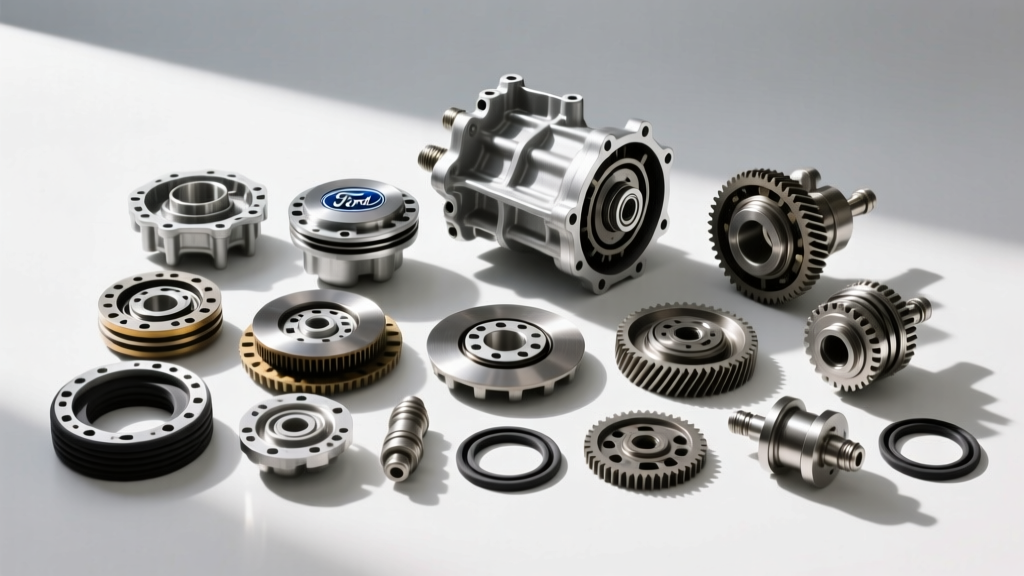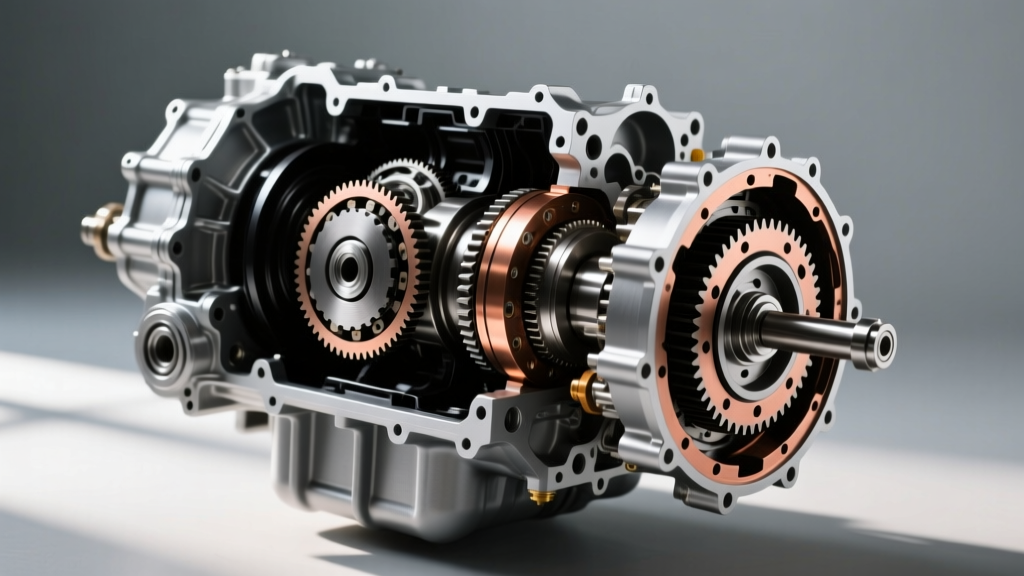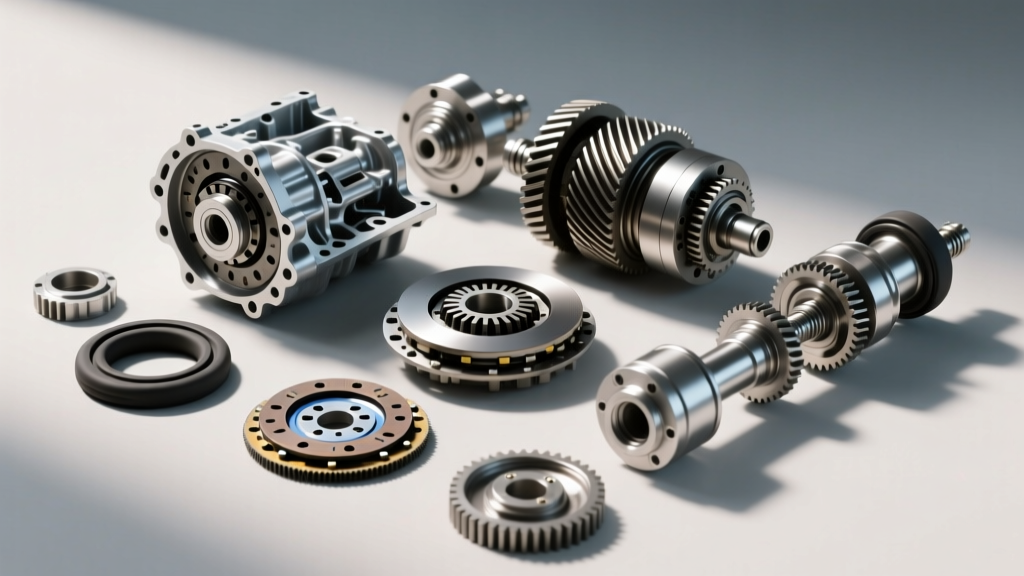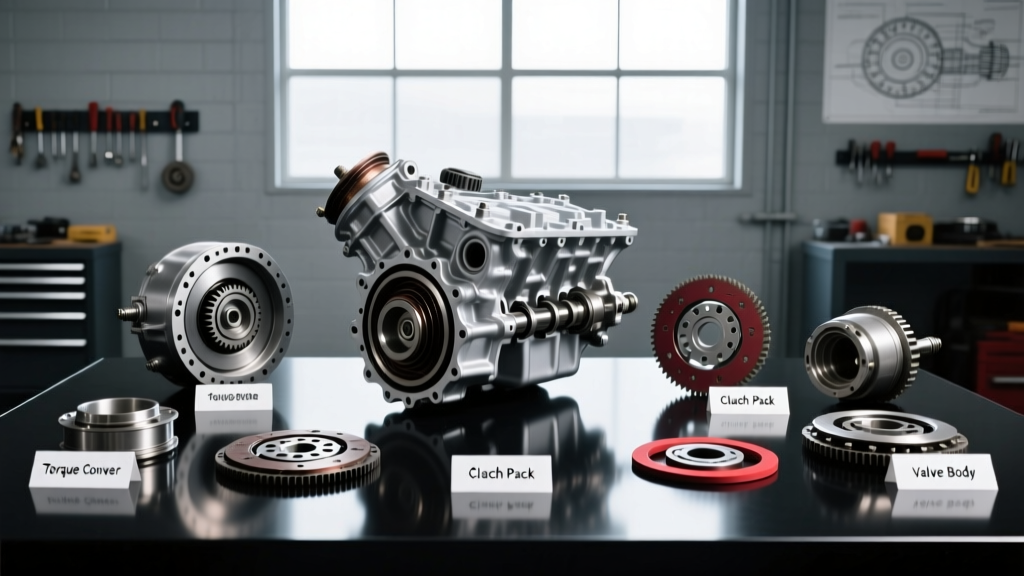
The 4L80E: Heavy-Duty Heritage Meets Modern Performance
The GM 4L80E is widely regarded as the modern, electronically controlled evolution of the legendary TH400 three-speed automatic. Originally designed for heavy-duty towing and commercial applications, its massive gearset and robust case have made it a favorite in the performance community. Whether you are building a 1,200-horsepower drag car, a high-torque diesel puller, or a street/strip weekend warrior, the 4L80E can handle immense abuse—provided it is built with the correct aftermarket upgrades. In this comprehensive guide, we break down the mechanical bottlenecks, performance upgrade pathways, and precise assembly specifications required to make the 4L80E virtually indestructible.
Stock Vulnerabilities: Where the 4L80E Fails Under Boost
While the 4L80E case and planetary gears are incredibly stout, the factory internals were only designed to handle roughly 450 to 500 horsepower and 450 lb-ft of torque. When pushing beyond these limits, specific components become catastrophic failure points.
The Forward Hub and Input Shaft Bottleneck
The most notorious weak link in the stock 4L80E is the forward hub and the input shaft. Under high torque loads (especially during trans-brake releases or aggressive 1-2 shifts), the splines on the factory input shaft will twist or shear entirely. Simultaneously, the cast forward hub is prone to fracturing at the spline root. Once the forward hub fails, it typically takes the direct clutch drum and the forward clutch pack out with it, resulting in a total loss of forward motion and severe internal case damage from flying shrapnel.
The Direct Clutch Drum and Overrun Clutch
The direct clutch drum is responsible for applying the direct clutches in 3rd and 4th gear. In high-horsepower applications, the factory stamped steel drum can distort under heavy line pressure, leading to burnt clutches and slipped shifts. Furthermore, the overrun clutch assembly is largely unnecessary in performance applications and is often removed or modified to reduce parasitic drag and improve cooling flow.
Performance Upgrade Pathways: Stage 1 Through Stage 3
Building a performance 4L80E requires a systematic approach to component selection based on your target horsepower. Below is a structured breakdown of the three primary build stages.
| Build Stage | Target HP / TQ | Critical Upgrades & Part Selections | Est. Parts Cost |
|---|---|---|---|
| Stage 1 (Street/Strip) | Up to 650 HP / 600 TQ | TransGo SK-4L80E-HD2 Shift Kit, Raybestos GPZ Frictions, Billet Servo Piston, Upgraded 3-4 Relay Lever. | $1,100 - $1,600 |
| Stage 2 (Serious Duty) | Up to 1,000 HP / 900 TQ | Sonnax Smart Tech Forward Hub, 4340 Billet Input Shaft, Kolene Steels, Deep Cast Aluminum Pan, High-Volume Pump. | $2,200 - $3,200 |
| Stage 3 (Race/Diesel) | 1,500+ HP / 1,500+ TQ | Reid Racing Billet Case, Billet Output Shaft, Full Manual Valve Body, Triple-Disc Billet Torque Converter, Trans-Brake. | $4,500 - $7,000+ |
For Stage 2 and Stage 3 builds, sourcing high-quality metallurgy is non-negotiable. Components like the Sonnax Smart Tech Forward Hub utilize reinforced spline geometries and superior steel alloys to eliminate the fracturing seen in OEM parts. Pairing this with a 4340 chromoly billet input shaft ensures the connection between the torque converter and the forward hub remains solid even under the shock load of a 3,000 RPM trans-brake release.
Navigating Transmission Rebuild and Replacement: Cheektowaga Market Insights
For enthusiasts and diesel owners in Western New York, sourcing the right talent for a high-horsepower build can be challenging. When evaluating options for a specialized transmission rebuild and replacement in Cheektowaga and the surrounding Buffalo metro area, it is vital to look beyond standard OEM repair shops. A true performance transmission facility should possess specialized equipment, including Sonnax vacuum test stations for valve body verification, Hennessey or PerformaBuilt dealer partnerships, and in-house dynamometer or stall-speed testing capabilities.
If you are opting for a professional bench build rather than a DIY approach in your garage, expect to pay a premium for performance machining. Local performance shops typically charge between $1,200 and $2,000 in labor for a complete teardown, hot-tank cleaning, precision measurement, and assembly of a Stage 2 4L80E. Always verify that the shop is familiar with setting proper endplay and clutch pack clearances on heavy-duty GM 4-speed overdrives, as these tolerances differ vastly from standard passenger car transmissions like the 4L60E or 6L80.
Precision Assembly: Clearances and Torque Specifications
The difference between a 4L80E that survives 50,000 miles and one that grenades on its first pass comes down to assembly precision. The 4L80E requires strict adherence to clearance specifications and torque values.
Clutch Pack Clearances and Endplay
- Forward Clutch Pack: 0.040" - 0.060" total clearance. (Use selective snap rings to achieve this).
- Direct Clutch Pack: 0.050" - 0.070" total clearance.
- Intermediate Clutch Pack: 0.045" - 0.065" total clearance.
- Total Unit Endplay: 0.010" - 0.025". (Measured at the output shaft using a dial indicator; adjusted via selective thrust washers or shims behind the rear ring gear).
Critical Torque Specifications
Over-torquing valve body bolts can warp the aluminum casting, leading to cross-leaks and burnt clutches. Always use a calibrated inch-pound torque wrench for internal components.
- Valve Body to Case Bolts: 7 - 9 lb-ft (84 - 108 in-lb)
- Transmission Pan Bolts: 97 - 115 in-lb
- Torque Converter to Flexplate: 35 - 45 lb-ft
- Bellhousing to Engine Block: 35 - 50 lb-ft
- Output Shaft Flange Nut: 190 - 210 lb-ft (Requires staking or heavy-duty threadlocker)
TCM Integration and Cooling Requirements
The 4L80E relies on a Transmission Control Module (TCM) to operate the PWM (Pulse Width Modulation) line pressure solenoid and shift solenoids. For performance applications, the factory TCM tuning is far too soft and slow. You must utilize a standalone controller (such as the Holley Terminator X or MSD 7500) or custom tuning via HP Tuners to command aggressive line pressure curves and instantaneous shift times. A TransGo shift kit is also mandatory to physically modify the valve body separator plate and accumulator circuits, ensuring that the hydraulic hardware matches the electronic commands.
Finally, heat is the ultimate enemy of any automatic transmission. A performance 4L80E requires a minimum of a 30,000 GVW-rated external cooler, such as the Tru-Cool LPD4739, mounted in direct airflow. Fluid selection is equally critical; abandon standard Dexron III and opt for a high-shear synthetic like Red Line D6 or Amsoil Signature Series Multi-Vehicle ATF, filling the system to its dry capacity of roughly 13.5 quarts (including the torque converter).
Cost Breakdown: DIY vs. Professional Bench Builds
Understanding the financial commitment is essential before tearing down your 4L80E. Here is a realistic cost breakdown for a Stage 2 Performance Build (Targeting 800-1,000 HP) in the current market:
- Core Rebuild Kit (Frictions, Steels, Seals, Bushings): $350 - $500
- Billet Input Shaft & Smart Tech Forward Hub: $600 - $850
- TransGo Shift Kit & Billet Servo: $150 - $220
- High-Volume Pump Assembly & Deep Pan: $300 - $450
- Performance Torque Converter (Stall-Matched): $800 - $1,400
- Professional Assembly Labor (If not DIY): $1,200 - $1,800
Total Estimated Investment: $2,200 (DIY Parts Only) to $5,220 (Fully Assembled Pro Build with Converter). While the initial cost is higher than a standard 4L60E rebuild, the 4L80E's ability to handle immense torque without requiring constant maintenance makes it the most cost-effective power-adder for high-horsepower GM platforms over the long term.