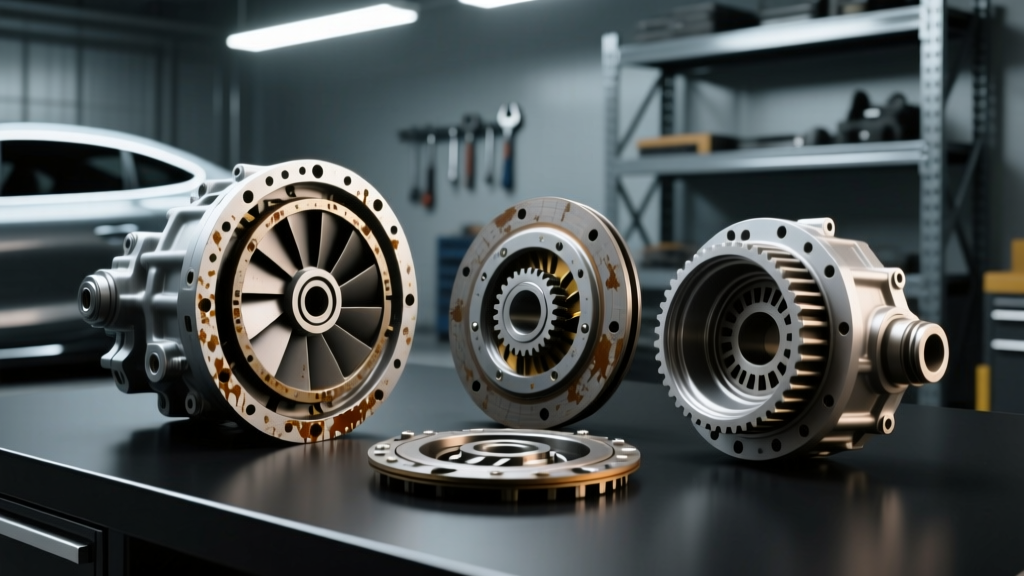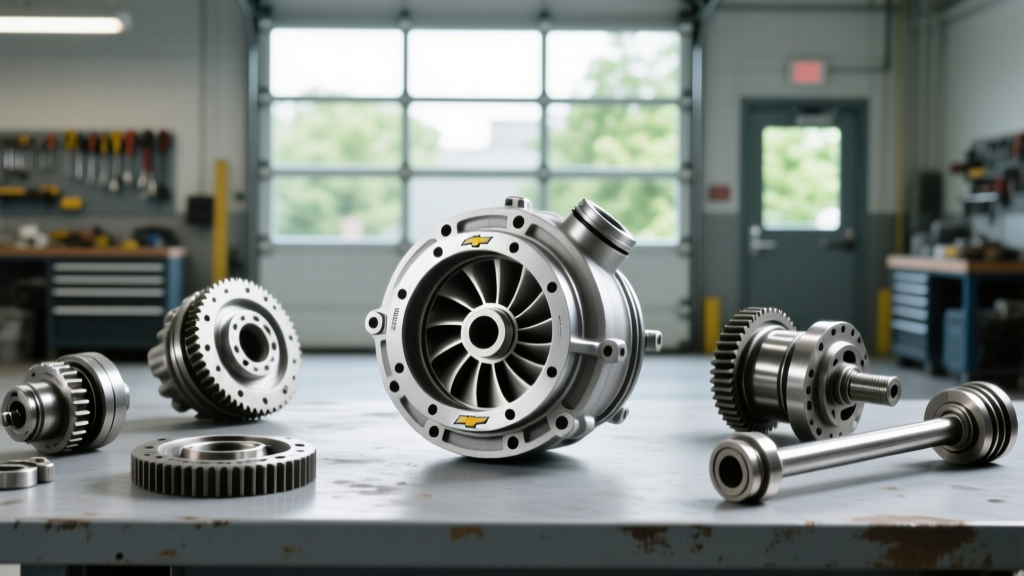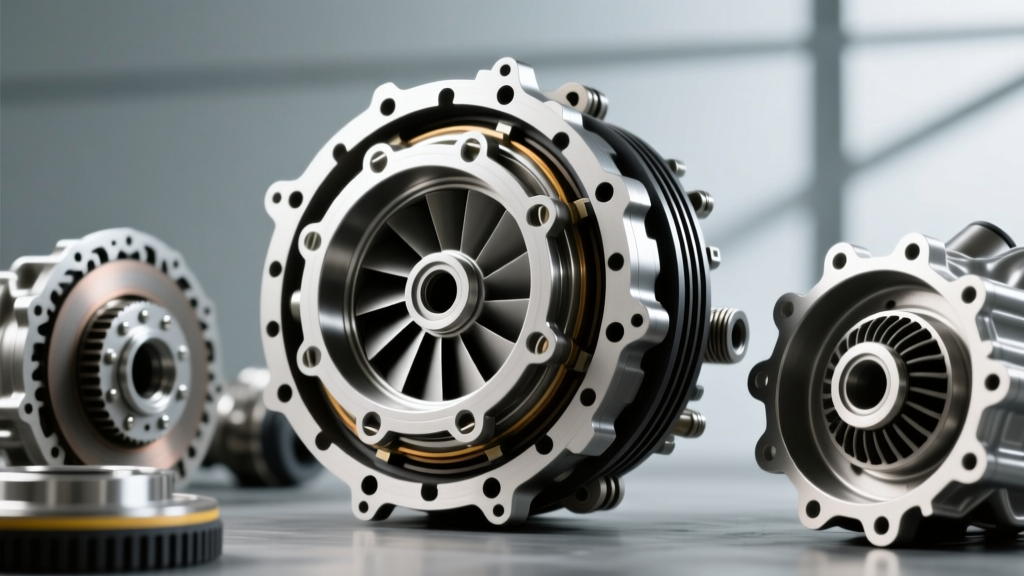
Why the 4L60E Torque Converter Fails: Symptom Diagnostics
The GM 4L60E (RPO M30) is one of the most prolific automatic transmissions ever produced, finding its way into millions of Chevrolet, GMC, and Cadillac rear-wheel-drive vehicles. However, as these platforms age, the torque converter becomes a primary failure point. If you are experiencing a rhythmic shudder that feels like driving over highway rumble strips between 35 and 50 mph, you are likely witnessing the early stages of Torque Converter Clutch (TCC) failure. In 2026, diagnosing the root cause before replacing the unit is critical; simply swapping the hardware without addressing the underlying hydraulic issue will result in a repeat failure within 5,000 miles.
Identifying TCC Shudder vs. Internal Clutch Failure
Before pulling the transmission, a proper diagnostic scan is mandatory. The most common OBD-II codes associated with a failing torque converter for a 4L60E transmission include:
- P0741 (TCC System Stuck Off or Performance): Indicates the PCM has detected excessive slip between the engine RPM and the transmission input shaft when the TCC is commanded to lock.
- P0742 (TCC System Stuck On): The clutch is mechanically binding, often causing the engine to stall when coming to a stop.
- P1870 (Transmission Component Slipping): This is the notorious 4L60E death knell. While it points to the torque converter, the root cause is almost always hydraulic.
Master Technician Insight: According to industry data published by Transmission Digest, a P1870 code on a high-mileage 4L60E is rarely just a bad converter. The aluminum valve body suffers from severe wear in the TCC apply valve bore. This wear allows vital hydraulic pressure to bleed off, preventing the TCC from fully applying. The resulting micro-slip glazes the converter's friction material, causing shudder. Replacing the converter without installing a Sonnax TCC regulator valve repair kit is a guaranteed comeback job.
2026 Cost Breakdown: Torque Converter for a 4L60E Transmission
The cost to replace a torque converter for a 4L60E transmission varies wildly depending on your repair channel, vehicle application (e.g., a 1998 Silverado vs. a 2006 Trailblazer), and regional labor rates. Because the transmission must be completely removed from the vehicle to access the converter, labor dominates the final invoice. Below is the 2026 national average cost matrix for a standard RWD 4L60E application.
| Repair Facility | Parts Cost (OEM/Reman) | Labor Rate & Hours | Estimated Total (2026) |
|---|---|---|---|
| Dealership | $350 - $550 | 7.2 hrs @ $145-$185/hr | $1,390 - $1,880 |
| Independent Trans Shop | $220 - $380 | 7.2 hrs @ $110-$140/hr | $1,010 - $1,380 |
| General Mechanic | $180 - $250 | 8.5 hrs @ $95-$120/hr | $980 - $1,270 |
| DIY (Home Garage) | $180 - $350 | 0 hrs (Your Time) | $180 - $400 (w/ Fluid) |
Note: Labor times assume a standard RWD truck/SUV configuration. AWD applications or vehicles with complex crossmember and exhaust routing (like the C5 Corvette or certain S10 Blazer configurations) will incur an additional 1.5 to 2.0 hours of labor.
OEM vs. Aftermarket: Selecting the Right 4L60E Torque Converter
When sourcing a torque converter for a 4L60E transmission, you must match the stall speed to your engine's torque curve. The stock 4L60E typically utilizes a converter with a stall speed ranging from 1,600 to 1,800 RPM for V6 applications, and 1,800 to 2,000 RPM for V8 (LS/LT) applications.
Recommended Part Numbers & Brands
- ACDelco Professional Remanufactured (Part #24254681 / 24234632): The gold standard for daily drivers and towing rigs. ACDelco units feature updated furnace-brazed fins and heavy-duty TCC friction linings designed to handle Dexron VI fluid chemistry. Expect to pay around $240-$290.
- Powertrain Industries (PTI) / Roadmaster: A budget-friendly remanufactured option often stocked by local auto parts stores. Priced around $160-$190, these are acceptable for low-horsepower V6 applications but not recommended for modified V8s.
- Circle D Specialties / Yank Performance: If your 4L60E is backed by a modified LS engine producing over 400 lb-ft of torque, you need a billet-front, multi-clutch TCC converter. These custom units cost between $650 and $1,100 but eliminate flexplate warping and TCC slip under heavy throttle.
Step-by-Step R&R: Critical Torque Specs and Seating Depth
Replacing the torque converter is a heavy-duty mechanical task. Once the transmission is on the bench, the old converter must be drained (expect 3 to 4 quarts of fluid). Before installing the new unit, you must flush the transmission cooler lines in the radiator using compressed air and a solvent flush to remove metallic debris and degraded friction material.
The 'Three-Notch' Seating Rule
The most common mistake made during a 4L60E torque converter installation is failing to fully seat the converter onto the transmission input shaft, stator support, and front pump gear. The converter must engage three distinct notches as it slides home. If the converter is not fully seated, it will protrude past the bellhousing mating surface. When you tighten the bellhousing to the engine block, the converter will be forced backward, instantly shattering the fragile front pump housing and destroying the new transmission.
Measurement Spec: Use a straight edge across the bellhousing face. The torque converter mounting pads must sit between 3/8-inch and 1/2-inch (9.5mm - 12.7mm) below the bellhousing mating surface. If it is flush or protruding, pull it out and reseat it.
Bellhousing and Flexplate Torque Specifications
Proper fastener torque is vital to prevent harmonic vibrations that mimic TCC shudder. Refer to ACDelco's GM service documentation for your specific engine RPO, but standard 4L60E mating specs are:
- Bellhousing to Engine Block (M10x1.5 bolts): 35 lb-ft (47 Nm)
- Torque Converter to Flexplate (3 bolts): 20 lb-ft (27 Nm) with medium-strength threadlocker (Blue Loctite 243)
- Transmission Crossmember to Frame: 35 - 40 lb-ft
- Flexplate to Crankshaft (LS-Series V8): 15 lb-ft + 51 degrees of rotation (Do not reuse TTY bolts)
Post-Install: Fluid Fill and TCC Relearn Procedure
The 4L60E requires Dexron VI automatic transmission fluid. Do not use older Dexron III or generic 'multi-vehicle' fluids, as the friction modifiers in Dexron VI are specifically calibrated for the 4L60E's TCC apply strategy. A dry-fill 4L60E requires approximately 11.2 quarts (10.6 liters), but a standard converter swap and pan drop will require roughly 5.5 to 6 quarts to reach the 'Cold Full' mark on the dipstick.
The GM TCC Relearn Protocol
After installation, the Powertrain Control Module (PCM) must recalibrate the TCC apply pressure. If you skip this, the transmission may apply the clutch too aggressively (causing a harsh clunk) or too softly (causing immediate slip and shudder).
- Start the engine cold and allow it to idle in Park for 3 minutes to build line pressure.
- With your foot firmly on the brake, shift through P-R-N-D, pausing for 3 seconds in each gear.
- Drive the vehicle until the transmission reaches normal operating temperature (approx. 160°F / 71°F).
- Accelerate to 45 mph in 3rd or 4th gear (TCC will not lock in 1st or 2nd).
- While maintaining a steady throttle, lightly tap the brake pedal with your left foot to trigger the brake switch. This commands the TCC to release and reapply, allowing the PCM to log the new hydraulic volume and slip rate data.
- Repeat this steady-state cruise and light-brake release cycle 5 to 10 times over a 15-mile test drive.
By understanding the hydraulic root causes of failure, adhering to strict seating depth measurements, and performing the proper PCM relearn, you can ensure your new torque converter for a 4L60E transmission provides reliable, shudder-free service for another 150,000 miles. For further technical deep-dives into 4L60E valve body wear patterns, consult the engineering resources available at Sonnax Industries.