The Thermal Reality of Modern Diesel Drivetrains
As we evaluate the 2026 landscape of heavy-duty towing, the thermal constraints of modern diesel drivetrains have become the primary limiting factor for longevity. Platforms like the Ford Super Duty equipped with the 10R140, the Ram 3500 with the Aisin AS69RC, and the GM Silverado HD utilizing the Allison 1000 are engineering marvels. However, they generate immense parasitic heat. When a diesel engine produces 1,000+ lb-ft of torque, the torque converter and clutch packs must manage massive kinetic energy transfers. Under heavy grade towing or high-altitude pulls, internal transmission fluid temperatures (TFT) can easily spike past 230°F (110°C), rapidly degrading the shear stability of synthetic fluids like Motorcraft MERCON ULV or ACDelco Dexron ULV.
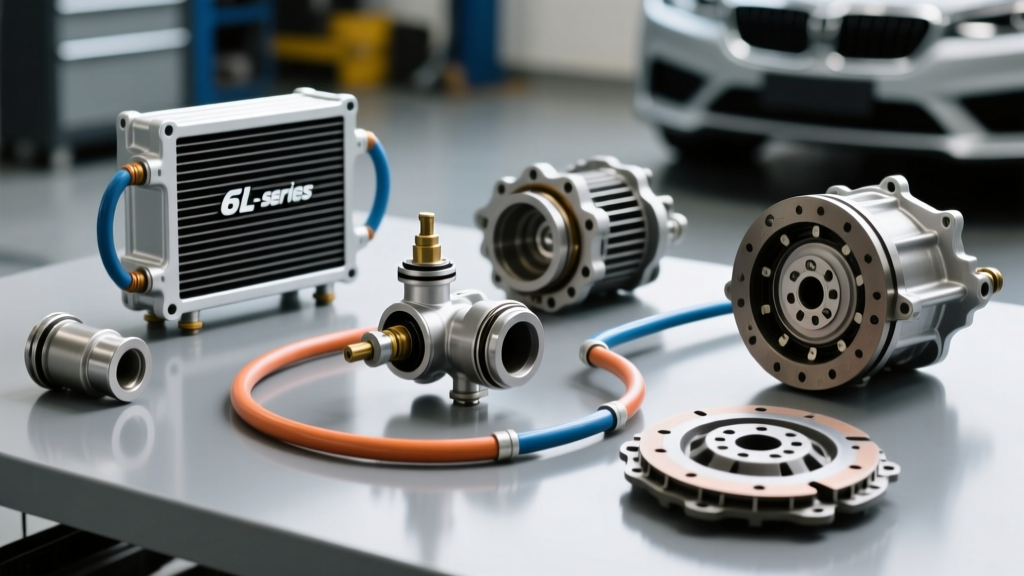
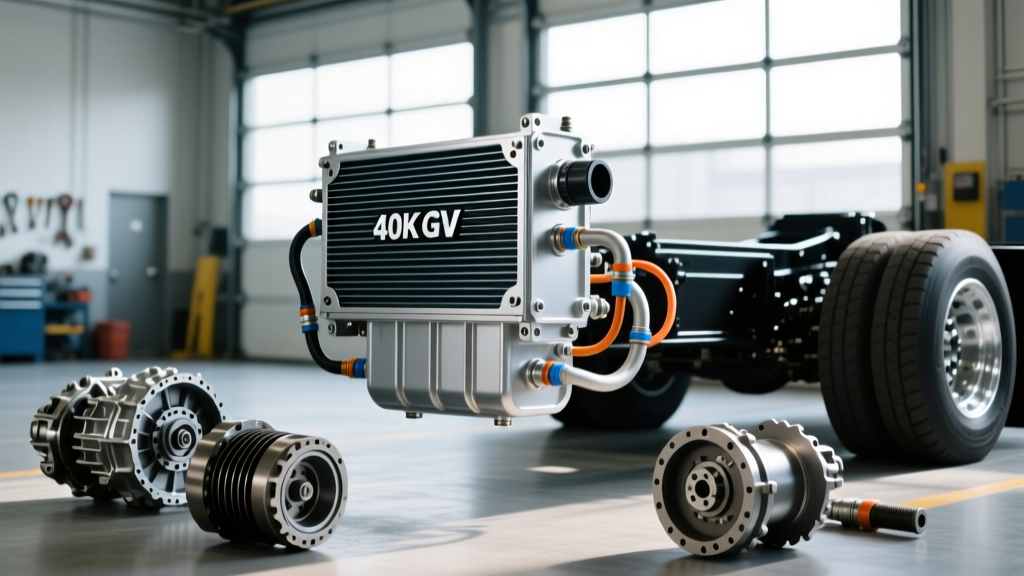
To mitigate this, the factory-integrated transmission fluid-to-engine coolant heat exchangers are often insufficient for sustained Class IV towing. This is where upgrading to an auxiliary air-to-fluid cooler becomes mandatory. Specifically, enthusiasts and fleet managers frequently look for a transmission cooler 40k GVW (Gross Vehicle Weight) rated unit to ensure adequate thermal headroom for combined truck and trailer weights approaching 40,000 pounds.
Decoding the "40k" Rating: GVW vs. Actual BTU Dissipation
The "40,000 GVW" rating stamped on cooler packaging is an industry-standardized classification, not a strict thermodynamic measurement. It indicates that the cooler is designed to maintain safe operating temperatures in a vehicle-trailer combination weighing up to 40,000 lbs under standard highway towing conditions. However, from an engineering perspective, what you are actually buying is surface area and flow capacity.
A true 40k-rated cooler typically requires a minimum core face area of 144 square inches (e.g., 12" x 12") and a thickness of at least 1.25 to 1.5 inches. More importantly, it must dissipate between 30,000 and 45,000 BTUs per hour depending on ambient air temperature and airflow velocity. When selecting a unit, ignore the marketing GVW number and focus on the core dimensions, fin density (FPI), and internal tube geometry.
Stacked-Plate vs. Plate-and-Fin for High-Viscosity Fluids
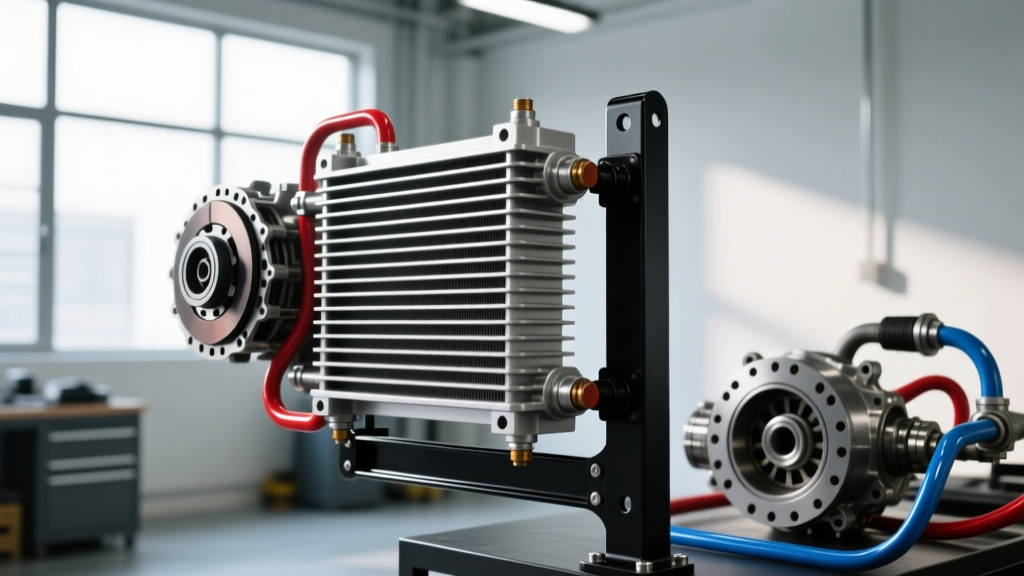
Modern diesel transmissions utilize low-viscosity, ultra-low friction fluids to maximize fuel economy. However, under extreme heat, these fluids thin out further. Furnace-brazed stacked-plate coolers are the undisputed standard for 40k applications. Unlike older tube-and-fin designs, stacked-plate coolers force the fluid through a series of turbulent micro-channels. This turbulence breaks up the boundary layer of the fluid against the aluminum walls, increasing the heat transfer coefficient by up to 30% compared to plate-and-fin designs, while simultaneously withstanding internal line pressures exceeding 250 PSI without ballooning or leaking.
Sizing and Flow Dynamics for Class 3 and Class 4 Pickups
Installing an oversized cooler is not always beneficial. If the cooler core volume is too large and the internal passages are too restrictive, you risk a severe pressure drop across the cooler circuit. Modern transmissions rely on precise hydraulic pressure for clutch apply times; a pressure drop of more than 15-20 PSI through the auxiliary cooler can result in delayed shifts, clutch slip, and subsequent burnout.
| Transmission Model | Application | Max Line Pressure | Fluid Capacity | Ideal 40k Core Dimensions | Recommended Fitting Size |
|---|---|---|---|---|---|
| Allison 1000 (10-spd) | GM 6.6L Duramax | 275 PSI | 12.7 Quarts | 13.0" x 11.5" x 1.5" | 1/2" Barb / AN-8 |
| 10R140 | Ford 6.7L Power Stroke | 250 PSI | 13.1 Quarts | 12.0" x 11.0" x 1.5" | 3/8" Barb / AN-6 |
| Aisin AS69RC | Ram 6.7L Cummins | 230 PSI | 10.5 Quarts | 13.0" x 11.5" x 1.25" | 1/2" Barb / AN-8 |
As noted by the Hayden Automotive Tech Center, matching the hose diameter to the factory output is critical. Stepping down from a factory 1/2" line to a 3/8" cooler inlet to save money on AN fittings will choke the return flow, starving the transmission lube circuit.
The Thermal Bypass Valve: To Delete or Not to Delete?
A major variable in 2020+ heavy-duty trucks is the factory thermal bypass valve. Located either in the transmission case or inline on the cooler hose, this valve blocks fluid flow to the auxiliary cooler when the fluid is cold, allowing the transmission to reach operating temperature faster for emissions compliance. The problem? These valves are notorious for sticking in the closed or partially closed position, effectively rendering your 40k cooler useless when you need it most.
For dedicated towing rigs, deleting the thermal bypass valve and running a full-flow, constant-circuit loop is highly recommended. This ensures that 100% of the fluid volume passes through the stacked-plate core at all times. While it increases warm-up time by 3-5 minutes in sub-freezing climates, the trade-off in thermal security under load is mathematically sound.
Installation Protocol and Hardware Requirements
Proper installation of a 40k-rated cooler requires precision. Relying on cheap worm-gear clamps and soft rubber hose is a recipe for a blown hose at 70 MPH. Below is the professional hardware and torque specification checklist for a heavy-duty auxiliary cooler install:
- Hose Material: Use SAE J1532 approved transmission cooler hose or high-pressure PTFE (Teflon) lined stainless braided AN-8 hose. Standard fuel line will degrade and swell when exposed to 220°F synthetic ATF.
- Clamps: If using barb fittings, utilize constant-tension T-bolt clamps or Oetiker stepless ear clamps. Torque T-bolt clamps to exactly 35-45 in-lbs to prevent cutting into the hose jacket.
- Adapter Fittings: When threading brass or steel AN-adapters into the aluminum transmission case (e.g., M16x1.5 to AN-8), apply a high-temp thread sealant (never Teflon tape, which can shred and block valve bodies). Torque case adapters to 22-26 lb-ft.
- Mounting Hardware: Secure the cooler using nylon-insert lock nuts and isolation rubber grommets to prevent chassis vibration from fatiguing the aluminum mounting brackets. Torque M6 mounting bolts to 8-10 lb-ft.
- Zip-Ties: Never use standard nylon zip-ties to secure the cooler to the condenser or radiator. Always use bolt-through mounting brackets or heavy-duty stainless steel hose clamps to secure the cooler to the frame or core support.
Real-World Thermal Data: Stock vs. 40k Auxiliary Cooling
Field testing on a 2024 Silverado 3500HD (Allison 1000) pulling a 14,000 lb fifth-wheel over an 8% grade at 55 MPH provides a clear picture of the thermal delta. With the factory fluid-to-coolant exchanger alone, TFT stabilized at 228°F. After installing a Derale Hyper-Cool 40k series stacked-plate unit in a full-flow configuration (bypass deleted), the TFT dropped to a peak of 174°F under the exact same ambient conditions (88°F) and load.
"Maintaining transmission fluid below 180°F effectively doubles the oxidative life of synthetic ATF. For every 20°F drop in operating temperature, the rate of fluid degradation and varnish formation is reduced by approximately 50%." - Allison Transmission Fluid Guidelines
Summary and Maintenance Intervals
Upgrading to a 40k GVW transmission cooler is not merely an accessory; it is a critical drivetrain preservation modification for any diesel truck owner towing near their GCWR. By selecting a furnace-brazed stacked-plate design, properly sizing the AN fittings to avoid pressure drop, and eliminating restrictive thermal bypass valves, you ensure that your Allison, 10R140, or Aisin transmission operates within its optimal thermal window.
Post-installation, monitor your TFT via OBD-II telemetry during your first heavy tow to verify flow and cooling efficiency. Furthermore, because the auxiliary cooler increases the total fluid volume of the system by 1 to 2 quarts, ensure you adjust your drain-and-fill maintenance intervals and fluid purchase quantities accordingly. A well-cooled transmission is a transmission that will easily outlast the engine it is bolted to.