The Tale of Two Platforms: Precision vs. Brute Force
As we navigate the 2026 automotive repair landscape, manual transmission specialists frequently bridge the gap between high-revving import performance cars and heavy-duty domestic haulers. At first glance, a 2017 WRX clutch replacement shares basic mechanical principles with swapping a clutch in a heavy-duty pickup or an off-road SUV. However, the engineering realities, tooling requirements, and failure modes are worlds apart.
For shops and advanced DIYers managing a diverse garage, understanding the stark contrast between the Subaru TY752 6-speed and heavy-duty truck transmissions like the NV4500 or SUV units like the NSG370 is critical. This guide breaks down clutch replacement for trucks and SUVs, using the precision engineering of the 2017 WRX as a comparative baseline to highlight the unique challenges of hauling platforms.
Heavy-Duty Truck Clutch Replacements: The NV4500 Standard
When discussing clutch replacement for trucks, the legendary New Venture Gear NV4500 5-speed manual remains a benchmark. Found in decades of Dodge Ram 2500/3500 and Chevrolet Silverado HD trucks, the NV4500 is built for extreme torque multiplication and towing. Replacing a clutch on an NV4500-equipped truck is an exercise in managing sheer mass.
Managing Mass and 13-Inch Clutch Assemblies
Unlike sport compacts, heavy-duty trucks utilize massive 13-inch (330mm) clutch discs and heavy dual-mass or solid steel flywheels designed to absorb diesel vibration or big-block V8 shock loads. A complete South Bend Clutch SDD3250-6 assembly for a Cummins-powered truck can weigh upwards of 90 lbs.
- Tooling Requirement: A standard floor jack is insufficient. You must use a dedicated transmission jack with a tilt-adjustable saddle to safely maneuver the 170 lb NV4500 gearbox and align the massive input shaft.
- Flywheel Resurfacing: Truck flywheels often feature deep step heights. For a 6.0L GM gas truck, the step height must be machined to exactly 0.030" to ensure proper pressure plate clamping force.
- Pilot Bearing Extraction: Due to high-mileage heat cycling, truck pilot bearings frequently weld themselves to the crankshaft flange. Blind hole pullers and hydraulic extraction tools are mandatory in the truck bay.
Mid-Size SUV Clutch Overhauls: Skid Plates and Concentric Slaves
The SUV segment presents a different set of hurdles. Vehicles like the Jeep Wrangler (NSG370 transmission) or manual-swapped Chevrolet Colorado ZR2s are defined by their off-road architecture. Clutch replacement for these SUVs is heavily complicated by underbody protection and internal hydraulic systems.
The Concentric Slave Cylinder (CSC) Nightmare
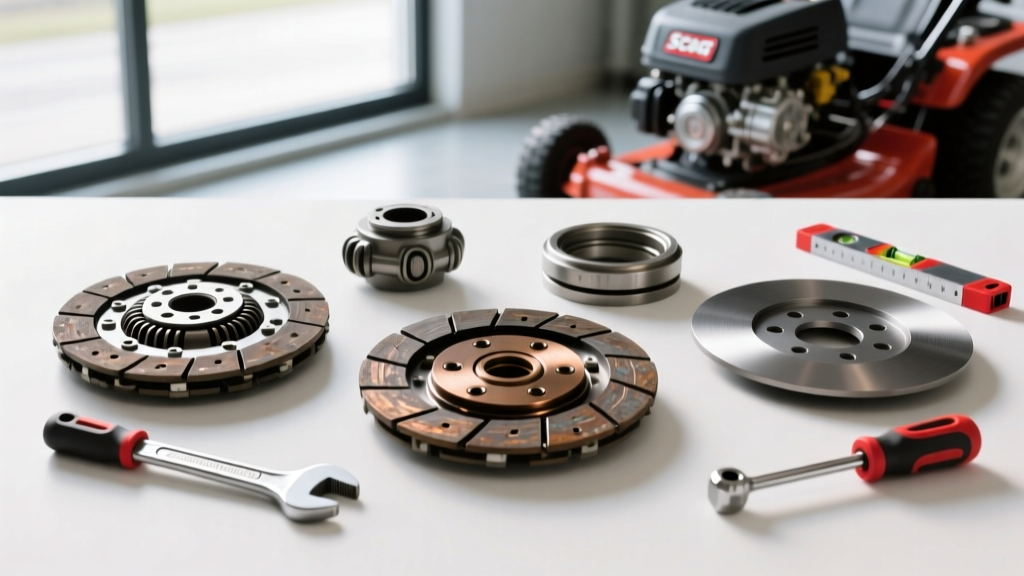
Modern off-road SUVs largely abandon the external clutch fork for Concentric Slave Cylinders (CSC) housed inside the bell housing. When performing a clutch replacement on a Jeep Wrangler or similar SUV, the CSC must be replaced every time the transmission is dropped.
Mechanic's Note: Bleeding a CSC without a specialized pressure bleeder like the Motive 101 is a recipe for a spongy pedal and premature throwout bearing failure. Gravity bleeding is virtually useless on internal hydraulic release bearings due to the upward routing of the hydraulic line.
Furthermore, SUV clutch jobs require the removal of heavy steel skid plates, transfer case adapters, and complex crossmembers. What might be a 4-hour job on a 2WD truck easily stretches to 7 hours on a 4WD off-road SUV.
The Import Baseline: How a 2017 WRX Clutch Replacement Compares
To truly appreciate the brute force required for truck and SUV clutch jobs, we must contrast them with the precision of a 2017 WRX clutch replacement. The 2017 WRX utilizes the FA20DIT engine mated to the TY752 6-speed manual. While it is an AWD performance car, its clutch architecture is fundamentally different from domestic haulers.
Pull-Type vs. Push-Type Architecture
The most critical E-E-A-T distinction here is the clutch actuation method. Almost all trucks and SUVs use a push-type pressure plate, where the throwout bearing pushes against the diaphragm fingers to release the clutch. The 2017 WRX TY752 transmission uses a pull-type clutch (OEM Exedy FJC022U).
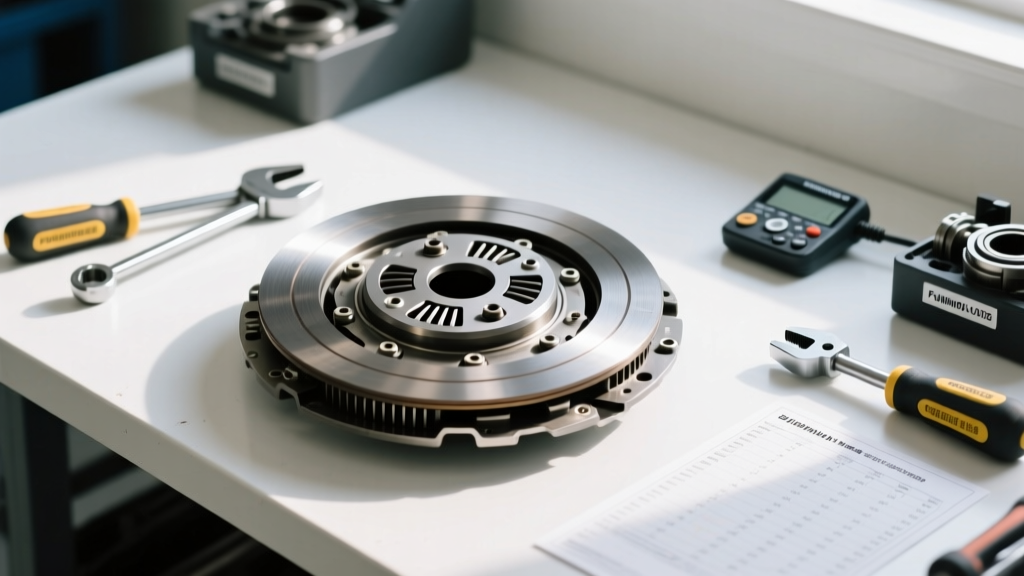
In a pull-type setup, the release bearing is permanently integrated into the pressure plate assembly. When the clutch fork pulls the bearing outward, the diaphragm springs invert to release the disc. This requires a highly specific, expensive alignment tool during installation. If a mechanic attempts to install a pull-type WRX clutch using a standard universal alignment tool meant for push-type truck clutches, they will destroy the diaphragm fingers upon first actuation.
Subframe Drops and Lightweight Components
While a truck requires supporting a massive transmission, the WRX requires dropping the rear subframe and pitch stop mounts to gain clearance for the TY752. However, the WRX clutch assembly weighs a fraction of a truck's setup. The 230mm (9.05-inch) Exedy or ACT SB3-HDSS clutch kit can be maneuvered by hand, allowing for rapid alignment and installation without the need for heavy lifting equipment.
Comparative Data: Specs, Splines, and Torque
Below is a technical comparison chart highlighting the mechanical differences between the 2017 WRX, a heavy-duty truck, and a mid-size off-road SUV. This data is essential for ordering the correct parts and setting torque wrenches in 2026.
| Vehicle Class | Transmission | Clutch Type / Diameter | Input Shaft Spline | Flywheel Torque Spec | Pressure Plate Torque |
|---|---|---|---|---|---|
| 2017 WRX (Sport) | TY752 6-Speed | Pull-Type / 230mm | 1" 25-Spline | 69 ft-lbs + 90° turn | 27 ft-lbs (37 Nm) |
| HD Truck (e.g., 2500) | NV4500 5-Speed | Push-Type / 330mm | 1-1/8" 10-Spline | 74 ft-lbs (100 Nm) | 35 ft-lbs |
| Mid-Size SUV (Wrangler) | NSG370 6-Speed | Push-Type / 258mm | 1" 14-Spline | 61 ft-lbs (83 Nm) | 29 ft-lbs |
*Always refer to the specific OEM service manual for your exact engine and transmission pairing, as spline counts and torque specs can vary by model year and manufacturer updates.
Hydraulic Bleeding: External Forks vs. Internal CSCs
The bleeding procedure is where many DIYers fail when transitioning from working on imports to working on trucks and SUVs.
- The WRX Method: The 2017 WRX uses an external slave cylinder that pushes a traditional fork. Bleeding is straightforward: attach a vacuum or pressure bleeder to the nipple on the slave cylinder, pump the pedal, and burp the system. It takes less than 10 minutes.
- The SUV/Truck Method: Vehicles with internal CSCs (like the Colorado ZR2 or modern Jeep Wranglers) require the hydraulic line to be disconnected from the bell housing, the new CSC installed, and the line reconnected. Because the bleeder screw is often buried high on the bell housing or requires a specialized quick-disconnect tool, trapped air is a massive issue. We recommend reverse-bleeding (pushing fluid from the slave cylinder up to the master cylinder reservoir) to force air bubbles upward against their natural tendency to rise.
2026 Labor Costs and Shop Realities
The financial reality of clutch replacement for trucks and SUVs reflects the physical labor involved. In 2026, with average shop rates hovering between $150 and $220 per hour, the disparity in labor times is stark.
- 2017 WRX Clutch Replacement: Book time is generally 5.5 to 6.5 hours. Expect to pay between $1,200 and $1,800 for labor, plus $400-$800 for an OEM Exedy or upgraded ACT kit.
- Heavy-Duty Truck (NV4500): Book time ranges from 7 to 9 hours, especially if the transfer case must be unbolted and supported separately. Labor costs easily exceed $2,000, and heavy-duty South Bend or Valair clutch kits can range from $800 to $1,500.
- Off-Road SUV (NSG370/CSC): Expect 6.5 to 8 hours of labor. The added cost of a mandatory OEM CSC replacement ($150-$250) and specialized hydraulic bleeding tools pushes the total shop bill to $1,800 - $2,400.
Final Verdict for the Multi-Vehicle Garage
Whether you are executing a precision 2017 WRX clutch replacement or wrestling an NV4500 out of a rusted heavy-duty truck, success relies on respecting the platform's unique engineering. Trucks and SUVs demand heavy lifting equipment, meticulous step-height measurements, and advanced hydraulic bleeding strategies. In contrast, the WRX demands strict adherence to pull-type alignment procedures and precise torque-to-yield flywheel specifications. By mastering the nuances of both worlds, you ensure longevity, safety, and optimal drivetrain engagement across every vehicle that enters your bay.
For further technical reading on heavy-duty transmission adapters and clutch geometries, consult the Novak Adapt NV4500 Guide or review application-specific catalogs via South Bend Clutch and Exedy USA.