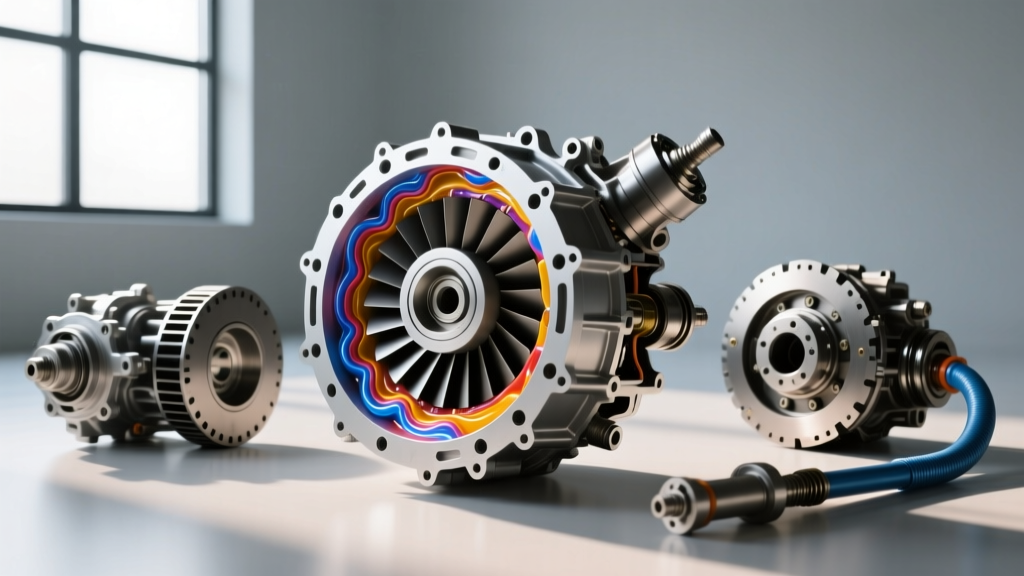
Understanding the 2017 Chevy Traverse Torque Converter and 6T75E Transmission
The Lambda-platform SUVs are renowned for their spacious interiors and towing capabilities, but the drivetrain requires meticulous care to reach high mileage. When maintaining the 2017 Chevy Traverse torque converter system, you are primarily dealing with the GM Hydra-Matic 6T75E 6-speed automatic transmission. Paired with the 3.6L V6 (LFX) engine, this transmission utilizes a complex Pulse Width Modulated (PWM) Torque Converter Clutch (TCC) to manage lockup and optimize fuel economy.
Unlike older hydraulic systems that relied on simple on/off lockup solenoids, the 6T75E uses a variable-force solenoid to apply the TCC gradually. This 'controlled slip' strategy reduces emissions and improves shifting smoothness, but it generates significant friction material debris over time. If this microscopic debris is not managed through rigorous fluid maintenance, it clogs the TEHCM (Transmission Electro-Hydraulic Control Module) solenoids, leading to the infamous highway-speed shudder, harsh shifts, and eventual torque converter failure.
Flush vs. Drain-and-Fill: A 2026 Buyer’s Comparison
One of the most debated topics in modern transmission maintenance is whether to perform a high-pressure machine flush or a traditional drain-and-fill. For the 6T75E, the approach you choose can mean the difference between extending the life of your drivetrain and blowing out aging internal lip seals.
| Method | Fluid Exchanged | Risk Level | 2026 Avg. Cost |
|---|---|---|---|
| Machine Power Flush | ~9.5 Quarts (100%) | High (on high-mileage units) | $280 - $350 |
| DIY Fluid Extractor | ~4.5 Quarts (45%) | Very Low | $45 - $65 |
| Pan Drop & Filter Change | ~5.5 Quarts (55%) | Low-Medium (TEHCM care needed) | $120 - $180 (DIY) |
| 3x Sequential Drain-and-Fill | ~8.5 Quarts (90%) | Safest for high mileage | $135 - $195 (DIY) |
Expert Warning: If your 2017 Traverse has over 100,000 miles and the fluid has never been changed, never use a pressurized machine flush. The sudden introduction of aggressive detergents and high pressure can dislodge varnish that is currently acting as a seal on worn clutch packs, resulting in immediate transmission slip. Opt for the 3x sequential drain-and-fill method instead.
Fluid Selection: Dexron VI and Synthetic Upgrades
The 6T75E transmission requires Dexron VI Automatic Transmission Fluid. GM explicitly states that older formulations like Dexron III are incompatible and will degrade the friction modifiers required for the TCC to operate without shuddering. According to the Chevrolet Owner Center, using the correct fluid specification is critical for maintaining the warranty and operational integrity of the torque converter.
OEM vs. Synthetic Alternatives
- ACDelco Dexron VI (Part # 10-9395): The factory fill. It provides excellent baseline performance and is the safest choice for vehicles still under powertrain warranty or those with strict OEM maintenance schedules.
- AMSOIL Signature Series Fuel-Efficient Synthetic ATF: A premium synthetic alternative that meets and exceeds Dexron VI specifications. Independent testing shows superior resistance to thermal breakdown, which is crucial for Traverse owners who frequently tow near the 5,200-lb capacity limit. You can review their technical specifications on the AMSOIL ATF product page.
- Valvoline MaxLife Multi-Vehicle ATF: A highly regarded, cost-effective synthetic blend that contains additional seal conditioners, making it a popular choice for higher-mileage 6T75E units experiencing minor seal weeps.
Step-by-Step Maintenance: The Extractor Method
Because the 6T75E transmission pan does not feature a traditional drain plug, the cleanest and most accessible DIY method is using a pneumatic or manual fluid extractor via the dipstick tube.
- Warm Up the Drivetrain: Drive the Traverse for 15-20 minutes to bring the transmission fluid to operating temperature (160°F - 180°F). Warm fluid flows faster and suspends contaminants better than cold fluid.
- Extract the Fluid: Insert the extractor tube down the transmission dipstick tube until it hits the bottom of the pan. Pump out approximately 4.5 quarts of fluid into your measurement vessel.
- Refill with Precision: Using a long-neck funnel, pour exactly the amount of Dexron VI synthetic fluid back into the dipstick tube. Do not overfill; overfilling causes fluid aeration, which leads to TCC slip and harsh shifts.
- Check the Level: With the engine running, the transmission in Park, and the vehicle on a level surface, check the dipstick. The fluid level should be within the cross-hatched 'HOT' zone.
Crucial Torque Specs for Pan Removal
If you opt to drop the pan to replace the internal filter (ACDelco Part # 24258323), you must exercise extreme caution. The TEHCM is mounted directly inside the pan, and the wiring harness is delicate. When reinstalling the pan, the M6 pan bolts must be torqued to exactly 10 Nm (89 lb-in) in a crisscross pattern. Overtightening will strip the aluminum case threads or warp the pan, causing massive fluid leaks.
Diagnosing and Preventing TCC Shudder
The most common complaint among 2017 Traverse owners is a vibration resembling driving over highway rumble strips, typically occurring between 40 and 55 mph when the torque converter clutch attempts to lock up in 4th, 5th, or 6th gear. This is known as TCC shudder.
According to transmission valve body experts at Sonnax, TCC shudder in the 6T75E is rarely a mechanical failure of the torque converter itself in the early stages. Instead, it is usually a hydraulic control issue. Debris from normal clutch wear accumulates in the TEHCM solenoid screens, restricting the precise fluid volume needed to apply the TCC smoothly. The solenoid pulses rapidly to compensate for the restricted flow, causing the converter to rapidly engage and disengage—hence the shudder.
The Maintenance Fix: Performing three consecutive drain-and-fills (driving 50 miles between each to circulate the fluid through the torque converter) often restores the detergent balance and clears microscopic debris from the TEHCM screens, eliminating the shudder without requiring a teardown. If the shudder persists after fresh fluid and a TEHCM reprogramming via a GM GDS2 scan tool, the torque converter friction lining may be permanently glazed, necessitating a full transmission removal and torque converter replacement.
2026 Cost Analysis: Dealership vs. Independent vs. DIY
Maintaining the 2017 Chevy Traverse torque converter system is an investment that pays dividends in longevity. Here is what you can expect to pay in the current 2026 market:
- Dealership Flush & Fill: $280 - $380. Dealerships typically use a BG Machines dialysis flush. While thorough, ensure they are using genuine GM Dexron VI and not a generic 'universal' multi-vehicle fluid.
- Independent Transmission Shop: $180 - $250. A reputable indie shop will often recommend a pan drop, filter replacement, and top-off, which is generally safer for vehicles approaching the 100k-mile mark.
- DIY Extractor Method: $50 - $75. The cost of 5 quarts of high-quality synthetic Dexron VI and the amortized cost of a manual fluid extractor. This is the most cost-effective way to stay ahead of TCC wear.
By understanding the specific hydraulic needs of the 6T75E and adhering to a strict 30,000-mile fluid exchange interval, you can effectively protect your torque converter, eliminate shudder, and ensure your Traverse remains a reliable family hauler for years to come.