The 6R80 Architecture: Why OEM Cooler Lines Fail
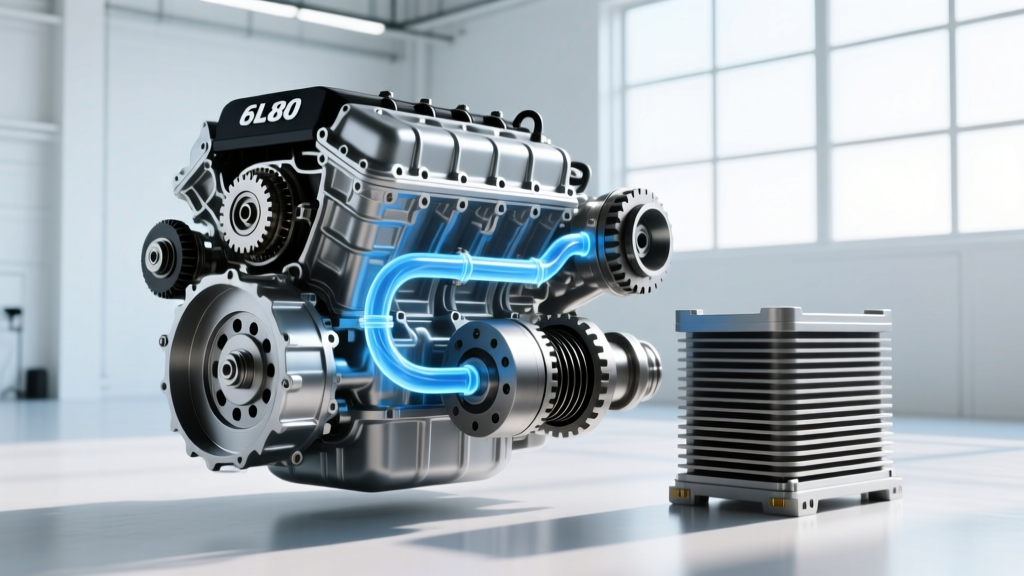
The 2015 Ford F-150 marked the debut of the aluminum-body P552 generation, but beneath the lightweight sheet metal, the powertrain relied heavily on the proven 6R80 six-speed automatic transmission. While the 6R80 is remarkably robust, the 2015 F150 transmission cooler lines represent a notorious weak point in the cooling circuit. The OEM lines utilize a hybrid construction: aluminum tubing mated to flexible rubber hose segments via crimped ferrules. Over time, thermal cycling, road debris, and engine bay ozone exposure cause these crimp collars to degrade, leading to micro-weeping and eventual catastrophic fluid loss.
Furthermore, the 6R80 cooling circuit features a thermal bypass valve integrated into the return line. Designed to restrict cooler flow during cold starts to help the transmission reach optimal operating temperature (around 190°F) faster, this valve is prone to stiction. When diagnosing cooling system faults, technicians must evaluate both the physical integrity of the lines and the operational status of this bypass valve.
Symptom Diagnosis: 3 Primary Failure Modes
Before tearing into the front end or dropping the transmission pan, you must accurately diagnose the root cause of the cooling anomaly. Here are the three most common failure modes affecting the 2015 F-150 cooling circuit.
1. The Crimp Fitting Weep
Symptoms: Red or brownish fluid spotting on the crossmember, low line pressure codes (P0868), and delayed forward engagement after sitting overnight.
Diagnosis: Clean the entire length of the supply and return lines with brake cleaner. Dust the crimped rubber-to-metal junctions with talcum powder or use a UV dye injected into the dipstick tube. After a 15-minute test drive, inspect the powder for fluid trails. The supply line (under higher pressure) typically fails first at the lower radiator fitting.
2. Thermal Bypass Valve Stiction
Symptoms: Transmission Over-Temperature warnings (P0218) during highway driving or light towing, despite no visible external leaks and adequate fluid levels.
Diagnosis: Use an infrared temperature gun. Monitor the bypass valve housing on the return line while the truck idles and warms up. The inlet side of the valve should read significantly hotter than the outlet side until the transmission fluid pan reaches approximately 180°F. If the pan exceeds 200°F and the outlet line to the cooler remains cold, the valve is stuck closed, starving the cooler of flow.
3. The "Strawberry Milkshake" (Internal Radiator Breach)
Symptoms: Milky, pinkish emulsion on the transmission dipstick, coolant loss without external engine leaks, and severe clutch slippage.
Diagnosis: If the internal transmission cooler inside the engine radiator ruptures, coolant and MERCON LV fluid mix. Do not drive the vehicle. Water destroys the friction material on the 6R80 clutch packs within miles. Pull the radiator drain petcock into a clear glass jar; if a pink sludge separates, the radiator and all 2015 F150 transmission cooler lines must be flushed or replaced to prevent cross-contamination recurrence.
Aftermarket Solutions: Mishimoto vs. Derale vs. Hayden
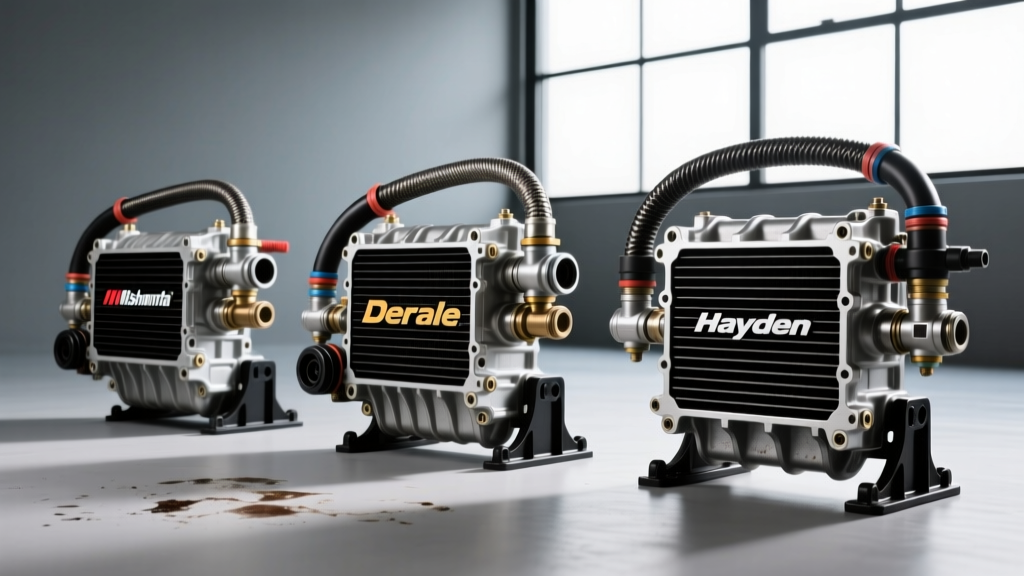
When the OEM lines fail or when you need to supplement the factory cooler for heavy towing, the aftermarket offers distinct pathways. In 2026, the big three—Mishimoto, Derale, and Hayden—dominate the F-150 cooling space, but they cater to different diagnostic outcomes and budgets.
Mishimoto: Premium Aluminum & Lifetime Warranty
Mishimoto targets the enthusiast and heavy-duty user who wants to eliminate rubber crimp fittings entirely. Their replacement line kits and X-Line auxiliary coolers utilize CNC-machined aluminum hardlines and TIG-welded end tanks. If your diagnosis points to recurring rubber degradation, Mishimoto’s hardline conversions are the definitive fix. Their stacked-plate coolers offer high BTU dissipation with minimal pressure drop, preserving the 6R80’s delicate line pressure parameters.
Derale: Towing Mastery & Active Cooling
Derale is the undisputed king of heavy-load thermal management. For 2015 F-150 owners towing 5th wheels or heavy boat trailers, the factory cooler is often insufficient. Derale’s Hyper-Cool series features stacked-plate cores paired with integrated, temperature-activated electric fans. This solves the low-airflow overheating issue common in stop-and-go traffic or steep grade climbs where ram air is minimal.
Hayden: OEM-Style & Budget Reliability
If you are simply replacing a ruptured OEM line on a daily driver and want a direct-fit, plug-and-play solution without modifying the front bumper or core support, Hayden Auto is the go-to. Their Rapid-Cool tube-and-fin auxiliary coolers and direct-fit replacement line assemblies mirror the factory routing. They are cost-effective and widely available, making them ideal for standard restorations rather than extreme-duty upgrades.
2026 Cooler & Line Replacement Data Chart
| Brand | Product Line / Type | Part Number (Ref) | BTU/hr Rating | Est. Price Range |
|---|---|---|---|---|
| Mishimoto | X-Line Heavy Duty Stacked-Plate | MMTC-U2 | ~33,000 | $280 - $320 |
| Derale | Hyper-Cool w/ Electric Fan | 15900 | ~45,000 | $350 - $410 |
| Hayden | Rapid-Cool Tube-and-Fin | 403 | ~16,000 | $75 - $110 |
| Hayden | OEM Direct-Fit Replacement Line | 5140 | N/A (Line Only) | $85 - $130 |
Wrenching Specs: Torque, Fluids, and Relearn Procedures
Replacing the 2015 F150 transmission cooler lines or installing an auxiliary cooler requires strict adherence to Ford’s service specifications. The 6R80 is highly sensitive to fluid volume and line pressure variations.
- Fluid Specification: Motorcraft MERCON LV (XT-10-QLVC). Never use older MERCON V; it will cause immediate clutch chatter and TCC shudder.
- Capacity: Pan drop and filter change yields approximately 5.5 quarts. A completely dry transmission (after a full radiator and line flush) requires 13.1 quarts.
- Line Disconnect Tools: The 6R80 utilizes quick-disconnect fittings at the radiator. You will need a 5/16" and 3/8" fuel line/transmission disconnect tool set to safely release the retaining collars without snapping the aluminum tabs.
- Torque Specifications: If utilizing aftermarket AN-fitting adapters or flare-nut conversions for hardlines, torque the flare nuts to 15-18 lb-ft. Do not exceed 20 lb-ft, as the aluminum transmission case threads and radiator end-tanks are easily stripped.
- TCM Adaptive Relearn: If your diagnosis revealed severe slipping due to low fluid from a leak, the Transmission Control Module (TCM) will have adapted to the low line pressure. After repairing the lines and verifying fluid levels at 185°F with the engine idling in Park, use an OBD-II bidirectional scanner to perform a "Keep Alive Memory (KAM) Reset" and run the 6R80 adaptive learning drive cycle.
Master Tech Tip: "Always verify the condition of the radiator transmission cooler ports before installing new lines. On the 2015-2017 F-150s, the plastic barb inside the radiator port can become brittle. If it cracks during line installation, you must replace the entire radiator assembly."
Summary
Diagnosing cooling system faults on the P552 F-150 requires looking beyond simple puddles on the driveway. By understanding the 6R80’s thermal bypass valve, recognizing the limits of OEM crimped lines, and selecting the correct aftermarket partner—whether it’s Mishimoto for hardline reliability, Derale for extreme towing, or Hayden for OEM restoration—you can ensure your truck’s transmission survives the next 100,000 miles of service.
Sources consulted for diagnostic procedures and specifications:
F150Forum Transmission Archives
Derale Performance Cooling Catalog
Mishimoto Tech Docs & Fitments